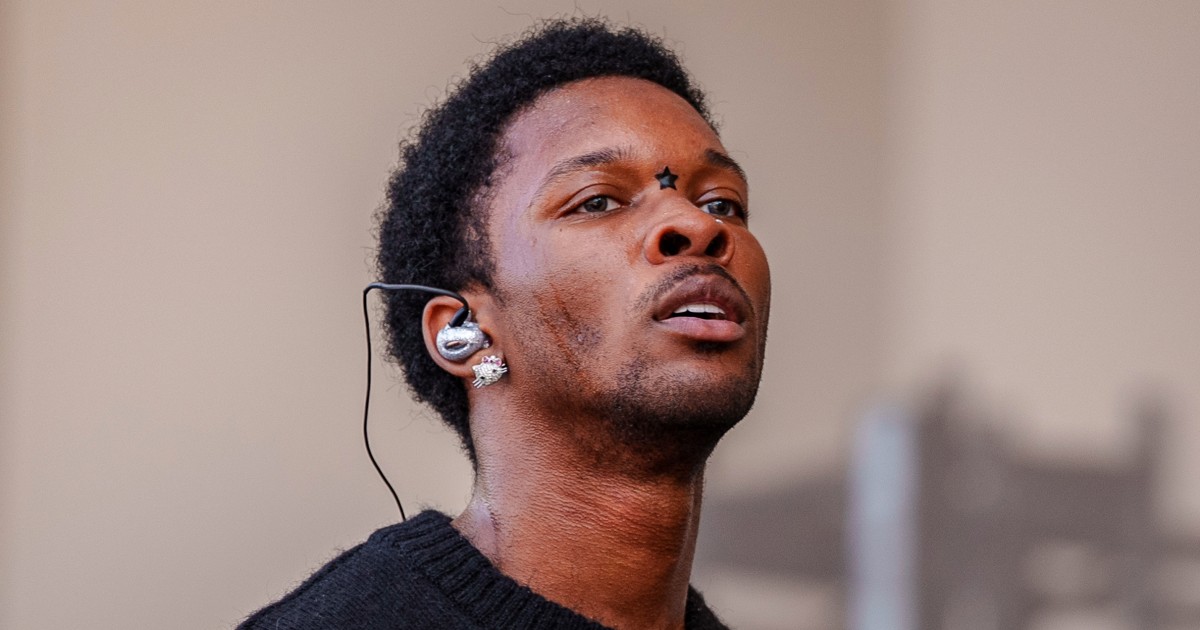
At the center of several news stories that, at first glance, seem unrelated, the same thread appears: violence is turned into a media narrative, and human life becomes expendable material for politics, the entertainment industry, and news cycles. From Donald Trump’s threats to “bomb” Iran and the blockade of the Strait of Hormuz to the case of pop performer D4vd (David Anthony Burke), accused of killing a 14‑year‑old girl, we see everywhere how brutality and the risk of escalation are presented through dramaturgy, ratings, and interest in big personalities, while the victims and consequences remain in the shadows.
In The Independent’s piece on the escalation between the US and Iran, reporters describe how Donald Trump is turning a potential war into a bargaining chip and a media spectacle in real time. The digital era adds an element of showmanship to diplomacy: the president claims the US seized a tanker linked to Iran (M/T Tifani), promises to extend a ceasefire, but at the same time publicly says he “expects bombings, because he thinks that’s the right setting to go into” negotiations. This phrase demonstrates an important shift: the public rhetoric of the leader of a nuclear power is built not around de‑escalation but around a “position of strength” as performance.
The blockade and the mentioned Strait of Hormuz are one of the world’s key maritime corridors, through which a significant share of global oil exports pass. Its closure is not just a military gesture but pressure on the global economy and security. According to Middle Eastern sources, Iran refuses to send negotiators to Pakistan until the blockade is lifted. In response, the US continues to block ports and remains in the logic of coercive leverage: “we will extend the ceasefire, but only until you come with a united position.” The whole scene—from the seizure of the tanker to threats that “many bombs will start exploding”—is presented as a sequence of media moves intended to both reassure and frighten the audience.
In another piece about Trump’s appearance at the White House, Sky News emphasizes that he is talking about sports while receiving college football champions, but journalists are already “on duty” near the broadcast: in case he says something about war and the ceasefire. The event itself—a sports ceremony—becomes a convenient stage for potential statements about war, and the channel explicitly says: “we will report if he mentions extending the ceasefire.” This is a symptom of modern media reality: the boundary between politics, war, and entertainment is blurred; everything turns into a single live broadcast, and the audience is trained to wait for “updates” on the fate of millions of people as casually as updates to a match score.
A similar logic of media dramatization and the focus on the figure rather than the victim appears in the criminal story surrounding musician D4vd. NBC News details how 21‑year‑old artist David Anthony Burke is charged with the murder of 14‑year‑old Celeste Rivas Hernandez, whose remains were found in the trunk of his Tesla in Los Angeles. Prosecutors have brought the most serious charges: first‑degree murder, prolonged sexual assault, and desecration of remains. Additionally, so‑called “enhancements” are alleged—circumstances that aggravate the offense: murder for financial gain, “lying in wait” (in American law this is murder of a victim after waiting in concealment, emphasizing premeditation), and killing a witness who could have testified against the defendant.
These “enhancements” are legally significant: under certain combinations in California law they elevate a case to a category that permits life imprisonment or the death penalty. District Attorney Nathan Hochman explicitly states that the death penalty is not excluded, and the question of whether to seek the maximum punishment will be decided later. For readers unfamiliar with the American system, clarification is needed: in such cases the struggle often concerns not only the conviction (guilty/not guilty) but also the classification of the crime and the “special circumstances” that determine whether the defendant could potentially face execution.
NBC News highlights that Celeste was a runaway teenager who was in a sexual relationship with Burke, who lived with her and had regular access to her. According to police, she disappeared, and months later her heavily decomposed remains were found in an abandoned car that had been towed to an impound lot due to a foul odor. The autopsy was sealed at the request of the police, so the cause of death has not been released. The indictment alleges the use of a “sharp instrument” as the fatal weapon. Meanwhile the defense asserts that “the factual evidence will show that David Burke did not kill Celeste and did not cause her death” and demands an open preliminary hearing, citing the absence of prosecution materials, despite the prosecution’s claim of “more than 40 terabytes” of evidence.
Several important trends are visible here. First, personalization of the story: the headline and structure of the text are framed through the figure of the well‑known performer—“singer D4vd charged with murder”—while Celeste herself appears primarily as a “victim” and as an element of the criminal case, not as a person with her own biography and subjectivity. Even the day her body was discovered is described as “a day after she would have turned 15”—this amplifies the emotional effect but still does not lift her story out of its role as an illustration of the drama surrounding the musician’s career.
Second, the logic of interest in the case itself: prosecutors claim the motive might have been an attempt to “preserve Burke’s career” and eliminate a witness in a lewd‑conduct case. Thus, the entertainment industry and the cult of public success turn out to be not just background but part of the motivational structure of the crime. If this accusation is proven, we will see an extreme example of how preserving image and career can outweigh, for a person, the value of another human life. In that sense the case fits into a broader set of stories where power, status, or political capital become supposed justifications for violence.
Returning to the international context, reports about Iran, the blockade, and threats of war show the same logic at the level of states and leaders. The Independent’s report emphasizes that Trump first says, “I don’t want to extend the ceasefire, we don’t have much time,” predicts bombings soon as the “right setting,” and then, just hours before the deadline, announces an extension of the ceasefire while continuing the blockade and the seizure of the tanker. A ceasefire under these circumstances becomes a tool of pressure rather than a step toward peace. Iran in response refuses to sit at the negotiating table in Pakistan until the blockade of the Strait of Hormuz is lifted, and the trip of US Vice President J.D. Vance is postponed, reinforcing the sense of stalemate.
Behind the scenes of this political game remain the region’s inhabitants—for example, Lebanon’s population, which, as Sky News reminds, Israeli authorities are again sending warnings to, fearing a widening of the conflict. But the focus of attentive coverage is not them; it is whether “Trump will say something about extending the ceasefire” during a meeting with the football team. This shift of perspective is repeated in the criminal chronicle about D4vd: journalists describe in detail Burke’s behavior in court, his stone expression, the black hoodie, the cancellation of remaining concerts, his lawyers’ work, and his parents’ attendance at the grand jury sessions, while Celeste’s personal story only faintly appears through dry formulations about a “many‑month delay” between death and discovery and “heavily fragmented remains.”
All of this forms a general picture: the modern information field is organized around characters with power and fame—presidents, musicians, prosecutors, senior police officers. War and violence, whether a potential exchange of strikes between states near the Strait of Hormuz or the murder of a minor girl, become not primarily tragedies but events embedded in the logic of spectacle: what matters are frames, quotations, plot twists, legal “enhancements,” the possibility of the death penalty, dramatic threats. Meanwhile the main thread—the destruction of human lives and the fragility of the right to safety—recedes to the background.
However, important signals are embedded in the pieces themselves. In District Attorney Hochman’s remarks—who speaks as a father of three about “the nightmare of a parent whose daughter leaves home and does not return”—there is an attempt to bring back into the picture the real cost of violence, regardless of how loudly the accused’s name resounds. The Independent’s decision to keep political material accessible without a paywall “so people can understand the facts, not slogans” shows a claim to act as a counterweight to the politico‑media show around the war. The defense’s demand for an open preliminary hearing and disclosure of grand jury materials in Burke’s case is a reminder that even in high‑profile cases with horrific accusations society must observe fair procedure and the presumption of innocence, so the investigation itself does not become yet another spectacle.
The key conclusion that connects all these stories—from Trump’s claim of seizing an Iranian tanker to Celeste’s body in a Tesla trunk—is that violence today is not only committed but also framed, packaged, and broadcast in the media space as dramaturgy. In this world, citizens must simultaneously be potential victims of the decisions of politicians and criminals, and spectators consuming the story in the format of “live updates” and “loud headlines.” The responsibility of editors, courts, and politicians in this situation is not only to make the right decisions but also to avoid losing sight of those who do not have a loud name and whose lives become hostages to someone else’s pursuit of power, career, or ratings.