Stories about the return of Artemis II astronauts to Earth, the mysterious disappearance of Lynette Hooker amid a fraught marriage, and a student-led Colby Community Health Program at a local homeless shelter at first glance seem unrelated. Space, crime reporting, and a local volunteer project look like separate beats. But looking deeper, all three pieces center on the same theme: how people cope with vulnerability and dependence on others — whether it’s a flight through a scorching atmosphere, unsafe relationships, or life in a homeless shelter. Wherever a person cannot survive alone, questions arise about trust, responsibility, and the role of systems and institutions — from NASA and the U.S. Coast Guard to the Royal Bahamas Police and a small group of volunteers in Waterville. These stories trace a common line: we inevitably live with risk, but how interactions between people and institutions are organized can either protect or exacerbate that fragility.
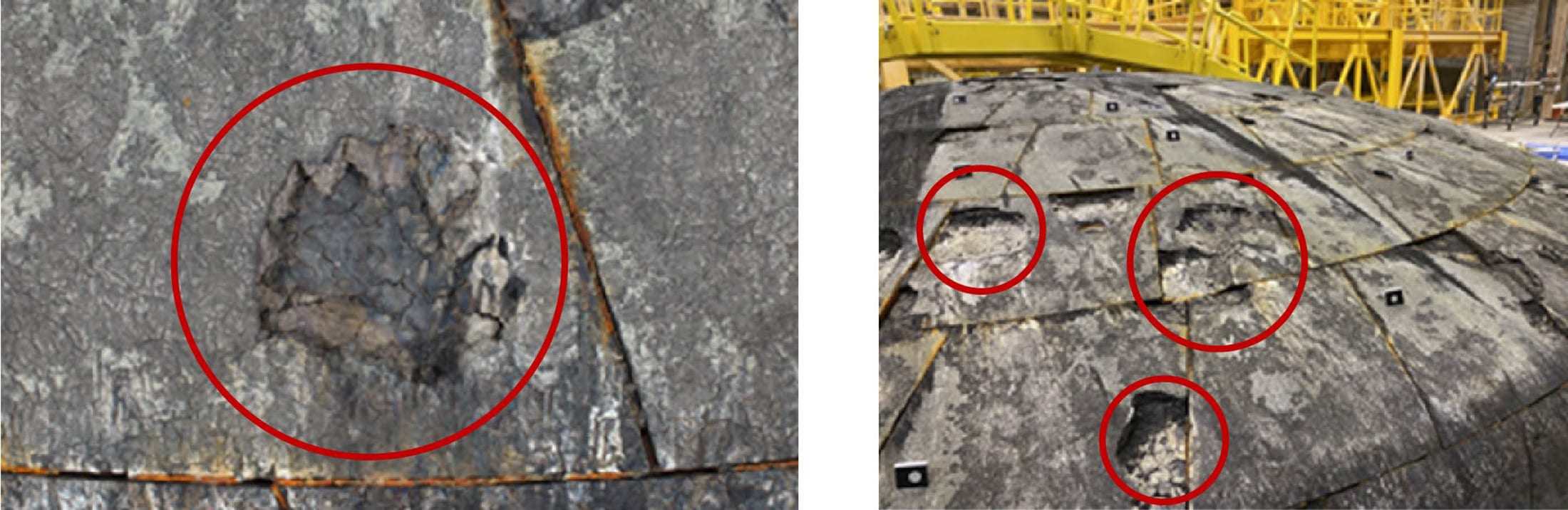
NBC’s report on the conclusion of the Artemis II lunar mission emphasizes how critical the spacecraft’s return through Earth’s atmosphere is. Essentially this is managed risk: NASA deliberately chooses a shorter, more direct reentry trajectory because of concerns about the Orion capsule’s heat shield. The agency acknowledges a technical vulnerability in the system and adapts the scenario to minimize the time the vehicle spends in extreme temperatures. This is an important detail: the space agency does not construct an illusion of absolute safety but addresses risk openly and systematically. The detailed choreography of stages — from service module separation at 7:33 p.m. Eastern to parachute deployment and splashdown at 8:07 p.m. — is not just a list of procedures but a demonstration of how collective knowledge and discipline turn a deadly process into something predictable and controllable.
The architecture of this operation shows that human vulnerability is here compensated for by a complex infrastructure of trust. Astronauts rely on engineers, calculations, redundant systems, and the ground team, with whom they lose contact for several minutes when the capsule enters a plasma “blackout” at about 400,000 feet, experiencing 3.9 g. Those minutes of radio silence are a concentrated metaphor for human dependence on others’ unseen work. People inside the capsule cannot go outside to “check” the heat shield; they literally entrust their lives to materials, algorithms, and decisions made long before launch. Even the final phase — helicopter evacuation of the crew to the U.S.S. John P. Murtha and the participation of Navy dive units — continues this thread: no participant is self-sufficient; everything rests on an interweaving of roles and expertise.
Against this backdrop, the story of Lynette Hooker, told in another NBC piece, is almost a mirror image, showing a situation where the system of trust has been broken or at least deeply undermined. A woman disappears during a boat trip off the Bahamas coast; her husband, Brian Hooker, says she allegedly fell overboard with the boat keys while on a dinghy near Elbow Cay, and that he had to row for hours to Marsh Harbour Boat Yard. Formally, it looks like an accident in “unpredictable seas and strong winds,” as he wrote on Facebook, yet the fabric of the relationship and the facts surrounding the event raise doubts among relatives and law enforcement.
A key element here is the conflicting accounts and the complex history of their marriage. An NBC report reveals a 2015 Kentwood, Michigan police report. In it, both spouses describe a domestic violence incident differently: Brian claims Lynette, heavily intoxicated, struck him in the face 4–5 times, evidenced by his bleeding, swollen nose; Lynette asserts that he hit her forehead and choked her when she tried to get into a room where she believed the children were locked. Police ultimately arrested only Lynette on assault charges, but a warrant was later not issued “for lack of sufficient evidence as to who initiated the attack.” That phrasing highlights the limits of institutional ability to establish truth in a complex, emotionally charged situation.
The current investigation into Lynette’s disappearance unfolds within an even more complex web of jurisdictions and interests. The Royal Bahamas Police arrested Brian Hooker after a “multihour” interview; his attorney called the arrest “shocking” and said his client cooperated with investigators and denies any wrongdoing. Simultaneously, the U.S. Coast Guard opened its own criminal inquiry, and Bahamian police formally requested American assistance. This is no longer just a family drama but a transnational case involving multiple law-enforcement systems. Even here, the motif of physical vulnerability appears: according to attorney Terrel Butler, Hooker allegedly fell overboard during the arrest phase, when, handcuffed and carrying belongings, he attempted to follow an officer’s orders aboard the vessel Soul Mate and injured his knee. Thus an action intended to ensure justice and safety — an arrest — in his version becomes another incident at sea.
A separate thread is Lynette’s daughter Carly Aylsworth’s internal struggle. She openly doubts her stepfather’s account while emotionally emphasizing how hard it is to accept that someone you’ve known your whole life could be involved in your mother’s disappearance. Her words — that she “hopes it was a bizarre accident, but finds it hard to believe” — convey not only personal pain but the crisis of trust that permeates the story. If in NASA’s case trust is built on verifiable procedures, transparency about risks, and clear communication, here we face a situation where memories, emotions, alcohol, an old police record, and lack of obvious witnesses create shaky ground. Opacity becomes the center of the narrative.
At the opposite pole is the Colby News piece on the Colby Community Health Program, a student initiative at the Mid‑Maine Homeless Shelter in Waterville. Vulnerability is acute here too — shelter residents live with instability, often bearing trauma, illness, addiction, and severed social ties. Yet in this context, a group of students intentionally builds an environment where vulnerability is acknowledged and is not a reason to distance oneself but a starting point for dialogue. Executive director of the program and psychology student Matthew Herrick describes the meeting space as an “equal-footed” place of “mutual learning and mutual understanding.” They not only hold sessions on healthy habits, goal-setting, nutrition, and resource access, but also play Jeopardy!, bring snacks, and — crucially — listen a lot.
The point of the program, as Colby News emphasizes, is not merely to transmit “correct” medical knowledge. It is a conscious attempt to dismantle the stigma of homelessness and the walls between the college campus and the Waterville community. The idea of a non–top-down relationship matters. One leader, Papa Boateng, who grew up in both the U.S. and Ghana, says directly: “We don’t know everything. But we approach with care and a mindset of bridging the gap.” They operate on the premise that expertise is distributed: academic knowledge among students, lived knowledge about survival and vulnerability among shelter guests. Herrick, who has lived with a father suffering from addiction, experienced the foster-care system, and endured trauma, stresses that he does not want to be “the Colby student lecturing people about how to live.” His formula is simple: two goals — share health information and “just connect.”
It’s instructive to compare how different systems handle “addressing vulnerability.” NASA builds multilayered protocols that precisely dictate human and technical behavior under extreme risk: module separation, control burns (like the four-minute raise burn before atmospheric entry), temporary communication blackout, and staged parachute deployment (first the drogue parachutes at around 22,000 feet, then the main chutes). Here vulnerability is recognized technocratically and managed through redundancy and strict sequence. Improvisation is minimized; trust rests on repeatability and statistics.
The law-enforcement system in Lynette Hooker’s case, by contrast, deals with human unpredictability without comparable levels of control and surveillance. Michigan police in 2015 faced a classic domestic-violence problem: conflicting testimony, alcohol, and no clear physical injuries for one party. They made a limited decision — a one-sided arrest later undercut by lack of a warrant — and moved on. Years later, Bahamian and U.S. agencies act more vigorously: arrest, multihour questioning, international cooperation. Yet even with institutional involvement, many “ifs” and “buts” remain: a daughter’s hope for an accident, attorneys’ professional interests, possible mistakes or alleged misconduct during detention (the defense’s account that led to a fall overboard). Vulnerability here is not only physical (disappearance at sea) but legal, emotional, and epistemic: it is difficult to establish what happened and whom to trust.
Colby College, meanwhile, builds a microinfrastructure of trust where acknowledging one’s own limits is part of the methodology. Students are explicitly told they come “from a completely different background” and must “try on the shoes” of shelter guests. Before starting, they undergo detailed training, record video presentations, and receive feedback. This detail is important: to help vulnerable people, good intentions aren’t enough; you need preparation and a sustainable, reproducible model that can outlast the founders. Former program founder Saathvika Diviti, O’Hanian‑Shostak civic leadership fellow, launched the project as the Colby Community Health Clinic with a focus on addiction resources and harm reduction. Preparing to graduate, she intentionally created a succession plan, and the college, through Dean of Civic Engagement Elizabeth Jabar, stresses that student initiatives must survive generational turnover. This differs from a “one-off burst” and resembles NASA’s institutional approach, only on a smaller scale.
The broader trend emerging through these texts is the importance of structures that can work with human fragility not only reactively but proactively. NASA preemptively adjusted Orion’s trajectory due to doubts about the heat shield and thereby possibly prevented catastrophe. In Lynette Hooker’s case one can ask whether mechanisms existed that might earlier have recognized and mitigated the marital conflicts her daughter describes — “the story of them not getting along, especially when drinking.” Domestic violence often plays out in chronic, hidden ways; police, seeing mutual accusations and clear signs of alcohol in 2015, offered a short-term intervention. Institutions here resemble a fire brigade: they come when things are already burning and leave without removing the conditions that led to ignition.
Colby Community Health Program, in turn, demonstrates a different approach: rather than waiting for “cases,” they show up regularly at the shelter, creating space for gradual habit change, trust-building, and improved health literacy. They acknowledge that homelessness and illness are not simply personal failings but the outcome of systemic factors and attempt to work at the intersection of knowledge, empathy, and practice. Assistant director for STEM programs Sasha Alcock and Herrick discuss how best to evaluate and track program success — an effort to measure how such soft, nonconfrontational work reduces people’s vulnerability.
Another important concept present in all three stories is the role of narrative. In the space story, NASA constructs a clear, chronological “script” for reentry: specific time stamps, actions, expected g-loads, and the sequence of parachute deployments. This script is technological and communicative: it explains to the public what happens during atmospheric entry, why communication is lost for six minutes, and why that is normal. A clear narrative frame reduces anxiety for astronauts and observers alike.
By contrast, multiple narratives compete in Lynette Hooker’s case. The husband’s account of an “accident in unpredictable seas and strong winds” clashes with the daughter’s memory that her experienced sailor mother would hardly “fall overboard,” and with the police record of a Michigan conflict. There is no accepted “script,” which breeds suspicion and mistrust. Even details like the unclear status of a Jacob Hooker — who, according to Brian, was allegedly in a locked room but never found by police — amplify the sense of gaps in the story. In international investigations involving multiple law-enforcement agencies, a coherent and transparent narrative is as crucial as it is in NASA’s work — only here it has yet to be formed.
Colby Community Health Program deliberately constructs a new narrative about homelessness and the relationship between a university and its town. Instead of the story “we, the educated, came to teach you,” they tell a story of “shared space,” where, as Herrick says, everyone is “on equal footing” and everyone has something to teach. This is not merely a more pleasant image; such a narrative lowers the defenses of vulnerable people, enabling exchange of experience and knowledge. Students do not hide their motivations: for Park it is the desire to apply knowledge for others’ benefit; for Boateng it is the drive to address health disparities he saw growing up; for Herrick it is personal experience of loss, trauma, and foster care that produced a worldview steeped in empathy.
All three stories lead to important conclusions. First, vulnerability is not an anomaly but a normal human condition, especially within complex systems. It is obvious in space, but in marriage, on the water, or in shelters we often underrate it. Second, the quality of institutions and their capacity to acknowledge risk, build resilient procedures, and communicate honestly determine whether vulnerability becomes a death sentence or a manageable state. NASA’s open trajectory correction to protect the Orion crew and the college’s building of succession and professionalization in a volunteer program are examples of proactive approaches. Fragmentary police intervention in a history of domestic violence and the post hoc investigation into Lynette’s disappearance show what happens when a system is engaged only after a potential tragedy.
Finally, in all three stories trust cannot be demanded; it must be earned with clarity, consistency, and a willingness to hear and admit limits. Astronauts trust those who designed and support their flight; shelter guests begin to trust Colby students when they see that the students are not moralizing but sharing snacks and talking human to human; Lynette’s family so far cannot place their trust in any official version and thus seeks “just the truth,” which law enforcement has yet to establish. In a world where risks — from the cosmic to the everyday — multiply, practices that build trust and competently address vulnerability become essential not only for NASA’s successful missions or local initiatives, but to prevent more people from vanishing — literally and metaphorically.