The world that emerges through these at-first-glance unrelated stories is the reality of complex systems that break easily and are extremely difficult to fix. The failure of direct talks between the US and Iran, the strange “roundabout to nowhere” in a Hungarian field, a giant fire in a vacant New York building — all are episodes of the same story: how political, infrastructural, and urban systems become fragile when a gap opens between plan and reality and risk management lags behind.
In a report by CBS News, Senator J.D. Vance, after a “marathon” session of direct talks with Iranian and Pakistani officials, states: there is no deal. Direct dialogue, which typically occurs when tensions are at their peak, produced no result. In the European Union parallel described in a CNN piece, a circular interchange worth 500 million forints — about $1.5 million — sits in a Hungarian field unused, built for an infrastructure project that never came online. And in a report from ABC7 New York, we see a vacant Manhattan building turn into a massive blaze, injuring firefighters, blocking neighboring buildings, and requiring the mobilization of roughly 200 rescuers.
The common thread in these stories is the mismatch between intent and implementation and how that mismatch turns into vulnerability: geopolitical, economic, urban, and human.
In the case of US–Iran talks, it’s important to note that the phrase “marathon session of direct talks” signals that indirect channels and intermediaries have ceased to function. The direct contacts between Washington and Tehran and the participation of Pakistani representatives, reported by CBS News, take place against discussions about the war, Iran’s role, security issues in the Strait of Hormuz area, and attempts to achieve at least some ceasefire in conjunction with Israel. The key point here is the structure of risk: the Strait of Hormuz is one of the critical nodes of global energy. Any escalation involving Iran and the US, any failure in negotiations, implies potential disruptions in oil supplies and increased strain on global markets.
That Vance openly says there is no agreement underscores the fragility of the diplomatic architecture: even with direct channels and high stakes, the outcome can be null. This is an important symptom of a broader trend — the erosion of the ability of international institutions and bilateral formats to effectively mitigate risks in crisis zones. A system can be called complex when it contains many interconnected elements and a reaction to one event is amplified down the chain. Geopolitics in the Strait of Hormuz and the Middle East overall is a classic example of such a system.
A contrast to this is the infrastructure story from Hungary in the CNN coverage: a roundabout, or “rota,” built in a field near the city of Zalaegerszeg was supposed to be part of a logistics hub. The European Union allocated about 500 million forints (roughly $1.5 million) for an interchange serving a container terminal and a new railway line intended to give this landlocked region better access to the sea. But the terminal was never built, the route never opened, and the interchange literally leads to nowhere.
Here we face another variant of systemic failure: institutional logic and the flow of money outpace the actual ability to complete a project. In complex infrastructure schemes, especially when supranational bodies like the EU are involved, there is an “inertia of funds” effect: if the budget is allocated, a structure is often built even if the associated elements lag or are not implemented at all. The result is an isolated fragment of a system that fails to perform its function. This “roundabout in a field” is not merely an anecdote about inefficient spending. It’s a lesson that infrastructure becomes useful only when integrated into the chain — in this case into real logistics flows: the railway, a demanded terminal, and active contracts.
From a risk perspective, this is the other pole of the same problem we see in diplomacy: in the US–Iran talks, the lack of a result increases the chance of crisis; in the Hungarian field, there is a physical result but no connectivity — and that is also a risk, albeit economic and political, fueling distrust of institutions and development programs. When citizens see in the news that an expensive but useless object was built in their region with EU money, it undermines the legitimacy of complex governance systems they don’t fully understand.
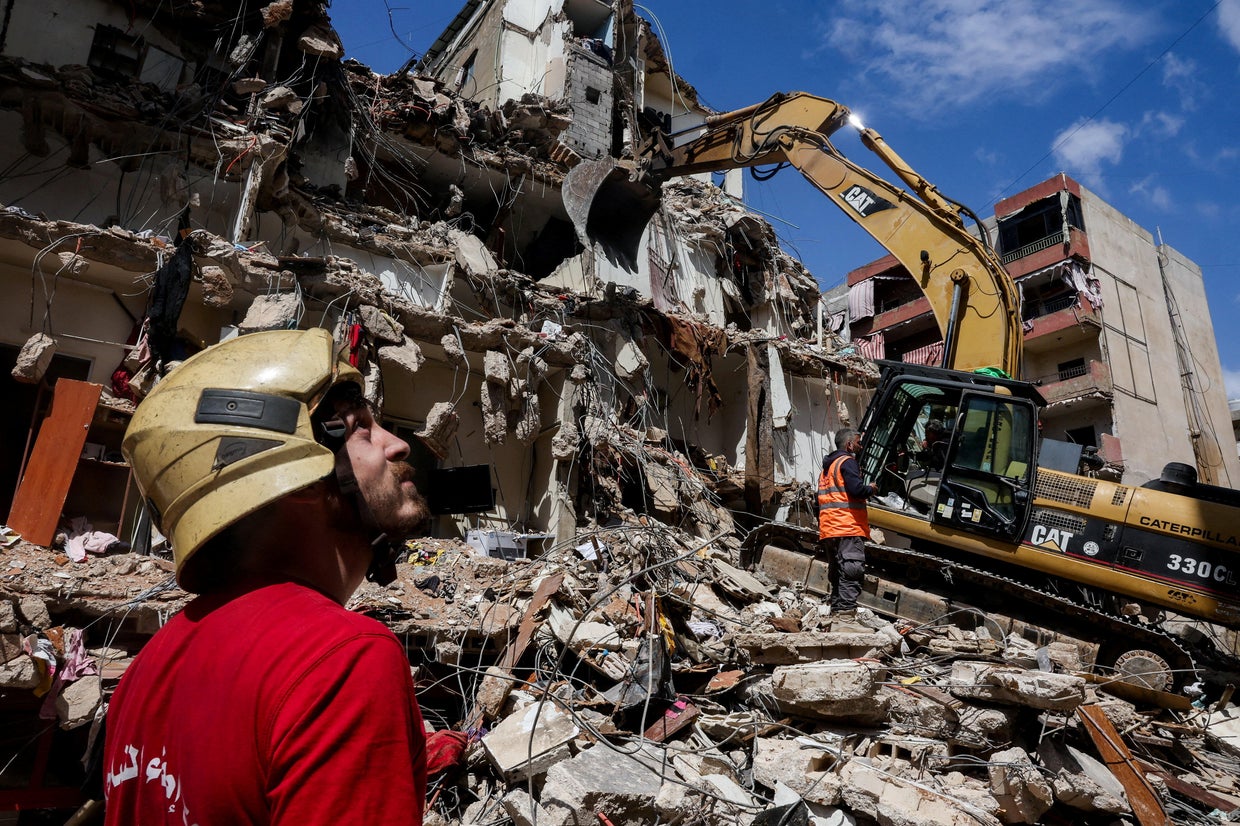
A similar type of structural vulnerability appears in the Chelsea fire story reported by ABC7 New York. The building on Seventh Avenue between 22nd and 23rd Streets is officially vacant but sits within a dense urban fabric. When a fire breaks out around 6 a.m., flames simultaneously engulf the first, fifth, and sixth floors, sending thick black smoke through the neighborhood. The building is so damaged that, as the FDNY deputy chief explained at a morning briefing, it’s dangerous for firefighters to enter — searches for people must be conducted from tower ladder buckets and through windows. Two firefighters were injured, a neighboring building was evacuated, and about 200 fire and EMS personnel responded.
This illustrates how “vacancy” in a city is never neutral. In theory, a vacant building is simply an unused asset; in practice, it’s a potential hazard: a place for unauthorized access, a source of ignition, a collapse risk. This brings into sharp focus the idea of urban risk management: the set of measures authorities take to reduce the likelihood of incidents and their consequences — from fire inspections to rules on abandoned properties. In Chelsea, judging by footage and the ABC7 New York account, the fire department responded quickly and professionally, confirming there were no occupants and containing the threat to neighbors, but the situation reveals a fundamental problem: in dense development, any “hole” in the control system becomes an immediate threat to many.
The common motif across all three stories is a mismatch between a system’s stated function and its actual state. US–Iran negotiations are meant to de-escalate conflict and stabilize the region, but, as Vance told CBS News, no agreement was reached, leaving open the possibility of further escalation. The Hungarian interchange shown by CNN was intended to link goods flows to seaports, yet for now it links only the road circle to an empty field. The Chelsea building should have been living space, but it became an unused object that turned into the site of a major fire, as reported by ABC7 New York.
Viewed together, several important trends emerge. First, increasing system complexity — whether diplomatic configurations, multi-level infrastructure financing, or a metropolis with an aging stock — raises the burden on governance institutions. Simply put: too many moving parts, and when coordination lags, consequences become nonlinear. A failed negotiation can reverberate as chronic instability for years. One mismatch in the “interchange–terminal–railway” chain turns an investment into a symbol of bureaucratic absurdity. One abandoned building in a dense neighborhood risks massive evacuations, injuries, and multimillion-dollar losses.
Second, transparency and accountability matter. When Vance publicly states “there is no deal” after a “marathon” session, on one hand it’s an honest admission of failure, and on the other it signals to the public and allies the state of the crisis. The CNN report on the Hungarian interchange exposes mechanisms usually hidden behind dry budget lines and reports: the real price of decisions becomes visible. In Chelsea, the comment by the FDNY deputy chief recorded by ABC7 New York demonstrates how, in an emergency, leadership must explain risks — why firefighters cannot safely enter a building, and how searches for possible victims are conducted.
Third, these stories show that risk management cannot be purely reactive. In diplomacy there is a clear need not only to extinguish crises after they occur but to build long-term security frameworks so that “marathon” negotiations aren’t required each time, as described in the CBS News piece. In infrastructure, mechanisms must ensure that financing and construction depend tightly on the synchronization of all project elements so new “roundabouts to nowhere” don’t appear on European maps. In the urban context, this means active policies on dealing with abandoned buildings: from strict owner obligations to renovation programs.
If these stories are abstracted into higher-level concepts, several key insights stand out. First: complex systems fail at the seams — the problem often arises not in a single element (the interchange can be built properly, the Chelsea building may once have been a perfectly normal residential property, diplomatic channels formally exist), but at the intersections of subsystems — diplomacy and domestic politics, European budgets and national planning, urban real estate and fire safety. Second: trust is the main asset of resilience. When citizens see millions wasted or encounter fires in abandoned buildings, their faith in institutions’ ability to protect and develop society declines. Likewise, failed negotiations between states erode trust not only between the parties but also among third countries and investors.
Finally, third: managing risks in such systems requires not only technical competence but the political will to acknowledge mistakes and reshape approaches. The failure of US–Iran agreements recorded by CBS News is a reason to think not only about the next round of talks but about which structural contradictions repeatedly render them fruitless. The vacant European interchange from the CNN piece is an argument for reforming planning and evaluation mechanisms for infrastructure projects. The Chelsea fire in the ABC7 New York story signals that urban safety must be treated not only as a matter of response but as one of long-term urban management.
These stories, scattered around the world, collectively say one thing: the world has become too interconnected to afford the luxury of “local” failures. The failure of talks in one region, a thoughtless infrastructure project in another, and an uncontrolled fire in a third are links in the same chain that underpins the sense of security and trust in the future.