Three news items that at first glance seem unrelated unexpectedly reveal a common theme: how people confront risk, violence and vulnerability — and how the security system responds, whether through the courts, road services or police. From the high‑profile story about NFL star Tyreek Hill to a fatal crash in Florida and a shootout with a fugitive in Nebraska — each story is about the fragility of the human body, trust (and distrust) in institutions meant to protect us, and how society turns tragedies and scandals into media narratives.
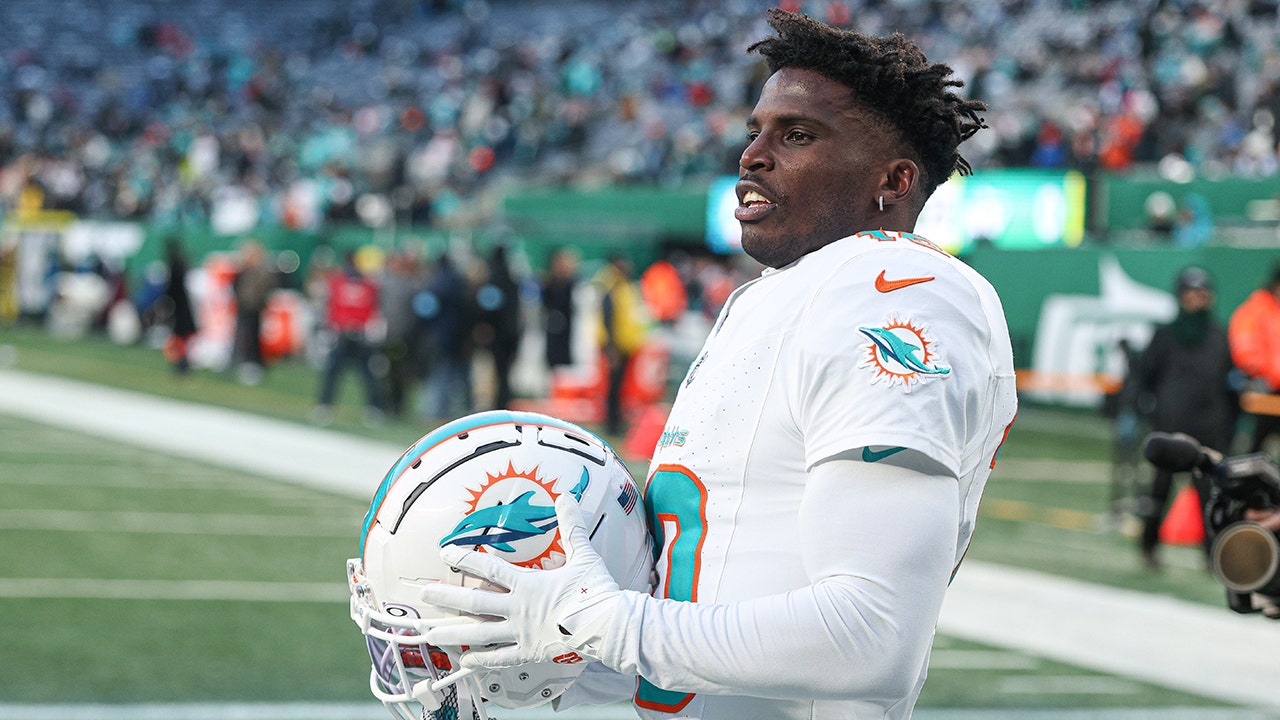
In a Fox News piece about NFL receiver Tyreek Hill and OnlyFans model Sophie Hall “Tyreek Hill's court battle with OnlyFans model who accused him of breaking her leg ends with shocking twist” the formal subject is a civil suit, but essentially it’s about the limits of permissible violence and vulnerability in intimate situations. Hall alleged that during “football lessons” in Hill’s yard he pushed her because he felt humiliated after a failed exercise in “offensive line drills” — training contacts for linemen in American football, where one player forcefully drives or blocks another. Hall said the shove resulted in a serious broken leg that required reconstructive surgery and lengthy rehabilitation. Hill insisted she tripped over his dog, not that he attacked her, and that it was an accident.
Notably, in this story violence and sexual behavior are closely intertwined. In her testimony Hall said that after the alleged injury Hill carried her on his back (“piggyback ride”) into the bedroom, where they had sex, and that she stayed with him for several days and even softened her description in another interview. This is a common dilemma in domestic or sexualized violence cases: the victim may simultaneously seek “comfort” from the same person she accuses and continue the relationship. Hall explained this plainly: “I wanted comfort, I felt very vulnerable in that moment. I was injured.” Legally this does not negate possible violence, but it makes the boundaries much murkier for the court and public opinion.
Ultimately, Fox News, citing NBC6, reports that Hall dropped her assault and battery claims (that is, accusations of intentional use of force — in American law battery implies unlawful physical contact or striking), and Hill agreed to settle on negligence — failure to exercise reasonable care to ensure another’s safety. No admission of assault, no public fact‑finding: the case ended in one day, and the player leaving the courtroom tossed off an almost caricatural line: “I'm going to Disney World.” The Fox News author turns the whole thing into an offseason NFL reality‑show, with deliberately ironic quips like “NFL offseason is undefeated.” A serious conversation about the trauma of the situation, about what “negligence” means when someone conducts forceful drills with an unprepared person, practically disappears beneath a layer of mocking entertainment.
This illustrates a trend: when a celebrity is involved, the risk and harm to another person’s body often get reduced to media amusement. A civil compromise (dropping intentional assault claims in exchange for a negligence settlement) becomes an erasure of responsibility, and society gets another “juicy” celebrity‑and‑OnlyFans tale instead of a discussion about safety, gender dynamics and power.
The second story — a Gulf Coast News & Weather report “Port Charlotte man dies in crash on Veterans Boulevard” — is presented very differently by the media, but again revolves around risk and vulnerability. There are no famous figures here, only a terse account of a 56‑year‑old Port Charlotte resident who died on Veterans Boulevard in Florida after his Toyota Sienna minivan suddenly veered left for unknown reasons, crossed the median, struck a Honda Passport and a guardrail, then was thrown back across lanes with a second impact against the barrier. The driver of the other vehicle, a 39‑year‑old man from Punta Gorda, and his one‑year‑old child in a car seat were uninjured. The minivan driver died at the scene; the cause of the crash is under investigation.
Here risk and safety manifest on another plane. The fact that the child was in a rear‑facing child restraint is emphasized as important: it’s a key element of modern road‑safety policy. Technical and infrastructure measures — the median, metal barriers, child seats — proved effective: the collision, fatal for the driver, did not injure the other occupants. Yet the phrase “abruptly veered left for unknown reasons” leaves a glaring void: we don’t know whether it was a medical event, loss of control, distraction. A person simply disappears from life in seconds, and the system can only record and “investigate” afterward. In such a dry police report there’s no drama and likely no prolonged coverage; but this is the most common, routine form of violence against the human body — unintentional, mechanistic, sometimes random.
If the Hill case shows how society entertains itself with risk and violence in celebrities’ private lives, the crash report demonstrates the opposite: mass, routine tragedies serve as a backdrop reminding us that safety is not only about courts and morality, but about technical standards, driver behavior and health. Paradoxically, the child seat and the intact barrier become the “heroes” of the story, even though the Gulf Coast News text mostly stays in a procedural mode, supplementing it only with ads for its app and the Very Local streaming service.
The third news item, a KETV story about another Omaha shooting “Douglas County deputy injured, suspect shot, killed after 'gun battle' in south Omaha, officials say”, returns us to overt violence — not domestic, but criminal and institutional. Here contact with risk is built into the profession: Douglas County deputies responded to an address in south Omaha to apprehend a parole absconder — someone who fled parole supervision and thus violated the conditions of release. The subject had a prior felony conviction for possession of a firearm, and Special Operations considered him armed and dangerous.
A SWAT team is a unit trained for high‑risk operations: raids, arrests of armed suspects, hostage situations. Sheriff Aaron Hansen said SWAT was activated around 2:30 p.m. to safely execute a search warrant, but before they arrived a scene erupted that resembled a street fight: the suspect exited the house, the search and special operations group attempted to detain him, and a shootout ensued, which the sheriff called a “gun battle.” The fugitive was killed, one deputy was shot in the leg, had a tourniquet applied on site and was rushed to UNMC in stable condition. Five officers involved in the shooting were placed on administrative leave pending investigation, per protocol.
Hansen’s context is significant: he said this was “maybe the ninth time” recently that an officer in Douglas County was shot at or injured in the line of duty. He calls it a “concerning trend.” Here security is not only about protecting citizens from criminals but also about safeguarding law‑enforcement personnel from increasing armed aggression. Widespread access to firearms, a combination of criminal history and readiness for armed resistance create a situation where any arrest warrant can turn into a miniature war in a residential neighborhood, as happened near 19th and Washington in Omaha.
If the Hill case shows how legal categories like “assault and battery” and “negligence” become bargaining chips and media fodder, in Omaha it’s simpler: a “gun battle,” one suspect dead, one officer wounded. But even here the picture is not entirely unambiguous. The report stresses that at least two other people were in the house; they were detained and are being questioned. The phrase “multiple individuals on both ends of this arrest were engaged in a gun battle” indicates the shootout was reciprocal, not a one‑sided “neutralization.” Meanwhile the police narrative, voiced by the sheriff at a briefing and embedded in the KETV story, shapes the viewer’s perception of a heroic clash between law and crime.
All three stories repeat a motif: a person suddenly faces a materialized risk, and then institutional machinery activates — courts, traffic police, sheriff’s departments, the media. But how these structures handle risk and violence differs markedly.
In Tyreek Hill’s case the court becomes a venue for quick settlement and reputation management. Hall, as a civil plaintiff, raises grave allegations — intentional assault, a broken leg, reconstructive surgery, long physiotherapy. Yet her testimony and behavior after the injury reveal ambivalence common among victims dependent on a powerful figure: she stays with Hill, receives Instagram messages like “I've been known to be a good stepdad,” and continues to play a role in his life. Under these conditions the legal category of negligence effectively describes not only classic carelessness but a power imbalance: a professional athlete used to physical contact and forceful drills should, by common sense, foresee risk of injury when involving an unprepared woman in offensive line drills. But Fox News’ public framing skews toward comedy and salacious details, not accountability and trauma.
In the Florida crash, Gulf Coast News maintains a nearly invisible media stance, dissolving into a police report. No one disputes whether the driver was negligent, and there are no lawsuits — for now the state’s only tool is an investigation into causes. This shows how differently the value of life is appraised: when an NFL star is involved, every detail is debated and moral culpability parsed; when a 56‑year‑old Port Charlotte resident dies, society limits itself to noting the child was properly restrained and that an investigation continues.
The Omaha shootout adds another layer — political and structural. Sheriff Hansen emphasizes that the shooting of officers has increased, calling it a concerning trend. “Trend” is double‑edged: statistically noting an increase, while also hinting at broader shifts — greater armament among the public, instability among people with criminal histories, and a crisis of trust in law enforcement. Politically, such incidents are often used to justify expanding police powers, enlarging SWAT units and tightening parole and supervision rules. Public debate about why someone previously convicted of gun possession ended up in another armed confrontation is usually much quieter than the emotional narratives about wounded deputies and the sounds of gunfire.
All three stories share several key patterns and consequences.
First, media dramatize risk differently. The OnlyFans‑model and NFL scandal is framed as entertaining copy, with the writer openly relishing absurd details, from the physical attributes of those involved to the “I'm going to Disney World” quip. The fatal car crash is reported neutrally and clinically. The Omaha shooting is presented with a dramatic visual kit (live helicopter shots, gunfire sounds, “massive police response”). This shapes which risks society takes seriously and which it leaves in the margins.
Second, legal and institutional responses to risk do not always align with moral expectations. A negligence settlement in Hill’s case effectively means the court will not examine whether there was intentional violence. A routine “investigation” of the Florida crash offers little solace to the deceased’s family but highlights that road policy focuses on preventing future incidents rather than retroactive blame. In Omaha, placing five officers on administrative leave and promising to release names after notifying next of kin underscores proceduralism: even after a “gun battle,” the system seeks a formal, step‑by‑step response.
Third, vulnerability and the body are central in all accounts. Hall describes herself as “very vulnerable” after the injury and seeks comfort from the very person she accuses. The minivan driver is physically unprotected from a sudden maneuver and impact, unlike the child, secured in a car seat. The deputy in Omaha took a bullet to the leg, and only a tourniquet and rapid transport to UNMC prevented a worse outcome. The body repeatedly serves as the final line that bears the consequences of negligence, accident or overt violence.
Finally, all three pieces raise the question of what counts as “acceptable” risk. Is it normal for a professional athlete to conduct forceful drills with a civilian in his yard? Are fatal crashes on Veterans Boulevard an inevitable cost of mobility? Should police always prepare for a “gun battle” when serving warrants on people with prior firearm convictions? None of the three outlets — Fox News, Gulf Coast News & Weather, or KETV — answer these questions, but the aggregate of the stories nudges toward an understanding: contemporary American reality is a space where risk is ever‑present and unevenly distributed, and public attention and institutional reactions determine who and what we are truly willing to protect.