Across all three pieces, despite their diversity, a single theme resonates: where exactly do the boundaries of human and state‑political control lie. The disappearance of 84‑year‑old Nancy Guthrie in Arizona exposes the dramatic fragility of personal security and the dependence on law‑enforcement institutions. The U.S. Supreme Court ruling on IEEPA clips the wings of presidential power in trade policy, returning key authority to Congress. Vladimir Zelensky’s remarks on peace talks with Russia demonstrate how limited even a warring state’s ability to dictate the terms of peace can be, and how external actors — primarily the United States — intervene. Together these stories form a coherent picture: neither an individual, nor a national leader, nor even the president of a superpower fully controls the situation — their actions are constantly framed by laws, institutions, external forces and, at times, outright criminals.
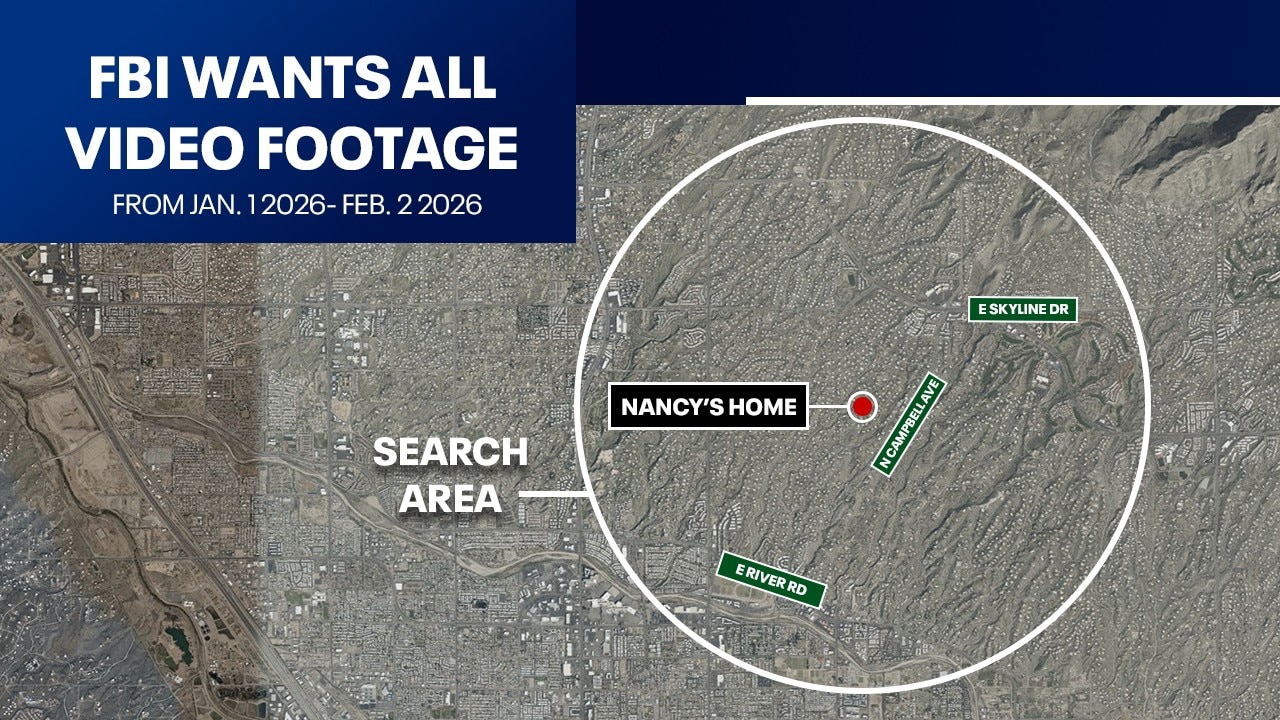
The story of Nancy Guthrie, the mother of NBC host Savannah Guthrie, unfolding now on day 21 since her disappearance, is a concentrated illustration of personal vulnerability and the limits of law enforcement. Fox 10 Phoenix’s coverage of the case describes the scale of the search: “several hundred” law‑enforcement personnel, FBI involvement, thousands of incoming calls and more than 20,000 tips and reports from the public. Investigators are searching the surroundings of the Catalina Foothills home near Tucson, analyzing evidence including gloves found in the county; one glove, discovered roughly two miles from the house, produced no matches in the CODIS DNA database, and authorities are now considering so‑called “investigative genealogy” — the method of searching DNA via databases of distant relatives, as directly noted in the Fox 10 piece (https://www.fox10phoenix.com/news/nancy-guthrie-disappearance-day-21-latest-updates).
This technology itself — genealogical DNA searching — highlights how much the state and society rely on complex infrastructure: from national databases to private genetic services. Yet even with such tools, authorities emphasize that they are not prepared or authorized to disclose details: all “forensic and warrant scenes” are directed to examination, but “specific details” will not be released while the investigation continues. This is a typical example of balancing public pressure and the demand for transparency against the need to preserve investigative secrecy so as not to harm the case.
An important element of lost control in this story is the sense of chaos in the information field. 9‑1‑1 phone lines are clogged by people wanting to help; dispatchers are publicly asked to “think before you call” so lines remain open for real emergencies. The FBI urges anyone with information to come forward but stresses that there is a formal mechanism to vet and “filter out” false or irrelevant tips. The same goes for volunteers: private search groups want to comb the fields, but the Pima County sheriff publicly asks to “give investigators space” and emphasizes such searches are better left to professionals. Property rights impose additional constraints: people cannot simply scour private land — everything depends on owners’ consent. As a result, even collective goodwill runs up against laws, procedures and jurisdictions.
Layered on top of this legal and procedural framework is a criminal element. The report mentions a “highly organized” extortion letter sent to TMZ demanding ransom in cryptocurrency — an amount “comparable” to the previously cited $6 million — with the letter describing “graphic” consequences for refusing to pay. Cryptocurrency here is not merely a technical term but a symbol of a new reality in which criminals use the anonymity and decentralization of financial technologies to complicate law‑enforcement efforts. Media are embedded in this ecosystem as well: TMZ received the letter and passed it to the FBI, effectively becoming an intermediary between criminals and the state.
Despite the enormous scale of resources deployed, the core of this story is intensely personal. Savannah Guthrie’s public Instagram appeal, quoted by Fox 10 Phoenix (https://www.fox10phoenix.com/news/nancy-guthrie-disappearance-day-21-latest-updates), shows how, when legal and coercive tools fail to produce immediate results, moral appeal comes to the fore: “It is never too late. You are not lost and you are not alone. It is never too late to do the right thing.” Sheriff Chris Nanos, in an interview with the same channel, speaks literally of faith and hope, debating with reporters about “evidence of life” versus “evidence of death,” and addressing the kidnapper: “Just let her go… It will be better for you in the long run.” Here the law‑enforcer is forced beyond strictly legal language and appeals to the perpetrator’s conscience, admitting: at the point where law cannot ensure an immediate outcome, all that remains is an appeal to any human side the abductor might have — if such a side exists at all.
The IEEPA decision by the U.S. Supreme Court, reported by Connect CRE (https://www.connectcre.com/stories/breaking-newssupreme-court-rules-president-cannot-use-ieepa-to-impose-tariffs/), unfolds the same theme — the limits of control — but at the level of constitutional architecture. In a 6–3 decision the Court found that President Donald Trump could not use the International Emergency Economic Powers Act of 1977 (IEEPA) to impose sweeping import tariffs. IEEPA was intended as a tool to respond to foreign emergencies — terrorism, hostile foreign state activity, threats to national security — with the power to “regulate imports and exports.” The Trump administration sought to read “regulate” broadly, effectively claiming authority to set economy‑wide customs duties in response, among other things, to trade deficits and transnational drug trafficking.
Chief Justice John Roberts, Connect CRE reports, noted in the majority opinion that Article I of the Constitution vests Congress with the exclusive power to “lay taxes, duties, imposts and excises.” This is crucial: even if Congress passes a law granting the president emergency economic authority, that law cannot be interpreted as a parliamentary “waiver” of its fundamental constitutional functions. The Court emphasized that the term “regulate import/export” in IEEPA cannot reasonably be read as transferring to the president an “emergency power to impose tariffs” that would bypass the Constitution’s scheme. Accordingly, the lower courts that blocked the tariffs were correct, and the tariff mechanism based on declaring an economic “emergency” exceeded the statute.
Dissenting conservative justices — Thomas, Kavanaugh and Alito — illustrate the classic dilemma in American law: how far can the executive branch go in interpreting broad powers granted by Congress, and where does judicial “circuit breaker” begin to protect separation of powers. The fact that both liberal justices (Sotomayor, Kagan, Jackson) and conservative justices (Gorsuch, Barrett) joined the majority shows a rare cross‑ideological consensus in polarized times. The Court is effectively saying: even in the face of genuine international threats, an emergency statute cannot be turned into a universal instrument of trade policy. The president, even of a very powerful nation, does not control the economy unilaterally; his control is bounded by laws and by the Constitution.
This logic echoes surprisingly well with developments in a completely different sphere — peace negotiations between Ukraine and Russia, as reported by Sky News (https://news.sky.com/story/ukraine-war-latest-putin-moscow-kyiv-trump-zelenskyy-live-12541713). Vladimir Zelensky’s comments again highlight the limited nature of power even over matters of war and peace. The Ukrainian president refers to talks between Kyiv, Moscow and Washington, stressing that the so‑called “military track” — discussion of ceasefires, monitoring mechanisms and practical military aspects — is “constructive.” All three sides, Zelensky says, acknowledged that if a truce is concluded, the United States will be “the first to monitor it” and “take a leading role in this area.” For both Ukraine and Russia this recognition is ambivalent: on one hand, international guarantees and U.S. involvement increase the odds that agreements will not be mere façades; on the other hand, it is direct evidence that even sovereign states cannot singlehandedly control their own peace processes and need an external “arbiter” and “guardian.”
But the situation changes once territories enter the discussion. In a WhatsApp chat with journalists, Zelensky says that talks over the status of Donbas, eastern regions and the broader “territorial agenda” were “less constructive.” Questions about which territories will be considered Ukrainian and which will not remain “extremely sensitive” for the political track of negotiations, and no “constructive solution” has yet been found. This demonstrates another limit of control: even if military and diplomatic actors can draft mechanisms for a ceasefire, politicians cannot freely dispose of what is foundational to their societies’ identity and legitimacy. Any territorial concession for Ukraine risks internal crisis and loss of public support; for Russia, it is a matter of symbolic prestige and domestic propaganda. Consequently, the peace process contains a built‑in sticking point that is not resolved by military, diplomatic or even external means of influence.
Among these negotiation details another aspect of control emerges — humanitarian. Zelensky expresses hope that in the coming days a further prisoner exchange can be agreed. Prisoner swaps are one of the rare elements of conflict where belligerents, despite mutual distrust and enmity, agree on concrete steps, recognizing a minimal shared human basis. Yet here too much depends on external organization, mediation by third countries or international organizations, and the parties’ ability to restrain their radical factions.
Viewed together, the three stories reveal several key observations.
First, the modern world increasingly rules out the illusion of absolute control at any level. A private crime against a single elderly woman in Tucson instantly becomes a federal and potentially international matter: the FBI is involved, national and perhaps international genetic databases are mobilized, information flows are processed by media and social networks, and the former U.S. president (Donald Trump, whom Fox 10 quotes as calling the situation “very sad”) publicly comments on the investigation. And yet neither the family nor law enforcement has been able to bring Nancy home. At another level, the U.S. president cannot unilaterally determine tariff policy, even under the guise of a “national economic emergency,” because the Constitution and the Supreme Court impose strict limits. At a third level, a state at war defending itself cannot freely make peace because, alongside its own interests, there is pressure from allies, the adversary’s interests, and constraints from domestic politics and public opinion.
Second, institutions play a critical role in all three stories: law enforcement and forensics in the Nancy Guthrie case, the Supreme Court and Congress in the IEEPA matter, and international diplomacy and the U.S. role as “monitor” and guarantor in the Ukraine talks. These institutions both protect and constrain. They provide a framework of predictability but deprive actors — whether the Guthrie family, a U.S. president or Ukrainian leadership — of the ability to act with total freedom. Rules of the game, procedural requirements, the need for transparency (or, conversely, secrecy) become as important as moral or political will.
Third, in every case information is crucial. Nancy Guthrie’s story lives in continuous updates: timelines, briefings, press conferences, mass calls, social media appeals. U.S. courts released a 170‑page rationale detailing legal arguments, and outlets like Connect CRE foreground the key formula: “Only Congress has the power to impose duties.” The Ukrainian president communicates with journalists via a WhatsApp chat, instantly shaping the agenda and interpretation of the negotiation process, while Sky News relays his words, highlighting that his statement about the chance for peace “shocked everyone.” Information flows are both a tool and a battlefield: they enable influence over public opinion, mobilization of support, pressure on opponents and even on criminals, but they also generate noise, misinformation and inflated expectations.
Finally, the most human layer is the attempt to regain control through moral and value‑based appeals. Savannah Guthrie’s plea to her mother’s abductors, the sheriff’s plea to “just let her go,” Zelensky’s hope for prisoner exchanges and the effort to at least lock in a ceasefire and monitoring mechanism despite a territorial impasse — these are all elements of the same strategy: where legal, coercive and political means reach their limits, people appeal to basic human decency or to rational self‑interest (“it will be better for you in the long run”). Even the Supreme Court, acting through dry legal prose, in effect defends the same idea — predictability, fair procedures and limits on arbitrary power, whether in the hands of a criminal, a politician or a head of state.
The main conclusion from juxtaposing these stories is that modern crises — personal, legal and geopolitical — can no longer be viewed in isolation. Threats to personal safety, abuses of emergency powers, wars and peace processes are manifestations of the same fundamental dynamic: an ongoing bargain between force and law, between freedom and restriction, between the desire for total control and the necessity of living within a system where such control is fundamentally unattainable. Understanding these limits and learning to operate within them — from a local sheriff in Arizona to Supreme Court justices and peace negotiators — becomes a key competency of the 21st century.