In three seemingly very different stories – the killing of a veteran in California, intensive Israeli strikes on Nabatieh in southern Lebanon, and an intraparty Democratic fight in Texas – a common thread emerges: political violence and extreme polarization as means of pressure and power struggle. These narratives unfold at different scales – from the entrance of a private home to an entire region and from a Houston neighborhood to the international stage. But in each case you can see how political or identity confrontation spills into physical threat, undermining the very idea of peaceful political competition and coexistence.
An NBC News piece on the death of Kerry Sheron in Escondido, California, recounts how a 69‑year‑old U.S. Army veteran, known in the town for his patriotic and pro‑Trump home decorations, died after an assault at his residence (NBC News on Sheron’s death). Police describe the attack as “unprovoked,” and prosecutor Ross Garcia says the suspect, Thomas Caleb Butler, first struck Sheron in the jaw and then continued to hit his head while he was already on the ground. Formally, a motive has not been established: Tanya Sierra, a spokesperson for the district attorney’s office, did not answer questions about a possible reason for the confrontation. But the context matters: Sheron’s house was literally festooned with American flags and pro‑Donald Trump slogans, and his wife told NBC San Diego that the couple had repeatedly faced threats and harassment over these decorations before, although there had been no physical violence until now.
This is not just a domestic quarrel. It is an example of how symbolic expression of a political stance – flags, slogans, décor – becomes a trigger for physical aggression. In circumstances where support for Trump in a large part of society is perceived not as a legitimate opinion but as an antagonistic stance, the mere visibility of that support can become a pretext for de‑facto “punishment.” Even if investigators do not classify this as a hate crime, the social backdrop is obvious: political differences are transformed into demonization of the “other” side, and it is only a short step to justifying violence in the eyes of some radicalized individuals.
A story of a very different scale, but structurally related, is unfolding in Nabatieh – one of the key Shiite cities in southern Lebanon. An Al Jazeera report details how the Israeli military stepped up strikes on the city and district, accompanied by orders for the forced evacuation of the population (detailed Al Jazeera report). Israel, officially, is targeting Hezbollah positions; however, Lebanese authorities and independent observers report that since the escalation of strikes on March 2 at least 3,213 people have been killed, including medical personnel and civilians. Journalist Zayna Hodr speaks of a “near‑continuous artillery barrage” around Nabatieh, local media record strikes on a cemetery within the city, and the Lebanese civil defense reports rescuing civilians trapped in destroyed buildings.
An important term mentioned in the piece that needs clarification is the “yellow line.” According to Prime Minister Benjamin Netanyahu, Israel has created a 10‑kilometer buffer zone in southern Lebanon, the northern boundary of which is referred to as this “yellow line.” In practice it marks the line north of which Israel is expanding military operations, declaring it will go “beyond the yellow line” and promising to “intensify strikes on Hezbollah.” Analyst Jad Dilati tells Al Jazeera that the aim of focusing on Nabatieh is “to turn it into one of the towns included in the area below the yellow line,” effectively making it territory of total military pressure and destruction.
Nabatieh is not only “the administrative, economic and symbolic heart of the south,” as Dilati describes it, but also a historical symbol of resistance. The piece recalls the “Ashura uprising” of 1983, when an Israeli column attempted to enter a religious procession and tens of thousands of locals physically prevented it. That event is considered in the region to have been a trigger for radicalization and the strengthening of armed resistance in the following 18 years, up to Israel’s withdrawal in 2000. Here we see how a history of violence and occupation itself becomes a source of a new spiral of mobilization and violence.
Today’s strikes, political scientist Mohamad Bazzi says, are aimed not only at military infrastructure but also at “the economic engines of the Shiite community”; Nabatieh as the most important economic center of the south is being turned into leverage against Hezbollah’s social base. Bazzi tells Al Jazeera he interprets this as a strategy to “paralyze the Shiite community in Lebanon by destroying its economic capacity” – the idea being to make “the return of people” and “ordinary life” impossible, forcing the political force to make concessions through collective punishment of the population.
This is not merely a military operation but a form of structural violence based on identity. When Dilati says “the city is now effectively empty and the next objective is to destroy the city,” that sentence crystallizes the essence of the policy: displacing more than 1.2 million people across the country (according to the article) and turning entire areas into uninhabitable zones. In response, Hezbollah is engaging in close combat with Israeli forces around Zoutar al‑Sharqiya, and its leader Naim Qassem publicly condemns planned direct negotiations between the Lebanese government and Israel on June 2–3. Political settlement alongside military confrontation again looks doubtful: radical actors see any talks as a threat to their position, and the local population perceives evacuations and destruction as another turn in a history of injustice, reinforcing the image of the enemy in collective memory.
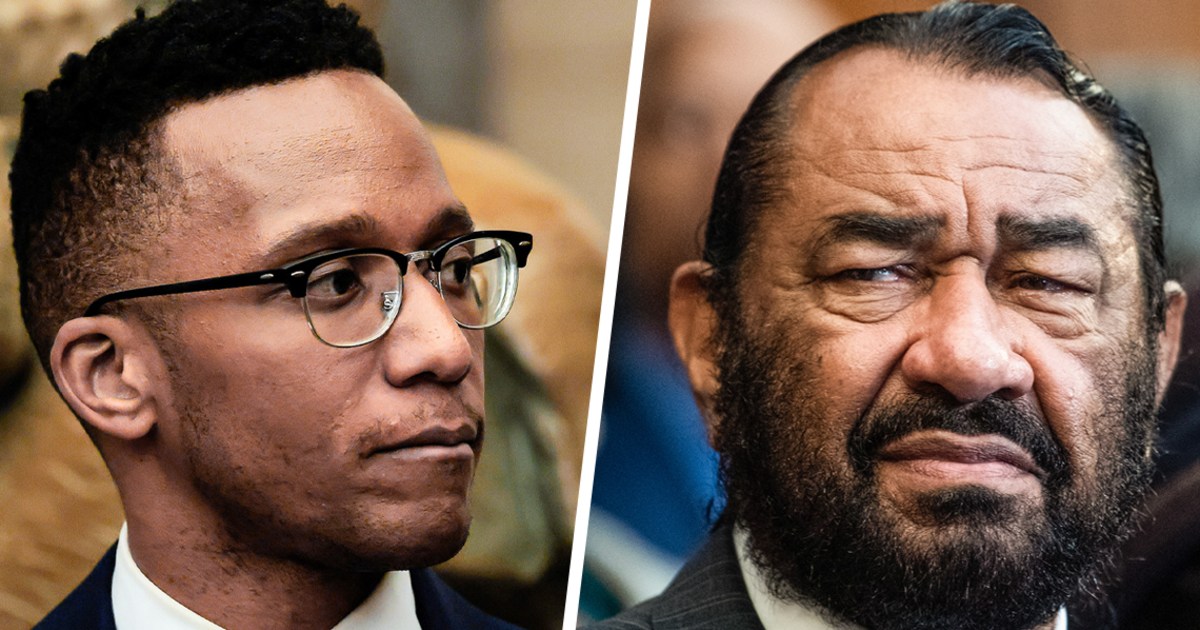
Against this backdrop, the domestic American story from Houston looks far less dramatic but demonstrates another aspect of the same global dynamic – polarization and the rising stakes of political confrontation. An NBC News report on the Democratic primary in Texas’s 18th district describes how young newcomer Congressman Christian Menefee beat veteran Representative Al Green in a rare “incumbent vs. incumbent” scenario for the U.S. (NBC News on the Texas race). This showdown became possible because of Republican redistricting – redrawing electoral boundaries. Republicans altered the lines so that Green’s “ninth” district became significantly more Republican, and seeking to preserve his reelection chances he ran in the traditionally Democratic 18th district, a historically Black Houston district represented by Black Americans for more than half a century – starting with the legendary Barbara Jordan in 1973.
Redistricting as an institution needs explanation. Formally it is the periodic redistribution of district boundaries based on the census. In practice in the U.S. it is often used as a tool of gerrymandering – politically reshaping a district to favor a particular party (by concentrating or, conversely, diluting opponents’ votes). In this case Republicans, by making Green’s district more Republican, forced him to compete with Menefee in the 18th district, sparking an internal conflict in the Democratic camp. This is not physical violence, but an institutional technique by which one political force tries to push out another, changing the “rules of the field” so that the opponent is left in the most vulnerable position.
Interestingly, both candidates ran campaigns opposing Donald Trump. Green is known as one of the most vocal advocates of impeaching Trump; he repeatedly introduced related resolutions and was even removed from the House chamber during Trump’s addresses to the nation in 2025 and 2026. Menefee, formerly the county attorney for Harris County, pointed to suits his office brought against the Trump administration as proof of his “anti‑Trump” credentials. Again, Trump’s figure appears as an axis of political polarization: support for or resistance to him becomes a marker of identity by which voters and elites define “us” and “them.” The same line runs through the story of Kerry Sheron, where open support for Trump became a factor of social isolation and threat.
In the race Menefee received massive support from the super‑PAC Protect Progress, linked to crypto industry leaders: more than $5 million in outside spending on his behalf. Super‑PACs are another important feature of the modern American political landscape. These political committees are legally barred from coordinating directly with candidates but can spend unlimited sums to campaign for them or against their opponents, funded by mega‑donors, corporations and industry groups. After the Supreme Court’s Citizens United decision, such structures became the main channel for ultra‑wealthy groups to influence elections. Notably, Menefee publicly admits he supports reform and a ban on super‑PACs, yet he effectively benefited from their support. Green criticized the “flood of mega‑donor money,” showing another line of division: the question of how legitimate and democratic such means of fighting for power are.
Thus, on three levels – local, national and international – we observe the same structural problem: the interaction of violence and politics in conditions of deep polarization. In California political identity so sharply exacerbates social relations that a man known for a “pro‑Trump house” lives under constant threat and ultimately becomes the victim of a physical assault. In Lebanon identity (the Shiite community, support for Hezbollah) becomes the target of a military disciplinary practice: destruction of Nabatieh’s economic infrastructure, mass evacuations and the creation of a buffer “yellow line” effectively mean collective punishment and depopulation of territories. In the U.S., the political struggle for districts and resources – from redistricting to super‑PACs – raises the stakes so high that representation of communities (as in the historically Black 18th district) becomes an arena of internal clash and redistribution of influence.
Key takeaways and trends from these stories can be summarized through several interconnected consequences. First, the growing normalization of violence as an acceptable tool of politics. From “a single blow to the jaw,” followed by “subsequent blows to the head,” as prosecutor Garcia describes the events at Sheron’s home, to the “near‑continuous artillery barrage” on Nabatieh and targeted strikes on medical personnel and journalists (the Committee to Protect Journalists reports that Israel has already killed at least 15 reporters in Lebanon, underscoring the danger for those covering the conflict). Violence is gradually ceasing to be an extreme measure and is perceived as one of the options for “solving the problem” of an opponent.
Second, the increasingly clear fusion of political identity with personal and communal safety. For Sheron, his house with flags and pro‑Trump signs was an expression of conviction, but for some around him it became a symbol of the enemy camp. For residents of Nabatieh, Shiite identity and the city’s historical role as a center of resistance mean their homes and market (“the historic souk,” already destroyed during 2024 strikes) become legitimate targets for parties that see them as the enemy’s rear. In Texas, residents of the 18th district find their historical representation turned into an object of manipulation through Republican redistricting and intraparty Democratic conflict, while millions in outside spending begin to determine whose voices and interests will be heard.
Third, institutional mechanisms meant to regulate conflicts are under severe strain. In Lebanon the government is trying to prepare for direct talks with Israel; President Michel Aoun, in an Eid al‑Adha address, called for “love, solidarity and unity… amid ongoing Israeli attacks,” yet Hezbollah publicly condemns those talks and tens of thousands have fled southern Beirut areas as soon as Netanyahu’s statements sounded. In the U.S., judicial and legal mechanisms around redistricting and campaign finance, formally intended to ensure fair representation and transparency, are in practice used as weapons in the struggle for power, deepening distrust in the system. Even in the investigation of Sheron’s murder, the informational deficit about motive and the lack of classification of the incident as a hate crime (at least at the time of the NBC News publication) can be perceived by parts of society as the system’s inability to adequately respond to politically motivated violence.
Taken together, these stories show how fragile the democratic fabric is when political and identity conflicts lack reliable channels for peaceful resolution. Where citizens do not believe that institutions (courts, parliaments, negotiations) can protect their interests and security, radical forms of response – from solitary attacks to armed struggle – inevitably seem to some justified or even the only possible option. Understanding this logic is the first step toward rethinking the limits of what is acceptable in politics: from street debates at a flag‑adorned house to national campaigns and international military strategies.