The stories behind three different news items may at first seem unrelated: a local manhunt in rural Tennessee, an internal front-office shakeup at the Chicago Bulls, and a professional journalism award for coverage of a mass shooting in Minneapolis. But look closer and a single thread runs through them: how contemporary media and institutions respond to violence, crises, and threats, and what that reveals about the condition of society. Attention to shootings—from intrafamilial to mass, from the search for a single veteran to a tragedy at a Catholic school—becomes a kind of barometer not only of safety but of the quality of journalism, law enforcement, and public trust in institutions such as the police, schools, or sports franchises.
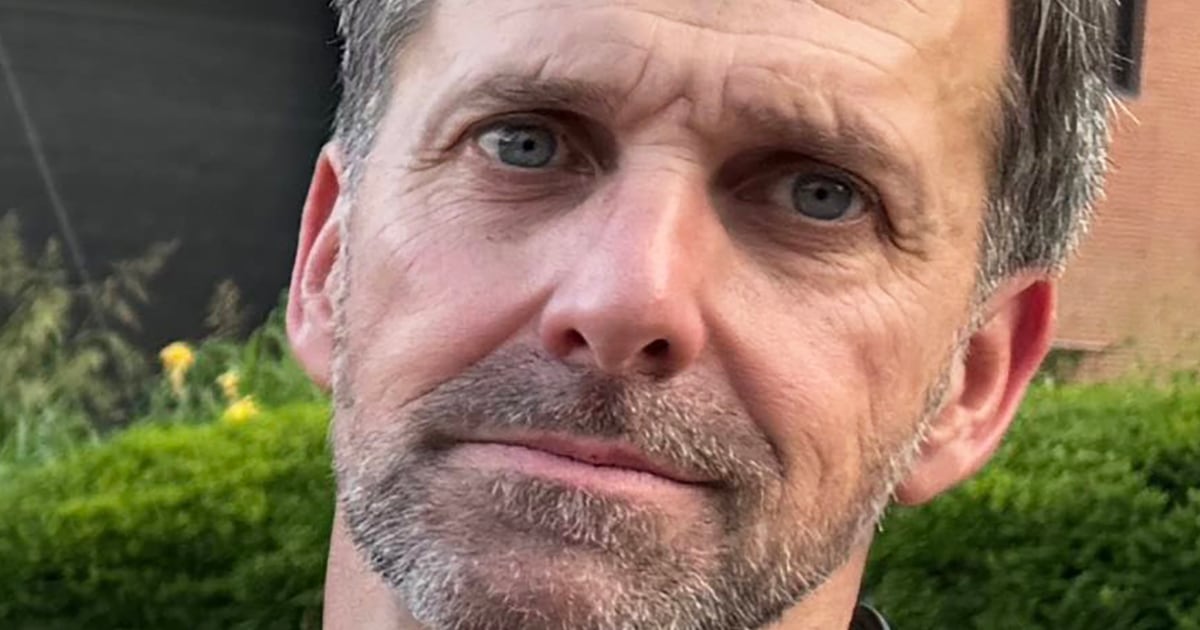
In NBC News’s piece on the search for Craig Berry in Tennessee, “Manhunt underway in Tennessee for veteran accused of shooting wife,” the focus is on a dramatic but, sadly, very typical U.S. episode: armed domestic violence committed by a person with a military background. Berry is a retired special-forces soldier with “extensive survival training,” “an excellent swimmer and diver,” and “in good physical shape,” as emphasized by the Stuart County sheriff’s office. Those details do more than add tension; they show how media and police construct the suspect’s image: he is dangerous not only because he is armed, but because he is professionally trained to evade capture and survive in tough environments.
The incident itself—a nighttime shooting of his wife in a Dover home, flight into the woods, “life-threatening” injuries that the woman nonetheless survived—fits a persistent pattern: domestic gun violence in which motives are often linked to personal conflicts or to “financial situations,” as Sheriff Frankie Gray cautiously suggests to NBC News. Notably, he consciously avoids specifying the couple’s “problems,” demonstrating the common restraint of officials in interpretation, while allowing money as a possible trigger.
Special attention is paid to search tactics. Authorities have launched “large-scale searches” together with the U.S. Marshals Service, combing a thickly wooded, hard-to-traverse area near River Trace Road, Highway 79, and Highway 232. About 30 personnel are involved in a “very detailed, methodical search,” Gray describes. The phrase “methodical search” matters here: it highlights a shift from ad hoc sweeps to a professionalized, almost military operation designed for the premise that they are dealing with someone who thinks militarily. It’s no accident that law enforcement is even considering the scenario that Berry might have swum away down the river; his ability to swim and dive becomes an operationally significant trait.
At the same time, law enforcement and media balance acknowledging the threat with efforts not to sow panic. The sheriff calls the search “urgent,” stresses that Berry is believed to be armed with an automatic weapon and at least one handgun with extra ammunition, but also states he does not expect Berry to break into others’ homes or attack other people. The most “rational” threat, he says, would be stealing a car to flee. Such discourse both informs residents of risks and seeks to keep social calm: the danger exists, but it is supposedly manageable and predictable.
The communication-and-control component is also interesting. According to Gray, Berry phoned a relative soon after the incident and then, police say, destroyed his phone. In a world where digital traces are the main means of tracking, destroying a phone is almost a symbolic gesture of trying to slip out of the system’s sight. The sheriff’s countermeasures reflect the new role of citizens in the media–police space: residents are asked to check trail cameras to see if the suspect appeared there and to “exclude nothing,” up to possible “outside assistance” for the fugitive. As a result, the “search” becomes not only a force operation but a collective surveillance effort, with private cameras and 911 calls drawing locals into the shared drama.
At the other end of the violence spectrum is the mass shooting at a Minneapolis Catholic school, coverage of which won the Minnesota Star Tribune a Pulitzer Prize in the breaking-news category, as WRAL reports. In American journalism, the term breaking news refers to events that have just occurred, when reporters and editors work under acute time pressure and information is constantly updated. In this case, the Pulitzer jury highlighted the “thoroughness and compassion” of the coverage of what the brief item calls a “scene of carnage”: a shooter opened fire at the first mass of the school year, killing two children and wounding more than a dozen, and was later found dead of an apparent self-inflicted gunshot.
The phrasing “thoroughness and compassion” is important because it sets a normative standard for quality journalism about tragedies. Thoroughness means not just getting information out quickly but fact-checking, developing context, and collecting multiple voices—from witnesses to experts—despite time pressure. Compassion implies ethical treatment of victims and their families: avoiding sensationalism, handling violent details carefully, and understanding the event’s trauma for the whole community. In such work, the journalist becomes not only a chronicler but also a kind of mediator of public grieving, helping to make sense of what happened rather than merely tallying the dead and injured.
Compared to NBC News’s coverage of Craig Berry, you can see how different genres and levels of media practice place emphasis differently. The local manhunt report focuses on the operational side: search geography, possible escape scenarios, the victim’s condition, statements from the sheriff. The Minneapolis mass shooting, already a “completed” event, becomes the subject of more complex, multi-faceted coverage—the kind that earned a Pulitzer. WRAL’s recounting of the jury’s verdict demonstrates that in today’s media landscape, not only the ability to break a story first is evaluated, but also the quality of the public conversation about violence.
In this context it is especially interesting to read a piece about the Chicago Bulls on BlogABull, which also uses breaking-news rhetoric, but in a very different, almost ironic vein. The author reports on the hiring of Bryson Graham as the new head of the Bulls’ front office—the structure that manages sporting and personnel decisions. Against the backdrop of tragic shooting stories, a sports front-office move seems minor, but the piece is framed as a reflection on trust, transparency, and managerial crises—the same themes that shape society’s reaction to real threats.
The BlogABull author stresses that Chicago has a “predictable” style of hiring: “aim low,” meaning not bringing in star, proven executives. He contrasts Graham’s hiring with the Dallas Mavericks’ move to hire the well-known and decorated Masai Ujiri, and notes that the nostalgic six-time-champions brand of the Bulls, despite its loud history, did not opt for an expensive, high-profile candidate. Graham is a 39-year-old Texan raised in the New Orleans Pelicans system, who worked for a long time under David Griffin and then briefly for the Atlanta Hawks. This is his “first time in the big chair,” as the author points out, and that makes him similar to past Bulls hires, including Artūras Karnišovas in 2020.
Beneath the ironic tone is a serious attitude toward decision-making processes and the quality of public communication. The author recalls lessons learned from Karnišovas’s arrival: don’t take the label “highly regarded” at face value and trust your own sense if someone “stumbles out of the gate,” as happened with cautious, delayed decisions about coach Jim Boylen. This is a fan’s perspective, anxious not about physical but symbolic violence: a prolonged managerial crisis is felt as violence against the club’s history and potential. The text contains cynicism toward the Bulls’ owners, whom the author calls “hopelessly greedy,” but at the same time he consciously tries “not to be cynical,” acknowledging that even a flawed process “doesn’t mean they can’t hit the mark with this hire.”
The common thread linking these seemingly disparate stories is the question of which institutions we consider reliable in a crisis, and what kind of journalism helps us understand that. In the Craig Berry story, the local sheriff becomes the central figure. His voice dominates the NBC News piece: he assesses threat level, offers possible scenarios, and sets the tone for the local community. What we don’t see (at least at this stage) is a broader media conversation about the causes that lead special-forces veterans to commit domestic violence, about conditions of reintegration into civilian life, or about access to firearms. The story remains at the level of operational reporting, and there is a risk in that: violence is perceived as a private story about “a dangerous man in the woods,” rather than as a symptom of systemic problems.
In the Minneapolis mass shooting case, the Pulitzer recognition for the Minnesota Star Tribune signals that journalists moved beyond mere chronology. Although WRAL’s item offers only broad assessments, the phrase “thorough and compassionate” hints that the paper likely did more than publish photos of tactical units and a list of facts. The important skill here is showing the humanity of victims and survivors and perhaps even the context that led the shooter to his actions—without justifying the violence, but explaining how it became possible. Paradoxically, that can make the media a space not only of information but of public therapy.
The sports blog analyzing the internal “drama” of the Chicago Bulls adds another important layer: a critical, sometimes sarcastic but engaged audience attitude toward managers. Here breaking news isn’t about gunfire but about a personnel decision; yet the framing of urgency and importance in fans’ eyes shows that trust in an institution—whether a basketball club or the local police—is largely built through how it explains its actions and how transparent its processes are. When the BlogABull writer says “we have no reason to think this will work,” but concedes the outcome could still be successful, he articulates the same ambivalence residents of Dover or Minneapolis feel: a mix of skepticism toward the system and hope that this time things will be done right.
The overarching trend you can detect is a gradual shift from passive consumption of news about violence to a more reflective, demanding approach that expects quality information and institutional accountability. In the NBC News piece you can see how police tactics enlist the public through surveillance cameras and 911 appeals, while the narrative itself remains in law enforcement’s hands. In the Pulitzer story, the Minnesota Star Tribune is lauded for journalism that not only records horror but helps make sense of it while respecting victims. And the BlogABull text shows that even in sports audiences are learning to evaluate process critically, resisting surface labels and demanding clear, honest communication from leadership—not just results.
The implications of this trend are ambiguous. On the one hand, the quality of coverage of violence and crises is improving: standards such as “thoroughness and compassion” emerge; society grows more sensitive to how victims are described, how suspects are portrayed, and how unverified data are handled. On the other hand, the news field’s saturation with shooting stories—from a domestic shooting in Tennessee to a mass killing in Minnesota—carries a risk of normalization: a constant background of armed violence can dull sensitivity and shift attention toward “sporting” dramas or internal organizational disputes that seem less painful.
The media’s overall task is to prevent violence from becoming just another news category and to maintain the link between individual tragedies and the structural problems that produced them. In that sense, the Minnesota Star Tribune example, recognized by the Pulitzer and relayed by WRAL, sets a standard for others: even in acute breaking situations, coverage can be both fast and responsible. The NBC News report on the search for Craig Berry and the critical review of the Chicago Bulls’ personnel choices on BlogABull show that society increasingly pays attention not only to “what happened” but to who tells the story—sheriff, team owner, or journalist—and what values underpin that telling.