Stories from three news items at first glance seem unrelated: a shooting at a hospital in Michigan City, the acquittal of a school administrator in Virginia after a six‑year‑old shot a teacher, and NOAA’s seasonal hurricane forecast. But they all effectively speak about the same thing: how society tries to manage risk — whether human violence or the force of nature — where predictability ends and randomness begins, and what the limits of institutional and individual responsibility are.
The shooting inside Franciscan Health in Michigan City, reported by WSBT, demonstrates a typical “breaking news” pattern: little information, much alarm, rapid assurances from authorities that “there is no active threat.” It is known that a police officer was injured inside the medical facility, the incident occurred around 7:15 a.m. local time, one person was detained, and LaPorte County Sheriff emphasizes this is an “isolated incident” and “there is no threat to the public.” Franciscan Health leadership issued a carefully worded statement: priority is patient and staff safety, there is no active threat, the emergency department is temporarily on ambulance bypass (meaning ambulances are diverted to other hospitals), but walk‑in patients are being accepted through the main entrance. Some offices of the Franciscan Physician Network are closed; other services are operating as usual.
This crisis‑management language — “no active threat,” “isolated incident,” “all services operating as normal” — has become the standard reaction to violent incidents in “safe” spaces: hospitals, schools, shopping centers. It reveals a tension between the fact of what happened (a shooting in an institution meant to treat and protect) and the need to immediately restore a sense of control and normalcy. Authorities emphasize that the risk is localized in time and space. But society increasingly perceives such incidents not as exceptions but as a recurring, if statistically rare, pattern.
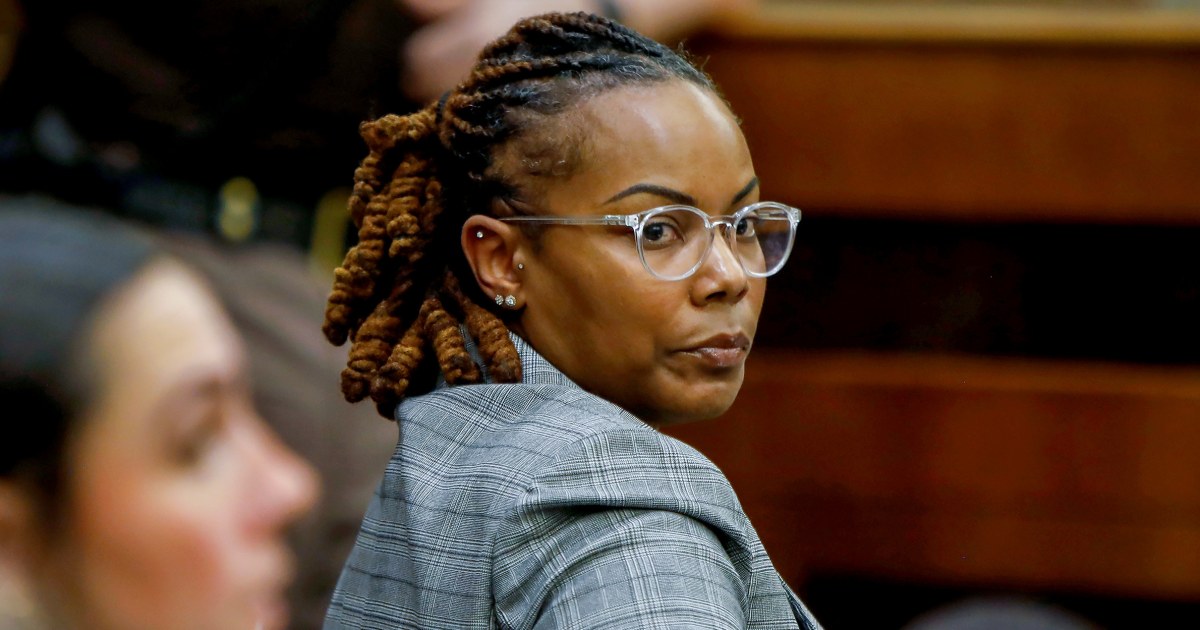
On the other hand, the criminal case against the former assistant principal at an elementary school in Newport News, Virginia, shows how difficult it is legally to draw the line between “foreseeable risk” and “unpreventable tragic coincidence.” According to NBC News, Ebony Parker was charged with eight counts of felony child neglect after a six‑year‑old at Richneck Elementary School shot his teacher, Abby Zwener, in January 2023. The eight counts corresponded to the number of bullets in the gun, prosecutors noted. However, Judge Rebecca Robinson dismissed all charges, saying: “From a legal standpoint this is not a crime, neither under Virginia common law nor its code… these matters are subject to dismissal.” She emphasized that her decision was based solely on “legal principles.”
Prosecutors argued that Parker “ignored warnings”: school staff reported they believed the child had a firearm in his backpack; the school counselor requested permission to search the child; internal rules required that crisis situations be reported to an administrator who was obliged to take action. Special prosecutor Josh Jenkins posed sharp rhetorical questions in his remarks: “Did she say, ‘search the child’? No. Did she say, ‘call the police,’ or call the police herself? No. Did she remove the child from the classroom and isolate him? No.” He concluded: “Warning after warning she did nothing.”
The defense argued that the responsibility rested with the teachers in the classroom: they could have, according to attorney Curtis Rogers, at least separated the child from other children. From a formal‑procedures perspective: Parker denied permission for a search, citing that searches could only be conducted by a safety officer or an administrator, and the officer was at another school at the time. She also did not report the situation to the principal. So, on one side there were many signals and an obvious sense of danger among staff; on the other, a system of rules, authorities, and hierarchy in which each person can claim they lacked the “full mandate” to act.
The situation’s particular sharpness is heightened by the fact that in a civil trial a jury already found Parker liable for ignoring warning signs and awarded Abby Zwener $10 million in damages. As her attorneys note in a statement quoted by NBC News, the civil court has already given a moral‑factual assessment of the “preventable failures” that led to the shooting, yet the city of Newport News still “resists accepting responsibility” and implementing the verdict’s meaning. Meanwhile the child’s mother, Deja Taylor, received actual sentences — two years under state charges for criminal negligence and 21 months on a federal weapons charge.
This contrast — criminal dismissal of the school administrator, a multimillion‑dollar civil verdict against her, and jail time for the mother — vividly demonstrates how legal systems treat risk differently. Criminal law requires the highest standard of proof and a clear statutory definition of the crime. Civil law more broadly interprets “negligence,” harm, and responsibility, especially when it comes to compensating a victim. Society sees these events together as one: a child who had been described as “in a violent mood,” wearing an oversized coat with hands in pockets, suspected of having a weapon, still shoots; the teacher undergoes six operations, cannot fully use her arm, a bullet remains in her chest, narrowly missing her heart. From a commonsense standpoint, the system failed to address an obvious risk. But criminal law cannot always turn that commonsense into a conviction of a specific individual.
Against this backdrop it is especially interesting to look at how we handle another kind of risk — weather and climate. The 2026 hurricane season forecast published by the U.S. National Oceanic and Atmospheric Administration (NOAA), covered by WGAL, is an example of how institutions formalize and communicate probabilities of threat. Meteorologist Ryan Argentine explains: the forecast is for 8 to 14 named storms, of which 3–6 could become hurricanes, and 1–3 could be “major” hurricanes (Category 3, 4, or 5 on the Saffir–Simpson scale). The statistical average is about three major hurricanes per season. Importantly, a “slightly below‑average” forecast does not mean no danger; it only indicates a reduced expected intensity overall.
Meteorologists break down the factors behind the forecast. One key factor is the phase of the so‑called El Niño/La Niña cycle. These are fluctuations in sea surface temperatures and atmospheric circulation in the tropical Pacific. During El Niño (characterized by warmer‑than‑usual water) the wind structure over the Atlantic changes, producing strong vertical wind shear. Vertical wind shear is the change in wind speed and/or direction with height; strong shear disrupts the vertical structure of developing tropical cyclones and thus inhibits their intensification into hurricanes. According to Argentine, the data point to the development of a strong or even “super” El Niño, which should suppress hurricane activity, but at the same time sea surface temperatures in the western Atlantic remain slightly above normal — a “wild card” that could either offset El Niño’s effect or enhance individual storms.
An important emphasis made by a National Weather Service official named John (quoted in the WGAL piece) concerns not only the coast but inland areas as well, including the Susquehanna Valley and central Pennsylvania. Even weakened or “remnant” tropical systems can produce extreme rainfall and flooding. Examples cited include storms Agnes, Lee, and Ida, which brought huge amounts of tropical moisture to the region. The meteorologist’s key point: “The most important thing is impacts. It’s not so much how strong the winds are — it’s the whole set of threats, from winds to tornadoes to torrential rains, that makes up the full picture.” And another refrain: however many storms are expected on average, “it only takes one” that directly affects you and your family. Hence the call: plan ahead, be ready for disasters, and closely monitor local forecasts.
Thus, meteorologists, law enforcement, and school administrators are grappling with the same task: assess the probability of severe consequences, mitigate them in advance, and communicate risk accurately to the public. But the success of these efforts varies. In the case of hurricanes, the scientific community emphasizes uncertainty, uses ranges (8–14 storms, 3–6 hurricanes, 1–3 majors), explains physical mechanisms (El Niño, vertical wind shear, sea surface temperature), relies on historical precedent (Agnes in 1972 with more than nine inches of rain), and translates all this into a public message: whether the season is “below average” is less important than how an individual storm will affect you. The concept “impacts, impacts, impacts” is a deliberate move away from fetishizing numbers toward discussing real harm.
In cases of violence, especially in hospitals and schools, the picture is different. The WSBT report on the Franciscan Health shooting is framed around minimization: no “active threat,” the incident “isolated,” police “investigating,” one person detained. Formally, that’s correct: the threat is localized, panic is unnecessary. But it is precisely a series of such “isolated” incidents across the country that creates a background, chronic sense of insecurity. Unlike hurricanes, which follow physical laws and are relatively well forecast in the aggregate, human violence is far less predictable. And the language of “singularity” for each case begins to irritate a public that sees in the aggregate a systemic problem — access to guns, gaps in mental‑health care, insufficiently secured infrastructure.
The Zwener–Parker story shows another important facet: retrospective predictability. After a tragedy, warning signs seem obvious: the child’s “violent mood” in prior days, his behavior on the day of the shooting, numerous staff appeals to the administrator, the request to search. In risk management theory this is called hindsight bias — the distortion that arises when, knowing the outcome, we evaluate past decisions as “self‑evident.” For criminal courts it is important to separate what was actually obvious and available to a reasonable person at the time from what appears obvious only after the fact. It is on this boundary that decisions like Judge Robinson’s arise, where morally it may seem someone “should be criminally responsible,” but legal criteria for a crime are not met.
At the same time, civil courts and public opinion operate under different principles. They are closer to meteorologists in logic: they evaluate not only formal adherence to procedures but also the actual outcome and the victim’s suffering. In that sense, a large civil verdict for Zwener is an attempt to restore justice and assign responsibility to the part of the system that, in the jurors’ view, had the greatest opportunity to prevent the incident or at least reduce its probability.
In both types of risk — natural and anthropogenic — a common trend emerges: from denial or downplaying of threats to recognition that full safety is impossible and emphasis on increasing resilience. Hospitals learn to conduct lockdowns and active‑shooter drills much like they do fire drills. Schools develop protocols for suspected weapons on a child while simultaneously facing legal limits on searches and intervention. Meteorologists and emergency managers have moved away from promising a “quiet season” toward a scenario of “prepare even if the forecast is favorable.” The key concept is not absence of risk but readiness for impacts and the ability to recover quickly.
From these stories several important conclusions can be drawn. First, the language institutions use to describe risk matters critically. Franciscan Health’s statement that “there is no threat,” alongside notices of office closures and ambulance bypass, illustrates the difficulty of balancing reassurance and honesty. Second, legal systems need updated terminology and criteria for “managed” risks: when there are many clear warnings of potential violence but no direct legal mechanism to criminally hold those who ignored them accountable, trust in the system is undermined. Third, the scientific approach to natural risks shows how to talk about uncertainty honestly — without promising the impossible and while motivating people to prepare.
Finally, the shooting at the Michigan City hospital, the tragedy at Newport News elementary, and the upcoming Atlantic hurricane season all suggest that a sense of security is not a once‑and‑for‑all state but a continually renegotiated social contract. It is built on trust in institutions — from police and schools to weather services. Where that trust is eroded (as in the prolonged disputes between the city of Newport News and the Zwener case verdict), society seeks alternative ways to restore justice. Where it is maintained (as with transparent and candid NOAA forecasts covered by WGAL), people are more willing to follow guidance and invest in preparedness.
In a world where both humans and nature generate serious threats, the key task becomes not so much total elimination of risk (which is impossible) as developing collective literacy in assessing and managing it — from federal agencies down to the decisions of a school administrator, a hospital clinician, and a family deciding how to prepare for the next hurricane season.