Across all three pieces—about Fauci, about a shot Mexican influencer, and a string of attempts on Trump—there runs the same thread: publicity is increasingly becoming a zone of risk. A politician, a doctor, a blogger, a candidate, or a sitting president is not merely a participant in public debate, but a target around which hatred, suspicion, weapons, and institutional conflicts concentrate. These stories differ in scale and context, but together they show just how fragile the boundary has become between public speech and physical danger, between the right to remain silent and accusations of evasion, between digital fame and real vulnerability.
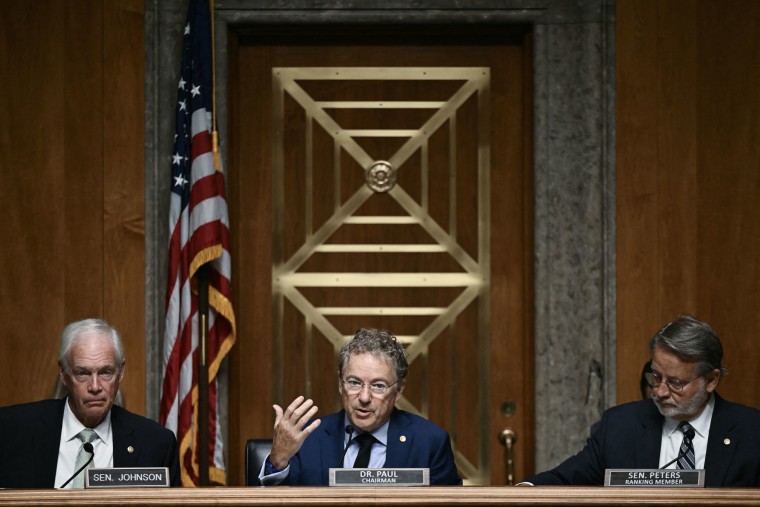
The story around Anthony Fauci, described by NBC News, illustrates how political polarization turns legal procedures into an extension of an ideological war. Senate Republicans voted to hold the former top US infectious-disease expert in contempt of Congress after he invoked the Fifth Amendment and refused to answer questions during tense hearings. Fauci himself had explained in advance why he was protecting himself with silence: he believed Republicans would try to use his testimony for criminal prosecution. Rand Paul’s camp, by contrast, frames it as “obstruction of an investigation” and insists that the pardon Joe Biden issued to Fauci before stepping down strips him of any grounds to invoke the Fifth Amendment. Here, what matters is not only the dispute over a right, but also the tone of the process itself: instead of uncovering facts, we see mutual accusations of abuse of power. Fauci’s lawyer called the vote a “crude political performance,” while Paul, in essence, continues a long-running personal campaign against the scientist. This makes the case symbolic: Fauci is turned into a figure on whom, at the same time, revenge for the pandemic is being worked out, a test is being run on the limits of congressional power, and voters are being shown the proponents’ toughness.
In the ABC News piece—entirely different, yet related in substance—the plot takes another shape. Mexican influencer César Gastélum was shot dead during a live stream in Culiacán. His audience—more than half a million followers on TikTok—made him visible in digital terms, but that visibility did not provide either security or protection. On the contrary, an open online life may have been part of his vulnerability: authorities study his posts and note that some of them contained references to a faction of a criminal organization. Local authorities call the killing directly a “targeted attack,” and Mexico’s president, Claudia Sheinbaum, links it to ongoing violence in Sinaloa—where a conflict between criminal groups has long expanded into a chronic public threat. In this case, the livestream is not just a content format, but a stage on which publicity literally connects with violence in real time. If, in Fauci’s story, institutions debate how to punish and whether someone can be compelled to testify, then here society confronts an even harsher reality: digital fame doesn’t merely fail to protect—it can come with a deadly risk.
The Fox News piece expands the theme to the level of national security and shows that even a US president lives under a continuous sense of threat. The outlet lists nearly a decade’s worth of incidents: an attempt to grab a gun from a police officer in Las Vegas, an attempt to overturn the presidential limousine with a loader in North Dakota, a letter containing ricin, shootings in Butler, an ambush near a golf club in Florida, an alleged attempt on Trump during a dinner for the White House Correspondents’ Association, and a fresh arrest at a California golf club. In this chronicle, what matters especially is not only the number of episodes, but their variety: threats come from lone actors, politically motivated criminals, and people with weapons who had scouted the route or security routines in advance. Events around Trump have become almost constant background to his political career, and after the injury in Butler, the topic of assassination attempts has taken on not an abstract but a completely tangible character. Fox News presents it as a story of exceptional vulnerability and, at the same time, as confirmation that the American security system is operating under unprecedented strain.
If you look at all three stories together, a broader picture emerges: in different countries and at different levels of government, a public figure is increasingly pushed into a zone of direct pressure—legal, political, or physical. Fauci tries to be trapped in legal procedure through hearings and charges; Gastélum is killed at the moment he is speaking with his audience; Trump lives under a constant spotlight, and his security becomes a subject of national and media attention. These aren’t the same kind of threat, but they share a common logic: public visibility has stopped being neutral. It has become a resource that can be used against a person. Today’s public face doesn’t just speak and influence—it also carries a higher risk, from harassment and investigations to assassination attempts.
Also important is that in all of these materials the conflict revolves around trust in institutions. In Fauci’s case, it is trust in Congress, in the right to self-limitation, and in the boundaries of legal power. In Gastélum’s case, it is trust in the state that must investigate a murder in a region where criminal violence has long undermined basic security. In Trump’s case, it is trust in protective services, intelligence agencies, and the state’s ability to prevent repeated attacks. Where trust weakens, a vicious cycle emerges: suspicion grows, public rhetoric becomes more radicalized, and the system starts working in reaction rather than in prevention.
There is another shared tendency: politics increasingly intertwines with performance and media spectacle. Fauci is accused before an audience, and the dispute is not only about facts, but also about how to interpret his very silence. Trump remains the hero of an endless media chronicle in which any threat instantly finds resonance. Even Gastélum’s killing, captured in a livestream, quickly becomes not only a criminal news story, but an example of how immediate public access to violence has become. Today’s information environment makes danger visible, but not necessarily manageable.
Finally, these materials show different kinds of institutional responses to threats. In the US, it is more often legal and political procedures: a vote on contempt of Congress, requests to the Department of Justice, court cases, the work of the Secret Service, investigations by the FBI and local authorities. In Mexico, the emphasis is on investigation and on the context of organized crime. But in both cases it is clear that procedures alone are not enough when the public atmosphere itself is fueled by hostility, revenge, and radicalization. When public status becomes a pretext for prosecution and security becomes an exception, institutions begin responding after the event rather than before it.
Explaining complex concepts matters for a correct understanding of these stories. The Fifth Amendment to the US Constitution provides the right not to testify against oneself—that is, not to answer questions that could lead to criminal prosecution. Contempt of Congress is a refusal to comply with a lawful demand of Parliament, for which sanctions and even referral of the case to the Department of Justice are theoretically possible. A pre-emptive pardon, or preventive pardon, is an unusual form of clemency issued before formal charges; it is precisely around the meaning of such a pardon that the dispute has unfolded over whether Fauci can continue to invoke the right to remain silent. A livestream is a direct internet broadcast where the event is shown in real time, without editing and without delay. Counterintelligence or protective intelligence work by the Secret Service is the collection and analysis of information about potential threats to people under protection, not just physical guarding. All of these terms matter because behind them lie real mechanisms of power, security, and legal protection.
The main conclusion across the three publications is that modern publicity more and more often comes not with symbolic attention, but with real, material risk. For some, it is the risk of legal prosecution; for others, violence in the street or during a broadcast; and for a third group, repeated attempts at murder. And the more strongly the political and media environment encourages confrontation, the harder it becomes to draw a line between criticism and harassment, between investigation and execution, between news and a scene of violence. That is why these materials are worth reading not as a collection of separate sensations, but as a symptom of a deeper problem: a crisis of safety in public life in an era when attention has become both a currency and a threat.