In three stories that at first glance seem unrelated — a woman’s disappearance from a boat in the Bahamas, an attempted murder of a wife on a mountain trail in Hawaii, and the destruction of bridges and railways in Iran — the same theme repeats. It’s violence cloaked as an accident or a necessary measure, and how society and the law try to distinguish between the two: where is it truly an accident, and where is it a deliberate blow carefully packaged in a plausible explanation. From private family drama to state-level strategies of warfare runs a single logic: “it just happened” versus “it was done.”
In the case of Lynette Hooker’s disappearance in the Bahamas, described in an NBC News piece about her husband’s arrest, everything begins with an account of a tragic incident at sea. 59-year-old Brian Hooker says his wife fell off a small dinghy (a small inflatable or rigid-bottom boat used as a tender) in stormy weather while they were traveling between Hope Town and Elbow Key. He claims Lynette was holding the motor keys, and when she ended up in the water the engine cut out, depriving him of the ability to maneuver immediately and rescue her. He says he “rowed for hours” to Marsh Harbour, where only in the early morning he told the first person he met what had happened, and after that authorities were notified.
From a superficial perspective this fits the image of a maritime tragedy: an experienced couple who sailed for years encounters severe weather, a crew member goes overboard, and a hopeless struggle with wind and currents begins. Hooker wrote on Facebook that he was “devastated” and that “the wind and currents pushed us further apart despite desperate attempts to reach her.” But this narrative of an accident begins to fray when Lynette’s daughter, Carly Aylesworth, says directly that she does not believe her mother “could have just fallen” overboard. Here the key conflict appears: the “tragic accident” version collides with the suspicion of a close relative who knows the mother’s character, habits, and caution.
Authorities’ response confirms that the story goes beyond a simple maritime drama. The U.S. Coast Guard has opened a criminal investigation, which in itself means that the participants’ behavior, the circumstances of the incident, and subsequent actions are being considered potentially criminal rather than pure force majeure. The Royal Bahamas Police Service, having arrested the 59-year-old man in Marsh Harbour, no longer treats him solely as a bereaved husband but as a possible subject of a criminal case. Brian Hooker’s lawyer, Terrel Butler, stresses that his client “categorically and unequivocally denies any wrongdoing” and particularly disputes Lynette’s daughter’s statements. Authorities’ announced shift from a “search” to a “recovery” operation for a body gives the story an even darker tone: hopes for rescue are essentially gone, and questions about where accident ends and guilt begins multiply.
A similar logic appears in the case of Hawaiian anesthesiologist Gerhardt Koenig, recounted by ABC News in a report on the verdict in the attempted murder case of his wife. The couple find themselves not at sea but on the Pali Puka trail on Oahu — a popular but dangerous route where a single misstep can be fatal. Formally, the situation could also be described as a tragic incident in a hazardous place: spouses argue, someone slips, a fight breaks out, emotions run high. But in this case the event did not remain in the realm of “he said — she said” only as competing personal versions: it went to trial, and jurors considered it a possible attempted murder.
The prosecution builds a picture of deliberate violence: according to the state, Koenig “devised a plan” to get rid of his wife by staging an “accident” in a remote location. Ariel Koenig says their trip to Oahu was an attempt to “fix” the marriage after her husband found “flirtatious” WhatsApp messages between her and a colleague in December 2024, which she describes as an “emotional connection” — not physical but emotionally intimate. That theme of an “emotional affair” resurfaces during the walk on the dangerous trail, where Ariel says her husband pushed her toward the edge, then, once she was on the ground, ended up on top of her, took out a syringe with a vial (plausible for an anesthesiologist with access to potent drugs), and then struck her with a rock up to ten times in the head.
Again a motive of masking intent appears: a blow with a rock and the possible administration of a substance could make her fall look like an accident or a suicide. A crucial detail is the arrival of two women who happen upon the struggle and hear Ariel cry, “Help, he’s trying to kill me.” She says their presence froze her husband and gave her a chance to crawl away. The fact of outside witnesses critically changes the perceived nature of the episode: instead of a private drama behind closed doors or on an empty trail, there is an external view.
The defense, in turn, insists it was self-defense: by Gerhardt Koenig’s account, his wife pushed him toward the edge and was the first to strike with a rock. He admits he struck her with a rock twice while on top of her, but denies the syringe and the attempt to drag her toward the cliff. His attorney, Thomas Otake, frames the case around “reasonable doubt,” calling the whole situation a “classic he-said-she-said” case, questioning the sequence and motivation of Ariel’s testimony (including the deleted messages with a colleague), and trying to emotionally blur the significance of Koenig’s conversation with his son, during which the son says the father confessed he “tried to kill her.”
It is precisely at the junction of these contradictory versions that the court stands: jurors do not find him guilty of second-degree attempted murder, but deliver a verdict on a lesser count — “attempted murder in the heat of passion.” This legal term means the court agrees that violence occurred and an attempt to take a life happened, but it took place in a state of extreme emotional disturbance — a very strong emotional state when the ability to control one’s actions is markedly reduced. The basis for such a conclusion is a combination of factors: Ariel’s “straightforward and coherent” (as prosecutor Joel Garner put it) account, supported by bloody traces and the severity of her injuries, digital data, and witness testimony, including the two women and the son from a previous marriage who heard a confession from his father over FaceTime. The defense was unable to convincingly explain why all these elements would be “doubtful” at the same time.
In both cases — on the Pali Puka trail in Oahu and in the waters around the Bahamas — we see the same problematic question: how do you distinguish a tragic coincidence and an outburst of passion from a cold-blooded plan disguised as an accident? In Koenig’s case the court concludes it was not simply self-defense or a pure accident but culpable violence, albeit committed in an emotional outburst. In Lynette Hooker’s disappearance the judicial and investigative machinery is only beginning to ask these questions: hence the U.S. Coast Guard’s criminal probe and the Bahamian police taking the husband into custody. Crucial here is that access to the victim’s body is either severely limited (a mountain, a trail) or entirely absent (the sea), and the situation occurs in a high-risk environment where an “accident” seems a plausible explanation. That creates a perfect field for disputes over intent.
If we move from these private cases to the Sky News analysis of Israeli strikes on Iran’s transport infrastructure, the same logic of masking and interpreting intent emerges at the level of international conflict. Here it is no longer a family walk but a deliberate strategy of war in which strikes hit railway and road bridges, energy facilities, and military production sites.
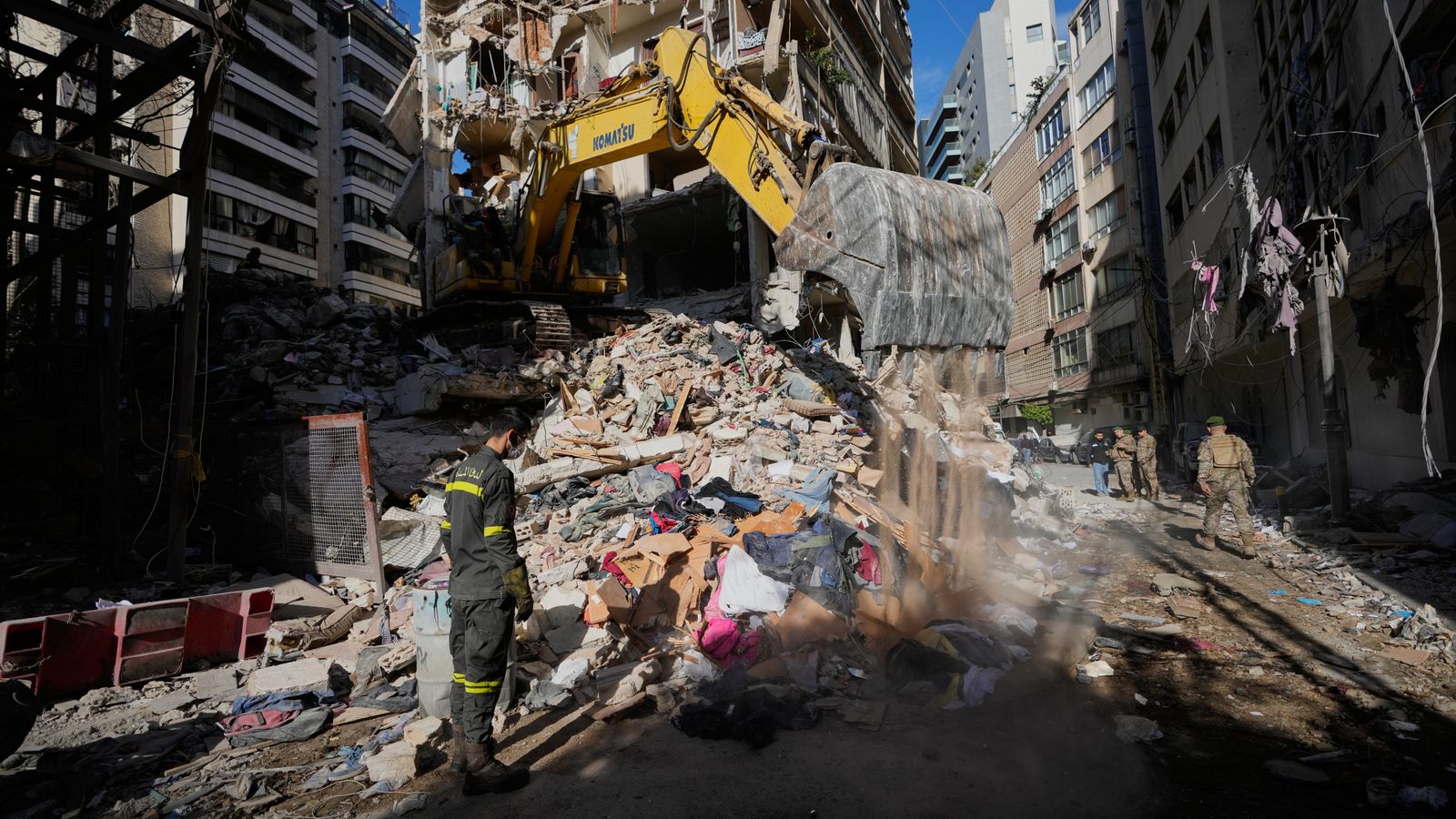
Sky News journalists, relying on data from Data x Forensics, geolocate seven of eight targets Israel claimed: five railway bridges and two road bridges. In footage of a destroyed railway bridge near Zanjan, rails hang in the air above a ruined span, and two bridges also collapsed onto roads running underneath them, damaging both rail and road routes simultaneously. A map analysis of railways shows the strikes effectively severed key arteries: from Tehran to the northwestern hubs of Zanjan and Tabriz, from Qom to the southwest centers of Kermanshah and Ahvaz, and to the southeast cities of Shiraz, Isfahan, Kerman and the port of Bandar Abbas. These are not random hits but a systematic attempt to cut internal connectivity, disrupting passenger and freight transport, including routes to neighboring countries such as Turkey, which uses Iran’s network to move goods to ports on the Caspian Sea and the Gulf of Oman.
Formally, such strikes fit a military-strategy logic as “lawful military objectives”: bridges and railways are considered dual-use objects (serving both civilian and military needs). But from Iran’s perspective, reflected in its “10-point peace plan,” this is destruction of critical civilian infrastructure for which it demands compensation from the United States. Again the question of intent arises: on one hand, the U.S. and Israel may frame actions as necessary to “weaken the enemy’s military potential”; on the other hand, Iranian residents and leadership point to the humanitarian consequences for millions deprived of transport and national connectivity. Sky News emphasizes that there are no signs Washington is willing to discuss reparations for damaged bridges and other facilities, even though Data x Forensics’ findings fit a broader course of “strikes on key transport infrastructure” carried out days before a fragile two-week truce was agreed.
Thus the universal conflict of interpretations emerges: the same bomb that destroyed a bridge can be called “a minimally necessary strike on enemy logistics” in one discourse and “a crime against civilian infrastructure” in another. As with Koenig’s case, where the same blow with a rock is framed as “self-defense” or “attempted murder,” in the case of bridges in Iran the question is: what was the main aim — military necessity or deliberate pressure on the civilian population?
Bringing the three stories together, several key trends and consequences stand out. First, modern law — both criminal and international — increasingly focuses not only on the fact of violence but on trying to recognize the intent hidden behind plausible explanations. In Koenig’s case the court did not stop at establishing that blows were inflicted; jurors assessed the defendant’s psychological state, the prolonged marital background, his words to his son, physical evidence, and witness testimony to distinguish spontaneous self-defense from a premeditated act of aggression. In Lynette Hooker’s disappearance investigators are no longer willing to automatically accept an account of an “awful accident at sea,” given the daughter’s statements, the couple’s experience on the water, and gaps in the timeline described.
Second, technological and analytical tools shift the balance between the alleged aggressor’s version and the evidence. In the Hawaiian trail story, crucial roles are played not only by emotions but by “digital evidence” — messages, calls, digital traces; in the strikes on Iran’s infrastructure, Data x Forensics’ satellite imagery and geolocation expertise objectively show which bridges and lines were severed and how that affected the rail network’s structure. Similarly, in Lynette’s disappearance metadata from phones, the vessel’s location, weather parameters, and timestamps of distress calls will likely matter — everything that helps separate an “emotional account” from a reconstruction of events.
Third, a theme of trust and distrust toward the “strong side’s” version runs like a red thread. In private life this is the daughter’s distrust of her stepfather and the wife’s distrust of a husband who already breached her physical safety; in the public sphere it’s the public’s and the affected party’s (Iran’s) distrust of military claims of “unavoidability” and “precision.” Remarks like “she couldn’t have just fallen” or testimony such as “he’s trying to kill me” resonate with diplomatic statements that the destroyed bridges are not “collateral damage” but targeted disabling of civilian arteries.
Finally, an important consequence is the humanitarian and psychological aftermath these episodes leave. Ariel Koenig shows the court scars from “complex lacerating head wounds,” speaks of filing for divorce months later and seeking sole custody of her children — a reaction from someone who experienced betrayal at the level of basic safety. Lynette’s disappearance becomes for her daughter and loved ones not only a loss but a situation of uncertainty — no body, no clear narrative, no trust. In Iran the consequences are disorganized transport, cut-off regions, and economic and social shocks. In all cases the question of responsibility arises: who and to what extent should answer for violence even when it is presented as “spontaneous,” “unavoidable,” or “forced”?
All three stories vividly show that in the 21st century the main struggle is not only for control of territory or bodies, but for control of interpretation. Was it an accident or an attempted murder? Self-defense or a planned killing? A lawful military strike or destruction of civilian infrastructure with far-reaching humanitarian consequences? Answers to these questions determine court sentences, demands for reparations in international politics, and, not least, society’s ability to call violence by its name even when it is carefully hidden behind a plausible story.