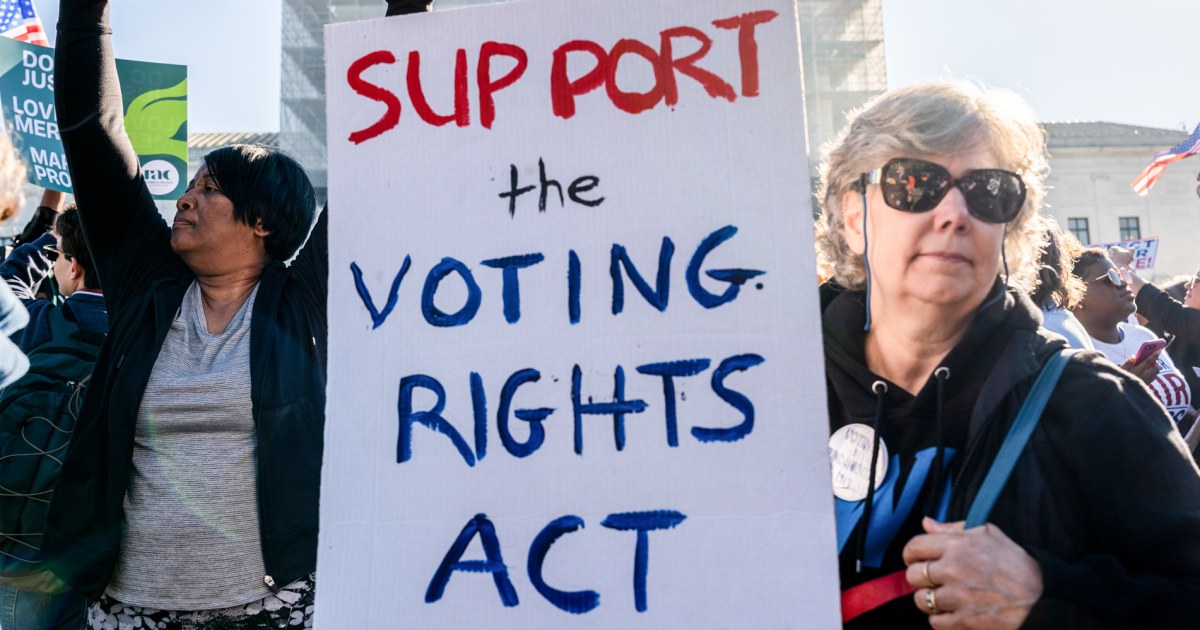
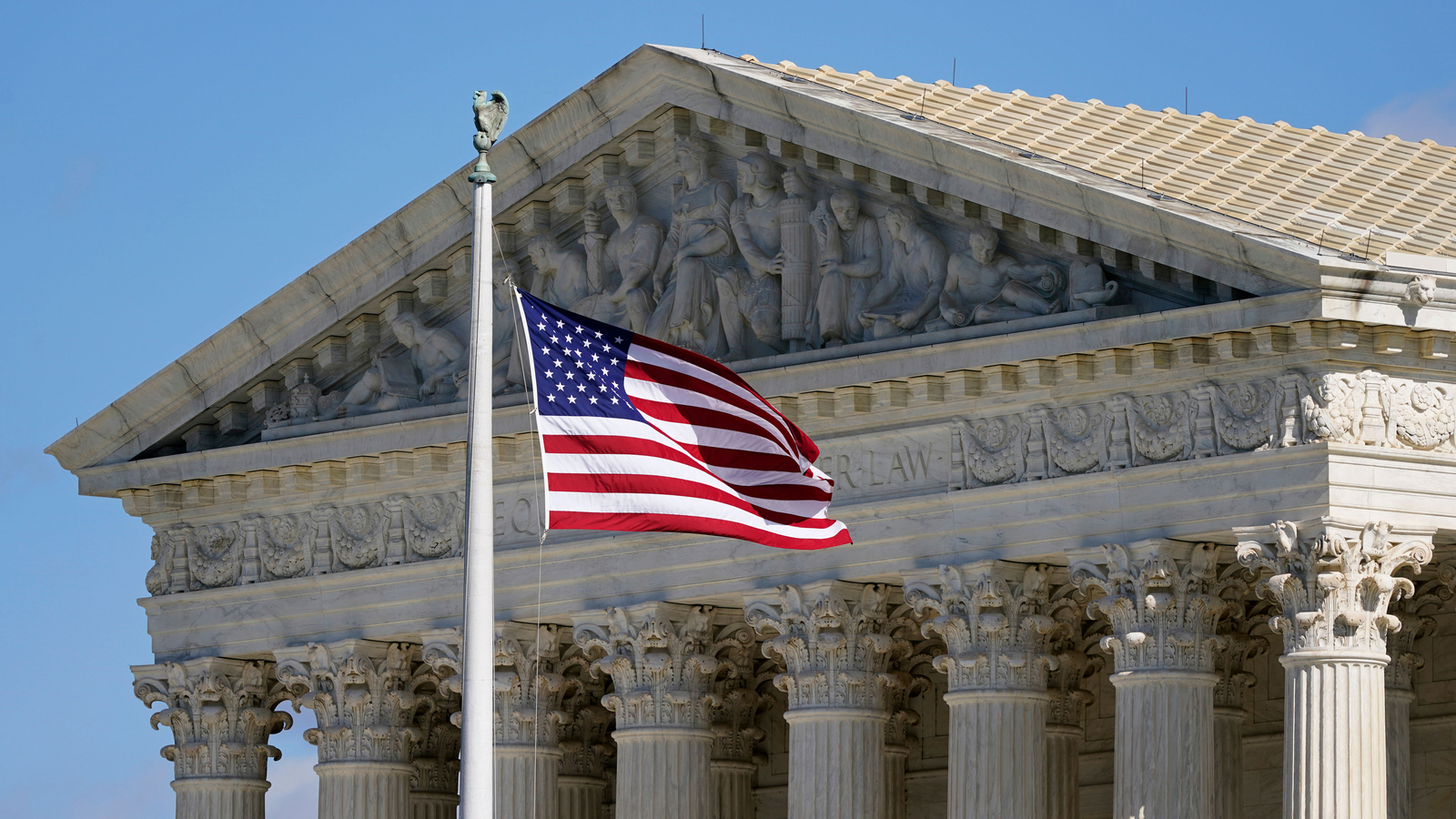
Seemingly modest Supreme Court decisions sometimes reshape real politics far more than high-profile elections. The story about Louisiana’s congressional map is one such case. Formally, it’s about technicalities of racial gerrymandering and the interpretation of the 1965 Voting Rights Act. In substance, it’s about how much the idea of racial-minority representation still functions in American democracy and who will control Congress in the coming years. Against this backdrop, even baseball news — like the Cleveland Guardians calling up Australian prospect Travis Bazzana, according to Yahoo Sports — feels part of another, almost parallel world: sports continue to follow their own logic of talent development and fan patience, while the worlds of politics and law are redefining the rules of the game.
The main common theme running through pieces from NBC News and 6abc Philadelphia is a radical rethink of the role of race in America’s electoral system and a gradual stripping away of a key tool for protecting minorities: Section 2 of the Voting Rights Act. That statute is at the center of today’s political-legal drama.
At the heart of the dispute is Louisiana’s congressional map drawn after the 2020 census. The state has six House seats, and roughly a third of its population is Black. The initial version of the map included only one majority-Black district. A lower federal court found that violated Section 2 of the Voting Rights Act: that provision was designed to prevent the dilution of minority votes by drawing districts in ways that leave sizable minority populations without real representation. In response, Louisiana lawmakers in 2024 created a map with two districts in which Black voters were the majority. Formally, they attempted to comply with the lower court ruling and the Voting Rights Act.
But the new configuration created a different legal minefield. The Supreme Court, in a 6–3 decision, declared that map an “unconstitutional racial gerrymander,” as Justice Samuel Alito put it in NBC News’s coverage. “Gerrymandering” refers to manipulating district lines for political advantage — for example, stretching a district into a serpentine shape to cluster favored voters and fragment opponents’ votes. 6abc Philadelphia cites a striking image: Chief Justice John Roberts described one Louisiana district as a “snake” more than 200 miles long, linking parts of Shreveport, Alexandria, Lafayette and Baton Rouge. To the court’s conservative majority, such a configuration shows “excessive” reliance on race when constructing political representation.
The key shift, described by NBC News, is that the Supreme Court is effectively saying states may almost never consciously consider race when drawing district maps, even when they are trying to comply with Section 2 of the Voting Rights Act. Alito allows that race-conscious measures might be justified in “extreme” cases, but he emphasizes that Louisiana’s situation does not qualify. Justice Clarence Thomas, a longtime critic of the Voting Rights Act, goes further in a separate concurring opinion: in his view, the decision should “largely put an end” to a system that he believes unconstitutionally divides people into districts based on race.
From the liberal justices’ perspective, the consequences are far more dramatic. In a blistering dissent quoted by both NBC and 6abc, Justice Elena Kagan writes that the decision “renders Section 2 virtually toothless” and that the effects “will likely be far-reaching and severe.” By “toothless” she means the statute remains on the books in name, but will be almost impossible to use in practice: if states are barred from actively considering race when creating districts, how can they ensure real representation for groups that faced decades of race-based discrimination?
Two competing philosophies of equality collide here. Conservatives, as NBC News notes, rely on a colorblind reading of the 14th and 15th Amendments. Those amendments were adopted after the Civil War to secure equal rights for formerly enslaved people, including voting rights. The contemporary conservative interpretation holds that law should be race-neutral and that any deliberate use of race as a factor violates equal protection. The liberal position emphasizes historical context: because the discrimination was racial, ignoring race when trying to remedy its effects ends up preserving the status quo and, in practice, perpetuating inequality under the guise of formal equality.
The practical effect of the ruling is already visible. As 6abc Philadelphia points out, voiding Louisiana’s second majority-Black district directly strengthens Republican prospects. The district represented by Democrat Cleo Fields was drawn to favor Black voters and, according to the court, “relied too heavily” on race. Its elimination, the piece notes, opens the door for other Republican-controlled states to redraw maps to reduce the number of race-conscious districts where Black and Latino voters — who tend to back Democrats — are concentrated. Voting-rights expert Nicholas Stephanopoulos, quoted by 6abc, estimates that nearly 70 of the 435 U.S. congressional districts are protected in some form by Section 2. If the Supreme Court’s new standard is applied consistently, a significant portion of those districts could be revisited.
The situation is made more notable by the court’s sharp change of course. In 2023, the Supreme Court unexpectedly enforced a lower-court finding in a similar Alabama case and required a map that gave Black voters a second effective opportunity to elect their preferred candidate — a decision mentioned in both NBC and 6abc. Influenced by that “Alabama” ruling, Louisiana added a second majority-Black district. Now the same court, which is more explicitly conservative in its current posture, declares that construction unconstitutional. Critics see this as a “180-degree turn,” adding more legal uncertainty to an already complex area of election law.
The Louisiana case also highlights another trend — a rebalancing between federal oversight and state autonomy in election matters. The Voting Rights Act of 1965, a central law of the civil rights era, was intended as a powerful federal tool against discrimination in Southern states. In Shelby County v. Holder (2013), the Supreme Court weakened Section 5 of the Act by striking down the coverage formula that required states with histories of discrimination to preclear changes to voting rules with the federal government. Then in Brnovich v. DNC (2021), the court narrowed the scope for challenging restrictive voting practices under Section 2, such as changes to voting procedures. The current decision continues that trend: without formally overturning Section 2, the court narrows the permissible means of its enforcement so much that, in Kagan’s view, it effectively eviscerates it.
A subtle but crucial detail NBC highlights: the Louisiana case began as a narrower dispute, but the Supreme Court expanded it, granting a second hearing focused on the broader constitutional question of when and to what extent race may be considered in redistricting if a state is trying to comply with the Voting Rights Act. In doing so, the justices used a specific case as a vehicle to redefine the general playing field.
Politically, the ruling is clearly favorable to Republicans. 6abc explicitly notes that it could affect the balance of power in the House of Representatives, where Republicans already hold only a fragile majority, and that a new wave of redistricting may not be fully realized before the 2026 elections but will certainly be a factor. The Trump administration, the outlet reminds readers, previously “launched a nationwide effort to redraw maps” in ways favorable to Republicans, and in 2019 the Supreme Court held that purely partisan gerrymandering — drawing districts to advantage a political party rather than a race — is beyond federal court jurisdiction. As a result, precise partisan tailoring of districts largely remains legal so long as it does not appear overtly racial.
A revealing detail is the political dynamic within Louisiana itself, described in NBC’s coverage. The state initially defended its two majority-Black districts, but later effectively “switched sides,” joining a group of non-Black voters who challenged the map as unconstitutional. The Trump administration later joined that position. This maneuver shows how redistricting has become an instrument of partisan strategy: actors who ostensibly should defend the law instead use the courts to pursue a politically advantageous map.
Against this political-legal turmoil, the sports story in Yahoo Sports about the Guardians promoting promising player Travis Bazzana stands out. Baseball’s logic of development and selection is straightforward: a prospect posts strong performance in the minors (for example, Bazzana’s 152 wRC+ in Columbus — wRC+ being a metric that shows a hitter’s run production relative to league average, with 100 as “average”), and the club gives him a chance in MLB. Fans are asked for patience, players get opportunities to “find themselves,” and management gets room to experiment with the roster. There is no Supreme Court to issue a single ruling that changes the rules of talent development or the competitive balance between teams; changes happen gradually within well-known league rules.
In American politics, the reverse is true: a few abstract lines of constitutional interpretation can quietly determine whose voices will be heard in Congress and whose will be diffused across a map. Whereas in baseball a prospect’s chance largely depends on statistics and scouting, in the electoral system a Black or Latino community’s chance to elect “its” representative increasingly hinges on which equality philosophy the Supreme Court’s majority adopts.
Key trends and consequences that emerge from these reports can be summarized in several interconnected findings. First, a long-term trend toward weakening federal protections against voting discrimination continues: from undoing preclearance for “problem” states to practically draining Section 2 of the Voting Rights Act by forbidding conscious consideration of race in district drawing. Second, under the banner of “colorblindness,” structural advantages for political forces whose bases are historically concentrated in predominantly white districts — primarily Republicans — are growing. Third, the gap between formal and substantive equality is widening: the Constitution, as interpreted by the court’s conservative majority, requires treating everyone “equally,” even if critics argue that doing so cements the consequences of an unequal history.
This story goes far beyond Louisiana. As 6abc estimates, dozens of districts nationwide are built around the idea of racial representation and are protected in some way by Section 2. The Supreme Court’s new standards set the course for their reevaluation. How quickly and extensively that happens will depend largely on the political will of states and the pace of further litigation. But it’s already clear: in a U.S. system with an almost even partisan split in the House, even a handful of lost majority-Black or majority-Latino districts can tip the balance.
And while Cleveland fans can calmly debate how quickly Bazzana adapts to the majors and who will patrol center field, political “fans” of American democracy must reckon with the fact that the very layout of the field on which the game is played is changing — and it is changing primarily by court decisions, not by voters’ choices.