Events surrounding the war between the United States and its allies and Iran, Israel’s strikes on targets in Tehran, and the rhetoric of the Donald Trump administration are forming a picture of a protracted and dangerous confrontation. The throughline of all the pieces is Washington’s aim not merely to “repel a threat,” but to reshape the very character of the Iranian regime to suit its geopolitical interests, while persuading the world that the war is going “successfully” and supposedly under control. Yet the louder the claims of success, the clearer it becomes: the conflict is drifting into a long and highly risky phase, where military strikes, energy security, Iranian leadership, and inevitable humanitarian costs are intertwined.
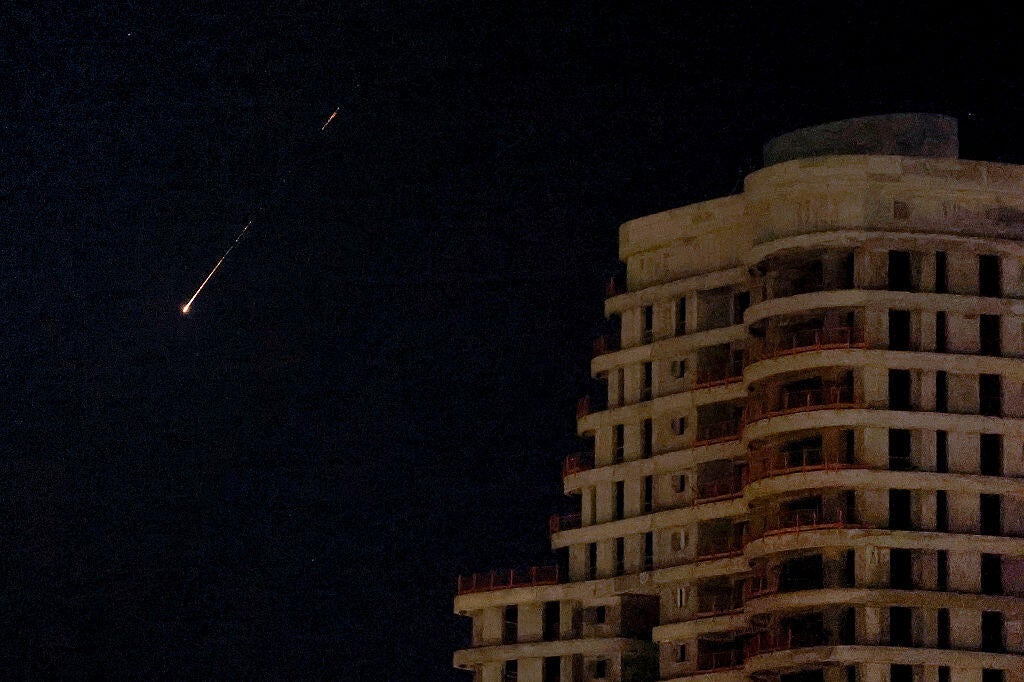
According to a CBS News report on the current phase of the war, the United States is clearly preparing for a more prolonged confrontation with Iran, while Israel is striking oil infrastructure in the Tehran area, including oil facilities, as described in CBS’s live-updates piece on Israel’s strikes on Iran. Strikes on oil terminals and other energy assets are not merely episodic acts of retribution. They are an element of a strategy aimed at depriving Iran of economic resources and leverage over the global oil market. CBS notes that the US “appears to be preparing for a longer fight” in Iran. That wording is significant: it effectively acknowledges that this is not a short-term operation, but a war of attrition calculated to gradually degrade Iran’s military and economic potential.
An interview with US Ambassador to the UN Mike Waltz on ABC News’s This Week complements this picture and exposes the White House’s political logic. Waltz explicitly states the Trump administration’s aim: the president wants to “see leadership in Iran that no longer threatens the United States or our regional partners” and that “doesn’t hold global energy supplies hostage” and does not pursue nuclear weapons, as he said in his ABC News interview. The phrase “leaders who do not threaten Americans” essentially describes not merely a change in Tehran’s behavior but a political reformatting of the regime. Waltz emphasizes that the next Iranian figure at the head of state should be someone “you can deal with,” meaning someone willing to fit into the American regional security architecture.
It’s important to clarify here: the term “regime change,” often used in English-language analysis, describes precisely this policy — not merely deterrence or punishment, but creating conditions under which the political elite and foreign-policy orientation of a country are replaced. Waltz does not formally utter the words “regime change,” but his emphases closely align with the logic of changing the regime: the “decapitation” of top leadership (he boasts that “key figures” of Iran’s leadership have been “beheaded”), degradation of missile capabilities, strikes on infrastructure and the energy sector, plus attempts to undermine the current authorities’ legitimacy in the eyes of the international community.
In the ABC interview Waltz claims that the US “sees huge success in our military objectives in this war,” pointing to the “significant degradation” of Iran’s ballistic potential and the elimination of parts of Iran’s military and political establishment. He says, “we’re not just on schedule — we’re winning.” This rhetoric is typical of phases when Washington seeks to consolidate domestic and international support for a military campaign: highlighting successes, stressing technological superiority, and assuring that the operation is limited, rational, and effective.
However, a central moral and political problem of any modern war simultaneously emerges — inevitable civilian casualties. Host Martha Raddatz directly asks about the bombing of a primary school for girls in southern Iran on the first day of the war. According to ABC sources, US forces conducted strikes on targets in the area where the school was destroyed, and preliminary assessments allow that an American strike could have caused the tragedy, since Israel, according to their information, was not operating in that area. This is a typical example of tragic “collateral damage” (the military term for civilian casualties accompanying an attack on military targets), but the political impact of such episodes is always far broader.
Secretary of Defense Pete Hegseth says the US is continuing its investigation, but Donald Trump has already publicly blamed Iran. When asked why the president was quick to blame Iran, Waltz sidesteps a direct answer and points to the Gaza precedent in 2023, when Israel was initially accused of striking a hospital but the US later said the cause was a failed Palestinian rocket launch. That parallel carries a political signal: Washington suggests presuming the guilt of “terrorists” or the opposing regime even before a technical investigation is complete. At the same time Waltz unequivocally states that America “is doing everything possible to avoid civilian casualties,” while acknowledging that “sometimes tragic mistakes happen.”
This duality is standard for wars with an asymmetric adversary: doctrinally, the emphasis is on precision weapons and minimizing civilian harm; in practice, strikes hit targets tightly entwined with civilian infrastructure, especially when oil, transport, ports, and energy are involved. CBS’s piece on the current strikes against Iran emphasizes that Israel is already attacking oil facilities in the Tehran area, while the Iranian president promises further strikes on American targets. This effectively acknowledges the fact of escalation: Iran is not merely defending itself but declaring intentions to broaden the geography of its retaliatory attacks.
The strategic importance of oil infrastructure is central here. As Waltz notes in the ABC interview, a key criterion for an acceptable Iranian leader to the US is someone who “will not hold energy supplies hostage to the rest of the world.” This implies Iran’s ability to choke or destabilize the global oil and gas market through export volumes or threats to shipping security in the Persian Gulf. Israel’s strikes on oil facilities described by CBS have a dual aim: military (depriving Iran of some resources) and economic-political (signaling to any potential third parties that the use of oil as a weapon will be firmly countered). Thus, the military theater becomes an arena of energy warfare, with consequences that may ripple far beyond the Middle East — through oil price volatility and vulnerability of global supply chains.
Particular attention should be paid to the “America First” rhetoric that Waltz speaks of so openly. He stresses that Trump’s goal is “an Iran that can no longer threaten Americans” within the “America First” logic of foreign policy, and also a country that cannot threaten US allies. On one hand, this continues the Trump line from his first presidential term: prioritizing US security and prosperity even if that requires ignoring parts of international rules and institutions. On the other hand, it contains a contradiction: the more actively Washington pursues military action halfway across the world under “America First,” the greater the risk that retaliatory strikes by Iran or its allies (Hezbollah, the Houthis, pro-Iranian groups in Iraq and Syria) will be perceived as unexplained aggression against the US. In other words, aggressive defense of national interests can ultimately generate new threats to those same interests.
Waltz’s remark that, “as a veteran, I can’t get my head around how many Americans were attacked and killed [by Iran] from Beirut to the Iraq War and the 1979 hostage crisis,” provides an emotional rationale for a long-term war. Here different historical episodes are deliberately mixed together, not always directly tied to Tehran’s actions, but creating in public discourse a cohesive image of an “Iranian threat” stretching back decades. This is an important psychological mobilization mechanism: the war is presented not as a new initiative of the administration, but as the logical continuation of a long struggle against a brutal enemy.
Conversely, the Iranian reaction, as described in CBS’s reporting, demonstrates a mirrored logic: the Iranian president promises further attacks on American targets in response to strikes on Iranian territory and critical infrastructure. For Iran, as for the US, it is important to show its domestic audience that the leadership is not passive and is not yielding under external pressure. This creates a dynamic of mutual escalation in which each new strike is justified by the previous one and becomes the basis for the next.
In this context, Israel’s strikes on Iranian oil facilities reported by CBS add another layer to the conflict. Israel acts out of its own security considerations, seeing Iran as an existential threat. But for Iran these strikes are practically inseparable from US policy, enabling Tehran to justify more direct confrontation with American military forces and targets. Thus regional wars (Israel–Iran, earlier Israel–Hamas) and US global policy become entangled in a single knot, where every new action intensifies the complex conflict rather than bringing it closer to resolution.
It is also significant how the US tries to manage the informational dimension of the war. In the case of the strike on the girls’ school in southern Iran we see an effort to postpone admission of possible responsibility (“I’ll leave that to investigators,” Waltz says), while reminding audiences of cases when accusations against US allies later proved false. This creates room for maneuver: if an investigation ultimately confirms US responsibility, the emphasis can be shifted to the category of a “tragic mistake” within the framework of “maximum efforts to protect civilians.” At the same time, for Iran any such episode becomes a powerful tool for internal mobilization and anti-American propaganda: the image of the US as a force willing to bomb schools and hospitals is extremely useful for consolidating the regime under slogans of “resisting aggression.”
Against this background, the third article the user sent — about Nazem Kadri’s trade from the Calgary Flames back to the Colorado Avalanche, published on Yahoo Sports (Breaking News: Nazem Kadri Coming Home to Avalanche in Trade from Flames) — looks particularly contrasting. At first glance, a sports news item about the 35-year-old center’s return to the team with which he won the Stanley Cup appears unrelated to the geopolitical crisis in the Middle East. Yet there is a symbolic layer: Kadri is the first hockey player born into a Muslim family to lift the Stanley Cup. At a time when political rhetoric about Iran, terrorist groups, and “threats from the Muslim world” is dominated by images of conflict, violence, and enmity, sports stories like Kadri’s career remind us of other forms of Muslim and Middle Eastern presence in Western societies — as ordinary, integrated parts of civic life.
This matters for public perception. When the political and media agenda is saturated with stories about the “Iranian threat,” “decapitation of leaders,” and “attacks on Americans,” it becomes very easy for mass audiences to form an image of Muslims or people from the Middle East as a monolithic “world of threats.” In this context, a routine Yahoo Sports report that Kadri, now part of NHL and Colorado Avalanche history, is simply “coming home” to the club with which he won, reads stylistically like any other sports trade story: discussion of stats, contracts, draft picks, and fan emotions. That kind of normalcy demonstrates that the social fabric is far more complex and richer than political slogans and military briefings suggest.
Taken together, the key elements of all the materials reveal several important trends and consequences.
First trend — the institutionalization of a long war between the US and Iran. Statements about “preparing for a long fight” in the CBS piece and Waltz’s confidence on ABC that the US is “ahead of schedule” and achieving “military objectives” indicate that in Washington the war is already being seen not as an exception but as a new normal in foreign policy, embedded in “America First” logic and the struggle for control over regional security architecture and energy.
Second — deliberate pressure on Iran’s leadership with elements of regime-change policy. The emphasis on “Iranian leaders who will not threaten Americans and allies,” the focus on degrading missile potential and “decapitation” of elites show that Washington wants not only to change Iran’s behavior but to create conditions for deep transformation of the country’s political system — formally not admitting regime change as a goal, while effectively moving in that direction.
Third — the growing role of energy as both a tool and a battlefield. Israel’s strikes on oil facilities in Tehran described by CBS, and Waltz’s special attention to the risk of Iran holding global energy supplies “hostage,” demonstrate a shift from purely military confrontation to a complex energy-economic conflict that could affect not only the region but the global market.
Fourth — widening gap between professed humanitarian caution and actual risks to civilians. Talk of “maximum efforts to avoid casualties” sits beside possible US involvement in bombing a school in southern Iran, as ABC sources report. Such episodes inevitably undermine Washington’s moral position and provide fuel for anti-American mobilization within Iran and across the broader Muslim world.
Fifth — both troubling and hopeful — the contrast between the logic of war and the logic of everyday life, exemplified by the Nazem Kadri story. Against the backdrop of an expanding conflict with Iran, this narrative reminds us that identity and origin do not predetermine a person’s role in society: the same categories “Iranian,” “Muslim,” “Middle Eastern” that in political discourse accumulate images of threat appear in sports, culture, and daily life as part of a mixed, shared reality.
Altogether, this forms a complex picture: the US, Israel, and Iran have entered a phase of conflict that no longer looks short-term or localized. It rests on a long history of mutual grievances, is intensified by energy and regional ambitions, and is fueled by political rhetoric on both sides. At the same time, the real world in which a Muslim forward becomes an NHL star and a Colorado fan favorite is a reminder: the further military and political logic drifts from everyday human reality, the greater the risk that decisions made under slogans of “security” and “victory” will produce long-term instability, humanitarian crises, and deeper global rifts.