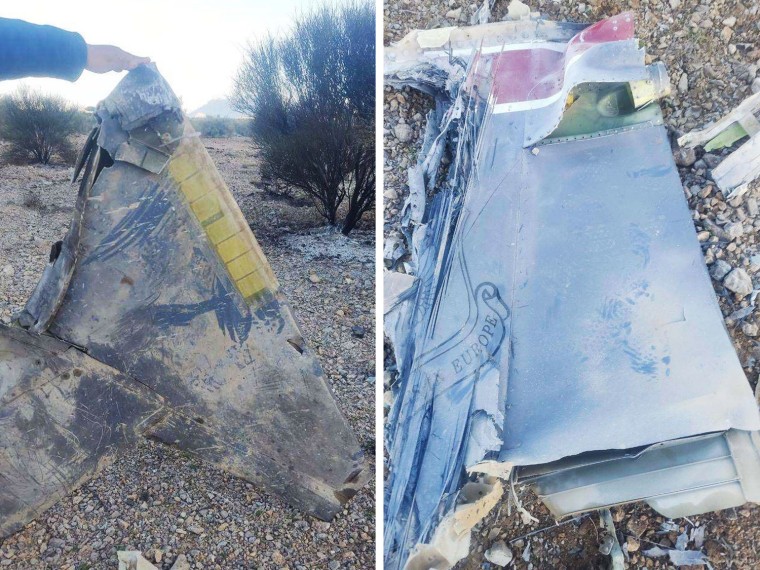
Reports that an American F‑15E fighter jet was downed over Iran mark the first confirmed episode of the current war in which a US military aircraft was lost in Iranian airspace. Hours after Iranian media reports, US sources acknowledged that one crew member was rescued and searches for a second continue. Almost simultaneously it emerged that US rescue forces also came under fire, and all parties to the conflict faced a question: how real is the claimed “complete domination” of US and Israeli forces in Iranian airspace?
Several complementary sources underlie these reports. NBC News, in its piece “U.S. fighter jet downed over Iran, one pilot rescued, official says,” describes details of the F‑15E incident and the subsequent search‑and‑rescue operation, including hits on other US aircraft and the White House’s reaction (NBC News). Regional outlet KTVZ, citing NBC, repeats key facts but adds important context: mentions of a possible second downed aircraft, a recent F‑35 emergency landing, and even friendly‑fire incidents involving Kuwait (KTVZ). Finally, a brief post by The New York Times on Facebook emphasizes the main point: this is the first confirmed case during the current war of an American military aircraft being shot down over Iran (NYT Facebook post).
The throughline in all pieces is a stress test of the real military‑technical and political “domination” the US and its allies claim in the war with Iran. This story is less about a single downed jet than about a shift in perception: from confidence in air control to acknowledgment that Iran can deliver painful retaliatory strikes.
According to NBC News, the two‑seat F‑15E Strike Eagle was shot down over Iran, one crew member was rescued and a second is listed as missing (NBC News; KTVZ also recounts confirmation of the rescue (KTVZ)). This detail matters for several reasons. First, the F‑15E is a heavy strike fighter considered a key instrument of US airpower: it carries a wide array of weapons and can deliver precision strikes against ground targets. Second, the two‑seat variant implies a complex mission profile: a pilot and a weapon systems officer act as a team, which—given the intensive bombing campaign over Iran—indicates frequent use of high‑precision weapons.
Iranian sources, via affiliated media, promptly claimed the jet was shot down by the Islamic Revolutionary Guard Corps (IRGC). KTVZ, citing the Iranian outlet Nour News associated with the IRGC, reports that the fighter “was destroyed in the sky over central Iran by a new advanced surface‑to‑air missile system of the IRGC Aerospace Forces” (KTVZ). It is important to clarify: the IRGC Aerospace Forces are an elite branch of Iran’s armed forces responsible for ballistic missiles, drones, and some air‑defense systems. The claim of a “new” air‑defense system is not merely technical detail but a strategic signal: Iran is demonstrating the ability not only to endure massive strikes but also to develop military technology capable of engaging modern US aircraft.
NBC News adds a dramatic detail: an A‑10 Thunderbolt II (the “Warthog”), used in the search‑and‑rescue operation, also came under Iranian fire but was able to reach Kuwaiti airspace where its pilot ejected and survived (NBC News). The A‑10 is traditionally used for close air support and cover, including during search‑and‑rescue missions. Its damage from Iranian fire shows that even rescue operations near Iran’s border are now highly risky.
US officials quoted by NBC say two UH‑60 Black Hawk helicopters involved in the search‑and‑rescue came under fire as well. Crew members were not injured, but the hits themselves underscore that Iran appears willing and technically capable of targeting not only combat aircraft but also support platforms, trying to turn each incident into a broader tactical success.
Another persistent Iranian theme is an attempt to involve local civilians in the “hunt” for American pilots. Both NBC News and KTVZ report that a regional governor in southwestern Iran called on residents to help search for the crew, promising cash rewards—KTVZ notes a representative of traders and the business community offered about $60,000 for handing over a captive (NBC News; KTVZ). An Iran‑state‑TV‑affiliated Telegram channel, according to KTVZ, urged residents of a rural southwestern region to turn in an “enemy pilot” to police for a reward. This creates a dangerously volatile situation for the second F‑15E crew member: they risk not only becoming a prisoner of war but also the focus of propaganda and potential bargaining.
Washington’s political reaction has been restrained. NBC reports White House press secretary Caroline Levitt saying President Donald Trump was briefed on the incident (NBC News; KTVZ makes the same point (KTVZ)). In a phone interview with NBC, Trump declined to discuss details of the rescue operation and, when asked whether Iran’s behavior would affect talks to end the war, replied: “No, not at all. This is war” (NBC News). That remark merits comment: the statement “This is war” effectively normalizes the incident as a routine aspect of armed conflict, reducing pressure for immediate sharp escalation. Yet Trump has previously said the US is “negotiating with Iran to end the war,” while Tehran officially denies direct negotiations. This divergence in interpretations shows a deep deficit of trust and transparency: each side seeks to present the situation to its audience in the most favorable light.
Notably, as NBC points out, Trump did not rush to comment on the downed jet in his Truth Social account; instead he posted about Iranian oil: “Let’s leave the oil, ok?” (NBC News). This highlights another persistent line in the current conflict—the control of strategic resources and transit corridors. According to Levitt, the US is strengthening its military presence in the Middle East and threatens “severe escalation” if Tehran does not open the Strait of Hormuz to commerce. The Strait of Hormuz is a narrow maritime passage between the Persian Gulf and the Gulf of Oman through which a significant share of the world’s oil exports travel; its closure or restriction would shock global energy markets and US and allied interests.
In this context, the assessment that “this is the first case where a US plane appears to have been shot down over Iran during the current conflict,” as NBC frames it, is particularly significant (NBC News). The New York Times’ brief Facebook post puts it even more starkly: “This was the first case during the war in Iran in which an American military aircraft was shot down over Iran” (NYT Facebook post). This has several key consequences.
First, it undermines the thesis of “complete control” of Iranian airspace by the US and Israel. Both NBC and KTVZ explicitly state that the incident “feeds doubts” about assertions of air dominance, especially since the joint campaign aimed to destroy and degrade Iran’s missile and air‑defense systems (NBC News; KTVZ). For clarity: in military theory, “air dominance” means one side’s ability to conduct operations in an opponent’s airspace with minimal risk of being shot down, having suppressed the opponent’s air‑defense systems. The downed F‑15E and the damaged A‑10 directly call that dominance into question: even if the US retains technical superiority, Iran remains capable of delivering targeted strikes that are politically and psychologically significant.
Second, the incident fits into a broader series of episodes that blur the picture of unquestioned US technical superiority. KTVZ notes photos published by Iranian sources of debris from an alleged second downed US aircraft over central Iran and recalls that US Central Command (CENTCOM) recently reported an F‑35 emergency landing on March 19, while refusing to confirm it was caused by an Iranian strike (KTVZ). Iran has repeatedly claimed to have struck US aircraft, claims the US had not acknowledged until recently. KTVZ also reminds readers of another worrying element of the war—friendly fire: at the conflict’s start, Kuwait “accidentally shot down three American fighters” (KTVZ). Such incidents typically stem from overloaded air‑defense systems, identification errors, and overall nervousness in a densely contested airspace.
The cumulative effect of these episodes is to shape an image of a war in which even the technologically superior side is not immune to losses from enemy action or its own errors and allied mishaps. This contrasts with the usual American narrative of “clean” air campaigns in recent decades.
Key trends emerging from comparing the coverage can be summarized as follows. Military: Iran’s air‑defense system, contrary to the stated goals of the joint US‑Israeli campaign to “destroy and degrade” it, remains functional and able to engage modern US aircraft. Nour News’ claim of a “new advanced air‑defense system” and hits on multiple target types (F‑15E, A‑10, UH‑60 helicopters) point to flexibility and adaptability in Iran’s defenses. Political: both sides are using the episode for their own ends—Iran as proof of IRGC resilience and technological progress, the US as justification for increasing military presence and pressure on Tehran, including threats of escalation if the Strait of Hormuz is not reopened. Communications: there is a clear gap between public rhetoric (claims about negotiations, denials of direct contact, assertions of dominance) and battlefield reality, where every loss becomes informational leverage.
Finally, the humanitarian dimension, which The New York Times succinctly underscores: one American was rescued, the fate of the second remains unknown (NYT Facebook post). Amid discussions of strategic dominance, new air‑defense systems, and the Strait of Hormuz, it is important not to lose sight of the human stakes: around one downed jet a tangle of risks forms, from the possible capture and use of a pilot as a bargaining chip to further dangerous US rescue attempts deep in or along the border of Iranian territory. When locals are offered rewards for catching an “enemy pilot” and the region endures heavy bombardment, the risk of unpredictable escalation rises.
The downing of an F‑15E over Iran has become not only a military episode but a symbolic moment: it visibly shows that a war now more than a month old has entered a phase where the myth of the US’s unconditional technological immunity to aerial losses is crumbling. Despite strikes against its air‑defense and infrastructure, Iran is demonstrating the capacity to respond, and the United States must choose between maintaining an image of control and admitting the real vulnerability of its pilots and aircraft. In this configuration, each new incident—whether a confirmed F‑35 loss, another friendly‑fire event, or the capture of a pilot—can become not just news but a point at which the perceived strategic balance of the war shifts again.