If you look at these three news items together, you can easily see a common thread: even in very different areas — from human health to transportation and urban engineering — much depends on a delicate balance that is upset faster than it seems. In one case, it’s about a habit of caffeine and how its effects depend not only on the dose but also on the source of the substance; in another, it’s a sea plane crash where emergency response and the work of rescuers move to the foreground; and in the third, it’s a burst water main that paralyzes traffic and serves as a reminder of how fragile basic city infrastructure remains. All three, in their own way, make the same point: modern systems seem resilient only until the first failure, and the quality of crisis response often matters more than the fact that the crisis occurred.
A note from The Washington Post highlights an important distinction that is often lost in popular discussions about caffeine: potential benefits are tied primarily to its natural sources — coffee, tea, and even chocolate — while energy drinks and synthetic additives do not show comparable advantages. The wording here is blunt and telling: “There’s no evidence of any health benefits from energy drinks or synthetic caffeinated products such as dietary supplements,” and it goes on to say that the available evidence on energy drinks suggests harm instead: “higher risks of potentially dangerous heart rhythm disturbances and heart failure.” The point of this assessment is not to declare caffeine “beneficial” in general, but to separate familiar food sources from industrial products with different dosing, ingredients, and, as a rule, a less predictable risk profile. In other words, the same stimulant can behave differently depending on the form in which it is consumed — a question not of fashion, but of biology and regulation.
Risk management is also clearly on display in the report about the Kenmore Air plane that crashed near Sucia Island. The tone of the news is not sensational but operational and institutional: first, the fact of the incident is established, then a confirmation that “everyone aboard has been accounted for,” followed by a list of hospitalizations and evacuation routes. This kind of presentation shows that in aviation incidents the priority is not only the crash itself, but the chain of response: local rescuers, the U.S. Coast Guard, hospitals, transport of the injured, and the airline’s internal procedures. Kenmore Air’s CEO, David Gagel, said: “We are grateful that everyone aboard has been accounted for, and our immediate focus is ensuring our passengers and pilot receive the care and support they need.” This quote matters because it shifts the emphasis away from the cause, which will not speculate on, and toward responsibility and care for people. While the investigation continues, this becomes the yardstick for system safety quality: not the absence of incidents as such, but the ability to quickly localize the consequences, save lives, and not substitute speculation for facts.
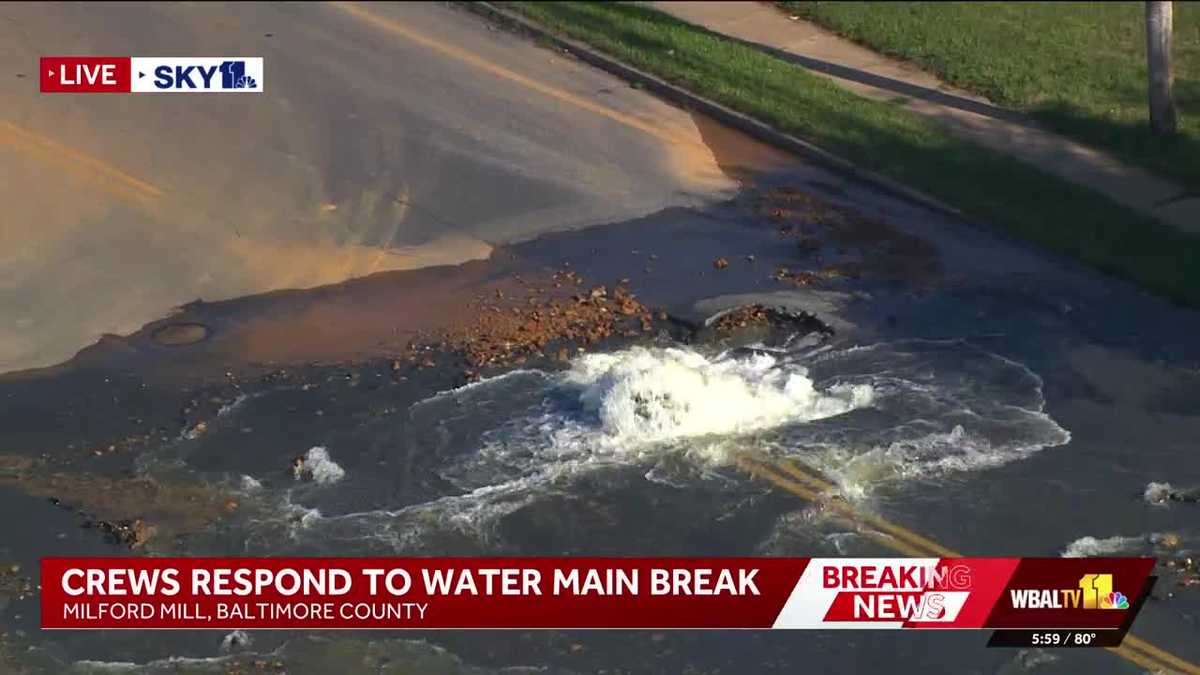
In WBAL-TV’s piece about a 16-inch water main break in Milford Mill, the same principle of vulnerability shows up at the level of the urban environment itself. Water, which should be a constant and almost invisible part of everyday life, becomes a source of destruction in an instant: the damaged section of Old Court Road is affected, traffic is restricted, repair crews are on the scene, but the restoration timeline is unknown. Formally, it’s a local utilities update, yet in essence it demonstrates how much a city depends on systems hidden underground. As long as everything works, they barely register; when the pipe bursts, the problem instantly becomes visible to hundreds of people through a road closure, transit delays, and uncertainty about when repairs will be completed. Here, too, there’s a phrase typical of such situations: “The cause of the water main break is unknown.” And this is not just legal caution, but a reminder that infrastructure failures are often difficult to predict in advance — especially when it comes to networks whose age, wear, and load may be hidden from view.
If you pull these stories into a single line, you don’t get a set of unrelated events, but an observation about how society manages uncertainty. In the case of caffeine, science tries to distinguish beneficial habits from dangerous forms of consumption; in the case of an aviation incident, the priority is coordinating the rescue effort and investigating without speculation; in the case of a water main, it’s about quick repairs and minimizing harm to the city. In all three storylines, the most important role is played not only by the cause of the problem, but by the quality of the response to it. This is especially noticeable in the modern world, where trust in systems — from medical guidance to transportation and utilities — is shaped not by promises of infallibility, but by transparency, speed of reaction, and willingness to acknowledge limitations.
There’s also one more shared takeaway: risk today rarely remains abstract. It always materializes in a specific form. For an individual, it may be an unfortunate choice of caffeine source; for passengers, a sudden emergency landing or a collision involving water and cold; for neighborhood residents, a closed road and a non-functioning part of the infrastructure. Therefore, the most important practical idea of these materials is straightforward: the more complex the system, the more important it is to distinguish a safe habit from a dangerous imitation, day-to-day operations from an emergency, temporary inconvenience from a structural problem. In other words, “good news” about caffeine stays good only in the right context, and a “successful rescue” after an aviation incident or the rapid arrival of repair crews after a pipe burst is not a minor detail of the news — it is the essence of how modern society withstands breakdowns.
It’s also important to explain some of the tougher terms in these materials. Naturally occurring caffeine is caffeine found in common foods such as coffee, tea, and chocolate, as opposed to synthetic caffeine, which is added to energy drinks and dietary supplements. “Heart rhythm disturbances” means disturbances in heart rhythm — a situation in which the heart beats too fast, too slow, or irregularly; it can be dangerous because it affects circulation. “Heart failure” is heart failure, a condition in which the heart can’t pump enough blood to meet the body’s needs. In the aviation report, “accounted for” means that everyone on board has been found and verified, not merely that they are reachable. In the utilities note, “water main break” is a break in the main water pipeline — a large pipe that brings water to consumers; such breaks often cause flooding, damage to roads, and traffic disruptions.
The key conclusions here come down to this: benefit and harm almost always depend on form and context, and system resilience is determined not by the absence of accidents, but by the maturity of the response to them. The science on caffeine once again shows the need to distinguish natural products from those boosted industrially. The accident near Sucia Island shows how crucial coordination among rescue services is, along with caution in public statements. The pipe break in Milford Mill serves as a reminder that urban infrastructure is not just a backdrop but a living organism that requires ongoing maintenance. What unites all three stories is the same idea: modern life is such that the most noticeable events often happen when something goes wrong — and it is exactly in those moments that it becomes especially clear how important reliability, verified information, and a fast, competent response are.
Sources: The Washington Post, The Orcasonian, WBAL-TV.