The materials presented cover different topics—a criminal case, the search for missing sailors, and a climate forecast—but they share a common thread: society is trying to make decisions with incomplete information, when the cost of error is exceptionally high. In the Luigi Mangione case, the final outcome depends on the terms of any possible plea deal and how the principle prohibiting double jeopardy is interpreted. In the case of the F/V Lily Jean, rescuers have video data showing the sunken vessel but still cannot determine the fate of six crew members. NOAA’s forecast of a powerful El Niño is also expressed in probabilities rather than guarantees: even a historically strong climate event will not produce identical consequences in every region.
This common theme matters because in all three cases, the facts have not yet formed a fully complete picture. The legal outcome could change on the day of the hearing, the search operation is ongoing, and climate scenarios describe increased likelihoods rather than predicting every specific storm, drought, or temperature record.
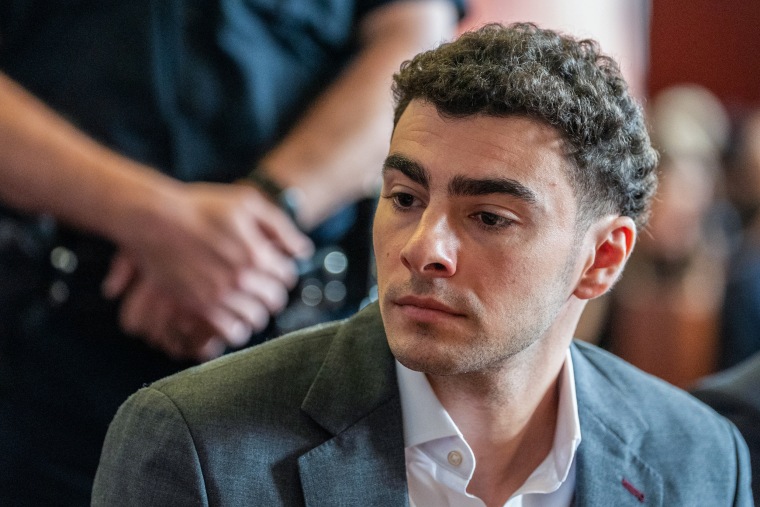
According to an NBC News report, Luigi Mangione, who is accused of killing UnitedHealthcare CEO Brian Thompson, is expected to plead guilty in the federal case. However, journalists emphasize that “nothing is final” until the defendant himself accepts the terms of the agreement. Negotiations between the defense and prosecutors are continuing, and it is not even clear whether the plea will cover one or both of the charges related to stalking.
This procedural development could radically change the course of the case because the federal proceeding is scheduled to take place before the New York state trial. The federal charges primarily concern alleged interstate stalking, while the state case involves intentional murder and unlawful possession of a weapon. The defense may seek to have some or all of the state charges dismissed, citing the principle of double jeopardy—the prohibition against trying a person twice for the same offense. In simple terms, the government should not prosecute someone again for identical conduct after a court has reached a final decision.
But the application of this principle here is not obvious. State prosecutors could argue that the federal and murder cases protect different public interests and require different elements to be proven. The federal stalking statute focuses on movement across state lines and threats to a victim, while New York’s murder statute focuses on the intentional taking of a life. Therefore, a possible guilty plea in federal court would not automatically mean that the state case would be dismissed. This legal uncertainty will be one of the central consequences of the deal, if it actually takes place.
The story also has a broader social context. After Thompson’s killing, followed by a dayslong manhunt for the suspect, Mangione became something of a “folk hero” to some people. This reflects less an attitude toward the specific crime than accumulated frustration with the American healthcare system, the cost of medical care, and the practices of insurance companies. However, the defendant’s popularity on social media does not change the legal questions: the court must assess the evidence and whether proper procedures were followed, not the public reaction.
Another article, published by WCVB, shows a different form of uncertainty—one involving a search and human lives. After the fishing vessel F/V Lily Jean sank off Cape Ann in January, the body of its captain, Accursio “Gus” Sanfilippo, was found, but six crew members remain missing: Freeman Short, Paul Beal Sr., Paul Beal Jr., John Rusanidis, Sean Terrien, and Jada Summitt.
Massachusetts State Police and environmental police surveyed the sunken vessel using a remotely operated vehicle, or ROV. This robotic system uses cameras to inspect objects underwater without divers being physically present. For approximately 90 minutes, four cameras examined the crew quarters while eight specialists watched the footage in real time. No remains were found, but the investigation is not over: the video is being reviewed again, and officials hope to recover equipment from the vessel to determine what caused the sinking.
The distinction between not finding something and proving that it is absent is especially important here. The cameras did not detect human remains, but that does not mean there are none on the vessel or that the crew members’ fate has been established. Visibility inside the sunken ship may be limited, debris may block access to compartments, and currents and structural damage complicate the search. Authorities therefore speak cautiously not of an investigative result, but only of “additional information about the condition of the vessel.” This language shows how officials distinguish confirmed facts from assumptions, especially when the wording affects families’ hopes of receiving a definitive explanation of what happened.
The institutional aspect is also important. Representatives of Massachusetts Governor Maura Healey said that the state continues to stay in contact with the relatives. The U.S. Navy, meanwhile, said it could not help recover the remains. As a result, the search depends on the capabilities of local agencies, available technology, and assessments of the risks to rescuers. The goal of the operation is not only to determine why the vessel sank, but also to “bring closure” to the families—that is, to provide them with a reliable answer and allow them to end a painful period of waiting.
The third source—ABC News—shifts the issue of uncertainty from the individual and legal levels to the global level. According to the U.S. National Oceanic and Atmospheric Administration, or NOAA, a very strong El Niño is expected in the fall and winter. For the October-to-December period, the agency estimates a 69% chance that the event will surpass all those recorded since 1950. The probability of a “very strong” El Niño occurring at all is greater than 90%.
El Niño is the warm phase of the ENSO climate cycle, in which sea-surface temperatures in the central and eastern equatorial Pacific become warmer than usual. The cold phase is called La Niña, while a neutral state means there is no pronounced deviation. Changes in ocean temperature affect atmospheric circulation, the position of jet streams, precipitation, and the conditions under which tropical cyclones form far beyond the Pacific Ocean.
That is why a strong El Niño can have different effects across the United States. The South typically faces a greater likelihood of cooler and wetter weather, particularly along the Gulf Coast and in the Southeast. Warmer conditions are more common in the northern United States, while some parts of the Midwest may experience drier weather. The Mid-Atlantic states and coastal areas of the Northeast may face an increased chance of snowfall, while areas farther inland may receive less snow. Wetter conditions and a risk of flash flooding are possible in the Southwest, while the Northwest and northern Rockies may experience a warmer and drier winter.
However, NOAA emphasizes that climate connections are statistical. Even during a historically strong El Niño, a particular region may experience weather that does not match the typical pattern. Forecasts are therefore expressed in terms of probabilities. As NOAA specialist Michelle L’Heureux explained, during a strong event, “we can speak with more confidence about some of the impacts,” but “in some places” they may still fail to match expectations.
El Niño also affects the hurricane season. In the Atlantic, it usually increases vertical wind shear—the change in wind speed and direction with altitude—which hinders the formation of powerful tropical cyclones. In the eastern Pacific, by contrast, conditions often become more favorable for hurricane activity. But sea-surface temperatures and other factors can partly modify this effect. Once again, the issue is not a simple cause-and-effect rule but a combination of conditions.
The connection between El Niño and global temperatures is particularly significant. The year 2024 was already the hottest on record, and NOAA estimates the probability that 2026 will rank among the five hottest years as virtually certain—99.9%. At the same time, the probability that 2026 itself will set a record is currently estimated at less than 1%; that figure could rise substantially in 2027, when the effects of the current El Niño are felt more fully. The climate phenomenon itself is natural, but it is occurring against a backdrop of long-term warming caused primarily by greenhouse-gas emissions. As a result, a natural cycle can temporarily intensify an existing trend.
Several common conclusions emerge from all three stories. First, an initial report is not a final result. The expected guilty plea may not happen; the absence of remains in video footage does not end the search; and a high probability of a strong El Niño does not guarantee the same weather in every city. Second, decisions are made step by step: courts assess the legal grounds, investigators refine the evidence, and climate scientists update their models as new observations arrive. Third, uncertainty does not mean a lack of knowledge. In each case, a substantial amount of information is already available, but it is not sufficient to support a categorical conclusion.
The key trend is a shift from simple statements toward probabilistic and procedural language. Lawyers discuss the possible consequences of a plea deal while distinguishing them from the court’s final decision. Search-and-rescue agencies speak of “additional information” rather than a definitive answer. Scientists use probability ranges and warn that a “very strong” event does not guarantee a particular outcome. This is not an evasion of responsibility or an attempt to conceal facts, but a way of honestly defining the limits of the available data.
The practical consequences differ. In the criminal case, uncertainty affects defense strategy, prosecutorial authority, and the potential sentence, which could reach life in prison if there is a guilty verdict. In the Lily Jean case, it determines whether costly and dangerous searches continue, as well as whether the families can receive a definitive explanation. In the climate forecast, uncertainty requires preparation for several possible outcomes at once—from heavy rain and flooding to drought, wildfires, reduced snowfall, and changing hurricane risks.
The unifying lesson of these materials is that a responsible response to risk must combine caution with action. We cannot wait for complete certainty when safety, justice, or protection from extreme weather is at stake. But it is equally dangerous to present a likely scenario as an established fact. The balance between prompt action, verification of data, and transparent acknowledgment of what remains unknown is what makes it possible to make decisions people can trust.