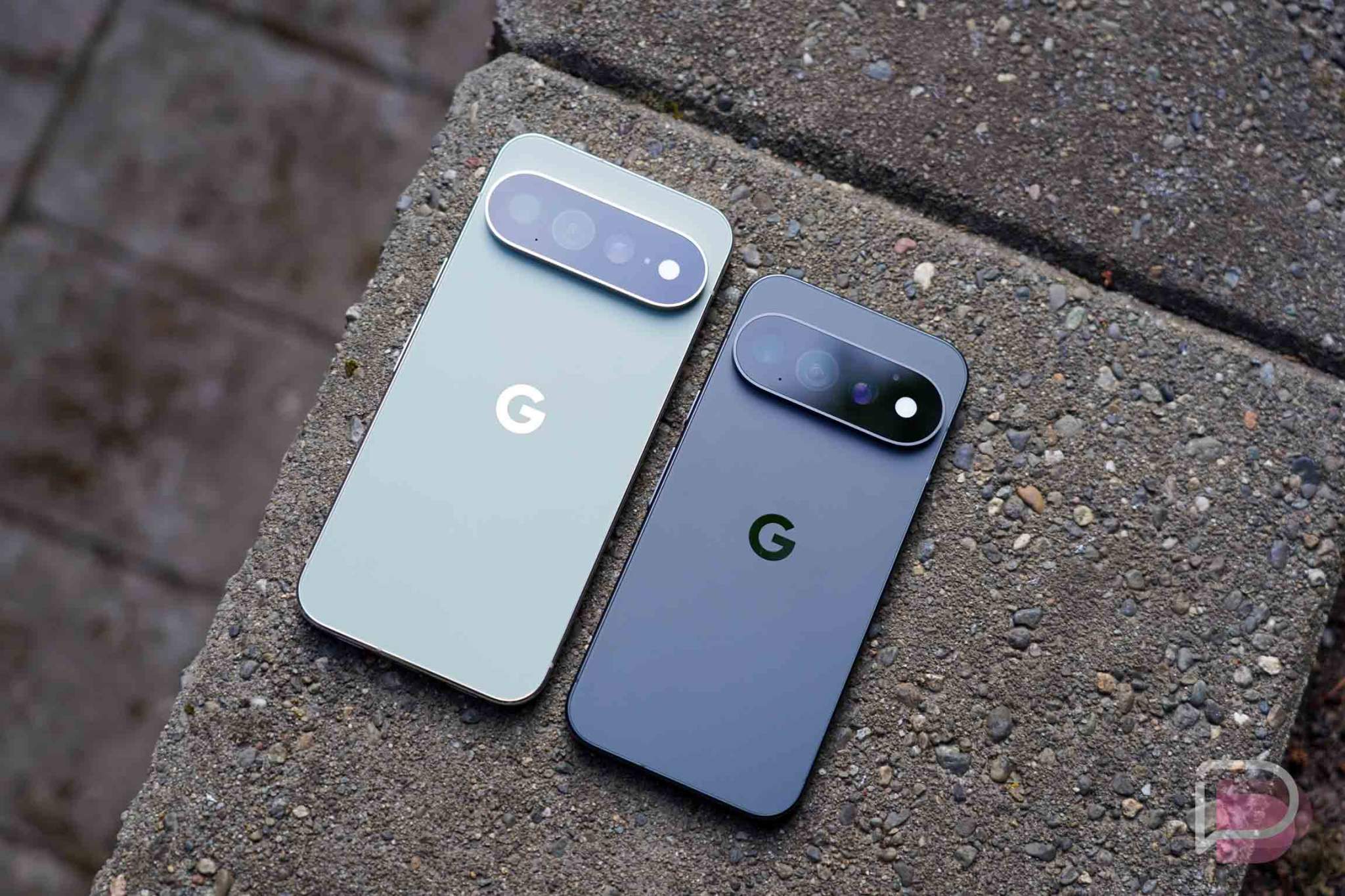
At first glance, three articles address different subjects: a sale on Google smartphones, the return of an honorary plaque to a Denny’s restaurant, and stock trades in Donald Trump’s portfolio. But the two political stories intersect around Nvidia CEO Jensen Huang, showing how the personal reputation of a technology executive has become tied to politics, national security and financial interests. The article about the Pixel 11 Pro provides a contrasting backdrop: it deals with the commercial promotion of a product, where a buyer’s savings can be calculated, while the key question in the stories surrounding Nvidia is whom to trust—and how much.
According to Politico’s article on the return of the plaque to Denny’s, the chain has once again recognized Huang as an honorary alumnus and restored the commemorative plaque to its restaurant in San Jose. Nvidia is said to have been founded at a booth in that restaurant. The plaque was taken down on November 13 after reports that Huang had stepped down amid stories about alleged affairs with at least two women; one of them, according to those reports, may have been a Chinese spy, prompting national security concerns. Then, Politico reports, Huang was reinstated as head of the company on Monday after President Donald Trump urged the board to bring him back.
It is important to distinguish established actions from allegations and speculation: the material provided describes reports of personal relationships and possible espionage, but offers no evidence that Huang passed on classified information or committed a crime. Even so, the possibility that the head of a major technology company had a connection with someone suspected of spying can raise questions about corporate security—especially when the company operates in the strategically important semiconductor industry.
The plaque story vividly illustrates how gestures of recognition can shift with political and corporate circumstances. Denny’s first distanced itself from Huang by removing the plaque, then restored it after he returned to his leadership role. This does not prove that the restaurant acted under political pressure, but it highlights the symbolic dimension of events: recognition of Huang as a founder and business leader has become closely tied to his current status and public standing.
Questions about the intersection of politics and Nvidia’s interests also arise in the BBC article about stock trades. According to the headline, Trump’s accounts made 44 trades involving Nvidia stock this year. The excerpt, however, gives the White House’s position: the president’s stock and bond portfolio is independently managed by third parties, and Trump and his family, it claims, “have no ability to direct or influence the investments, or to instruct when to buy and sell.” In other words, the issue is a potential conflict of interest and how independent the management of those assets appears to be. The fact of the trades cited in the headline does not, on its own, prove that the president personally made investment decisions or used his office for financial gain.
Taken together, the two political stories point to a broader problem: when an influential politician publicly intervenes in the fate of a major company’s CEO, while accounts linked to that politician trade in the same company’s stock, it is especially important that decisions are made transparently and in accordance with the rules. The articles do not establish a causal link between Trump’s call to bring Huang back and the stock trades. But the coincidence of these circumstances naturally draws greater scrutiny to possible conflicts of interest and to how convincingly safeguards against personal influence over investments are designed.
Against this backdrop, Droid Life’s article about discounts on the Pixel 11 Pro looks like a more familiar story about commercial incentives. According to the article, ahead of Black Friday Google cut the price of the Pixel 11 Pro by at least $350 and the Pixel 11 Pro XL by $400. The 256 GB versions cost $749 and $899 after the discounts, respectively; the 512 GB models cost $869 and $1,019. The article calls the 512 GB configurations particularly attractive: the author links the extra storage and 16 GB of RAM to future-proofing, including in anticipation of new Gemini features.
Buyers can lower the price further by trading in an old device: Droid Life says trade-ins of certain Pixel models offer an additional discount of up to $700 on top of the main promotion. Google Fi offers are also available—a free Pixel 11 Pro or Pixel 11 Pro XL for $100, provided the subscriber stays with the service for 24 months and receives monthly bill credits. According to the article, Google Play Points members may qualify for an additional discount of up to $275. These conditions matter: “free phone” does not mean there are no obligations—the offer is tied to a service plan and a long commitment, while further discounts depend on the customer’s status or the device being traded in.
Comparing the consumer news with the political stories does not mean the events are directly connected. They share a broader theme of trust and incentives. In the case of smartphones, the terms of the deal are expressed in prices, discounts and service commitments: buyers need to check the final cost and any restrictions. In the case of Nvidia and Trump, the stakes are higher and transparency is harder to assess: public statements, documented actions and unsubstantiated suspicions must be kept distinct. The greater a company’s influence over strategic industries and government policy, the more important it is not only that no wrongdoing has been proven, but also that people trust the procedures designed to prevent conflicts of interest.
The key takeaway is that the reputation of a technology leader is no longer defined solely by business success. It has become part of corporate governance, national security and political legitimacy. Huang’s return to his post and the plaque’s return to Denny’s show how quickly public recognition can be restored, but they do not resolve the questions raised by the initial reports. And the data on Nvidia stock trades in Trump’s accounts do not, on their own, establish wrongdoing, but they make independent asset management and convincing disclosure of the circumstances all the more important. At the consumer end of the spectrum, the Pixel discounts show that trust also has a practical price: buyers need clear terms, and the public needs equally clear explanations when power, corporations and money intersect.