The materials presented describe events that are not directly connected: military escalation in the Middle East, a cargo plane crash in Miami, and an investigation into an apparent murder followed by suicide in Maryland. However, they share a common narrative: the consequences of decisions made amid conflict, stress, vulnerability, and inadequate oversight. In all three cases, the news reports document a tragedy that has already occurred, while key questions about causes, prevention, and accountability remain unanswered.
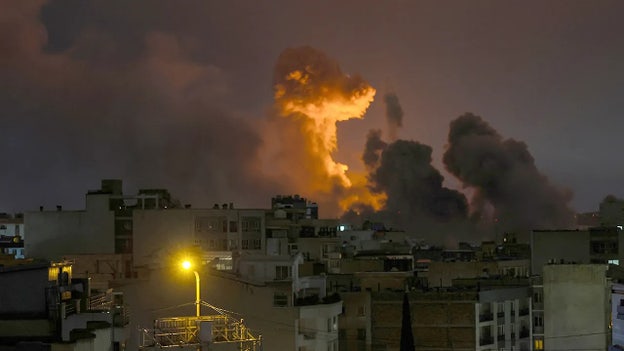
According to a Fox News report on the situation surrounding Hezbollah, Israel seized the Ali al-Taher ridge in southern Lebanon—a strategically important position described by the outlet as a Hezbollah and Iranian stronghold. According to retired Lieutenant Colonel Sarit Zehavi, Israeli strikes over the past three years have destroyed or disabled approximately 90% of the group’s missile and rocket arsenal. At the same time, the report says Hezbollah still has between 10,000 and 15,000 rockets.
Even if these estimates are accurate, they do not mean the threat has disappeared. On the contrary, the source emphasizes the group’s transition from a large, centralized military structure to a more dispersed and resilient threat. Losing the ability to organize a large-scale invasion of Israel does not mean the end of rocket attacks, sabotage, or the gradual reconstruction of infrastructure. Zehavi warns explicitly: “As long as Iran supports its main proxy—Hezbollah—it will be very difficult to prevent the restoration of its military capabilities.”
It is important here to explain the term “axis of resistance.” This refers to a network of armed groups supported by Iran or politically aligned with it. It generally includes Hezbollah in Lebanon, several Shiite formations in Iraq and Syria, and other regional movements. The term is political and is used differently by the parties to the conflict: Iran presents the network as resistance to Israel and American influence, while Israel and its allies view it as a system of proxy forces—armed partners through whom Tehran expands its influence without entering into direct war on every front.
The main conclusion from this report is that military successes can alter the balance of power but rarely eliminate the source of a conflict itself. Israel may limit Hezbollah’s arsenal and mobility, but as long as the group retains funding, supplies, and political support, it can adapt. The issue, therefore, is not only the capture of territory but also a prolonged contest involving infrastructure, intelligence, logistics, and the ability to rebuild strength.
A very different but structurally similar question arises in a CBS News report on the cargo plane crash at Miami International Airport. An Amazon aircraft operating Prime Air Flight 7598 overran the runway on September 6, 2026. After striking navigation equipment, it hit a cleaning-service van carrying seven people, then crashed into a Toyota and stopped near parked Tesla robotaxis. Five people in the two vehicles were killed.
Witness Abraham Altamar said that one of the pilots emerged from the cockpit in shock. He was shaking, had injuries to his forehead and hand, and asked for a phone so he could contact his wife. According to the witness, the pilot said, “My career is over.” The remark conveys not only the person’s emotional state after the crash but also the premature nature of attempts to assign blame. The U.S. National Transportation Safety Board had not yet interviewed both crew members, and the flight recorders—devices that record cockpit conversations and flight parameters—had only been sent for analysis.
Investigators must determine why the aircraft failed to stop within the runway limits and what role was played by the condition of the aircraft, the crew’s actions, weather conditions, runway characteristics, and the airport’s safety organization. Particular attention is already being given to the possibility of installing an EMAS system at airports—a special area made of lightweight, crushable material that slows an aircraft when it overruns the runway. Such systems are used at more than 70 airports, primarily where it is impossible to provide the standard 1,000-foot clearway. According to the airport, such a zone existed in Miami, so the question of whether EMAS was necessary remains a matter for technical and regulatory assessment, rather than clear evidence of an error.
This episode shows how individual factors and systemic conditions intertwine. Even if the pilot made a mistake, the investigation must determine whether infrastructure could have mitigated the consequences. Modern safety is built not on the assumption that people never make mistakes, but on creating backup mechanisms that prevent a single error from turning into a mass-casualty event.
The third report—a DelmarvaNow article about an apparent murder-suicide in the city of Pocomoke—shifts the focus from large systems to private life. Maryland State Police are investigating the deaths of 67-year-old Christine Wells and 66-year-old Robert Dehart. Wells was found unresponsive in a home in Pocomoke, while Dehart was found nearby with a gunshot wound that, according to the preliminary account, he inflicted on himself. Investigators believe the two had previously been in a relationship and that Wells was currently caring for Dehart. The medical examiner’s office officially classified Wells’s death as a homicide.
Police emphasize that the case remains active. This is important: the phrase “apparent murder-suicide” describes a working hypothesis but does not replace a final investigative conclusion. That conclusion requires the results of the crime-scene examination, ballistic testing, forensic analysis, an examination of the relationship between the deceased, and a reconstruction of events.
Unlike the military report and the aviation investigation, far less information is publicly available here. However, this case also demonstrates the importance of detecting danger early. In situations involving domestic violence, dependency, a caregiver role, or severe psychological distress, outside assistance—from relatives, social services, medical professionals, and police—can become a critically important barrier. After a tragedy, it is usually possible to determine what happened, but preventing it is no longer possible.
A common trend is visible across all three reports: safety depends not on a single decision but on a system’s ability to recognize threats in advance and remain resilient after an initial failure. In the Middle East, military force temporarily limits an adversary’s capabilities but does not eliminate the political and social foundations of the conflict. In aviation, technical measures such as EMAS can reduce the consequences of crew error but do not replace training and investigation. In a domestic tragedy, law enforcement records the consequences, while prevention requires functioning support mechanisms for people trapped in dangerous relationships or experiencing a crisis.
There is another important common feature: caution in determining causes. Fox News cites assessments by an Israeli think tank and official sources but does not provide independent verification of the claim that 90% of Hezbollah’s arsenal has been destroyed. CBS reports that the investigation is ongoing and explicitly notes that the pilots had not yet been interviewed. DelmarvaNow likewise emphasizes the preliminary nature of the murder-suicide theory. Readers should therefore distinguish between confirmed facts, statements by interested parties, and investigative hypotheses.
The key conclusion is that very different tragedies often unfold according to a similar logic: a dangerous environment, limited control, human vulnerability, and a delay between the emergence of a threat and the response to it. War shows this at the level of states, an aviation disaster at the level of a complex technical system, and the tragedy in Pocomoke at the level of a family and personal relationships. In each case, definitive answers should emerge only after a full investigation, not in the initial wave of emotional reporting.