Taken together, these three reports form a single story about how modern politics and public life increasingly revolve around extreme situations: war and nuclear deterrence, mass violence in a peaceful city, and attempts to find and punish those responsible years after a crisis. At first glance, they are very different stories — about Iran and the United States, a shooting in Idaho, and an investigation involving Anthony Fauci. But they share one important theme: the question of responsibility when decisions are made under pressure, consequences are severe, and society demands not only explanations, but concrete action. In each of the pieces, the same anxiety is voiced — people’s safety depends on how quickly and convincingly power is able to respond, and how well it is later possible to determine who exactly is responsible for what happened.
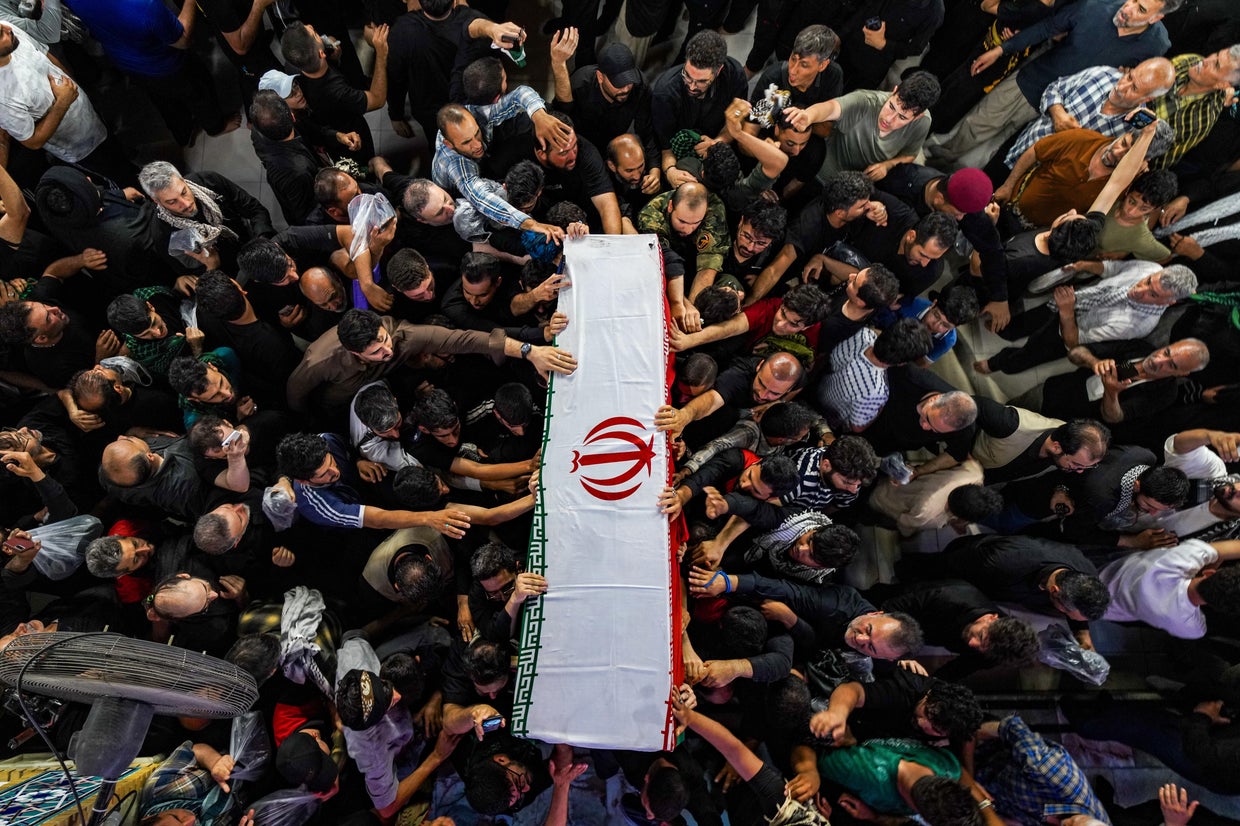
In the report by CBS News, the focus is not only on the conflict around Iran itself, but also on how close the world is to escalation, where any decision can change the balance of power. A headline saying that Donald Trump called off strikes against Iran on the condition that a “quick” peace deal be reached portrays politics as an ongoing bargaining process between strength and restraint. The wording “rapidly” is particularly important here: it underlines that in international politics, time itself becomes a weapon. While the sides keep things in the balance, the risks of new attacks grow — along with the closure of strategic routes such as the Strait of Hormuz and the pulling-in of neighboring countries and U.S. military bases in the region into the crisis. Even a brief note about “tensions rise in Iran war with threat of new strikes” reflects the core logic of such conflicts: every step toward de-escalation always comes with the threat of reversing course. This is not peace, but a pause between surges.
The report by NBC News shifts the same theme of safety into the level of ordinary, everyday American life. A shooting near an In-N-Out Burger in Twin Falls, Idaho, shows that mass violence is no longer only a problem of large cities or criminal neighborhoods. It happens in shopping areas, around restaurants, near movie theaters — places where people feel most protected. According to police, at least three people were killed, five others were wounded, and the alleged shooter died. At the same time, the police chief, Matthew Hicks, said plainly: “We believe the threat to the community is over.” That line matters not only as an operational message, but also as a symbol of modern crisis communication: for the public, it is crucial to hear as quickly as possible that the threat has been contained, otherwise the space around the incident instantly turns into a panic zone. In the account by In-N-Out Burger president Lynsi Snyder, the emotional dimension of the tragedy is especially striking. She speaks about an employee who “was taking care of our most important asset — our customers,” and describes the shooter as “a disgusting human who doesn’t value the lives of others or his own.” These words are not just an expression of grief; they also show how business, police, and local authorities are forced to carry out two tasks at once: seek facts and calm the public. The closure of a Chick-fil-A and a nearby shopping center, evacuation measures, and the later lifting of the restriction all illustrate how, in the U.S., the response mechanism to shootings has become part of everyday risk infrastructure.
The Fox News piece changes the genre but not the theme: here, it is no longer immediate physical danger, but political and legal responsibility for past decisions. Louisiana is joining other states that have started investigations into Anthony Fauci after his testimony in the Senate, where he invoked the Fifth Amendment 111 times. That number itself has become a political symbol: it is used not so much as a legal fact, but as evidence of evading answers. The note repeatedly emphasizes that the federal pardon allegedly granted by Joe Biden does not protect against possible cases at the state level. Secretary of State Liz Murrill says, “Fauci lied,” and Senator Tommy Tuberville claims that Fauci was “responsible for the deaths of millions of Americans.” Such formulations show that the dispute over Fauci has long since moved beyond assessing his medical role during the pandemic. This is now a political-legal fight over how to interpret the past: was he an official acting amid uncertainty, or a person who concealed important decisions and should be held accountable? It also matters that the investigation is being led not by federal authorities, but by the state authorities themselves. This reflects a broader trend in American politics: when an issue is exhausted or blocked at the federal level, the conflict is shifted to state jurisdictions, where it gains a new life.
Link these stories together, and you can see that the shared nerve of today’s news is not simply conflict, but a crisis of trust. In the case of Iran, it is trust between states and whether diplomacy can move fast enough to prevent a strike. In the case of the shooting in Idaho, it is citizens’ trust that public space can be safe. In the case of Fauci, it is trust in experts and government institutions that made decisions during the pandemic — institutions that are now themselves becoming targets of suspicion. In all three storylines, power is trying to demonstrate control: the White House and the military through signals that strikes could be stopped, the police through a statement that the threat has been eliminated, and the states through new investigations. But at the same time, all three stories show the limits of that control. Diplomacy can fail, violence can erupt suddenly, and legal responsibility can stretch on for years and become a political weapon.
There is also a deeper takeaway: modern society lives in a mode of both constant retrospection and immediate response at the same time. It demands an instant reaction to a crisis — as in Twin Falls, where it is important to understand right away whether the danger has ended. But it also demands a long, after-the-fact investigation — as in the Fauci case, where each earlier decision is brought back into the spotlight. Between these poles lies international politics, where the question “will peace be reached quickly?” sounds like a time ultimatum. That is why all three texts are not only about specific events, but about a new norm in public life: safety is no longer taken for granted, and responsibility is no longer a question that can be considered definitively closed.
Even the complex concepts in these materials need clarification. The Fifth Amendment to the U.S. Constitution, which Fauci referenced, protects a person from self-incrimination: if an answer could be used against them in a criminal proceeding, they have the right to refuse to testify. A federal pardon means forgiveness for violations of federal law, but it does not necessarily close possible cases at the state level, which is why there is a dispute about whether someone can still be prosecuted. The Strait of Hormuz is a strategically vital sea passage through which a significant portion of the world’s oil trade flows; threats around it always raise fears in global markets. The phrase “shelter-in-place” means an order to stay indoors and not go outside until special permission is given — that is, a temporary measure to protect people when there is a threat of shooting or other danger.
The key conclusion drawn from all three materials is that public stability today is determined not by the absence of crises, but by the quality of the response to them. International decisions are measured in hours and days, local safety in minutes, and political responsibility in years. And it is in that difference in pace that the main tension of the present is born: the world is demanding a faster response, but getting less clarity for longer.