At first glance, these three news stories seem completely different: one is about a scandal in an election campaign in the U.S. state of Maine, another about tensions within NATO amid the war in Ukraine and a conflict with Iran, and the third about a baffling injury suffered by footballer Jordan Henderson after England’s victory. But they share the same underlying narrative: systems that look stable and familiar suddenly prove vulnerable because of a sudden shock, abnormal behavior, or built-up internal strain. A political campaign, an international alliance, and a sports team—all three spaces rely on trust, discipline, and manageability, and in all three cases it is precisely those foundations that break down. In that sense, the news reads like three variations on the same theme: how fragile order becomes when it’s pressed by personal accusations, geopolitical fault lines, or simply one careless step.
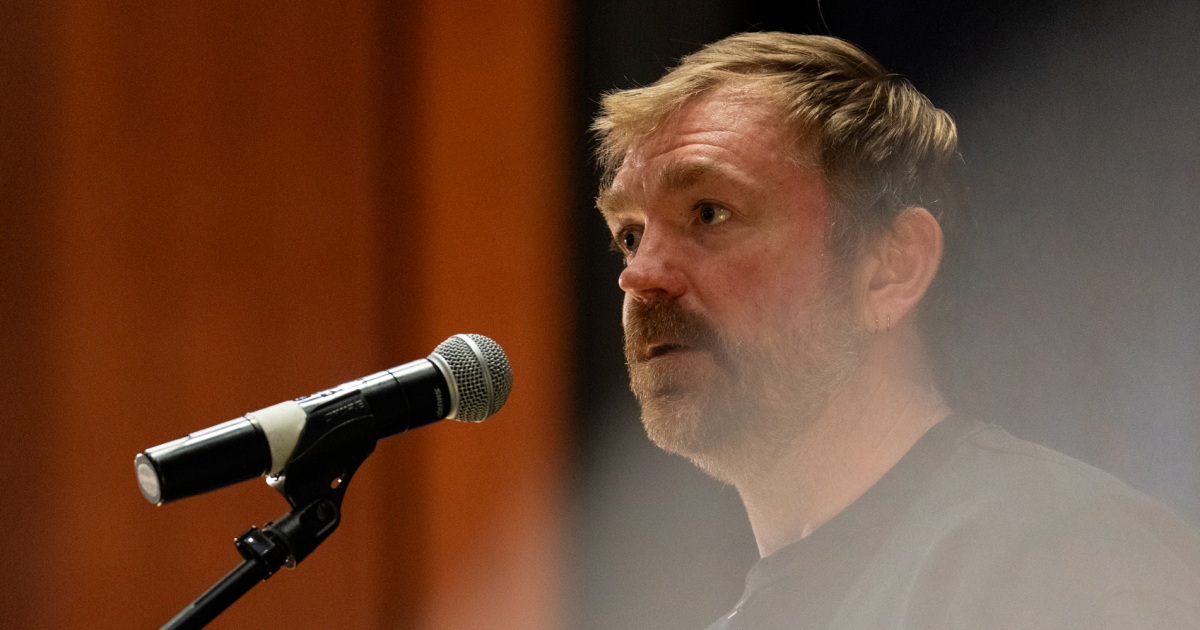
The most acute and straightforward example is the story involving Graham Platner, the Democratic candidate for the U.S. Senate seat from Maine. NBC News reports that he is “denying a new allegation of sexual assault,” but the very appearance of such claims already changes the dynamics of the race. Platner said he was taking “time to reflect on the best path forward,” and in the video he directly linked his personal situation to the political consequences for the campaign. Here, what matters is not only the substance of the allegation, but how quickly a personal scandal turns into a strategic crisis: it’s no longer about how convincing one response will be—it’s about whether the candidate will be allowed to remain the party’s symbol in a crucial campaign for control of the Senate.
The story unfolds along a familiar American pattern: a public accusation, an immediate denial, counterclaims of “smear” campaigns—then a fight over how to interpret what’s happening. NBC News notes that it could not independently verify Politico’s report, in which Platner’s former partner, Jenny Rakisoc, described a 2021 incident in which he allegedly showed up at her home drunk and “forced himself on her.” She is quoted saying, “I remember him grabbing my pelvis and being really forceful of me,” and she also admits that at some point she thought, “This is no longer my choice.” That is an extremely strong formulation: it moves the discussion from politics into the realm of control over the body and over the boundaries of consent. At the same time, Platner calls the allegations “categorically false,” and his team claims the accusations are a coordinated attack by “out of state establishment operatives.” In this way, the dispute becomes not only legal or moral, but electoral: whom will voters believe, how will they view the timing of the publication, and whether a personal crisis might derail the party’s strategy at a moment when the stakes are especially high.
It also matters that this episode is happening against a backdrop of already accumulated distrust. NBC writes that Rakisoc previously appeared in a New York Times article about women who described Platner’s “unsettling” behavior. In other words, the current accusation does not emerge in a vacuum—it lands on top of an existing layer of worry about his private life. An additional dimension comes from the figure of activist and attorney Cheyenne Hunt, who said she had been contacted by multiple women and that this involves “courageous women” and protecting other women from the person she described as not fit “to hold a United States Senate seat.” Her rhetoric shows how quickly one story can turn into a moral mobilization. But for analysis, the institutional impact is more important than the volume of the judgments: if a candidate from the country’s major party is forced at a critical moment to talk about his own future, it means the campaign has stopped controlling the agenda.
NBC’s piece highlights a particularly important legal-and-political timing. The campaign says the publication came out a week before Maine’s deadline, after which a candidate can no longer voluntarily withdraw from the election without special procedures. That makes the story not just scandalous, but procedurally complicated: if Platner withdraws, the Democrats will have a very narrow window to replace him. That’s why he and his team emphasize that he won’t step aside and that all of this is “desperate smears.” That’s how a private drama turns into a question about how the party machinery functions. Democrats need this Senate mandate to restore control of the chamber, so any blow to the candidate is a blow to the entire architecture of their hopes.
On the international stage, the same logic of fragility shows up in Al Jazeera’s coverage of a NATO summit in Turkey. Formally, the agenda sounds familiar: defense spending, Europe’s industrial base, and support for Ukraine. But the real center of gravity is the relationship between the U.S. and its allies, which—according to the outlet—has become “the single biggest challenge overshadowing its future.” Donald Trump set the tone in advance, writing that it was “Ridiculous for the U.S.A. to continue along this one sided path when the relationship is not reciprocal,” and adding: “They were not there for us!!!” Those short phrases concentrate the alliance’s core problem: NATO exists as a mechanism for collective security, but inside it, doubt is strengthening about the very idea of reciprocity. If the alliance’s largest ally publicly questions the meaning of its commitments, the organization is still working—but it is working in a mode of anxiety.
Al Jazeera emphasizes that at the summit, allies are discussing three priorities: increasing defense investment, expanding Europe’s defense industry, and providing long-term support for Ukraine. That sounds like a reinforcement plan, but in reality it’s a plan to adapt to the potential weakening of America’s role. The words of expert Ian Lesser—“I don’t think the alliance is at a breaking point. But it is entering a period of profound adjustment”—capture NATO’s condition precisely: not collapse, but a redesign under the threat of collapse. That is the main point of the article: the alliance hasn’t broken yet, but it can no longer live the way it did before. As Sofia Besch puts it, Europeans no longer believe in restoring the previous level of trust and are hoping, at best, for “greater predictability.” This is an important idea. When people no longer dream about trust but dream about predictability, it means the system has shifted from a partnership phase to a risk-management phase.
The article also includes a deeper structural layer: Europe is trying to become more independent while still remaining dependent on the U.S. in critical military functions. Al Jazeera cites the IISS, which points to Europe’s reliance on the U.S. for long-range strikes, intelligence, satellite capabilities, logistics, and integrated air and missile defense. In other words, even with defense spending rising by 62% between 2020 and 2025, Europe cannot quickly replace the American military framework. The assessment of $1 trillion and the timeframe of “a decade or more” to replenish critical U.S. capabilities show that strategic autonomy is not a slogan—it’s a long-term and expensive project. So the talk of a “breaking point” is, in fact, a talk about time. NATO may not be collapsing right now, but it could end up trapped in a transitional period when old guarantees have already weakened and new ones have not yet been created.
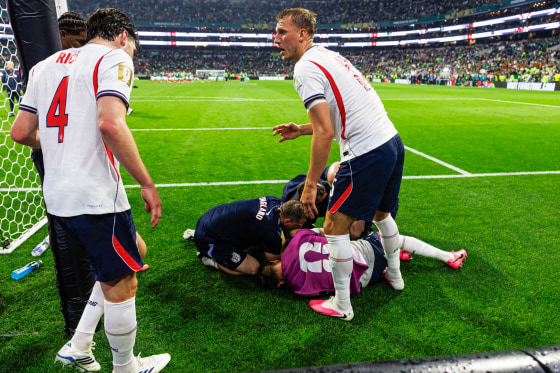
The third piece, which at first glance seems the lightest in tone, also fits this logic. The story of Jordan Henderson, who suffered a serious injury during England’s victory celebration, looks almost absurd: after a dramatic match, the team sings “Wonderwall,” captain Harry Kane jumps over a temporary barrier, and then Henderson unsuccessfully tries to repeat the move and falls. But it is precisely in this absurdity that the meaning of the news lies. The victory is already achieved, the danger seems to be over, emotions are overflowing—and then an injury happens in the moment of triumph. It’s a reminder that vulnerability doesn’t disappear even after success. Thomas Tuchel says, “Mixed feelings also because I’m exhausted, of course, and emotional, but also sad because Jordan got injured,” and then уточняет: “He’s at the moment in the hospital, so it’s a quite serious injury.” Joy and loss end up in the same sentence, making the episode especially human.
Here, too, a key detail is that Henderson was a substitute and barely played in the match, yet still ended up at the center of attention—first on the pitch, and then in the hospital. Symbolically, sometimes what matters isn’t athletic contribution in the game, but a role in the atmosphere, in the ritual, in the team’s shared identity. But the ritual of safety doesn’t guarantee anything. Even a victory celebration can turn into an injury if the body and the space fall out of control. This story doesn’t carry political weight like the pieces about Platner and NATO, but it adds to their common idea: human and institutional structures break down not only because of big catastrophes, but also because of small, awkward, almost accidental failures.
If you put all three materials together into a single picture, you can see that the main theme here is a crisis of manageability. In Maine, a candidate who only yesterday won the primaries with more than 70% support is suddenly forced to consider whether he will remain in the race. In NATO, an alliance that has relied on American leadership for decades is trying to understand whether its foundation is turning into a source of instability. In football, a player gets injured not during hard contact, but in the middle of a triumphant celebration. Everywhere, the same mechanism is at work: outwardly the system remains intact, but the internal margin of resilience is shrinking.
There is also a common media conclusion. Modern news increasingly shows not just an event, but a crisis of interpretation. In Platner’s story, nobody argues only about facts—people argue about timing, motives, political context, and whether they trust the accusation. In NATO’s story, the debate isn’t only about spending, but about whether it’s even possible to rely on the alliance’s old rules if the U.S. is speaking in the language of ultimatums. In Henderson’s story, the injury becomes a plot point not because of the match strategy, but because it happened at the height of the team’s shared emotions. That is the sign of the times: an event becomes significant when it breaks an expectation.
Some concepts here are worth explaining. “SMear effort” or “smear” is a smear campaign—an attempt to undermine a person’s reputation through negative claims, often at a politically sensitive moment. “Strategic autonomy” means Europe’s strategic autonomy, the ability to ensure its security independently without critical dependence on the U.S. “Integrated air and missile defence” refers to a system that combines detection, interception, and the coordination of protection against air and missile threats. And the mention of “Wonderwall” in the football news is a reference to the Oasis song that became the team’s informal anthem and part of its ritual after a win.
The key takeaway from all three pieces is that trust is a more fragile resource than it might seem. A political candidate can, within hours, shift from being a winner to becoming someone who is apologizing and defending himself. A military alliance can find that its center of gravity is no longer perceived as unshakable. Even a sports victory doesn’t eliminate the risk of a physical breakdown at the most harmless moment. And that’s why these stories, despite their differences, are about the same thing: resilience is not a state, but continuous work to keep a system from falling apart. When that work fails, the consequences show up quickly, publicly, and often at the most inconvenient moment.
Sources: NBC News on Graham Platner, Al Jazeera on the NATO summit, NBC News on Jordan Henderson.
![A NATO flag flies over the Tapa military base in Estonia [File: Ints Kalnins/Reuters]](https://www.aljazeera.com/wp-content/uploads/2026/04/2026-04-01T142912Z_644868872_RC2TO0ABOF8S_RTRMADP_3_UKRAINE-CRISIS-TRUMP-FRANCE-1776407091.jpg?resize=770%2C513&quality=80)