Sometimes very different news items — about a football club moving, the death of a beloved actor, and a shooting at a city festival — unexpectedly form a single theme: how quickly and without warning what we take for granted can change. A local team that “was always here,” an actor who seems an eternal part of the screen world, a family festival associated only with music and food — all of these can disappear or be shattered in one day. That vulnerability of the familiar order becomes the invisible thread linking the stories reported by Yahoo Sports and NBC News.
The news about a possible move of the Chicago Bears to a neighboring state, reported by Yahoo Sports (https://sports.yahoo.com/articles/breaking-news-nfl-franchise-move-204829981.html), sounds like a personal loss to many fans. This is not merely a change of stadium, but one of the NFL’s historic franchises — a club whose identity for decades has been inseparably tied to the city of Chicago — taking a “major step toward an interstate move.” Club leadership officially announced a stadium project in Hammond, Indiana, emphasizing its regional significance: according to chairman George H. McCaskey and president and CEO Kevin Warren, “a world-class stadium project in Hammond will transform the region, linking northwest Indiana with Chicago’s South Side through the Loop and through neighborhoods and suburbs north of the city.” Even the wording “link the region” shows how a sports team is envisioned not only as a city symbol but as a tool for spatial, economic, and social restructuring.
Yet beneath that business and infrastructure rhetoric lies a fracture of familiar local identity. The team openly admits it has “exhausted all options to stay in Chicago, which was our original objective,” and states: “there is no viable site in the city.” Now only two options are under consideration — Arlington Heights in Illinois, where the club already owns a 326-acre parcel, and Hammond in Indiana. The failure of the initiative in the Illinois legislature, which adjourned its session on June 1 without even considering a measure to create local “stadium authorities” for Arlington Heights, became a political signal: the city and state essentially could not — or would not — create the conditions to keep the team within its traditional borders.
At the same time, in Indiana a legislative committee voted in February to create the Northwest Indiana Stadium Authority — a special body designed to facilitate financing and construction of a domed stadium in the state’s northwest. A sort of interstate competition is unfolding around the club: “several efforts” have been made to lure the franchise to relocate. Economically, it all makes sense: investment, jobs, taxes, prestige of a mega-project. But for fans it is a blow to the very foundations of who they feel they are on fall Saturdays and Sundays. The Chicago Bears in Indiana — formally a regional “Chicagoland” team, in reality — is a trauma for people for whom the club was part of the city’s code, like architecture or accents.
The same theme — how the world changes when a seemingly constant figure disappears — appears in NBC News’s piece on the death of Anthony Head, known for “Buffy the Vampire Slayer” and “Ted Lasso” (https://www.nbcnews.com/news/obituaries/anthony-head-buffy-vampire-ted-lasso-actor-dies-72-rcna348677). He died at 72 “peacefully, from complications of pneumonia, surrounded by family,” according to a statement from his daughters Emily and Daisy. On the level of facts, this is a private tragedy for a family and a professional community, but through mass culture it becomes a loss for millions of viewers.
Interestingly, in both “Buffy” and “Ted Lasso” Head played characters named Rupert — and both portrayals became symbolic in their own way. In “Buffy” he was Rupert Giles, a fatherly mentor to the heroine (Sarah Michelle Gellar) and the whole team: quiet, ironic, and morally steady. His colleagues on the show emphasize that facet. Gellar, in a farewell Instagram post, quotes a line from the show: “‘Tell Giles I understand everything and I’m okay.’ But I don’t understand everything and I’m not okay. But I understand that I was lucky to have known you.” David Boreanaz calls him “a pillar of the ‘Buffy’ universe” and recalls his kindness and sense of humor, which brought “great energy” to the set.
In “Ted Lasso” everything is flipped: Rupert Mannion is the selfish, unfaithful owner of a football club, an almost caricatured antagonist to the characters played by Jason Sudeikis and Hannah Waddingham. But colleagues, such as Brett Goldstein (Roy Kent in the series), immediately disentangle the on-screen and real-life images: in his Instagram post he said Anthony Head was “a brilliant actor who played the worst person in the world, which was an incredible skill because he himself was the best person: endlessly charming, kind, funny and joyful.” Again there is a contrast between fiction and reality: an actor who could embody strength and vice proves in life to be a bearer of human warmth and steadiness.
For British audiences, Head was known long before his Hollywood projects. NBC’s piece highlights his “long and successful career” in the U.K., from dramas to comedies, including appearances on the satirical sketch show Little Britain (about British manners and stereotypes), where he often parodied his own “serious” actor persona. Creator Matt Lucas recalls that in casting they sought “an actor like Tony Head,” not expecting Head himself to want to participate — and admits they were very lucky: he was “always brilliant, kind and warm.”
A distinct part of his cultural footprint was advertising: from 1987 to 1993 he starred in a series of TV commercials for Nescafé Gold Blend. These mini-series, where he and Sharon Maughan played neighbors flirting over instant coffee, ended with “romantic cliffhangers” (that is, they cut off at a moment of tension — a device typical of serials) and became a true cultural phenomenon in the U.K. Thus Head was present in viewers’ everyday lives not only as a drama or comedy character, but also as a kind of constant guest in the living room — part of television domesticity.
His biography emphasizes continuity: son of documentary filmmaker Seafield Head and actress Helen Shingler, nephew of musician Murray Head, he trained at the London Academy of Music and Dramatic Art (LAMDA) and brought theatrical training to the screen. In the daughters’ farewell statement they write that their grief is “much more than the hole he left, but we know his legacy will live in the shows he was part of and the audiences who love them,” noting the comfort in knowing “we can watch him do what he loved even when he is no longer with us.” In the modern world this is a special form of immortality: the screen fixes an image, and a familiar, “one of ours” character remains with us even though the person who created it has gone.
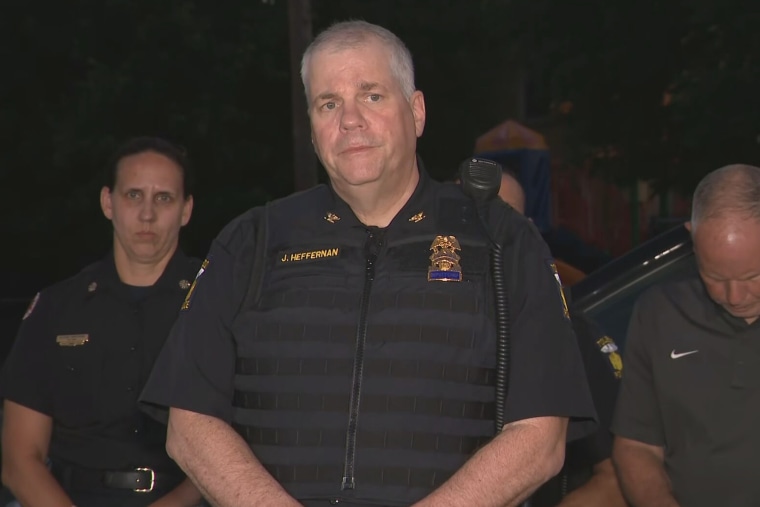
The fragility of normality, which is rarely contemplated, becomes especially painful when it concerns physical safety. Another NBC News piece reports on a shooting in Toledo, Ohio, near the summer Old West End Festival (https://www.nbcnews.com/news/us-news/ohio-old-west-end-festival-shooting-rcna348826). According to police, at least 12 people were shot Saturday evening when, according to Deputy Chief Joseph Heffernan, “at least two shooters likely were shooting at each other.” Among the wounded were people aged 14 to 61, mostly slightly over twenty; two were in critical condition.
The situation is especially tragic given that the festival itself is described as a “beloved Toledo tradition”: live music, food courts, a beer garden, kids’ activities — all that is associated with safe, family, almost idyllic outdoor time. Authorities stress that security measures were heightened for the festival: Heffernan said more police were on duty, plus a significant number of off-duty officers were working the event, and “mobile security cameras” were deployed. In other words, formal security parameters were in place, but that did not prevent violence that, judging by preliminary data, was directed not at festival-goers but at “opponents” of one another. Nevertheless, bystanders who simply came to the festival became victims.
Lieutenant Dan Gerken notes the investigation is in its early stages: police are interviewing witnesses and analyzing video. But already one can speak of eroded trust in the very format of a city festival. The Old West End Association said in a statement the Sunday portion of the festival would be canceled: “after discussions with organizers, law enforcement and the city we feel it would be neither compassionate, responsible nor possible to continue the festival.” Ohio Governor Mike DeWine publicly expressed “deep concern” and stressed that “summer festivals should be safe spaces for families to spend time together without fear of violence,” calling the incident a “senseless crime.”
The common motif of these stories is the loss of a sense of a stable, predictable world. In the Bears case, it is the collapse of the illusion that “our team will always be here.” Legal, financial, and political factors — from legislative decisions to the creation of special “stadium authorities” — prove stronger than the symbolic weight of a team as a city emblem. It is useful to explain the term “stadium authority”: in the U.S. this often refers to quasi-governmental entities that can issue bonds, hold property and operate facilities, facilitating public-private partnerships in stadium construction. Whether such an entity is created often determines how attractive it is for a club to remain in a particular jurisdiction.
In Anthony Head’s story the idea that the world of mass culture is stable is broken: characters and actors we grow accustomed to leave, and the viewer feels acutely that beloved series and films are not just texts but the labor of specific people whose lives are finite. At the same time, digital memory makes the loss paradoxical: new generations will discover “Buffy” and “Ted Lasso” without knowing the moment the actor passed, and for them he will remain alive in every frame. This changes how we perceive the deaths of public figures: the person is corporeally gone, but his image continues to participate in cultural life “in real time.”
In Toledo, the sense of everyday safety is shattered. Most people view a city festival as the opposite of danger: music, food markets, children. When violence intrudes into that space — despite cameras, increased police presence, and organization — it undermines not only comfort but trust in institutions that seemingly did everything “by the book.” There is a broader context: in the U.S. mass and semi-mass shootings have become so recurring that each new story is at once unique and eerily similar to previous ones. There is no overt debate about gun laws here, but the governor’s emotional reaction — “festivals should be safe” — effectively records the gap between norm and reality.
In all three pieces public statements play an important role — announcements from clubs, politicians, and colleagues. This is a kind of ritual language by which society attempts to mark the boundary between the past and the new state of affairs, to give meaning to loss or change. The Bears’ statement that there is “no viable site” in Chicago is an attempt to translate the emotional conflict with the city and fans into a language of rationality and objective constraints. The statements from Anthony Head’s daughters and his colleagues are a way to grieve collectively while also fixing his legacy (“his legacy will live in the shows and audiences”). Statements by Governor DeWine and the Old West End Association are attempts to restore moral order by saying: this should not be so, and we acknowledge it by canceling the festival out of respect for the victims.
If one attempts to formulate several key takeaways from these stories, they would look like this. First, our symbols — from sports franchises to beloved actors — do more than adorn life; they structure it: through them we define where “our” city is, what “our” leisure is, who “our” heroes are. Their loss or radical change (like a team’s relocation) provokes such a strong reaction precisely because it is perceived as an assault on one’s own identity.
Second, infrastructure, economics and politics increasingly intervene directly in cultural and emotional attachments. Decisions about tax incentives or the creation of stadium authorities become equivalent to deciding whether fans will have home games in their familiar city. Similarly, decisions to renew or cancel a show, to cast a particular actor, or shift the emphasis in a story affect how people will remember an entire period of their lives.
Third, safety — physical and psychological — is an increasingly fragile resource. Even in situations with extra security measures and surveillance technologies, as in Toledo, the human factor remains: a conflict between a few people can change the fates of dozens and lead to the cancellation of a long-standing tradition.
Finally, in all three cases society instinctively responds by trying to preserve and rework memory: fans will follow every move of the Bears as they choose between Arlington Heights and Hammond, debating whose team it is now; viewers will rewatch “Buffy” and “Ted Lasso,” reassessing Anthony Head’s performances and sharing quotes and stories about him; Toledo residents and officials will debate how to make the Old West End Festival return someday and again become a “beloved tradition” — this time with a clear understanding of how easily everything can be destroyed.
The fragility of normal does not mean that any order is doomed, but it does call for greater attention to the people and things that seem “self-evident.” Sports teams, actors, city festivals are not just a backdrop but the framework of our everyday reality. Perhaps realizing this is the first step toward ensuring that politics, economics and public life take into account not only numbers and efficiency but also that invisible fabric of human attachments — a fabric revealed by the Yahoo Sports texts about the Chicago Bears, NBC News’s obituary of Anthony Head, and NBC News’s report on the Toledo festival shooting.