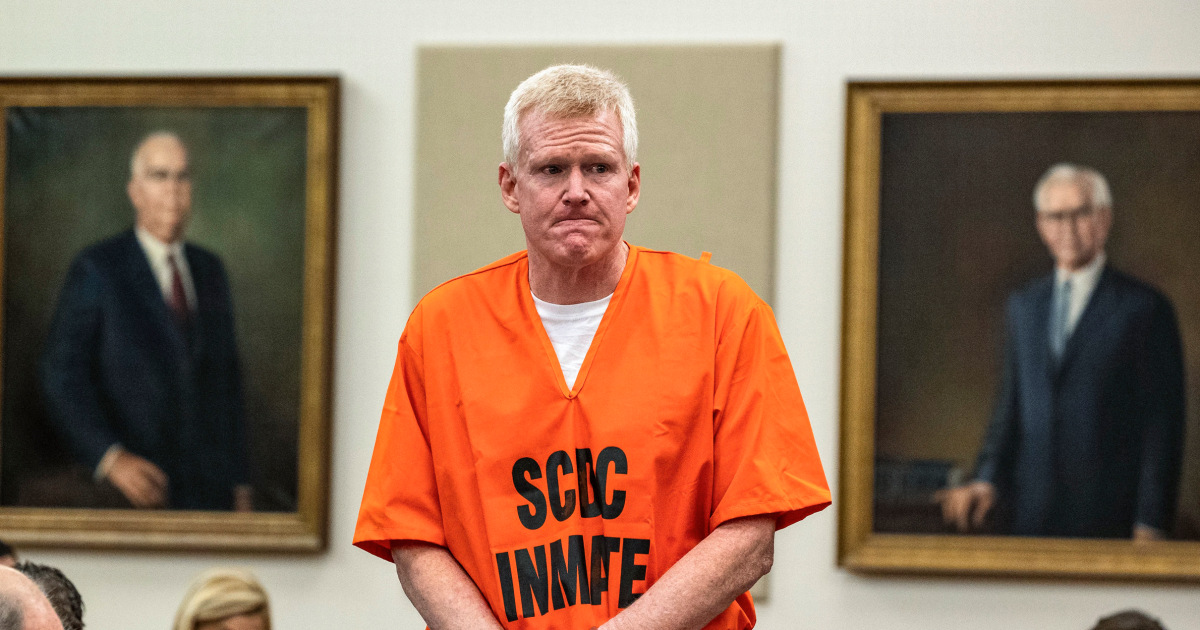
Almost nothing seems to connect, at first glance, the protagonist of a sensational court case, Alex Murdaugh, NBA player Brandon Clarke, and MLB outfielder Alek Thomas. Different fields, different fates, different scales. But the stories told in an NBC News piece about Murdaugh's overturned conviction (NBC News), a Yahoo Sports obituary on Clarke's death (Yahoo Sports), and a short Arizona Sports note about Thomas being traded to the Dodgers (Arizona Sports) actually form a single narrative. It's a story about how vulnerable people in the spotlight are — from courtrooms to arenas — how easily systems treat them, and how thin the line is between triumph, downfall, and attempts at justice.
In the Alex Murdaugh case, that vulnerability appears at the very core of justice: the South Carolina Supreme Court finds that a man convicted of a double murder did not receive a fair trial because of interference by a court clerk. In Brandon Clarke’s fate, vulnerability shows up as a destructive combination of injuries, psychological pressure, possible dependency, and the premature death of an athlete his team and league describe as a beloved teammate and a person with “huge passion and dedication.” In the news that Alek Thomas, once a promising Arizona Diamondbacks player, was traded to the Los Angeles Dodgers after being designated for assignment (DFA), we see the cold logic of professional sports: a person becomes an asset managed according to market conditions.
The settings change in all three cases, but one theme remains constant: how public institutions — courts, leagues, teams, media — shape and break the lives of those within their orbit, and how little control those people have, even when they outwardly appear strong and successful.
The story of Alex Murdaugh, described in the NBC News piece, has become, essentially, a serial drama about the fall of a legal dynasty and trust in the judicial system. Murdaugh, born into a powerful South Carolina legal clan, was found guilty two years ago of killing his wife Margaret and his 22-year-old son Paul in June 2021. Prosecutors claimed he committed the double murder to elicit sympathy and distract attention from large financial crimes that threatened his reputation. Jurors believed the prosecution at the time, and the trial turned into a national media spectacle, spawning podcasts, books, and a Hulu series.
Now the state Supreme Court unanimously overturns that conviction, pointing to “improper external influence” on jurors by Colleton County court clerk Rebecca Hill. The ruling states that Hill “tipped the scales of justice,” effectively interfering with the trial's outcome. The most significant allegation is that she allegedly pushed jurors toward distrust of Murdaugh’s testimony, which directly undermines a fundamental principle: the defendant is entitled to an impartial hearing. The problem here isn’t only the fate of a particular person — who, as NBC reminds readers, is already serving a separate 40-year federal sentence for stealing about $12 million from clients. The problem is that even in a case where public opinion long ago rendered its verdict, the highest court recognizes that rules were broken, and that matters more than the emotional need to “close” a high-profile case.
Paradoxically, the scale of media coverage makes the clerk’s interference even more dangerous. When a trial becomes a show, any internal distortion — the words of someone formally in a technical role trying to influence jurors — undermines trust not only in that particular verdict but in the entire system. By calling the interference “shocking,” the Supreme Court is effectively saying: even if society despises you, you deserve a fair trial. This sharply contrasts with the image of the “fallen lawyer” cemented in mass culture through numerous adaptations of the Murdaugh saga. Justice, ideally, should be more resilient to mob and media pressure than the characters in serialized investigations on streaming platforms.
In the Brandon Clarke story, reported by Yahoo Sports, vulnerability looks different but stems from a similar root: a person whose life outwardly seems like a successful sports career with a multimillion-dollar contract finds his body, mind, and legal status increasingly dependent on external circumstances. Clarke, selected 21st overall by the Memphis Grizzlies in the 2019 draft, burst onto the league scene: 12.1 points, 5.9 rebounds per game, and fourth place in Rookie of the Year voting. In 2022 the club showed confidence by signing him to a four-year, $52 million contract. But then came a sequence of events that reads like a tragic spiral.
First, an Achilles tendon tear in the 2022–23 season. Then persistent injuries: limited games, recurrent knee, ligament, and calf problems. Each new injury narrows the planning horizon, turning the player from a promising “long-term project” into a risky asset. The Yahoo Sports piece details injuries and missed seasons like a medical chronicle. At the same time, another troubling thread appears: in April Clarke was arrested in Arkansas for speeding, reckless driving, and possession of a controlled substance. More than 200 grams of kratom were found in his car.
Kratom is an herbal product made from the leaves of a tropical tree; in low doses it acts as a stimulant, in larger doses as a sedative. According to information from the U.S. Drug Enforcement Administration (DEA) cited by Yahoo Sports, kratom use can lead to psychotic symptoms as well as psychological and physical dependence. Its legal status in the U.S. is fragmented: it is legal in some states and, in others like Arkansas, fully banned. For an NBA player to be found with more than 200 grams of a substance illegal in that state is not just a legal issue but a sign of a possible attempt to cope with pain, anxiety, or addiction.
A report from NBCLosAngeles.com, cited in the Yahoo Sports piece, indicates Clarke’s death is being investigated as a possible drug overdose; the final cause will be determined by an autopsy. Against this background, the words from his agency Priority Sports are especially poignant: he is described as “the softest soul,” “the first to help friends and family,” someone “loved by all,” and someone “impossibly missed.” The club calls him an “outstanding teammate and an even better person,” and NBA commissioner Adam Silver highlights his passion and leadership character.
This is typical obituary language in professional sports, but combined with facts about injuries and substance issues, it raises a broader question: how well do systems — leagues, teams, medical staffs — actually protect players when their bodies and careers start to break down? Public statements of “love” and “support” are almost always sincere, but they don't erase a deeper conflict: an athlete is both a person and an asset expected to deliver results. If he can’t play, his value inside the system falls sharply, while psychological and physical burdens do not disappear.
In that sense, the brief Arizona Sports Arizona Sports item that outfielder Alek Thomas of the Arizona Diamondbacks was traded to the Los Angeles Dodgers after being DFA’d — designated for assignment, meaning removed from the club’s 40-man roster and left in limbo — reads almost comically businesslike. The segment contains no emotions, biography, or character assessment; the Bickley & Marotta radio show simply “reacts to the trade” of a player recently placed on DFA status. For Thomas, this is likely a pivotal career moment: moving to one of MLB’s richest and most successful clubs could be either an opportunity or the end of hopes for a steady role. But within the MLB structure he is just an element of a transaction.
It’s important to understand that DFA is not merely a formality. It’s a mechanism by which a club removes a player from the active roster, having up to a week to trade, release, or pass him through waivers to send him to the minors if he clears (a process where other clubs can claim the player). For fans it’s often just a line in the news feed. For the player, it signals that the former organization no longer trusts his future in the same measure. The fact that the Arizona Sports coverage treats this as “breaking news” without emphasis on the human dimension illustrates how depersonalized the system’s view of an athlete can be.
All three stories — Murdaugh, Clarke, and Thomas — show different facets of how the modern world treats public figures. In Murdaugh’s case, we see how the legal system, even when acknowledging systemic error, does so years later, after the accused’s life is already shattered and his public image shaped by media series and podcasts. By overturning the conviction and ordering a new hearing, the South Carolina Supreme Court sends an important signal: formal guarantees — the right to an impartial trial and protection from external influence on jurors — cannot be sacrificed to the desire for “quick justice” in sensational cases. The attempt by court clerk Rebecca Hill to “tip the scales of justice” demonstrates how a single person inside a system can distort the outcome of a life-defining decision.
In Brandon Clarke’s story we see how an athlete’s body and mind are subjected to a no less ruthless system — professional sports. When his career in the NCAA, first at San Jose State and then at Gonzaga, was marked by growth and defensive dominance (16.9 points and 3.2 blocks per game on average, an Elite Eight NCAA Tournament run where the team lost to Texas Tech), he was perceived as a rising star. But after signing a major contract, injuries and substance issues created a zone where personal vulnerability collided with the club’s and league’s economic logic. The investigation of his death as a possible overdose, reports of 200 grams of kratom illegal in Arkansas, create a social context: the accessibility and stigmatization of alternative painkillers and psychoactive substances, the pressure-culture of “playing through pain,” and complicated relationships between sports and drugs or pseudo-medical remedies.
Thomas, whose Arizona Sports story currently lacks dramatic undertones, represents another facet of vulnerability: structural. There are no criminal cases or tragedies here. But it’s a clear reminder that even in favorable scenarios a professional’s life in the public sphere is constantly subject to decisions by managers, general managers, coaches, and league commissioners. Today you’re a promising outfielder for a club; yesterday you were designated for assignment; tomorrow you’re an “asset” in a deal with the Dodgers. Personal history, character, and inner struggles remain offscreen.
The throughline emerging from these three narratives is an increasingly sharp clash between the human and the institutional. In the courtroom, figures who seem secondary — like a court clerk — can significantly skew the balance, and correcting that mistake is slow and painful. In sports, athletes are simultaneously defended and exploited: they receive contracts and medical support, yet their careers can be wiped out by injuries, legal troubles, and reputational risks. In all cases the media play a dual role: they can draw attention to abuses (as with details of Rebecca Hill’s interference in the NBC News piece, or to the context of kratom and its legal status in different states in the Yahoo Sports article), but they also turn real human lives into series, headlines, and breaking-news bites where depth is often replaced by dramatic setting.
Key takeaways and consequences from these stories can be framed on several levels. First, supreme courts and higher authorities do remain the last line of defense for basic rights, even when the person involved has an abhorrent reputation. The South Carolina Supreme Court’s reversal of Murdaugh’s conviction, despite his admission to stealing $12 million, reminds us: the right to a fair trial does not depend on whether we like the defendant. Second, professional sports, from the NBA to MLB, needs a deeper and more honest discussion about protecting players’ physical and mental health amid large contracts, fan expectations, and constant injury risk. Brandon Clarke’s story shows that good words after death do not substitute for systemic support beforehand, and that contracts and status as a “long-term” player do not guarantee security.
Third, treating athletes like tradable assets, as glimpsed in the succinct Arizona Sports item about Alek Thomas’s trade to the Dodgers, is not an anomaly but the norm. It isn’t necessarily cruel by design, but it is harsh in effect: any dip in form, injury, or poor stretch can instantly change a career’s trajectory. Players find themselves in a situation where identity and future depend on decisions made in general managers’ offices.
Finally, all three narratives pose a common question: are our public institutions capable of seeing the people behind “cases,” “players,” and “assets” — people with vulnerabilities, pain, and rights? The Murdaugh story, repellent as the figure may be, shows that even the most sensational criminal cases cannot have their procedures “adjusted” for convenience. Clarke’s story shows that behind injury stats, arrests, and possible overdoses are real attempts by a person to cope with pain and pressure, not just a set of red flags for management. Thomas’s story shows that even routine transactions in professional sports carry a human dimension that is easiest to forget.
Fame, status, money, and publicity do not make people invulnerable. On the contrary, they often amplify pressure and hasten moments when the system begins to regard a person not as a subject but as an object. A careful reading of the materials from NBC News, Yahoo Sports, and Arizona Sports shows that behind brief reports on convictions, deaths, and trades there is always a more complex story about the fragility of the human condition within large systems. Perhaps the real test of maturity for those systems is how capable they are not only of reacting to scandals and tragedies but of building mechanisms that reduce the likelihood of such destructive outcomes.