Three news stories that at first glance seem unrelated revolve around the same theme: the cost of security and how society and the state manage violence, risk, and the protection of people. In one case it's high politics and the prospect of peace between the US and Iran; in another, an officer’s split‑second decision in a supermarket; in the third, the hidden but persistent violence of spending systems that determine the health and lives of mothers and children in the United States. Together they show that for people in very different situations the central question is the same: who pays for security, who controls it, and why does the price become so high — sometimes literally in dollars, sometimes in lives, sometimes in fear and debt.
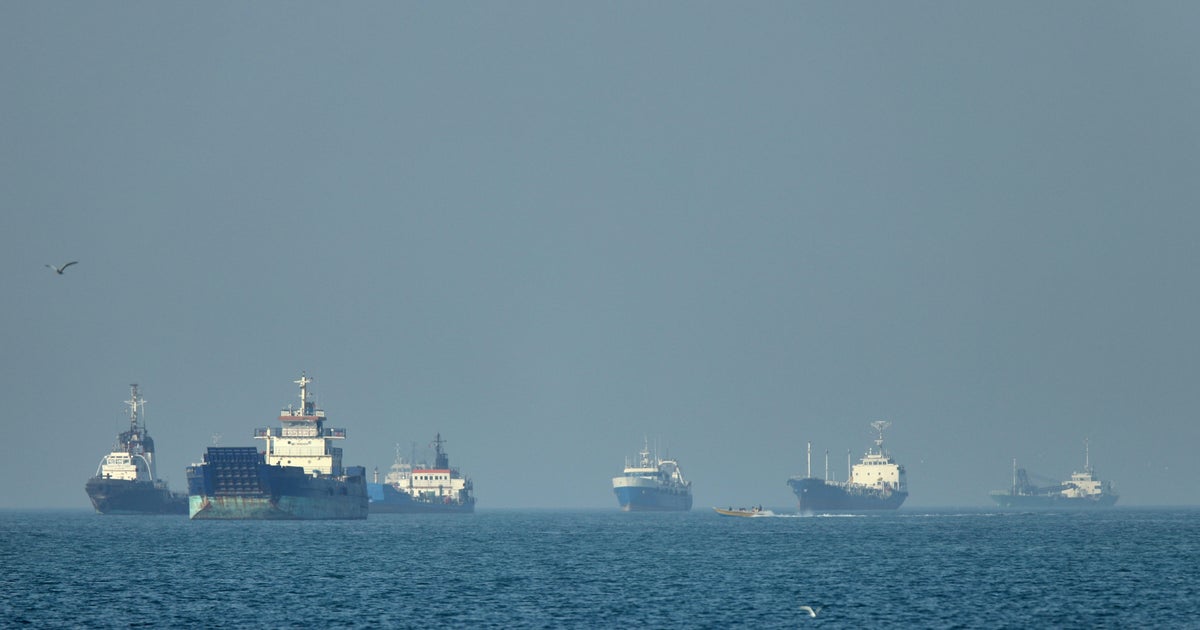
A CBS News piece on talks to end the war between the US and Iran, with Qatar’s involvement, says the US “is still awaiting Iran’s response to a peace plan,” and Donald Trump says that a response could come “at any minute” (CBS News). Formally it’s about diplomacy, but in practice it’s an attempt to reduce the risk of large‑scale violence and a new war in a region where another escalation would cost thousands of lives, destroy infrastructure, and produce years of instability. When Trump says the response could come “at any minute,” he underscores a state of perpetual uncertainty: peace and war depend on a single decision, on the political will of a limited circle of people. It is a concentrated example of how the security of millions is reduced to a bargain between states, where the price of peace and the price of war are calculated in offices, not by those who will be struck.
A similar dynamic plays out at the small‑town level in a KFIZ radio report about an incident at Oshkosh Fleet Farm in Wisconsin (KFIZ). According to a police scanner, an elderly white man asked to see a gun, loaded it with his own ammunition, tucked it into his pants, and left the store. Ten minutes later he was stopped by an officer; the man pointed the weapon at the officer, who fired and wounded him. The area around the store was cordoned off and an investigation began. The phrase “officer involved shooting” has already become a technical, almost sterile term, though it concerns the extreme expression of the state’s monopoly on violence: the officer’s right to decide in fractions of a second whether to shoot at a person who poses a threat.
In both cases — international diplomacy and a local armed incident — the central question becomes control over violence: who exactly decides where the line lies between acceptable and unacceptable risk, how transparent that boundary is to others, and how predictable the consequences are. But in the third piece, published by Al Jazeera, violence looks different: it’s structural, embedded in the economy and the healthcare system, and therefore less visible, even though its victims and consequences encompass millions (Al Jazeera).
Al Jazeera examines how expensive it is to be a mother in the US — from pregnancy through childcare. The US is one of the richest countries in the world but has one of the highest maternal mortality rates among high‑income nations: 18.6 deaths per 100,000 births versus less than three in Norway, Ireland, Switzerland, or Italy. Racial inequality is especially stark: Black women die at roughly three times the rate of white women, 50.3 per 100,000 versus 14.5 for white women and 12.4 for Latina women, according to CDC data for 2023. This is not a “natural” risk but the result of a combination of economic burden, limited access to quality care, discrimination, and a lack of systemic support.
The article details how the cost of childbirth is structured in the US. The concepts of “in‑network” and “out‑of‑network” are key: “in‑network” means the physician and hospital have a contract with the insurer, and rates are prearranged and lower; “out‑of‑network” means no contract, and even insured patients face much higher bills. The national median in‑network cost: about $15,178 for a vaginal birth and $19,292 for a cesarean. In some states prices soar: in Alaska up to $29,152 and $39,532 respectively; New York, New Jersey, California, and Connecticut also report vaginal birth costs above $20,000.
Women’s stories turn dry statistics into lived experience. Maria Harris, a 40‑year‑old American from a Denver suburb (name changed at her request), even with “top” insurance received a bill for childbirth and postpartum care totaling $40,000 for a three‑day hospital stay, of which about $3,000 had to be paid out of pocket. She recalls being charged $600 for a painkiller pill that costs about $5 for a bottle at a pharmacy. Her daughter was placed in the neonatal intensive care unit (NICU) after discharge, and the family received another “crazy” bill for three days’ stay, which Maria is still paying off in installments.
Out‑of‑network is even worse: the median cost for a vaginal birth is $31,117, cesarean $44,432. In some states like Nevada, New Jersey, California, or Florida these numbers reach $49,000–$72,000. In emergencies a woman often cannot control the choice of hospital or specialist: it’s enough that the doctor in the emergency room is outside her insurance network for the bill to multiply. Maria notes that Colorado passed a law requiring out‑of‑network doctors to warn patients and obtain a signed consent for possible charges. But the very need to sign financial acceptance at a moment when a mother’s and child’s lives are at stake illustrates how responsibility for safety is distributed in the US: the system minimizes risks to the financial interests of medical providers and insurers, shifting the burden onto families.
Does the state pay for childbirth? The largest single payer is Medicaid, the government health insurance program for low‑income people, covering 40.2% of all births in 2024. To qualify, a family’s income must be roughly at or below 200% of the official poverty line — about $50,000 a year for a family of three. Unlike countries with universal healthcare systems where the state centrally covers major costs, in the US prospective parents navigate between private insurance, deductibles, networks, and provider rules, and a mistake or unforeseen situation can easily turn a pregnancy into a debt trap.
The same logic appears in parental leave. The US is one of the few wealthy countries without federally guaranteed paid parental leave. The Family and Medical Leave Act (FMLA) of 1993 gives some workers up to 12 weeks of unpaid leave, but many are ineligible or cannot afford to be without income. By contrast, Bulgaria provides almost 59 weeks of leave with 90% pay, and Western and Northern European countries offer months or years of parental leave with substantial compensation. American families often must balance health and financial survival.
The story of Jade, a 43‑year‑old Black woman from Chicago, underscores this gap. She received 12 weeks of paid leave at 60% pay and an additional 4 weeks unpaid. That’s more than many receive, but she still found it insufficient: “I wished I could have more time at home with my child, but I was afraid if I asked I would be denied or lose my job, not to mention the loss of income for my family.” She returned to work when the baby was four months old; by American standards that’s a “good” length of leave, but “in my heart I knew it wasn’t enough.” Her childbirth bill in 2018 was about $46,000, of which she paid $18,000 herself. Here the security of mother and child collides with the risk of job loss and financial ruin — and the state steps back, offering only minimal formal guarantees.
The pressure doesn’t disappear after birth: childcare costs in the US are among the highest in the world. In 2023 couples spent about 40% of disposable income on childcare services — roughly double Ireland (22%) and massively more than Germany, Italy, or Portugal, where subsidies and public systems make net costs close to zero. Local officials like Zohran Mamdani in New York try to ease the burden, launching, for example, the city’s first free childcare program for municipal workers, but that’s the exception rather than the rule.
For individual families this becomes a constant crisis. Maria Harris in Colorado, a high‑cost‑of‑living area, pays caregivers and nannies $25–$30 an hour, which for a 40‑hour week equals about $4,000 a month — a sum comparable to a mortgage and exceeding the average wage in many US regions. She admits: “I have a child and no job, my view of the US has completely changed.” Her husband, from Eastern Europe where maternity and childcare systems are much more socially oriented, “no longer wants to live here.” This personal illustration reflects a broader trend: a sense that a country’s wealth does not translate into security for families.
Returning to the other two stories, the overall plot becomes clearer. In international politics the US and Iran are discussing a halt to hostilities and a possible agreement. Qatar’s role as mediator, the Qatari prime minister’s trips to Florida, and the awaited response that Trump says could come “at any minute” — all show that security at the state level also becomes the subject of a deal where each side calculates its costs. The threat of war, missile strikes, and attacks on infrastructure and transport routes is a price ultimately paid by ordinary people. Decisions made in Washington, Tehran, or Doha resonate far beyond negotiation rooms, just as a split‑second police shot in an Oshkosh parking lot determines the fate of a person who left a store with a gun and the safety of everyone around.
The pattern repeats: at all levels, from global to familial, the key resource — control over risk and violence — is concentrated in the hands of a relatively small set of actors: states, security forces, corporations, insurers, major employers. Those with the least say in decision‑making often pay the highest price. Iranian citizens and American service members might become victims if a peace plan fails; shoppers in a supermarket might be victims of someone’s decision to carry and brandish a weapon; pregnant women and new mothers might be victims of economic and political choices that make childbirth and childcare matters of personal financial risk.
Some concepts in this picture are especially important. Maternal mortality is the number of women who die during pregnancy, childbirth, or within a specified postpartum period per 100,000 live births. A high rate in a wealthy country signals not “biological” differences but problems with access to care, quality of care, inequality, and often hidden forms of racism and class discrimination. The distinction between in‑network and out‑of‑network is not just bureaucratic jargon but a practical marker of financial risk: being out‑of‑network often means facing bankruptcy. Neonatal intensive care (NICU) is a lifesaving but extremely expensive service where each day a newborn with complications stays not only affects survival chances but costs hundreds or thousands of dollars.
Key trends across these pieces intersect. First, security becomes increasingly dependent on political and economic structures. Whether Iran responds to the peace initiative — and how — affects not only the current conflict’s fate but the security of trade routes, energy markets, and regional stability. The protocols and training police receive determine outcomes in potentially lethal everyday situations. The laws Congress and state legislatures pass on healthcare, insurance, and parental leave shape maternal mortality, demographics, and social stratification.
Second, there is growing inequality in risk distribution. In international affairs elites can minimize personal risk even when diplomacy fails; domestically in the US the most vulnerable are poor, Black, and Latina mothers, families without stable insurance, and residents of high‑risk neighborhoods. This shows up in racial disparities in mortality, in who works in higher‑risk jobs, and in who can afford private lawyers, good insurance, or to move to a “safer” area.
Third, structural violence becomes more “invisible.” Military actions and police shootings are dramatic and newsworthy. But an equally destructive system is one in which a woman is still paying off childbirth debt three years after a NICU stay, and a young mother returns to work earlier than she believes is right out of fear of losing her job. When Al Jazeera notes that in some European countries net childcare costs are close to zero while US couples spend up to 40% of income, that’s not just an economic fact but an indication of different social models: in one case childcare is a collective responsibility, in the other it is a private family problem.
Finally, in all three cases the long‑term consequences of these decisions remain open. If the peace plan between the US and Iran collapses, a new wave of violence would undermine faith in diplomacy and possibly create a generation raised under sirens. If police use‑of‑force practices provoke protests and a sense of arbitrariness, trust in law enforcement will erode and the chance of escalation in every incident will rise. If the cost of motherhood in the US stays so high, the country risks falling birthrates, deepening social inequality, a brain drain, and the disillusionment of people like Maria and her husband, who begin to question whether the gamble called the “American dream” is worth the stakes.
Thus, news about talks in the Persian Gulf, a parking‑lot shooting in Wisconsin, and bills for childbirth and daycare in Colorado form a single picture. It shows that security — whether protection from war, crime, or poverty and illness — is not given “by default.” It results from political choices, economic architecture, and collective decisions. As long as the logic of shifting costs onto those who have the least influence on the rules persists at various levels, the price of security will remain excessive — and those who pay it will, above all, be the most vulnerable.