Two reports by ABC News and ABC7 New York describe the same tragic crash in Midtown Manhattan, in which a Tesla passenger was killed and the driver was injured and arrested. At the center of the story is not only the vehicle’s collision with city infrastructure, but also questions about why control was lost, possible impaired driving, an attempt to leave the scene, and the cost of irresponsible behavior on the road.
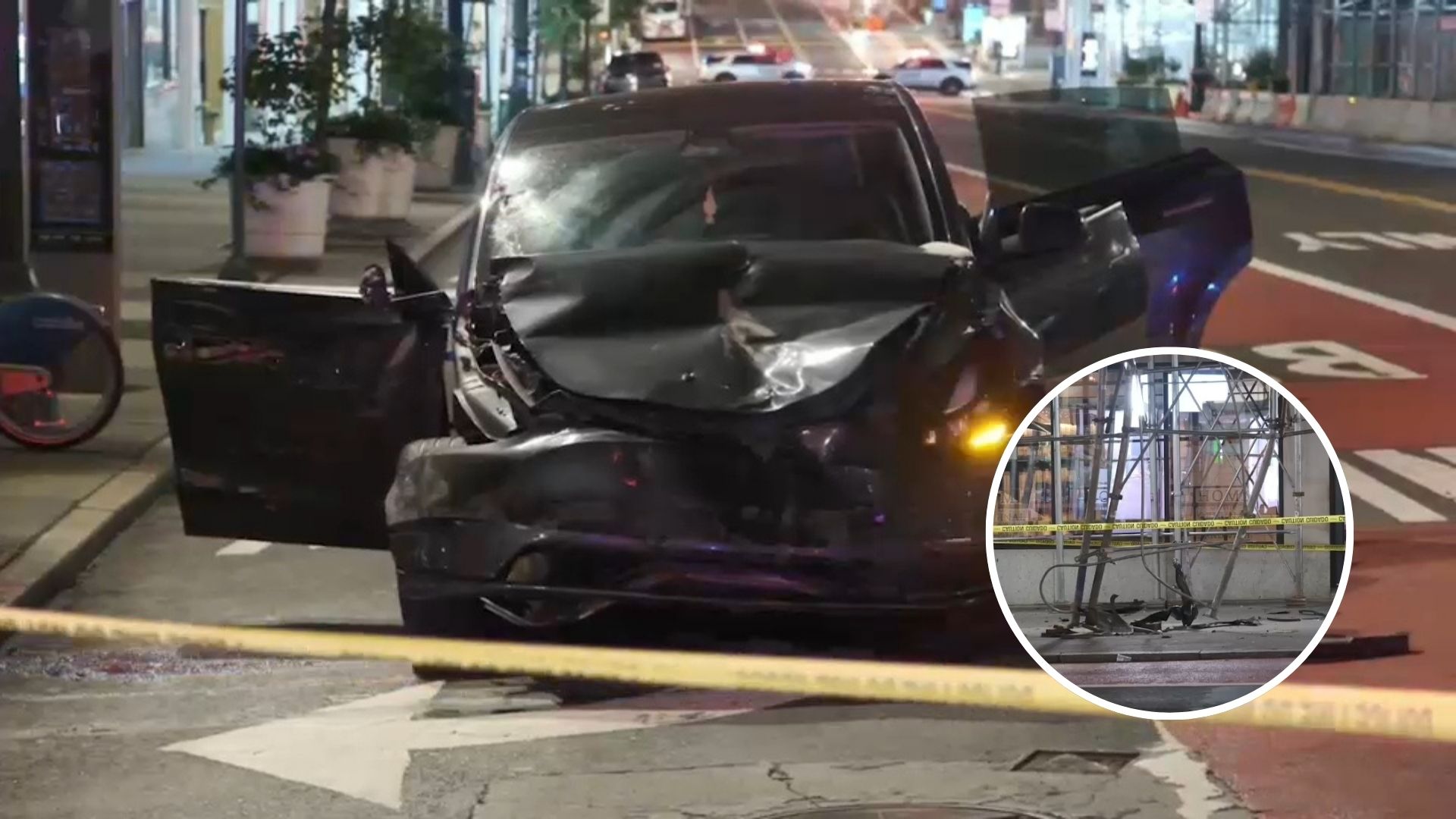
According to ABC News, the crash occurred at approximately 2:43 a.m. Wednesday on East 42nd Street. A gray 2024 Tesla Model Y driven by a 27-year-old woman first struck scaffolding, then continued for several blocks before crashing into a bus stop and a mailbox. A passenger of the same age was taken to a hospital, where she died. The driver survived and, according to preliminary information, was in stable condition.
ABC7 New York provides a more detailed account. The victim was identified as 27-year-old Eliza Suomi of Harlem, the mother of a three-month-old child. She and the driver, Alejandra Paharsingh of Westbury, Connecticut, had been friends since school. According to acquaintances, Suomi was preparing to work as a patient-care aide, and was a caring person and loving mother. These circumstances make the incident especially tragic: the crash ended the life of a young woman who was just beginning to care for her own child and build a professional future.
According to preliminary police information, the vehicle was traveling east on 42nd Street but failed to negotiate a section of the road before crashing into protective structures. The Tesla then continued moving and stopped near the intersection with Second Avenue. In police and traffic-camera footage that has been released, the vehicle is already heavily damaged. This scenario suggests that the initial collision did not stop the car, and that the driver either could not or did not attempt to stop immediately.
Greg Huff, a passerby riding a Citi Bike, provided important testimony. He said he saw the Tesla “accelerate directly into the scaffolding” and travel “at a high rate of speed.” According to Huff, the vehicle’s hazard lights were on after the collision, and the driver’s behavior appeared unusual. Huff said he followed the car and then tried to help. As ABC7 reports, one police officer was assisting the passenger, but according to the witness, the driver “did not comply with commands” and drove away.
That detail became central to the criminal case. Paharsingh was charged with vehicular manslaughter, leaving the scene of a crash resulting in death, and driving while intoxicated or impaired by drugs. At the same time, ABC’s reports emphasize that the investigation is ongoing and that the exact cause of the loss of control has not yet been officially determined. The charges should therefore be viewed as allegations by prosecutors, not as conclusively established guilt: the outcome will depend on toxicology results, video footage, witness statements, and a technical examination of the vehicle.
The term “vehicular manslaughter,” used in the American criminal justice system, generally refers to causing someone’s death through negligence or dangerous operation of a vehicle. It is not the same as intentional murder: prosecutors must establish that the driver’s actions were so careless or unlawful that they directly caused another person’s death. A separate charge of leaving the scene of a crash means that the driver was required to stop, call emergency services, and provide reasonable assistance. Leaving the scene—particularly when people are injured—can significantly worsen the legal consequences.
The reports also show how quickly a localized crash in a dense urban environment can become a chain of collisions. The vehicle damaged scaffolding, then a mailbox and a bus-stop support. Such structures are part of infrastructure designed to protect pedestrians and serve the city, but at high speeds they can themselves become sources of additional destruction and injury. In Manhattan, where pedestrians, public transportation, and work zones remain nearby even at night, losing control of a vehicle poses an immediate threat to many people.
Another public concern stems from the fact that Tesla is often viewed as a technologically advanced vehicle. However, modern driver-assistance systems do not eliminate a person’s responsibility for operating a car. No brand or form of automation can guarantee safety if a driver is under the influence of alcohol or drugs, disoriented, acting impulsively, or ignoring police commands. The available reports provide no basis for claiming that a technical malfunction or an automated system caused the crash. On the contrary, police have explicitly said that the cause of the loss of control remains unknown.
The most significant conclusions from these reports involve three trends. First, the investigation will focus not on the vehicle’s brand but on the driver’s behavior, condition, speed, reaction after the first collision, and possible violations of the law. Second, the alleged attempt to leave the scene could become nearly as important to the case as the crash itself: it affects how the driver’s actions are assessed and deprives victims of timely assistance. Third, the story highlights the human consequences of traffic-related crimes. Behind the dry description of a “27-year-old passenger” is a young mother who lost her life and a three-month-old child left without her.
At the same time, the reports maintain necessary caution. ABC News contains a report about a sporting event and is unrelated to this crash; it adds no information about the investigation. The main details of the incident come from the other two sources. ABC7 provides more information about the victim’s identity, the witness’s account, and the charges, while ABC News presents the initial police account and emphasizes that the investigation is still ongoing.
Thus, this tragedy is not a story about an “unsafe Tesla,” but an example of how a combination of high speed, possible violations, unpredictable behavior, and subsequently leaving the scene can result in a passenger’s death. Final conclusions should be drawn only after the police and judicial reviews are complete. But it is already clear that the consequences extend far beyond the damaged vehicle and city infrastructure: a young mother has died, the driver faces serious criminal charges, and the city is once again confronting the question of how to prevent dangerous driving in a densely populated urban environment.