The news picture from different sources comes together into one rather worrying and at the same time familiar story for recent decades: US–Iran relations live in a constant oscillation between military escalation and diplomatic attempts to reach an agreement, while inside the US a fierce dispute over values and identity rages — from foreign policy to abortion and the role of religion in universities. What in Fox News’s morning roundup looks like a “war of words” and tough rhetoric appears on Al Jazeera’s live coverage as cautious diplomatic bargaining in Geneva, and in OSV News’s report as an internal conflict at the Catholic University of Notre Dame over the appointment of a pro‑abortion professor. Together these stories show a single thread: how political and moral splits inside the US intertwine with its foreign policy moves and the country’s image abroad.
Fox News First’s morning newsletter, “Iran vows to target US troops as Trump threatens repeat strike,” sets a tone of hard confrontation. Even the framing: top of the list is a report that Iran promises to strike American troops, while Donald Trump “threatens a repeat strike.” Context is thin, but the headline logic is clear: escalation, the risk of direct clash, personalization of the conflict around Trump. Other elements of the newsletter complete the picture: Britt Hume’s comment that Trump is merely “going through the motions of diplomacy with Iran,” and a column by Senator Lindsey Graham, “Iran is facing a Berlin Wall moment — history is watching us now,” which Fox cites in its Opinion section. Comparing Iran to the Eastern Bloc on the eve of the Berlin Wall’s fall is not just a metaphor but an assertion: the regime in Tehran is presented as historically doomed, and the US as moral arbiter — “history is watching us,” therefore decisive action is necessary.
This discourse exemplifies so‑called hawkish rhetoric: emphasis on threats, on the moral illegitimacy of the adversary, on readiness to use force. At the same time, the same newsletter shows how the foreign policy issue is woven into the broader right‑wing media narrative. Alongside Iran appear scandals involving Democrats, criticism of “anti‑Trump hysterics” (Ilhan Omar and her outbursts during the State of the Union), accusations of liberal bias at Big Tech (“alleged bias of Apple News”), stories about migration and judicial “resistance” (Biden judge halts Trump deportations to third countries). The list of headlines forms an association for the audience: an external enemy (Iran) and internal opponents (Democrats, liberal media, judges) are perceived as parts of one big crisis in which “ours” are under threat.
Against this backdrop, Al Jazeera’s report on the Geneva talks seems almost from a parallel reality. In the live coverage, “US‑Iran nuclear talks live: ‘Practical’ proposals discussed, Tehran says,” it’s emphasized that the third round of indirect talks on the nuclear program is underway, “practical proposals” are being discussed, and all this occurs amid a “large buildup of US military presence in the Middle East.” An important detail is the phrase “indirect negotiations”: the parties communicate through intermediaries, which indicates a deep level of mistrust. This is a typical element of modern diplomacy when direct contact is politically toxic, so intermediaries (European countries, Switzerland, the UN, etc.) relay proposals and counterproposals.
In diplomatic language, the term “practical proposals” usually means a set of concrete measures, timelines, and verifiable steps that go beyond general declarations. In the context of Iran’s nuclear program, this may include limits on uranium enrichment, number of operational centrifuges, IAEA access arrangements, and steps for lifting sanctions. Al Jazeera stresses that the talks occur “against the backdrop of a massive military buildup,” meaning diplomacy and displays of force are happening simultaneously. In international relations theory this is described as “coercive diplomacy”: a party combines the threat of force with an offer to negotiate, hoping the opponent will concede to avoid the worst outcome.
Here Fox News’s rhetoric and the diplomatic reality reflected by Al Jazeera begin to form a coherent picture. To external observers, it feels like the US is playing on two levels. Domestically, through outlets like Fox, Iran is portrayed as an existential enemy where any softening is suspicious and dangerous. Externally — through platforms such as the Geneva talks — the administration is, by contrast, compelled to seek “practical” solutions, balancing pressure from hawks at home with the need to limit Iran’s nuclear program to avoid a full‑scale war. The phrase from the newsletter that Trump is “going through the motions of diplomacy with Iran” in this context sounds like a critique of any negotiation: it looks less like a sincere effort to compromise and more like an empty ritual that only delays “real” use of force.
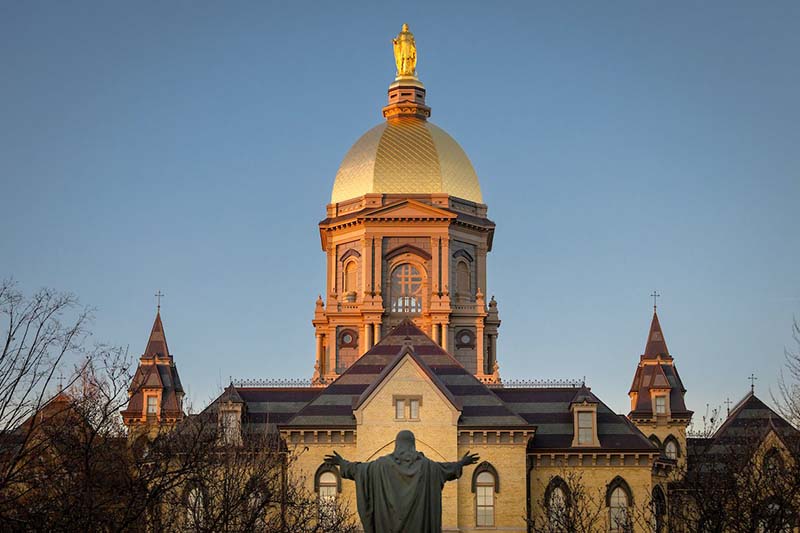
This duality in foreign policy is inseparable from internal culture wars, and the OSV News story about Notre Dame makes that especially clear. The piece, “Pro‑abortion professor withdraws from University of Notre Dame institute appointment,” describes how Professor Susan Osterman, a supporter of legal abortion, withdrew from the position of director of the Institute for the Study of Asia and Asian Studies at the Catholic University of Notre Dame after “weeks of criticism” from students, staff, and several bishops. Bishop Kevin Rhoades said he was deeply “outraged” by the appointment and saw it as a “scandal for the faithful”; he cited her “extensive public advocacy for abortion rights” and “offensive and provocative remarks” toward those who defend life “from conception to natural death.”
This is not merely a local campus scandal but an example of how abortion in the US has become a key marker of political and moral identity. For a Catholic university claiming fidelity to church teaching, inviting a pro‑abortion figure to head an institute is perceived by the community as undermining the institution’s “Catholicity.” Rhoades’s reaction — “we pray for the University of Notre Dame” at the Marian grotto with 50 students and faculty — underscores that this is a struggle not over a single position but over the institution’s “soul.”
Why is this episode significant in the context of US–Iran relations and media narratives? Because it reveals the same structure of value conflict that shapes foreign policy. For a large share of conservative Catholics and evangelicals in the US, abortion is not merely “one social issue” but an absolute moral boundary. These same groups often advocate for a tougher line toward Iran, appealing to the protection of religious minorities, support for Israel, and resistance to “Islamic radicalism.” Their worldview is a map of a struggle between Good and Evil, where domestically those who support abortion, gender reforms, and “liberal campuses” are blamed on Democrats and “leftist professors,” and externally — regimes like Iran. It is therefore unsurprising that in a single information space like Fox News one finds both headlines about Iran and pieces on “anti‑Trump hysterics” by Democratic congresswomen, alongside rhetoric about the “undermining” of American values.
Conversely, platforms such as Al Jazeera readily show the world that the US, which accuses Iran of ideological intolerance, is itself deeply divided over religion, morality, and academic freedom. From the inside this looks like a fight for identity; from the outside it appears as a sign of instability and the politicization of policy. For Iranian negotiators that internal split is a factor they can take into account: they see that even if the president is open to compromise, he is constrained by pressure from Congress, the media, and religious groups who will view any concession to Tehran as “betrayal” and “appeasement.”
Conceptually, the link between Lindsey Graham’s “Berlin Wall moment” and the live nuclear talks in Geneva is interesting. When the senator says “history is watching us,” he is effectively calling for a policy of maximum pressure, hoping for the internal collapse of the Iranian regime as happened with Eastern European socialist regimes. But recent practice, reflected in Al Jazeera’s reporting, shows that Iran does not crumble under sanctions; it adapts: accelerating its nuclear program, deepening ties with Russia and China, and strengthening proxy networks in the region. In this context, moving from slogans to “practical proposals” is an acknowledgment that a strategy of “maximum pressure” without a diplomatic pathway only brings the world closer to a dangerous brink.
Meanwhile, inside the US the trend toward moralizing all politics — from foreign affairs to university life — intensifies. The Osterman controversy, allegations by Fox News that Apple News is allegedly “pro‑Democrat” (due to the number of Democratic donors among its leadership), and criticism of protesting students who trashed a Kroger store — all these stories from the same Fox News First newsletter create a sense of cultural war. In such an atmosphere the Iran issue easily becomes a loyalty test: backing a hard line against Tehran is considered a sign of “patriotism,” while calls for negotiations are viewed as suspiciously “soft” and sometimes even “treasonous.”
In terms of consequences, this coupling of foreign and domestic dynamics has several key effects. First, it makes US policy toward Iran extremely unstable: a change in administration (for example, between Trump and Biden) can lead to a sharp swing from withdrawing from agreements to trying to restore them. For Tehran, that signals that deals with the US may be short‑lived and contingent on shifts in Congress and the news cycle. Second, polarization narrows space for compromise: when one side is labeled a “regime of evil” and any concession is called “Munich XXI,” diplomats are forced either to hide real compromises behind tough rhetoric or to forgo them entirely to avoid domestic attack.
Third, within the US there is increasing pressure on educational and cultural institutions to be ideologically “correct.” In the Notre Dame story this manifested as the administration effectively having to take into account the position of the bishops and an active segment of students: formally Osterman “withdrew” from the post, but it is clear this was the result of a pressure campaign. That logic easily transfers to foreign policy: politicians, especially in an election year, must constantly signal to their bases of religious and ideological supporters through tough statements on Iran, Israel, and migration so as not to be seen as “too soft.”
Ultimately, from three very different sources — the aggressive morning roundup from Fox News, the spare but telling live thread from Al Jazeera on the Geneva talks, and the detailed OSV News report on the Notre Dame conflict — one narrative emerges about how the US is simultaneously trying to manage a dangerous international crisis and experiencing a deep internal values split. Iran’s threats to strike American forces, “practical proposals” in nuclear talks, and prayers at the Marian grotto against appointing a pro‑abortion director are links in a single chain in which foreign and domestic policy can no longer be considered separately.