NBC News and Action News Jax, though focused on different stories, converge on an important theme: institutions in the United States are today forced to act under extreme pressure—whether it’s the fallout from a natural disaster, conflict between branches of government, or an urgent infrastructure inspection after an accident. In each of these reports, it’s clear that the cost of a mistake rises sharply, and decisions are made not in calm mode, but under crisis oversight, public distrust, and the need to restore controllability immediately. At first glance, these are stories about a camp bankruptcy, a dispute over an immigration-voter reform, and the closing of a bridge after it was hit by a barge. But if you look at them more broadly, they all say one thing: American systems—financial, political, and transportation—are operating at the limit right now, and society is increasingly demanding not promises, but accountability.
The most tragic and emotionally heavy story is tied to Camp Mystic, where last summer, during a catastrophic flood in the Texas Hill Country, 27 people died, including 25 girls, two teenage counselors, and the camp’s long-time director. Now the camp’s owner has filed for Chapter 11 protection from creditors, citing debts ranging from $10 million to $50 million and assets of just $1 million to $10 million. Formally, Chapter 11 is a reorganization procedure, not a liquidation: it allows a company to try to restructure its debts and keep operating. But in this case, even the word “reorganization” sounds almost discordant, because this is not just a matter of accounting—it’s about trust, which, judging by events, has already been seriously undermined.
NBC News notes that the camp’s owners and operators “faced intensive scrutiny” after the flood. That’s not surprising: a hard-hitting report by state investigators published earlier this month pointed directly to shortcomings in emergency planning, storm preparedness, evacuation, and incident management. The report’s authors wrote that “the lessons to be learned from the camp’s inadequate planning and response deserve careful examination to prevent similar tragedies in the future.” That phrasing matters not only as a critique of a specific institution, but also as a reminder that in crises, the main problem is often not the disaster itself, but how people prepare for it. The report also highlights another shocking point: the evacuation effectively fell on the shoulders of just three men—the co-owner of the camp, his son, and a guard. Co-owner Richard “Dick” Eastland died during the flood, and that detail makes what happened even more tragic, while also underscoring how fragile the management system was—too dependent on only a few people.
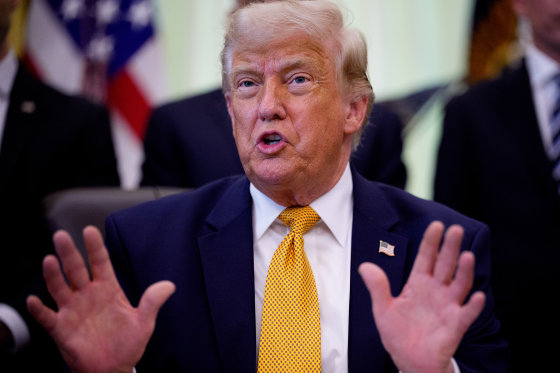
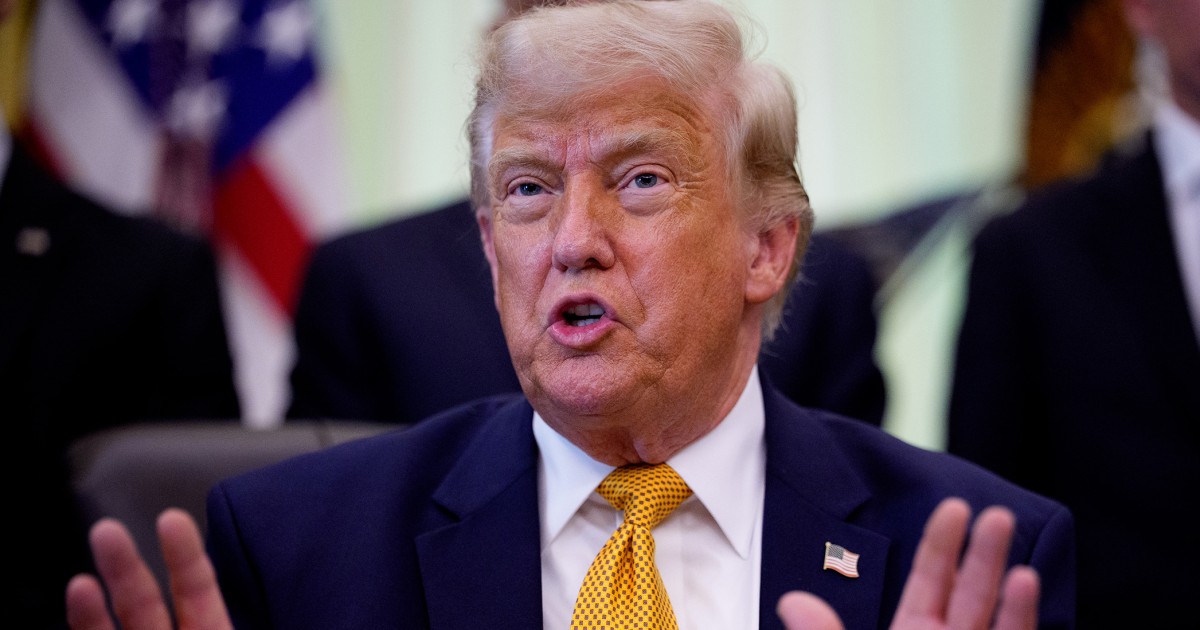
NBC News’s political segment shows another kind of pressure—not natural, but institutional. President Donald Trump suddenly canceled a planned ceremony to sign a major bipartisan housing bill, saying he would not do so until Congress passes the SAVE America Act, which he calls a “national emergency.” In essence, the SAVE America Act is meant to radically change election rules across all 50 states, including through stricter requirements for verifying citizenship and confirming a voter’s identity. Here the fight isn’t just about legislative priorities—it’s about who sets the state’s priorities and how: the White House, Congress, party leadership, or the president himself using public pressure as a tool for negotiation.
It’s especially telling that Trump downplayed the housing bill that both chambers of Congress had passed with an overwhelming majority, calling it a “matter of secondary importance.” That sharply contrasts with the bill’s real substance: it aims to reduce the cost of housing, including by encouraging the construction of new homes and placing limits on large investors that buy up single-family houses. In other words, it’s an issue voters genuinely view as one of the key ones. NBC News writes directly that this bill gives Republicans a “major legislative win,” especially amid rising cost of living. But Trump, in effect, flips the priorities: instead of debating housing, he again brings the political stage back to the SAVE Act and to his pressure on Senate Republicans, demanding they kill the filibuster. A filibuster is a Senate tactic to delay consideration of a bill in the U.S. Senate, which in practice means that for most initiatives to pass, a threshold of 60 votes is required. According to the material, it’s exactly that barrier that prevents Republicans from quickly pushing through the changes the president wants.
A shift is clearly underway here: within the party, power is moving away from institutional alignment and toward a personalized political impulse. Senate leader John Thune responded to the cancellation almost demonstratively calmly, saying he had just learned about it and had no comments yet. But the situation itself shows rising tension between the White House and the Senate. Moreover, NBC News mentions that in one of the recent meetings in the Oval Office, Trump—according to a source familiar with the matter—talked about building “almost all the time except about 15 minutes,” and then added, “I don’t care about housing, but if you want it, I’ll help.” Even if relayed through an intermediary, that remark clearly illustrates his style of pressure: the substance of the bill is secondary to a political display of strength and his ability to impose his agenda on Congress.
The third piece, from Action News Jax, at first glance is the most local and technical: on a morning in Jacksonville, traffic on the Shands Bridge was shut down after the bridge was struck by a barge. But the same principle is visible here: infrastructure works normally only until an unforeseen event happens—at which point inspection mode, restrictions, and caution are activated immediately. According to FDOT, the bridge was closed “out of an abundance of caution,” and inspectors went to the scene to conduct a careful assessment of the structure’s condition. Later, after the inspection, traffic resumed because the bridge was deemed safe. It’s a short item, but it reflects an important mechanism of modern infrastructure safety: even a brief incident requires instant diagnosis to prevent more serious consequences. The phrase “out of an abundance of caution”—“out of the utmost caution”—has long become a standard in public communications in such situations, because it both explains the delay and signals that safety takes priority over speed.
If you combine these three stories into a single line, a broader portrait of modern American reality emerges. In the case of Camp Mystic, you can see how, after a tragedy, first comes a public investigation, then a moral and legal crisis, and then a financial collapse. In the case of Trump, you can see presidential power trying to impose its own order of priorities on Congress—turning even a bill that was nearly agreed upon into an object of bargaining. In the case of Shands Bridge, you see how even a brief physical hit to infrastructure triggers a bureaucratically necessary but vital procedure of inspection. All three stories show that the system’s resilience today is measured not by the absence of crisis, but by how quickly and honestly it knows how to respond to it.
There is one more common takeaway: public attention is shifting away from the catastrophe itself and toward the quality of the response to it. In the case of the camp, it was preparation, evacuation, and incident management that drew harsh criticism—not only the force of the flood itself. In the case of the White House, the subject of dispute became not only the contents of the bill, but also the way the president uses his status to pressure the legislative branch. In the case of the bridge, the main focus was not the barge collision itself, but the readiness of specialists to quickly assess the risk and return the asset to operation. This means responsibility is increasingly understood as the ability to ensure a reliable process—before, during, and after a crisis.
Some concepts in these materials require brief clarification. Chapter 11 bankruptcy is an American bankruptcy procedure in which a company can continue operating while trying to settle debts under court oversight. The SAVE America Act is a proposed federal law connected to tightening voting rules and voter citizenship verification; its exact provisions and political implications are the subject of debate. A filibuster is a rule of the U.S. Senate that allows opponents to block a bill from moving forward without a qualified majority. And the phrase “out of an abundance of caution” in the Shands Bridge report means authorities preferred to temporarily stop traffic until they were confident the structure was safe.
The main trend that ties all three materials together is the rising cost of mistakes in systems where trust is no longer given automatically. The Camp Mystic tragedy shows that neglecting preparation can lead not only to human deaths, but also to subsequent financial and reputational collapse. The political episode involving Trump shows that even when there is bipartisan consensus, the executive branch can sharply change the trajectory of discussion if conflict becomes a tool for mobilization. The bridge story serves as a reminder that technical infrastructure requires ongoing oversight—not the assumption that everything will just work on its own.
Looking at the consequences, they also extend beyond individual cases. For camps and private institutions, this case will be a signal: emergency planning standards will be evaluated more strictly, and legal risks will increase. For Congress and the White House, it’s another episode in the struggle over the agenda, where symbolic victories increasingly run into real limits imposed by procedures and vote counts. For local transportation authorities, the Shands Bridge story confirms that even after a comparatively small incident, the public expects an immediate and transparent response. That is what modern risk management looks like: not as a guarantee that there will be no problems, but as the ability to quickly recognize a threat, name it, and keep the system from a more severe breakdown.
Sources: NBC News on the Camp Mystic bankruptcy, NBC News on Trump’s cancellation of the housing bill signing, Action News Jax on the closure of Shands Bridge after a barge strike.