On August 16, 2026, the news highlighted several manifestations of extreme strain—military, infrastructural, and human. The most significant event was a large-scale wave of Ukrainian drone attacks on Moscow and other Russian regions, carried out at the same time as another Russian strike on Ukraine. Against this backdrop, reports of air-defense shortages, damage to facilities, and casualties show that the confrontation is increasingly becoming a war of attrition. Separately, Novak Djokovic’s acknowledgment of a long-standing health problem after a difficult match echoed the broader theme of the day: even the most prepared systems and people face limitations that cannot be completely concealed.
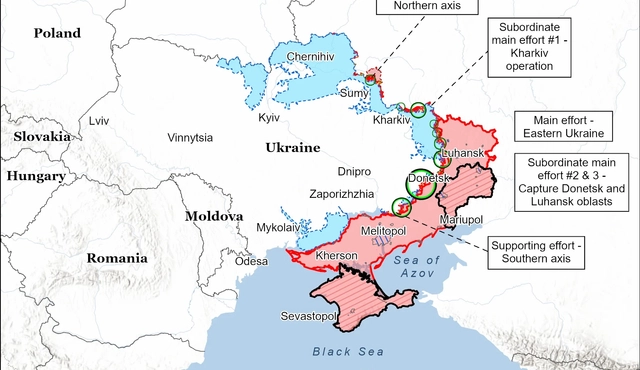
According to ABC News, Ukraine sent around 600 drones toward Moscow overnight from Saturday into Sunday. Moscow Mayor Sergey Sobyanin said that Russian air defenses shot down at least 201 drones in the Moscow region. If confirmed, these figures would represent one of the largest attacks on the Russian capital since the start of the war.
However, reports about the consequences differ. Sobyanin did not report destruction or casualties, mentioning only the work of emergency services at locations where debris fell. At the same time, Moscow Region Governor Andrey Vorobyov said that one person was killed in Ramenskoye District when a drone struck a residential property. Such discrepancies in official reports are typical of large-scale attacks: federal and regional authorities may release information at different times, while damage assessments change as areas are inspected.
Russia’s Defense Ministry reported intercepting at least 822 Ukrainian drones overnight. According to the ministry, they were destroyed over 16 Russian regions, as well as over occupied Crimea, the Sea of Azov, and the Black Sea. Even with the caveat that these claims cannot be independently verified, the reported scale of the attack points to a change in the nature of the air war. Drones are being used not only to strike specific military targets but also to place continuous pressure on air defenses, transportation systems, and daily life in major cities.
Wildberries infrastructure was once again among the targets. The company reported a fire at a warehouse complex in Podolsk, south of Moscow. Ukrainian missile and drone manufacturer Fire Point said its weapons had been used against a Wildberries logistics hub in Kolyedino. If the facility was deliberately selected, this could indicate an attempt to target not only military enterprises but also major logistics centers capable of serving both civilian and military purposes. However, the weapons manufacturer’s statement alone is not independent confirmation of the nature of the facility that was struck.
The attack also affected civil aviation. Russia’s Federal Air Transport Agency, Rosaviatsia, reported temporary restrictions at airports in Kaluga, Tambov, Gelendzhik, and Sochi, as well as at three of Moscow’s four international airports—Vnukovo, Domodedovo, and Zhukovsky. This is an important indicator of the strategic impact of drone raids: even when most drones are shot down and damage is limited, the threat forces authorities to alter routes, delay flights, and temporarily close airspace. The consequences of an attack are therefore measured not only by the amount of destruction but also by the scale of disruption to normal activity.
Russian strikes on Ukraine continued that same night. Ukraine’s Air Force reported the launch of 106 drones and several missiles. According to its data, 85 drones and three missiles were shot down or suppressed, but impacts were recorded at 13 locations. Ukrainian President Volodymyr Zelenskyy said that at least six people were wounded in Kyiv and the Kyiv region. In addition, two people were killed in Kryvyi Rih, one in Sumy, and two more in Zaporizhzhia region.
Zelenskyy separately called on allies to increase deliveries of air-defense systems. He wrote that after Russia used North Korean ballistic missiles, European interceptors “cannot simply remain in storage.” His wording underscores Ukraine’s central problem: the ability to detect and repel attacks depends not only on technical systems but also on stocks of interceptor missiles. Even effective air defenses gradually lose their capabilities when ammunition consumption exceeds replenishment rates.
In this sense, the war increasingly resembles a contest of industrial and defense resources. Russia has the capacity to carry out mass strikes on Ukrainian cities, while Ukraine is responding by expanding the range and scale of attacks on Russian territory. A strike on Moscow carries not only military but also political significance: it demonstrates the capital’s vulnerability to Russian society and forces the authorities to distribute air-defense resources among the front, military facilities, industry, and major cities.
An additional international dimension emerged after reports that at least one drone entered NATO airspace over Romania from Moldova. According to Romania’s Defense Ministry, the aircraft was tracked by a Spanish F-18 fighter before it was shot down. Incidents of this kind increase the risk of unintended escalation: even if the drone was not aimed at a NATO country, violating its airspace requires a military response and increases the possibility of a direct clash or mistake.
The Kyiv Post page with news updates for August 16, 2026 places these events within the broader context of the ongoing war. The publication describes the format as a collection of verified breaking reports on military, political, and international events. This is important for understanding the information environment: war news develops through constant updates, and initial assessments of the number of attacks, deaths, and damaged facilities may be revised. Claims by the parties should therefore be treated as statements by participants in the conflict unless they are supported by independent sources.
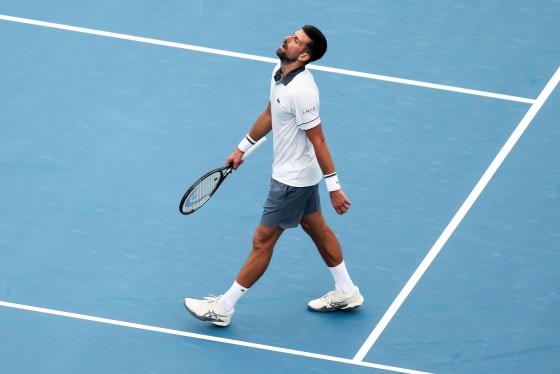
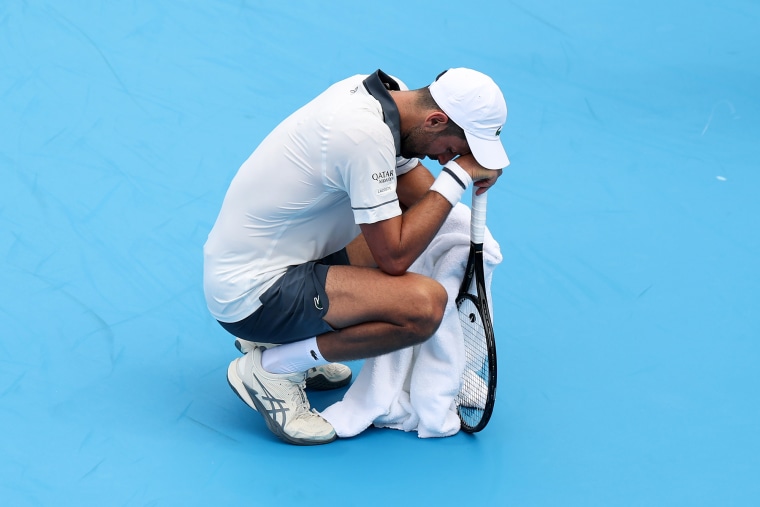
The second article provided—an NBC News report about Novak Djokovic—is not directly related to the war but explores a similar theme: the limits of resilience. Thirty-nine-year-old Djokovic lost in the second round of the Cincinnati tournament to 25-year-old Thiago Agustín Tirante, 2–6, 6–4, 6–4. The match lasted nearly three hours; the Serbian tennis player appeared physically unwell, vomited at one point, and required a medical timeout.
After the match, Djokovic said that he had been experiencing a particular illness or condition for several years, one that was especially pronounced in heat and high humidity. He did not name the diagnosis, so no medical conclusions can be drawn from the article. What matters is the athlete’s own wording: “It’s a health condition that has been bothering me for the last couple of years.” He also noted that stress and nervous tension intensified the problem.
Despite his physical difficulties, Djokovic remained highly effective in some areas: he saved 13 of 15 break points but lost the deciding set after Tirante broke serve in the ninth game. For the young Argentine, the victory was, in his words, possibly the best result of his career. For Djokovic, the defeat was especially notable because of his historically strong record in Cincinnati: his tournament record now stands at 45 wins and 13 losses.
Djokovic’s uncertainty about returning to Cincinnati also points to a changing stage of his career. After losing to Jannik Sinner at Wimbledon and withdrawing from the Canadian Open, he had been preparing for the US Open, which begins on August 30. However, health uncertainty may prove more important than rankings, statistics, and his usual schedule. Even one of the most successful athletes in history must take physical limitations into account and cannot fully compensate for them with experience.
The common thread linking all these materials is the collision between systems and the limits of their capabilities. In the military sphere, these are the limits of air defenses, missile stocks, and the ability to protect multiple regions at once. In civilian infrastructure, they involve the vulnerability of logistics centers, airports, and residential areas. In sport, they are the limits of the body, particularly when age, heat, humidity, and psychological pressure combine.
The key conclusion from the military reports is that mass drone attacks are becoming an instrument of strategic pressure even when most of the drones are intercepted. For the attacking side, the objective is not only direct damage but also forcing the opponent to expend expensive air-defense missiles, close airports, strengthen the protection of facilities, and redistribute resources. For the defending side, a high interception rate does not mean complete safety: individual strikes can cause deaths, fires, and disruptions to critical infrastructure.
The difficult-to-interpret term “suppressed,” used in descriptions of Ukraine’s defenses, usually does not necessarily mean that a drone was physically destroyed. The aircraft may be disabled by electronic warfare, lose contact with its operator or its navigation system, and crash without reaching its target. Therefore, the figures for drones “shot down” and “suppressed” cannot be mechanically compared with the number of targets destroyed: they are different categories, and counting methods may vary.
The term “dual-use” refers to facilities that are formally civilian but may be used to store, transport, or supply military goods. This is why an attack on a logistics center requires additional verification: damage to a commercial warehouse does not by itself prove that it had military significance, although the selection of a major hub may be explained by both economic and military motives.
Overall, the events of August 16 point not to an approaching quick resolution but to a deepening war of attrition. Ukraine is demonstrating the ability to launch long-range strikes against areas that were long considered relatively well protected, Russia retains the ability to carry out large-scale attacks on Ukrainian territory, and NATO countries face the risk of accidental involvement because of airspace violations. Against this backdrop, Djokovic’s story is a reminder that resilience—military, political, or physical—is not limitless. The key question is not only who can deliver the stronger blow, but also who can preserve resources, protection, and the ability to recover for longer.