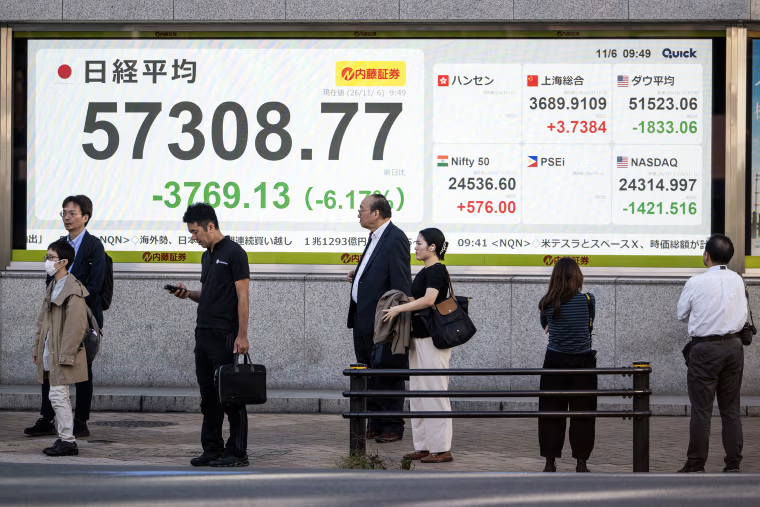
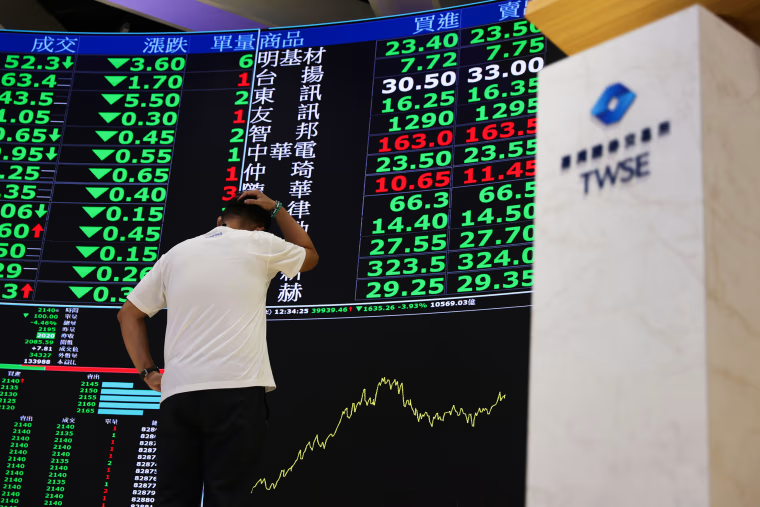
A sharp drop in U.S. stocks after the midterm elections showed just how heavily the market’s current rally depends on the artificial intelligence boom. Investors were rattled by Democrats’ plans to restrict data center construction—the infrastructure needed to expand AI. While some market participants see the sell-off as a painful but limited correction, others worry about project delays and higher costs. The impact on retirement savings will vary: much depends on portfolio composition, time until retirement, and whether money needs to be withdrawn during a downturn.
On Thursday, technology stocks had one of their worst days in years. According to NBC News, the Nasdaq 100 fell 6.3% and the S&P 500 dropped 4.4%; the combined loss in companies’ market value was estimated at trillions of dollars. Politico also describes a sharp sell-off, reporting that the Nasdaq Composite fell 5.5% and the VIX volatility index jumped nearly 70%. The figures differ because the outlets cite different indexes and metrics: the Nasdaq 100 comprises the 100 largest non-financial companies listed on Nasdaq, while the Nasdaq Composite covers a much broader range of issuers.
The election results were the immediate cause for concern. NBC News reported that politicians opposed to some data center projects and the rapid expansion of AI infrastructure won office. Democrats had pledged to seek restrictions on such facilities; after the election, investors began weighing the possibility that those pledges could lead to new reviews, delays, or additional costs. Texas is particularly important as one of the largest data center markets in the United States: Gina Hinojosa’s election as governor sharpened attention to possible changes at the state level.
This is about more than a political dispute over technology. Data centers require substantial capital investment, land, electricity, and grid connections. If permits take longer to obtain and rules governing location and energy use become stricter, projects could become more expensive or fail to meet investors’ expectations. That calls into question the returns on AI infrastructure investments—and, in turn, some of the projections underpinning technology company valuations. As Charu Chanana, chief investment strategist at SAXO Markets, put it in a comment to NBC News, “Markets are punishing companies based on how tied they are to the U.S. AI infrastructure build-out cycle.”
Political uncertainty has compounded a broader question: have expectations for AI gone too far? The rise in technology stocks and optimism about the economy increasingly rest on the assumption that demand for computing power will continue to grow rapidly. If construction slows or returns fall short of expectations, the market may reassess not only valuations for equipment makers and AI developers, but also those of companies whose business models depend on the future expansion of this infrastructure.
Still, falling share prices do not necessarily mean the investment boom is over. Economist Ed Yardeni, cited by NBC News, called the decline “just a few bumps in the road” and suggested the market was shaking off excessive hype. That view is consistent with the partial recovery in U.S. technology indexes the very next day: the Nasdaq 100 opened up 1.6%, while the S&P 500 rose 0.3%. But a rebound after a single day does not resolve the central question: how real is the risk of project delays and cancellations? Until there is clarity, volatility is likely to persist.
The effects on retirement savings will also vary from person to person. Fox Business notes that a decline in stock indexes can affect 401(k) accounts, especially when a large share of the money is invested in stocks. But the extent of losses depends on asset allocation: a portfolio made up mostly of stocks will respond differently from a diversified one that includes bonds and cash.
Financial advisers interviewed by Fox Business warn against making hasty decisions. Wealth management adviser Mark White believes the emotional response to a market downturn may be more dangerous than the decline itself. For younger workers, making regular contributions to a retirement plan during a market decline allows them to buy assets at lower prices, though this does not guarantee future gains. For people nearing retirement, it is more important to prepare their portfolios for a possible drop and keep enough liquid funds to cover current expenses.
This is where so-called sequence-of-returns risk comes in: if a retiree has to sell assets regularly after a market decline, their savings may run down faster than they would with the same average returns occurring in a different sequence. A drop in investment values is therefore especially concerning for those already withdrawing money or about to start doing so. Reducing risk in this situation does not necessarily mean giving up stocks altogether; it means planning expenses and reserves so as not to sell assets at the worst possible time.
Politically, the sell-off quickly became an occasion for mutual recriminations. President Donald Trump wrote on Truth Social that the drop was “one of the worst days in history” because of the election results, and blamed Democrats. The remark reflects the political battle over the market, but it does not, on its own, explain the scale of the swings: they were also driven by regulatory expectations, the high concentration of investment in AI, and the sensitivity of company valuations to future growth rates.
The main takeaway is that the market has begun assessing not only AI’s potential profits, but also the cost, political conditions, and timeline for building the infrastructure it requires. This marks an important shift from euphoria about the technology’s prospects to closer scrutiny of business plans. If data center construction continues without major obstacles, the current sell-off may prove to be a correction after excessive optimism. But if regulatory changes slow projects, the market could face revised expectations and further instability. The practical lesson for investors is not to guess the outcome of the political dispute, but to consider their own investment horizon, diversify their holdings, and avoid irreversible financial decisions driven by short-term panic.