The three articles cover entirely different events: the Indiana Fever’s victory in the Women’s National Basketball Association, Donald Trump’s statement about an oil deal with Venezuela, and the death of former Fresno State player Nate Maier. Yet they share one theme: how public achievements and crises become events that matter not only in themselves but also to the communities that form around them. In the first case, a sporting result becomes a symbol of team growth and the commercial appeal of women’s basketball. In the second, a resource and an international agreement are presented as instruments of national benefit. In the third, the death of a young athlete shows that a sporting biography is measured not only by statistics but also by the memories people carry.
The OutKick article about the Indiana Fever’s victory primarily describes a game in which the team managed to overcome a poor start. The Connecticut Sun finished the first quarter with a 28–19 lead, taking advantage of their opponents’ slow opening. But in the second quarter, Indiana Fever completely changed the course of the game: the home team scored 39 points to Connecticut’s 15 and went into halftime leading 58–43.
This episode matters as more than a description of a particular game. It demonstrates the team’s ability to respond to pressure and adjust its play as the game unfolds. The final 111–91 victory gave Indiana another confirmation of its offensive effectiveness. Fever set a franchise record for the number of games in a season in which it scored more than 100 points: the total reached 19.
The game’s leading figures were Caitlin Clark and Kelsey Mitchell. Each scored 34 points, while Clark also recorded 12 assists. One particularly impressive moment was her pass to Mitchell, which the article’s author described as a highlight-reel play. Thanks to their combined performance, the players recorded their fourth game of the season in which both scored at least 30 points. That set a WNBA record for a pair of teammates.
In this story, individual achievements are not set against the team result. On the contrary, the author shows that Clark’s popularity goes hand in hand with Mitchell’s important role and the strength of the team as a whole. Clark attracts enormous public attention, but Fever’s victory cannot be explained by her efforts alone: Mitchell scored 34 points and moved into the league lead in total points. The audience is therefore given a fuller picture—the success is built around several leaders, not just one high-profile name.
The upcoming break in the season is connected to the FIBA Women’s Basketball World Cup. FIBA is the International Basketball Federation, which organizes the largest international tournaments. For clubs, such a break means a temporary suspension of the regular season; for players, it offers an opportunity to represent their national teams. Indiana Fever had four regular-season games remaining, and its next game was scheduled for September 18 against Toronto Tempo. The team therefore entered the break riding a wave of momentum.
The NBC News article about the reported U.S.–Venezuela oil deal has an entirely different scale and character. It also contains a theme of collective benefit, but here that idea is expressed through government policy, control over resources and economic promises. Donald Trump said that the United States had reached an agreement providing for control over more than 65 billion barrels of Venezuela’s proven oil reserves. He called it “the biggest oil deal in the history of the world” and claimed that American companies would gain control without any cost to taxpayers.
It is important to emphasize that, in the article as presented, these details are described as statements by Trump and Marco Rubio, not as an independently verified analysis of the deal’s terms. NBC News quotes their wording while also providing context that allows readers to assess the scale and possible contradictions involved. For example, Trump claimed that the agreement “more than doubles” U.S. oil reserves, although it primarily concerns control over foreign reserves rather than the literal transfer of those resources into American ownership or geological reserves.
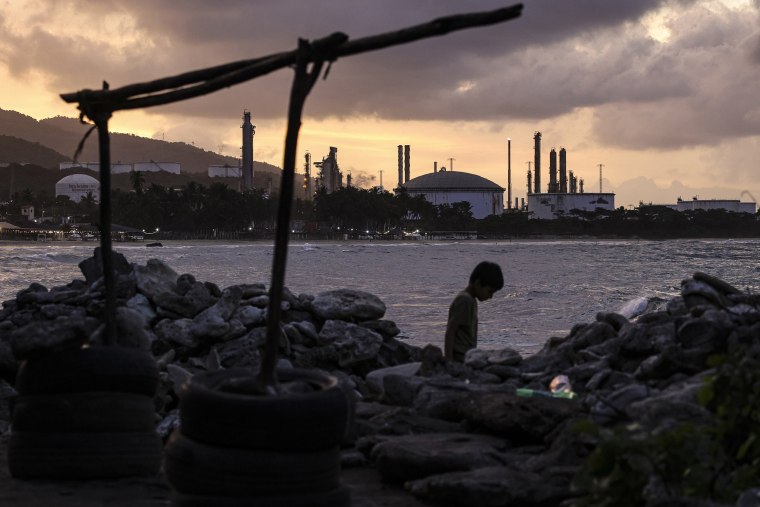
The article says that Venezuela has approximately 303 billion barrels of oil, or about 17% of the world’s reserves. However, having resources does not automatically mean being able to extract and sell them on the global market. Because of its damaged infrastructure, the country produces only about 1% of the world’s oil. This is a crucial detail: the economic value of oil fields depends not only on the volume of reserves but also on the condition of pipelines, refineries, ports and technology, as well as on investment and political stability.
For this reason, the American side’s promises of nearly $100 billion in private investment and the creation of high-paying jobs should be viewed as a political program, not as an economic result that has already been achieved. Rubio called the agreement an “enormous victory” for both countries, saying it would ensure stable oil supplies, lower gasoline prices in the United States and help rebuild Venezuela’s economy. But there is a substantial gap between announcing an agreement and implementing it. Important questions remain about the specific legal mechanisms, the fate of existing contracts, the role of the Venezuelan state, the conditions of the sanctions regime and how revenues would be distributed.
The article also places the statement in a political context. It says that in January, U.S. military forces captured Venezuelan President Nicolás Maduro so that he could stand trial in the United States on charges of narco-terrorism and drug trafficking. In addition, Trump was facing growing pressure ahead of the midterm elections amid rising gasoline prices and the war with Iran. Against this backdrop, the oil deal appears not only as an economic project but also as a political instrument. It allows the administration to demonstrate its ability to provide energy security while promising benefits to American consumers.
Against this backdrop, the story of Nate Maier, reported in The Collegian, brings the narrative back from geopolitics to the human scale. The former Fresno State player died unexpectedly on August 25 at the age of 21. At the time of publication, the cause of death remained unknown. Maier was an offensive lineman for Fresno State during the 2022–23 season, graduated from Rim of the World High School in 2022 and was part of the athletic community in Lake Arrowhead, California.
His college statistics were limited: the article notes that he had no notable figures recorded on the ESPN and 247Sports websites. But the absence of significant numbers does not mean an absence of significance. To his school and friends, Maier was not a line in a statistical report but a person who participated in football, track and field and wrestling. In their memories, he appears as both an athlete and a student who influenced those around him.
A particularly important detail is a post on X in which Maier announced that he was temporarily stepping away from football during the 2023 season to attend to personal matters, with the hope of returning in the spring. He specifically thanked head coach Jeff Tedford and the coaching staff for supporting him “not only as an athlete, but as a person.” This wording reveals one of the central features of college sports: athletes are judged not only by playing time and results but also by their relationships with their team, mentors and educational institution.
A GoFundMe organized by the school, which had nearly reached its $8,000 goal, demonstrates the practical side of collective support. The community is not limiting itself to expressions of sympathy; it is trying to help the family with funeral expenses and other costs. In an obituary, Rim of the World High School said that it was “pausing the ordinary rhythm of life to acknowledge the profound loss” of one of its graduates. This is the language of communal memory, in which an athlete retains significance even after a career has ended.
A comparison of the three articles shows that sport in the modern media environment exists on several levels at once. At the professional level, it is connected with records, rankings, media attention and commercial value. At the state level, sporting and economic achievements can be used as part of a political narrative about strength, control and national benefit. At the local level, sport becomes a system of social ties in which support, loss and memory are especially visible.
There is also a deeper common trend: in all three stories, importance is attached not only to facts but also to interpretation. Clark and Mitchell turn Indiana Fever’s victory into a story about team dynamics and the growing influence of women’s basketball. Trump and Rubio present the oil deal as a “victory” and evidence of effective foreign policy, although its practical consequences require verification. Maier’s community builds his memory through personal qualities and the testimonies of those close to him, compensating for the absence of prominent athletic statistics.
At the same time, these articles must be read with different levels of verification in mind. A sports score, the number of points and assists are usually directly verifiable from the game’s results. A claim about an oil agreement requires far more rigorous scrutiny: it is necessary to examine the official text of the deal, the legal status of the transfer of control, actual production volumes and investment commitments. The report of Maier’s death contains confirmed information about his age, athletic background and the community’s response, but the cause of death remains unknown, making any speculation inappropriate.
The main conclusion is that an event’s public significance is not always determined by its scale. Indiana Fever’s victory has a national sports audience, the oil deal claims global importance, and the death of a young player primarily affects a school and university community. Yet in every case, the event becomes meaningful through the people and institutions that give it significance: the partnership between Clark and Mitchell, statements by the U.S. administration, and the memories held by Maier’s coaches, classmates and friends. These stories show how achievements, promises and losses form collective narratives—that is, explanations through which societies understand what is happening and determine why it matters.