Three pieces that initially appear to focus on entirely different subjects—the death of a schoolgirl, international basketball, and the work of Congress—are connected by a broader story: American society is confronting problems that require not only an emotional response but also the ability of institutions to act effectively. In one case, the issue is child safety and violence in the everyday urban environment; in another, how sports reflect political and cultural divisions; and in the third, whether the federal government can avoid another governance crisis.
The story of 16-year-old Dannady Green particularly starkly illustrates the gap between the perception of safety and the actual condition of the public environment. The girl suffered serious gunshot wounds on the morning of August 25 while waiting for a JCPS—Jefferson County Public Schools—bus on Beach Street, on her way to Valley High School. She died in the hospital several days later, the coroner’s office reported. According to witnesses, a group of teenagers shot her and then drove away laughing; witnesses heard as many as five shots. The motive for the attack remained unknown, however, and no arrests had been made at the time of publication. WLKY reports.
What matters here is not only the crime itself but also where it took place. A bus stop on the way to school is one of the most ordinary parts of a teenager’s daily life. When violence occurs in such a setting, it changes the perception of safety not only for the victim’s family but for the entire school community. A small memorial near the site of the shooting becomes a symbol of collective shock, but it does not answer the central questions: Why was the attack possible? Was the risk known in advance? And what measures could protect students before a conflict escalates into gunfire?
The article does not claim that the attack was random or targeted, and that distinction is crucial. A targeted attack could point to a personal conflict, group pressure, or a criminal feud; a random shooting could indicate a broader problem involving access to firearms, impulsive behavior, and insufficient control in public places. Until investigators establish a motive and file charges, any conclusions remain speculative. This lack of clarity intensifies the anxiety: society sees the consequences but does not understand the mechanism that produced them.
At another level, a similar problem—the need for joint action amid deep divisions—appears in a Fox News article about Caitlin Clark and Angel Reese potentially joining the U.S. women’s basketball team at the Women’s World Cup. For several years, they have been viewed as rivals: their confrontation began in college basketball, continued in the WNBA, and became part of a larger media narrative about the two leading figures of a new generation of women’s sports. On the national team, however, personal competition must give way to a common goal: defending the four consecutive world titles won by the United States and its current 30-game winning streak. Fox News provides the details.
This story matters less because of the sporting intrigue than because of the way society turns rivalry into a conflict of identities. Fans view every game, foul, or gesture by Clark and Reese as confirmation that one side is superior to the other. As a result, sports cease to be merely a competition and become an arena of cultural division. At the same time, their experience playing together shows that this opposition is not inevitable. At the 2024 WNBA All-Star Game, Clark recorded 10 assists, while Reese scored 12 points and grabbed 11 rebounds, helping Team WNBA defeat the U.S. Olympic team. At the World Cup qualifying tournament in Puerto Rico, the American team won all five games: Clark was named the tournament’s Most Valuable Player, while Reese led the team in rebounds.
Reese’s statement—“Team chemistry is everything”—effectively describes the national team’s central challenge. “Not everyone can do everything they do on their respective teams,” she noted, emphasizing the need to accept a particular role. This is a universal principle of collective action: success depends not on each participant displaying maximum individuality, but on coordinating their functions. In this sense, the national team becomes a model of what is often lacking in public life as well: the ability to subordinate one’s personal position to a shared task without abandoning one’s own convictions.
The question of the national anthem adds particular intensity to the article. In the WNBA, teams follow different pregame practices: some players remain on the court, while others stay in the locker room. In an international national-team setting, the context changes. The USA Basketball code requires players to “display proper respect during the playing of the national anthem,” although it does not specify whether they must sing, place a hand over their heart, or adopt a particular posture. FIBA rules also restrict political and ideological gestures but do not explicitly prohibit remaining silent, declining to make a gesture, or kneeling.
This ambiguity illustrates the complexity of the American debate over patriotism. The same action can be interpreted as respect for the country, criticism of the government, or political protest. At an international tournament, the players’ actions will also be viewed through the lens of U.S.-China rivalry. The American team will open the tournament against China on September 4; the United States has won all 15 of its World Cup and Olympic games against the Chinese team. In China, meanwhile, the law requires respectful behavior during the anthem at major sporting events, and publicly insulting the anthem can result in detention or criminal prosecution. As a result, even the ceremony before a game can take on political significance, although it has no formal bearing on the outcome.
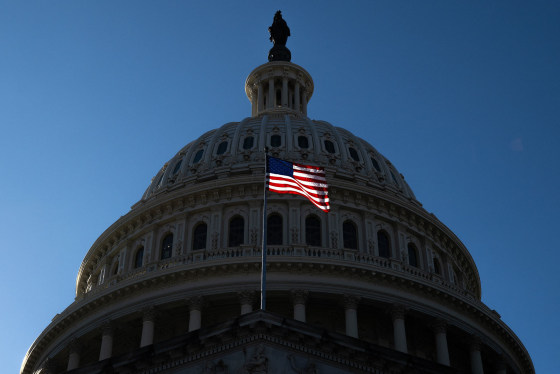
The third article shifts the issue of institutional capacity for collective decision-making to federal politics. As NBC News writes, the House of Representatives is returning from a five-week recess for just four working days, with its main task being to prevent a government shutdown. Funding for federal agencies was set to expire on October 1. The Senate has already approved a temporary bill by a vote of 90–6; the measure extends funding through December 11 and leaves room for a broader agreement after the election.
A “government shutdown” is a partial suspension of federal operations caused by the absence of approved appropriations. In such a situation, many government employees are furloughed or continue working without immediate pay, while a range of programs and administrative services slow down. Formally, it is a budgetary mechanism, but politically it becomes a tool of pressure: parties can use the approaching deadline to force opponents to accept their demands.
In this case, the temporary measure keeps the government funded “on autopilot,” without major changes to existing spending. It also includes agreements to protect federal grants for states that voted against President Donald Trump, as well as to preserve SNAP and WIC food-assistance programs and disaster-relief funding. Such additional provisions can make even a technical spending bill politically sensitive.
The limited time before the midterm elections increases the pressure. The House was scheduled to reconvene on September 14, leaving only about three weeks of work before Election Day on November 3. The narrow Republican majority means that party leaders must maintain internal discipline while also seeking Democratic support. The Senate’s 90–6 vote shows that compromise is possible, but it does not guarantee that the measure will pass the House without conflict: presidential intervention or new demands could change the calculations at the last minute.
Congress’s agenda also includes questions of political accountability. The House was due to consider a recommendation to censure Republican Chuck Edwards following an investigation by the Ethics Committee. The committee concluded that the congressman had engaged in “a sustained pattern of unprofessional and inappropriate behavior” toward two young female staffers. Edwards rejected the committee’s findings and argued that “a friendly relationship is not a sexual proposition.” Censure is an official public condemnation of a member of Congress, but it does not remove that person from office. Edwards declined to seek reelection but continued to fight the resolution.
Here, as in the bus-stop shooting, institutions face a question of trust. An ethics investigation must establish the boundaries of acceptable conduct and demonstrate that holding elected office does not exempt someone from accountability. At the same time, the dispute over the censure shows how much political institutions are occupied not only with creating policy but also with protecting their own legitimacy.
The common thread running through all three pieces is the growing importance of public symbols and procedures against the backdrop of real problems. In Louisville, the symbol is a school-bus stop, which should be associated with safety but became the site of deadly violence. In Berlin, the symbolic focus will be the anthem, capable of turning a sporting ceremony into a debate over patriotism, protest, and national identity. In Washington, the symbol is the government-funding deadline: a technical date becomes a test of the parties’ ability to govern the country.
The central conclusion is that public trust is built not through statements but through consistent action. After Dannady Green’s death, what matters is not only officials’ words but also the investigation, the identification of those responsible, and measures to prevent similar attacks. For the U.S. team, success will depend not on whether the rivalry between Clark and Reese disappears, but on whether they can turn it into productive competition within a unified team. For Congress, the main test will not be one party’s rhetorical victory, but funding the government on time without triggering a destructive crisis.
In every case, emotional polarization can obscure the substance of the problem. Fans choose sides in a sports rivalry, political parties use budget deadlines as leverage, and the public demands immediate answers after a tragedy. Sustainable solutions, however, require a different approach: establishing the facts precisely, setting clear rules, and coordinating action effectively. This is what society expects from law enforcement agencies, athletes, sports federations, and lawmakers when familiar systems of safety, representation, and governance are put to the test.