Three articles about seemingly unrelated events share one theme: the sense of security and how quickly it can prove to be an illusion. One concerns military bases and threats linked to Iran, another describes an unknown person entering an apartment, and the third examines political security and the state of democracy in India. In all three stories, people and institutions are trying to regain control over spaces they believed were protected: the state over military infrastructure, residents over their own homes, and society over elections, public debate, and the country’s future.
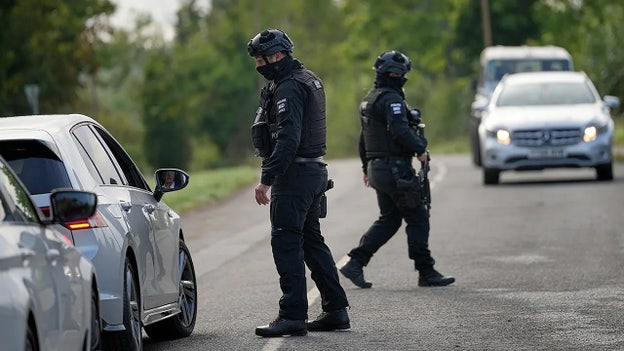
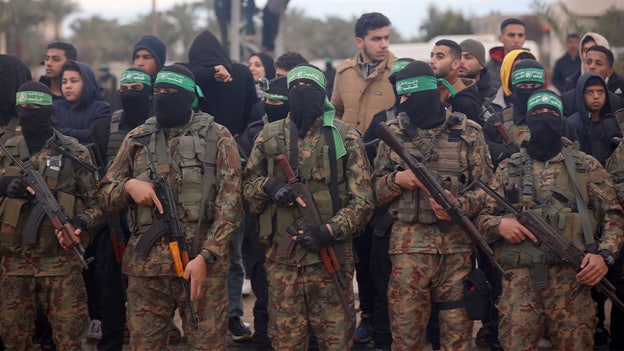
In an article from Fox News, U.S. Secretary of State Marco Rubio said Washington remains confident in the security of its military bases despite an incident at RAF Fairford, a British air base linked to U.S. forces. Following arrests in an alleged Iran-backed plot, American B-1 bombers were withdrawn from the facility. Rubio said this could have been a routine rotation or redeployment, stressing that “we remain confident in the security of all our bases,” since any of them could theoretically become a target.
The wording is both reassuring and revealing of the scale of the problem. Security here is presented not as the absence of threats, but as constant readiness to confront them. A military base is considered secure not because an attack is impossible, but because it is surrounded by systems of surveillance, protection, and response. However, the arrests and the movement of strategic aircraft show that even heavily guarded facilities depend on intelligence, cooperation among allies, and the ability to detect threats in advance.
The word “rotation” in Rubio’s statement is significant. In a military context, it means the planned replacement of personnel, equipment, or units, often connected with exercises and the redistribution of resources. But amid heightened tensions, any such movement is perceived not merely as an administrative procedure but also as a potential signal of risk. Public explanations by authorities therefore become part of security policy itself: the state must demonstrate control while avoiding the disclosure of unnecessary information about the actual level of threat.
At the everyday level, a similar problem appears in a story from Gainesville published by News4JAX. A woman awoke to find an unknown man on top of her inside her apartment. According to police, he entered the residence and covered her mouth and face, but the victim fought back, and her roommates came to her aid. The attacker fled; police established a perimeter and searched with a K-9, but the suspect was not found.
This story highlights the difference between physical space and the sense of being protected. An apartment is usually viewed as private territory, separated from the outside world. But an unlocked door, an inadequate check of the premises, or an unknown method of entry can destroy that feeling within minutes. Police have not released a description of the suspect, leaving the investigation unresolved. Vulnerability therefore persists even after the immediate attack has ended: the victim and other area residents do not know who committed the crime or whether he might try again.
Police spokesperson Art Forgy urged neighbors to check on one another and make checking locks part of their evening routine. His advice to “look out for each other” and regularly ensure that doors are locked shows that security depends not only on law enforcement. It also relies on everyday habits, mutual attentiveness, and a community’s ability to respond quickly. In this sense, the victim’s and her neighbors’ actions formed the first line of defense, with police serving as the next.
The Al Jazeera article shifts the subject of security from the private and military spheres to the political one. In an interview, writer Arundhati Roy argues that youth protests in India have shattered the “carefully constructed image” of Prime Minister Narendra Modi, sustained by corporate television networks and the ruling Bharatiya Janata Party’s control over social media. She describes the Cockroach Janta Party movement, a satirical initiative whose participants adopted the insulting label “cockroach” and turned it into a symbol of resistance.
According to Roy, the movement’s importance lies not only in its size but also in its form. Young activists use humor, short videos, and social media to undermine official political rhetoric. Satire becomes a tool of political struggle: it diminishes the authority of the government not through a direct slogan, but by showing that the official image can be mocked and reinterpreted. In Roy’s words, “the emperor was exposed and lost his power.”
This does not mean, however, that the government has actually lost control. Rather, a crack has appeared in a system that previously seemed monolithic. Roy links the protests to a combination of problems: Modi’s failure to secure a full majority after the 2024 elections, allegations of electoral misconduct, examination-paper leaks, unemployment, and social inequality. In such circumstances, a specific event can become the “last straw,” bringing different forms of discontent together.
The concept of democratic security occupies a central place in the interview. For Roy, elections alone are not sufficient evidence of democracy. Independent institutions, constitutional guarantees, a system of checks and balances, and the ability to criticize the government without facing the threat of imprisonment are also necessary. She argues that these mechanisms have been weakened in India and that political competition and the work of electoral bodies have come under pressure. These claims are presented as the interviewee’s position, not as an independently verified conclusion by the editorial staff, and should therefore be treated cautiously. Nevertheless, they reflect a broader conflict over what should count as democracy: the existence of elections or the ability of institutions to act independently of the executive branch.
Roy also discusses pressure on activists, students, lawyers, and government critics. She compares public life in contemporary India to “dancing on a mined floor”: a person may not know when repression will follow. This is a vivid metaphor for political uncertainty. When the boundaries of what is permissible are constantly shifting, self-censorship becomes part of the system of control. A person need not be threatened directly every time; it is enough for punishment to remain possible and unpredictable.
At the same time, the interview is not defined by unambiguous pessimism. Roy sees in India a deep tradition of resistance, intellectual independence, and unconventional forms of dissent. She believes that, after the satirical movement emerged, people who had previously “shrunk and trembled” under pressure from the regime began to regain their courage. She describes this process as the creation of “spaces” for protest and public discussion.
The connection among all three stories lies in the fact that the threat emerges within a familiar environment. For the American military, it is allied infrastructure generally considered secure. For the Gainesville resident, it is her own bedroom. For Indian society, it is the state institutions and public sphere that are formally supposed to protect civil rights. In each case, security proves not to be a permanent condition but a process that must be maintained and reaffirmed.
The responses, however, differ. In the military sphere, they involve protecting facilities, intelligence gathering, redeployment, and coordination among allies. In everyday life, they involve locks, mutual checks, and promptly calling the police. In politics, they involve independent media, protest, satirical communication, transparent elections, and oversight institutions. All these mechanisms are vulnerable when trust and accountability are absent. A military base may be well protected yet fail to detect preparations for an attack; an apartment may have a lock yet remain vulnerable; elections may be held regularly without ensuring genuine democratic competition.
Another common theme is the importance of information. In the story involving the British air base, authorities are trying to shape the interpretation of events by presenting the movement of the bombers as a routine rotation. In Gainesville, police and the university are warning students and asking them to report suspicious activity. In India, according to Roy, social media and corporate television networks have become arenas in the struggle over the perception of reality. Whoever controls information has considerable influence over how society assesses danger, identifies those responsible, and considers possible solutions.
Roy also warns about the role of artificial intelligence and the “weaponization” of social media. This refers to the use of digital platforms to spread manipulative content on a mass scale, pressure opponents, create a false public consensus, or strengthen authoritarian practices. Technologies themselves are neither democratic nor anti-democratic: their impact depends on who controls them, what rules apply, and whether society can verify the information being circulated. But the faster and broader digital communication becomes, the more difficult it is to distinguish genuine mobilization from a coordinated influence campaign.
The main conclusion of these materials is that security cannot be understood as complete isolation from risk. It requires resilient institutions, attentive communities, and the ability to acknowledge threats without exaggerating or concealing them. Rubio’s statement reflects the institutional logic of deterrence: threats are inevitable, so readiness matters. The Gainesville story demonstrates the importance of solidarity among neighbors. The interview with Roy emphasizes that political freedom also needs protection—through independent institutions, the right to criticize, and citizens’ ability to resist a monopoly on information.
A trend running through all the sources is the movement of threats from the periphery into the center of everyday life. Danger no longer necessarily arrives in the form of an open attack or an officially declared crisis. It may appear as suspicious activity near a military base, an unknown person in an apartment, pressure on electoral institutions, or subtle manipulation on social media. Society’s resilience is therefore determined not only by the strength of the state but also by the quality of its feedback mechanisms: whether authorities are willing to heed warnings, whether people are ready to help one another, and whether independent channels for fact-checking exist.
In all three cases, control remains incomplete. The Gainesville suspect has not been found, the actual scale of the threat to the British base has not been made public, and Roy’s political predictions do not guarantee a change in government. But that is precisely what makes these materials significant: they present security not as an achieved result, but as a constant struggle for space, trust, and the right to define reality.