Three publications cover completely different events: an attack on a mother and child in Providence, a botched execution in Tennessee, and Hardywood’s purchase of Starr Hill Brewery. Yet they share a broader theme — how institutions and organizations manage risks, the consequences of their decisions, and the need to preserve public trust. In one case, the issue is an immediate threat to safety on the street; in another, a possible technical and legal failure in a state procedure; and in the third, how a business is trying to preserve a recognizable brand and remain resilient in a competitive industry.
According to a WCVB report, a mother and her two-year-old daughter were taken to the hospital after a stabbing near Broad and Public streets in Providence, Rhode Island. Police said a “person of interest” was in custody, but at the time of publication, neither the person’s identity nor a possible motive was known. The victims’ conditions were also not disclosed.
The incident alarmed local residents. One told reporters: “No one should be afraid to walk down the street with their children.” This reaction matters not only as an emotional comment but also as an indicator of how the public perceives safety. An attack in a public place, especially against a woman with a young child, is seen as a violation of a basic expectation: a city street should be a place where people can move freely without constant fear. At the same time, the police’s cautious wording — “person of interest,” rather than “suspect” — underscores that the investigation is not yet complete and that premature conclusions would be inappropriate.
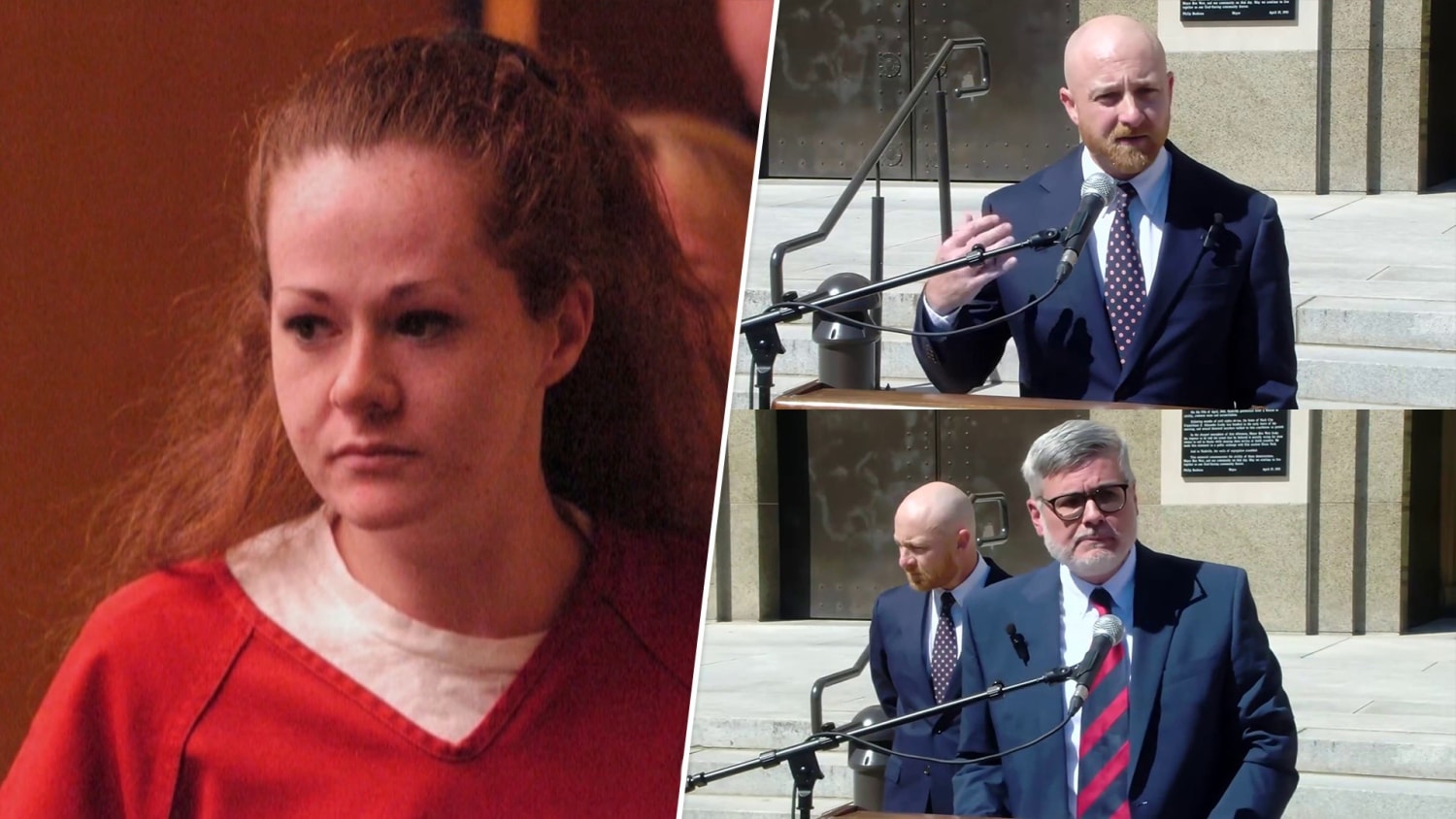
The second publication examines a more complex and far-reaching issue — the limits of state accountability when it carries out the death penalty. As NBC News reports, Christa Pike regained consciousness after a failed execution attempt in Tennessee. According to her attorney, Randy Spivey, she spent six days unconscious and on life support. After waking, she was able to speak but was suffering from pneumonia, a blood clot in her arm, difficulty swallowing, and a loss of function in her hands.
The description of the suspected technical cause is particularly revealing. Doctors interviewed by NBC News believe that a substantial portion of the pentobarbital — the drug used in lethal injection — entered the tissues of the arm rather than the bloodstream. The dose was sufficient to induce sleep but likely insufficient to stop the heart or suppress breathing. The attorney claims that this scenario was foreseeable: the defense had warned in advance about problems with Pike’s veins that could complicate the drug’s administration.
According to her attorney, Pike woke up asking, “Where am I and who are you?” She was confused and angry but understood that the state had tried to execute her. Spivey also said that she cooperated with staff during the procedure and helped them find a suitable vein while employees spent about an hour trying to establish intravenous access. This detail heightens the ethical dimension of the story: a procedure that is supposed to be strictly controlled and predictable turned into a prolonged medical experiment with serious consequences.
After a court hearing, Judge A’Shia Miles ordered the state to preserve all materials related to the execution attempt. The list included intravenous lines and needles, medical records and supplies, the drugs and information about their manufacturer, photographs, video recordings, handwritten notes, checklists, and witness statements. The ruling does not automatically mean that authorities have been found liable. It means that potentially important evidence cannot be destroyed or lost before a full investigation takes place.
This is where the shared theme of the three stories becomes especially clear: trust in procedures depends not only on the outcome but also on the transparency of the actions taken afterward. Pike’s attorneys have not yet sought to obtain the evidence; instead, they have sought to ensure that it is preserved so that experts, the court, and the public can determine what happened. Tennessee Governor Bill Lee said the procedure had been carried out according to protocol, but later announced an independent review and suspended executions in the state through the end of the year. Frank Strada, head of the corrections system, announced his departure, saying the decision was in the best interests of residents amid the review.
The situation is further complicated by the fact that Pike’s execution attempt was already the second similar failure in Tennessee in a single year. In May, the execution of Tony Carathers was halted because staff could not find a vein for a backup intravenous line. The issue, therefore, may not be an isolated incident but a systemic problem involving preparation, medical support, or oversight of death-penalty procedures. Until the independent review is complete, it is impossible to determine definitively what caused the failures, but the recurrence of such incidents makes the issue particularly serious.
The third article, published by Richmond BizSense, shifts the discussion from physical safety and state power to corporate resilience. Richmond-based Hardywood Park Craft Brewery acquired Charlottesville-based Starr Hill Brewery for an undisclosed amount. The deal closed on October 1 and was structured as a stock acquisition: Starr Hill’s owners received a minority stake in Hardywood.
Unlike many acquisitions in which the buyer gradually abandons the previous brand, this deal is expected to preserve the Starr Hill name, its beer, and its distinctive identity. Its six taprooms — establishments where customers are served beer directly and offered a brewery’s selection — will continue operating. This means Hardywood is seeking the benefits of consolidation without destroying Starr Hill’s accumulated customer loyalty.
The deal was a logical continuation of an existing partnership. In the summer, Hardywood began producing and distributing some of Starr Hill’s key beers, and later did the same for Legend Brewing’s Legend Brown Ale. This model shows that small and regional breweries increasingly need to share production and distribution resources. Manufacturing and delivery are costly, so combining capacity can reduce expenses and expand the geographic reach of sales.
At the same time, preserving the independent Starr Hill brand, founded in downtown Charlottesville in 1999, has strategic importance. The company moved to Crozet in 2007 and has had a presence in Richmond since 2019. Over that time, it developed its own history, customer base, and name recognition. A full acquisition that eliminated the brand could have devalued some of those assets. The deal therefore appears to be more than simply a competitor acquisition; it is an attempt to combine infrastructure while preserving local identity.
Taken together, the stories show three levels of risk management. In Providence, the issue is preventing and investigating violence in a public space. In Tennessee, it is the need for demonstrably safe and legally accountable state procedures. In the brewing industry, it is the financial and operational resilience of companies facing competition. In every case, the central question is whether an organization can not only act but also take responsibility for the consequences of its actions.
The clearest overall conclusion is that trust is built through verifiability. For police, this means prompt investigation, clear communication, and protecting people in public spaces. For the corrections system, it means preserving evidence, conducting an independent audit, and recognizing that formal compliance with a protocol does not by itself prove that the protocol is reliable in practice. For businesses, it means explaining the terms of a deal openly and honoring promises to preserve familiar brands and locations.
In the NBC News article, the concept of “preservation of evidence” is particularly important. This is a legal obligation not to destroy or alter materials that may be relevant to a future investigation or court proceeding. It is especially important in cases where the state itself controls the scene, the participants in the procedure, and the medical records. Without independent access to these materials, it is impossible to determine objectively whether the failure was accidental, systemic, or connected to a violation of the rules.
The term “lethal injection” refers to an execution carried out through the sequential administration of drugs generally intended to cause unconsciousness, paralyze the respiratory muscles, and stop cardiac activity. If a drug is injected into surrounding tissue rather than a vein, its effects may be incomplete and unpredictable. According to the medical assessments cited, this may have happened in Pike’s case.
A “taproom” is a brewery venue or separate location where a producer sells beer directly to consumers. Keeping Starr Hill’s six taprooms open allows the company to maintain direct contact with customers while also using the new owner’s resources. An “all-equity acquisition” means that the buyer does not pay the entire amount in cash; instead, the former owners of the acquired company receive a stake in the combined business.
The main trend running through all three texts is the growing importance of institutional accountability after a crisis. The event itself may be isolated, but the quality of the response determines its long-term consequences. The attack on the mother and child tests the city’s ability to ensure public safety. The failed execution tests the limits of state power and the quality of oversight over that power. The acquisition of Starr Hill tests whether a company can expand without destroying trust in the acquired brand.
At the same time, the sources provide an incomplete picture, and this must be taken into account. The WCVB report contains no information yet about motives, charges, or the victims’ conditions. In the NBC News article, the independent review must establish the final causes of the failure, while doctors’ conclusions about the drug’s movement remain preliminary. Richmond BizSense also notes that this is breaking news, so the companies’ financial terms and strategic plans have not yet been fully disclosed.
Thus, the three events demonstrate different forms of vulnerability — personal, governmental, and corporate. But they share one underlying principle: resilience is determined not by the absence of problems but by the ability to identify mistakes promptly, preserve evidence, protect people, and explain subsequent decisions honestly. That ability — from the work of police and corrections officials to brand management — builds the trust without which neither public institutions nor businesses can function reliably.