Stories that at first glance seem unrelated — an NFL mock draft with the fall of a promising star, a local search for an armed suspect in North Carolina, and Congressman Eric Swalwell dropping out of the California governor’s race — turn out to be links in the same chain. In all three cases the central theme is the same: how serious accusations and suspicions instantly change trajectories — careers, public safety, political calculations — and how society, the media and institutions try to balance the presumption of innocence with the need to protect people and preserve trust in systems — sporting, legal and political.
In an SB Nation piece about the upcoming 2026 NFL draft NFL mock draft 2026: Top-10 shifts following breaking news, the focal figure is not a new star quarterback but Miami defensive back Rueben Bain Jr. Until recently he was considered almost a guaranteed top-10 pick — in NFL terms that implies the status of a future franchise cornerstone, a multi-million-dollar contract and long-term expectations. Yet on the eve of the draft new information emerges: reporter Oliver Connolly reports Bain’s name is linked to a 2024 car crash that killed a 22-year-old student, a story later picked up by ESPN. The mock-draft author stresses that NFL teams have begun intensified background checks on the player (in the league this is called due diligence — an in-depth legal and personal vetting of a prospect), and in their new projection Bain no longer sits in the top ten but slips to pick 12, to the Dallas Cowboys.
It’s important to understand: this is not yet about proven guilt. The mere fact that a player’s name is linked to a tragic crash instantly changes his market value and clubs’ strategies. In the NFL reputational and legal risks have long been factors alongside talent and statistics. Teams assess not only athletic qualities but the likelihood that a player will become the subject of investigations, be disciplined by the league, or spark public backlash. So Bain’s “slide” out of the top ten is not just a reshuffle on a chart but a demonstrative example of how an allegation that hasn’t been fully investigated can immediately materialize in economic and career losses. For fans, by the way, all of this is presented as part of entertainment content: the site invites readers to “discuss the picks” and “join the community,” emphasizing that the upcoming draft “will be a lot of fun.” Against the backdrop of human tragedy and legal uncertainty that “fun” creates a stark contrast, but it also shows how modern sports coexist with moral dilemmas: clubs calculate risks, media stage the spectacle, and the eventual price of suspicion is reflected in how many draft spots a player falls.
A similar but more urgent emphasis on immediate public protection rather than career consequences appears in another story — a WXII report from North Carolina Search underway for breaking and entering suspect in Rockingham County. This is about a search for a suspect in a home invasion (essentially “breaking and entering”), who, according to Rockingham County Sheriff Sam Page, is armed with a shotgun. The scenario begins with a 911 call: a woman reports her home was broken into. According to the sheriff, while she was tending animals in her yard in the town of Eden she saw a person on the property with a shotgun — a weapon investigators believe he had just taken from her house. The suspect fled and an active search operation began.
Here government response unfolds in real time and under camera scrutiny. Reporter Erin Burnett, live on air, describes how the sheriff’s office concentrates searches first around Ute Road, then near Highway 87 and Harrington Highway, and how the sheriff publicly appeals to residents on surrounding streets — Harrington Highway, Yancey Road, Hoke Road — to be extremely cautious and to call 911 immediately if they see someone matching the suspect’s description. Particular attention is paid to the physical description: about 180 cm tall, around 90 kg, slim build, light hoodie with a hood, jeans, baseball cap. This is not mere news detail but a tool for collective safety: the media report becomes a way to mobilize the local community. Unlike the Bain case, no one here debates the “reputation” of the suspect or the long-term consequences for his life. The focus is wholly immediate: he is potentially armed, he has already invaded someone’s home and taken a weapon, and the task is to minimize risk to others.
Nevertheless the institutional logic of response is similar: even before court and verdict law enforcement and media act as if the risks are real and society must change its behavior now. Residents are told explicitly: if you see someone with a gun do not make contact, call 911. This is, in practice, the principle of preventive security — where a reasonable suspicion triggers a mechanism of public mobilization.
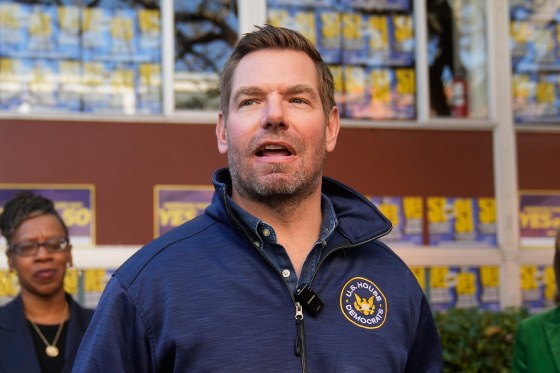
The third, more expanded and politically charged story is an NBC News article Eric Swalwell drops bid for California governor after sexual misconduct allegations about Democratic Congressman Eric Swalwell’s decision to suspend his campaign for governor of California after a series of sexual misconduct allegations. Swalwell, who had been polling among the leaders and was seen as the strongest Democrat in the race, wrote on X (formerly Twitter): “I am pausing my campaign for governor. To my family, staff, friends and supporters I deeply apologize for poor judgments I made in the past. I will fight the serious, false allegations that have been brought — but that is my fight, not the campaign’s.” The phrasing both acknowledges “poor judgments” and asserts that the specific allegations are false — a typical political balance between partial contrition and legal defense.
The crisis’s root stems from reporting in the San Francisco Chronicle and then CNN. A former staffer alleges she had sexual contact with the congressman while employed and that he assaulted her sexually twice when she was too intoxicated to consent. Several points matter. First, the allegation is not merely “office intimacy” but sexual assault in circumstances where she could not give informed consent — which qualifies as sexual assault. Second, the Chronicle says it vetted her account: it saw messages she sent to a friend three days after one of the incidents, interviewed an ex-boyfriend, and reviewed medical records concerning pregnancy tests and STI tests. CNN later published accounts from four women, including Democratic influencer Elli Sommarco, who says Swalwell sent her unsolicited pictures of his genitals. The outlets emphasize they corroborated the stories through associates and messages. NBC concedes it could not independently verify everything but checked the key accuser’s identity and her employment with Swalwell from 2019 to 2021.
Swalwell calls the allegations false; in a video statement he says: “These allegations of sexual assault are categorically false. They did not happen. They never happened. And I will fight them with everything I have.” Yet political and public reaction unfolds swiftly and largely not in his favor. Key Democrats, including Nancy Pelosi, say the allegations must be treated with respect and investigated “with full transparency and accountability,” with Pelosi noting it’s best done outside the context of the gubernatorial campaign. Supporters and allies begin to withdraw endorsements: Senator Ruben Gallego rescinds his backing, and 55 former Swalwell staffers publish an open letter urging not only that he exit the race but that he leave Congress and that a criminal probe be opened. They write: “We unreservedly support our colleague… We believe her.” This is a strong signal from within the elite: people who worked with him collectively distance themselves and side with the accuser.
Practical consequences unfold along three lines. First — legal: the Manhattan district attorney’s office in New York confirms to NBC News it has opened an investigation into the sexual assault allegations. Second — political: the party effectively pushes Swalwell out of the race, and California Democratic Party chair Rusty Hicks calls his actions “repugnant,” saying he is “unfit and undeserving of holding public office in California,” while urging voters not to support him even though by law he may still appear on the ballot. Third — institutional: congressional colleagues such as Ro Khanna, Sam Lick, Jared Huffman openly call for his resignation and for an ethics committee and law enforcement investigation.
It’s worth noting how partisan interests and principles mix in this story. On one hand many Democrats stress that one cannot “look the other way” for one’s own and that standards must be equal for Democrats and Republicans. The piece recalls Republican Tony Gonzales of Texas, who admitted to an affair with a staffer and is accused of exchanging explicit messages with two former aides (one of whom later died by suicide); Representative Anna Paulina Luna (a Republican) promises to file a resolution to expel Swalwell from the House, and a number of Democrats say they would vote to expel both Swalwell and Gonzales if the matter were put to a vote. On the other hand there is pure electoral logic: the exit of a leading Democrat in a crowded race — where primary contenders include, for example, Tom Steyer and former Representative Katie Porter — reshapes the field. There is a risk that a fractured Democratic field could lead to two Republicans advancing in California’s “top-two” system (where the two highest vote-getters, regardless of party, advance to the general election), especially after Donald Trump endorsed Republican candidate Steve Hilton. Some view Swalwell’s withdrawal as “the right move”; others say it’s only the minimal accountability and not something to praise.
Viewed together, the three stories reveal a throughline: in contemporary society, serious allegations — from possible involvement in a deadly crash to sexual violence and armed home invasion — instantly trigger changes in institutional and individual behavior. In sports this shows up as draft position declines and millions lost; clubs activate due diligence safeguards and revise plans. In public safety law enforcement rapidly uses media to turn news viewers into participants in a manhunt, and suspicion of an armed crime becomes grounds for broad mobilization, area lockdowns and public warnings. In politics — particularly in the #MeToo era and amid heightened focus on abuse of power — a substantial journalistic investigation supported by corroborating witnesses can topple a candidate for a state’s highest office in days, and party colleagues will distance themselves en masse.
At the same time these cases raise difficult questions about balancing the presumption of innocence with the need to respond to risk. None of the Rueben Bain, Rockingham County suspect, or Eric Swalwell stories yet has a definitive court decision. And still, decisions — economic, administrative, political — are already being made. NFL teams are adjusting strategies without awaiting a verdict. County residents receive warnings and alter daily behavior based on police descriptions. A political party and the public decide that allegations of this magnitude are incompatible with a gubernatorial campaign, even if the accused insists he will “fight the lies.”
Key trends in this broader picture are these. First, media reporting itself becomes a catalyst for formal actions: from the Manhattan district attorney opening an investigation after Chronicle and CNN reporting to draft board reshuffles after reporting on Bain. Second, the principle “no one is above the law” is strengthened — stated explicitly in the former Swalwell staffers’ letter calling for not only political but criminal review of his actions; the same message appears in comments about Gonzales and in California Democrats’ harsh words about Swalwell’s fitness for office. Third, institutions — clubs, parties, sheriff’s offices — increasingly prioritize preventive reputational and factual protection: better to remove, insure, mobilize earlier than later be held accountable for inaction.
But behind all these mechanisms are concrete human stories. The student killed in the crash, the frightened homeowner in Eden, former staffers describing sexual assault — these are reminders that behind draft numbers, police bulletins and candidate ratings are consequences that cannot be reduced to a formula of “poor judgments” or a “fun draft.” And if the main lesson from this set of seemingly disparate news is one thing, it is that suspicions and accusations are no longer peripheral or “private matters.” They have become a central factor capable, within days, of reshaping people’s lives, altering entire organizations’ strategies and testing the resilience of trust in legal and political systems.