The story around Jeffrey Epstein has long ceased to be the tale of a single criminal. New U.S. Department of Justice documents, congressional attempts to reach the “top of the food chain,” victims’ fights for justice and, alongside them, elites’ desperate efforts to protect themselves and their reputations — all of this forms a single pattern: the corrosion of trust in political, legal and aristocratic systems. Against this backdrop even a seemingly apolitical story from the Olympic Village — about fragile medals at the Winter Games in Milan — looks like a symptom of the same phenomenon: the fragility of symbols that society has come to accept almost automatically.
An AP report on the Winter Olympics in Milan–Cortina highlights a strange detail: medals, the highest award for an athlete, physically break literally in the first hours after the medal ceremony. American alpine skier Breezy Johnson recounts how her gold medal bounced off its ribbon when she was jumping for joy: “Don’t jump in them… I was jumping for joy — and it broke,” AP News quotes her. German biathlete Justus Strelow sees his bronze fall to the floor during celebrations; figure skater Alisa Liu posts on social media a medal detached from the official ribbon with the words: “My medal doesn’t need a ribbon.” Organizers are forced to respond, promising “maximum attention” and calling it “the most important moment for athletes.” This is not the first incident: after the 2024 Paris Olympics some medals were replaced due to corrosion resembling “crocodile skin.”
What matters here is less the physical quality of the medals than the contrast between symbol and reality. A medal is the material embodiment of the myth of the Olympic Games’ “perfection,” their ideals, professionalism and flawless organization. When a symbol proves literally fragile, the viewer suddenly sees not only a technical defect but a breach in the mythology: if even this “sacred” object was treated like an ordinary contractor contract, where one can cut corners or make mistakes, what should we expect from other institutions? This motif — the gap between promised ideality and actual practice — runs through all the stories around Epstein.
An ABC News piece describes in detail a closed virtual deposition of Ghislaine Maxwell before the U.S. House Oversight Committee, devoted to investigating Epstein’s ties to influential figures in politics, business and entertainment. Maxwell, already convicted as Epstein’s accomplice, repeats the same phrase more than a dozen times: “I am invoking my Fifth Amendment right,” and refuses to answer virtually every question: whether she was close friends with Epstein, participated in trafficking girls, knew about sexual abuse of minors, or participated in it. ABC emphasizes that the deposition video was fully released by committee chairman James Comer so that “Americans can see everything for themselves” (ABC News).
The Fifth Amendment to the U.S. Constitution, which Maxwell invokes, gives a person the right not to testify against themselves to avoid self-incrimination and criminal prosecution. It is a cornerstone of American criminal law, protecting citizens from state coercion. But in public perception, especially in high-profile corruption or sexual scandal cases, invoking the Fifth Amendment is often taken as an admission of moral, if not legal, guilt. Here a fundamental conflict arises: the formal supremacy of the law versus society’s demand for “truth at any cost.”
The situation is aggravated by Maxwell’s lawyer David Marcus’s stance: he explicitly says his client “is willing to speak fully and honestly if she is granted presidential clemency by Donald Trump.” This exchange of “truth for freedom” moves the conversation from a legal plane into the political. Marcus even states that “both President Trump and President Clinton are not guilty of any wrongdoing,” and only Maxwell can explain why, and society “has a right to hear that explanation.” In other words, a sole holder of potentially destructive information is using it as leverage over the political system, and the truth that could restore justice for victims becomes bargaining material.
Chairman Comer notes that Maxwell was expected to answer questions about additional accomplices, the scale of the crimes and Epstein’s ties to “the most powerful people in the world.” But Maxwell, already found guilty in court, remains completely silent, citing that her habeas petition is still pending in a New York court. Democrats point out she is using the congressional platform merely to repeat her plea for a pardon; Comer himself and some Republicans strongly oppose any clemency. Meanwhile the committee has already scheduled depositions for Leslie Wexner, Epstein’s former principal client, Hillary and Bill Clinton, as well as the financier’s accountant and lawyer. In other words, the enforcement chain of the high-profile case is moving to systemic figures.
It is important to understand: the Epstein case is not only about crimes against specific victims, but about a stress test for the institutions that should have protected those victims rather than turned a blind eye to an influential abuser. The very existence of the massive trove of files that the DOJ is releasing in parts and which congresspeople can examine unredacted suggests that for a long time the authorities possessed far more information than the public. Today we observe a painful process of catching up in trust: society is trying to understand who knew but stayed silent, who covered things up, and who simply looked the other way because it was “too inconvenient.”
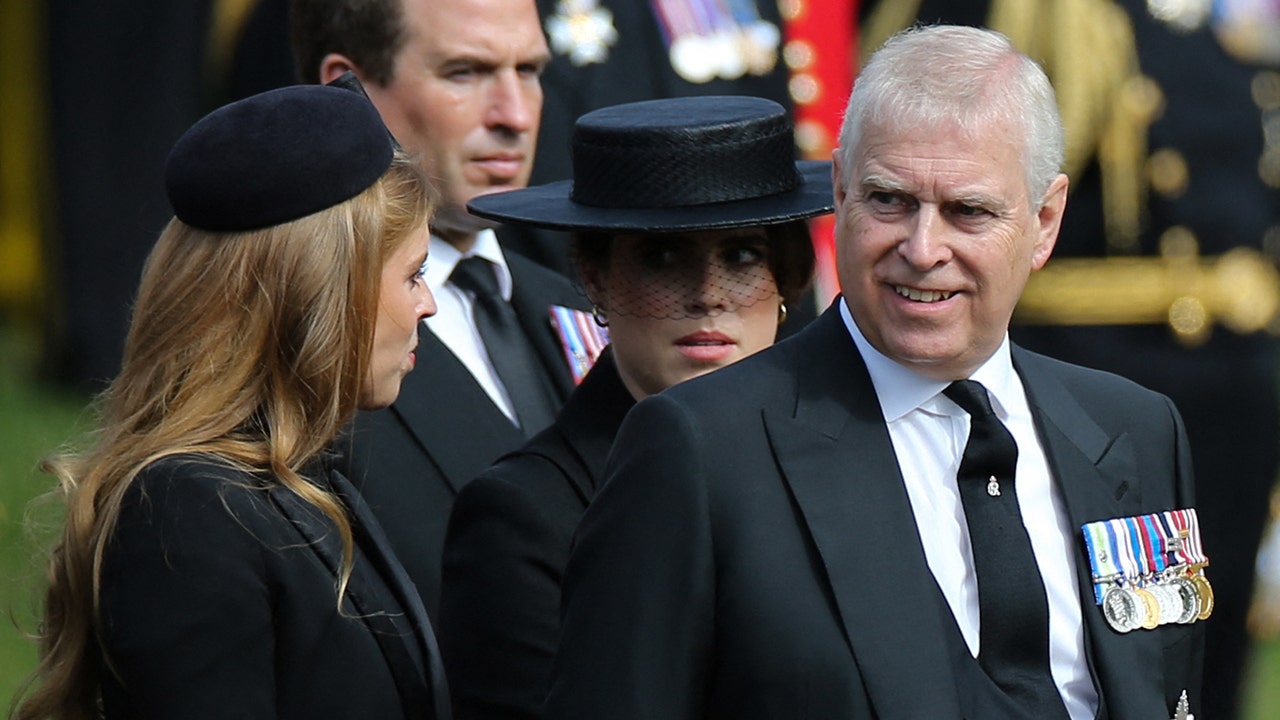
A Fox News piece about the daughters of former Prince Andrew, Beatrice and Eugenie, shows how all this ricochets onto another ancient institution — the monarchy. Royal experts say both sisters are “emotionally drained” and feel “betrayed” amid a new wave of DOJ documents that involve their father and their mother, Sarah Ferguson (Fox News). Importantly: inclusion in the document trove does not mean automatic guilt, but constant association in the same context with Epstein creates a persistent linkage in public opinion.
In published correspondences cited by Fox News, Sarah Ferguson supposedly wrote to Epstein in 2009 about an upcoming lunch: “What address should we arrive at. I’ll be there, Beatrice and Eugenie.” In another 2010 message she jokingly refers to Eugenie’s trip to New York as a “shagging weekend” — a crude phrase implying a “sex weekend” with a boyfriend. There are also discussions of a possible tour of Buckingham Palace that either Sarah herself or one of the daughters might give. Additionally, People, cited by Fox, reports that Andrew sent Epstein family Christmas cards with photos of his daughters even after Epstein’s 2008 conviction in Florida.
Even if these actions are not crimes in themselves, for public perception they matter as markers of normalcy: continuing correspondence, family gestures, plans for social visits with someone already convicted of sexual crimes against minors signals treating those crimes as an “insignificant inconvenience.” Another foundation collapses here — the idea of the monarchy’s moral exceptionalism as a “model of conduct.” That image, carefully constructed over decades, proves incompatible with the facts.
It is unsurprising that, according to experts, Eugenie and Beatrice are experiencing a severe crisis of trust in their parents. One source claims Eugenie nearly severed contact with her father, which is especially painful given her active work on anti-slavery and anti-trafficking projects: trying to protect victims, she must cope with her father being associated in the media with a man who built an “industry of exploitation.” Beatrice, commentators say, maintains a closer emotional bond with her parents and, conversely, feels responsible for caring for them. Both sisters desperately try to distance their reputations from the family scandal, focusing on their work and charitable activities.
The Crown’s reaction is also telling. King Charles, according to Fox News sources, “wants to protect his nieces,” and Prince William “doesn’t want them to be outcasts.” At the same time the King has launched a formal process to strip Andrew of titles and honors, removing him from active public life. Andrew has already been relieved of royal duties, announced his renunciation of titles in October, and on February 3 left Royal Lodge, the residence he shared with his former wife. However, he cannot be removed from the line of succession: that is a different aspect of traditionalism, where even compromising ties cannot touch the basic mechanisms of succession.
Andrew’s story is complicated by a civil suit brought by Virginia Giuffre, who alleged Epstein trafficked her and accused Andrew of sexual assault when she was 17. The suit was settled out of court in 2022 without an admission of guilt from him. But the very possibility of such a settlement underscores how differently the system operates for people of different social status: victims receive compensation but not the precedent-setting public trial that might have revealed more truth.
All these narratives — from brittle Olympic medals to Maxwell’s silence and the royal family’s crisis — add up to a broader trend: society is ceasing to uncritically trust symbols and those who stand behind them. An Olympic medal, a royal title, a high government post, even the constitutional protection of the Fifth Amendment — all of these were supposed to embody stability, honor and justice. But when a medal falls off its ribbon an hour after being awarded, when an elite member refuses to answer any questions about crimes and turns knowledge into a bargaining chip, when members of a royal family are repeatedly linked in the record to a sexual predator — trust in institutions themselves melts away.
At the same time it is important to separate emotional reaction from legal foundations. The right to remain silent is not a “loophole in the law” but a protection against abuse; the demand for evidence and the presumption of innocence are not shields for the rich but the bedrock of any fair system. The danger lies elsewhere: in the selective application of these principles. When society sees that influential and wealthy people can use the law more effectively than ordinary citizens, and when truth becomes a resource in political bargaining, a sense arises that the game is rigged. That is why the House committee insists on publicizing depositions, including the Maxwell video, and why media outlets — from ABC News to Fox News — are painstakingly parsing every new detail in the DOJ’s multimillion-page file trove.
The key insight that emerges from comparing these seemingly different stories is that today the chief deficit is not money or power, but trust. And trust cannot be restored by symbolic gestures alone: replacing a broken medal, stripping titles, conducting another closed deposition. Systemic changes are required: procedural transparency, equal standards of accountability for everyone — from Olympic organizers to members of royal families and former presidents — respect for victims’ rights and an honest explanation to the public about why certain steps are being taken or, conversely, are legally impossible.
The Epstein case has shown how one person, exploiting gaps and weaknesses in the system, can poison faith in a whole range of institutions for years — from the American justice system to the British monarchy. The question now is whether the system itself can use this crisis for reform. Fragile Olympic medals here prove to be not just a curiosity but an apt metaphor: if the quality of the foundation is not checked in time, at the most important moment the symbol may not bear the load.