Three reports cover seemingly unrelated events: a mass-casualty crash in Massachusetts, a shooting near a university in Virginia and court testimony from former Senator Kyrsten Sinema. Yet they share a broader theme—the vulnerability of people and institutions, as well as the consequences of decisions made in situations where personal conduct, public responsibility and the legal system intersect. In one case, the issue is a sudden physical danger on the road; in another, violence in a university setting; and in the third, a public figure’s private relationship that became the subject of litigation.
The most immediate threat is described by WCVB: around 8 a.m. Sunday, several vehicles were involved in a crash on northbound I-95 near Exit 25 in Canton, Massachusetts. Two people suffered serious injuries and were taken to hospitals. All northbound lanes of the highway were closed, and traffic was rerouted through Exit 23.
The report is based on preliminary information from state police and does not explain what caused the crash. This is an important feature of breaking news: at an early stage, journalists record confirmed facts—the location, time, number of injured people and traffic restrictions—without drawing conclusions about who was responsible or how the collision occurred. The closure of all lanes shows that the incident had not only medical but also significant transportation consequences: a major highway was temporarily taken out of normal operation, potentially causing traffic jams and additional risks for drivers.
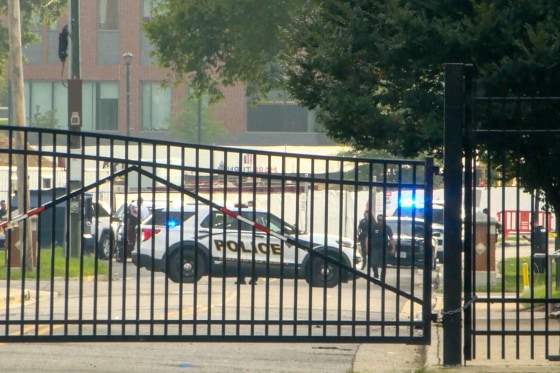
An even broader threat to public safety is presented by the shooting near the dormitories of Virginia State University, as reported by NBC News. At around 1:28 a.m., five people suffered gunshot wounds. One victim, a 21-year-old man, was in critical condition. Three others—a 17-year-old boy, a 23-year-old man and a 19-year-old woman—suffered non-life-threatening injuries. The fifth victim, a 20-year-old university student, was later released from the hospital.
After the shooting, the campus was placed under a lockdown, which was lifted at about 8:20 a.m. Police arrested 19-year-old Kamron Harris, who investigators said was hiding in a closet in one of the dormitories. Authorities said he was not a university student. He was initially charged with malicious wounding and using a firearm in the commission of a felony; additional charges could be filed later.
This report particularly illustrates how the response system operates in the face of a threat: campus police and county law enforcement coordinated with the federal Bureau of Alcohol, Tobacco, Firearms and Explosives and the sheriff’s office of a neighboring county. In this context, “lockdown” means restricting movement within an institution: people are instructed to remain indoors while police determine whether the danger persists. The measure is intended to prevent further victims, but it also disrupts normal campus operations and heightens anxiety among students.
The significance of the incident is amplified by the fact that the shooting occurred just before the start of the academic year. Virginia State University is a historically Black university located in Ettrick, about 24 miles from Richmond, with approximately 5,700 students. The dormitories were already open, and classes were scheduled to begin Monday. The incident therefore affected not only the individual victims but the entire university community, which was just beginning to return to its academic routine. Virginia Governor Abigail Spanberger expressed support for those affected and thanked emergency responders and law enforcement officers.
The third report, published by Fox News, concerns not sudden physical violence but the legal and ethical consequences of the personal conduct of a public official. According to court documents, former U.S. Senator Kyrsten Sinema acknowledged during a deposition that she had repeatedly had sex with Matthew Ammel, who was married at the time and worked on her security detail. His former wife, Heather Ammel, filed the lawsuit, accusing Sinema of destroying their 14-year marriage.
The lawsuit is based on the so-called “alienation of affection” law, a provision that exists in several U.S. states and allows a spouse to seek compensation from a third party believed to have caused the breakdown of a marriage. This is an unusual mechanism in many legal systems: it treats the destruction of a marital relationship not only as a private dispute between spouses but also as grounds for a civil claim against an alleged outside participant. Sinema’s legal team sought to move the case from state court to federal court and then have it dismissed, arguing that the relationship took place outside North Carolina and that the court lacked personal jurisdiction over Sinema. Jurisdiction is the authority of a particular court to hear a case and issue binding decisions concerning the parties involved.
In her deposition, Sinema described several encounters beginning in late May 2024: in California, during a trip to a wedding in New York, in Washington, during a trip to Aspen and later in Phoenix. She also acknowledged that she knew Ammel was married and had three children. The case materials include personal messages, including the phrase: “I put my hand on your heart. See you soon. I miss you.” Asked by an attorney whether such messages could have caused concern for his wife, Sinema replied: “Yes.”
The testimony, however, does not present only the plaintiff’s version of events. Heather Ammel described how she learned about the relationship, but also called her former husband a “chronic liar and manipulator” and suggested that he may have manipulated both her and Sinema. This detail is important for an objective assessment: the case concerns not only allegations against the former senator but also the credibility of all the participants’ testimony. The Ammels’ divorce was finalized in March 2026, and a hearing on the merits of the claims is scheduled for August 19.
Taken together, the three reports show that public safety has several dimensions. In Canton, the danger arose from a traffic incident, making the main priorities rescuing the injured, investigating the circumstances and restoring traffic flow. In Virginia, the issue was the intentional use of a weapon, requiring the immediate isolation of the threat, the suspect’s arrest and the protection of a large number of people. In Sinema’s case, there was no immediate threat to life at the time described, but public interest arose from the participant’s status and the possible effect of personal conduct on trust in government institutions.
All three reports depend on official procedures. The first article relies on state police as its source; the second on county police, the university and other law enforcement agencies; and the third on court documents and depositions—formally recorded sworn testimony given before trial. This underscores the importance of verifiable material in reporting events, especially when the information is still incomplete. None of the reports presents final conclusions as established fact: the crash investigation is ongoing, the shooting suspect has only been arrested and the charges may change, and the court has not yet ruled in the civil case against Sinema.
Another shared theme is the impact on the wider community. The crash disrupts travel for thousands of people, the shooting undermines the sense of safety among university students and staff, and the lawsuit involving a former senator raises questions about reputation, responsibility and the boundaries between private life and public office. At the same time, the reports demonstrate the difference between legal and moral responsibility. The affair itself may be viewed as ethically problematic, but Sinema’s legal liability will depend on whether the lawsuit meets the requirements of the law, whether the court has the necessary jurisdiction and whether the plaintiff can prove a causal connection between the defendant’s actions and the breakdown of the marriage.
The key conclusion is that crisis events require not only a rapid response but also careful fact-finding. In a crash, the priorities are medical assistance and road safety; after a shooting, campus protection and a criminal investigation; in a civil dispute, an adversarial process, the examination of testimony and a determination of the court’s authority. In all three cases, early reports may be incomplete, making it especially important to distinguish confirmed information from speculation and a final verdict from a preliminary charge. This boundary—between the event, the authorities’ response and a proven conclusion—is central to understanding the reports presented here.