
The stories described in pieces from ABC News, NBC News and Al Jazeera initially seem unrelated: a legal fight over construction of a ballroom at the White House, Lindsey Vonn’s desperate decision to start at the Olympics with a torn anterior cruciate ligament, and record snowfalls in Japan that have caused dozens of deaths. Yet in all three cases a common theme runs through them: how societies and individuals manage risk — where they draw the line between acceptable and unacceptable, who gets to move that line, and what justifications are used to try to outwit reality.
In the White House case, risk is presented through the language of governmental necessity and national security. In its filing to Judge Richard Leon, the U.S. Department of Justice argues that stopping construction of the ballroom and related infrastructure in the East Wing “would jeopardize the safety of the President and others who live and work at the White House.” The Trump administration is using the gravest possible argument — national security — stressing that the current open construction pit itself constitutes a threat, as attested by the Secret Service. Moreover, the government plans to submit an additional classified declaration to the court to convince it that halting work “would jeopardize national security and, therefore, affect the public interest.”
It’s important to clarify several legal and political nuances. When the Department of Justice asks in advance to “stay” a possible injunction (a so-called stay, a temporary pause in enforcement of a court order), it effectively acknowledges: the risk of losing in court is real, and the consequences of potentially stopping construction are so sensitive that, in their logic, an appellate court should have the chance to intervene before all work is halted. Separately, the government contends that the project cannot be “segmented” into a “security” part and a “ballroom” as something superfluous: in the administration’s view, such an attempt would be “unworkable” — that is, from technical and organizational standpoints it would be impossible to clearly isolate and continue only the security-related elements while freezing everything else.
Opponents of the project, the National Trust for Historic Preservation, raise a different layer of risks — legal and institutional. They rely on a 1912 law that prohibits building federal structures without explicit congressional approval, and effectively ask: do these restrictions also apply to the president when he seeks to add an annex to the White House using private donations, without an explicit legislative mandate? Judge Leon has already publicly expressed deep skepticism, comparing the administration’s legal construction to a “Rube Goldberg contraption” — an overly complicated, absurd system of workarounds to accomplish what could (or should) have been done more simply and transparently. Rube Goldberg was an American cartoonist known for drawings of absurdly complex machines that perform elementary tasks. When the judge calls the plan a “Rube Goldberg contraption,” he is effectively saying: “you’re layering too many legal and procedural tricks to reach a contentious aim.”
Thus two dimensions of risk clash. The administration asserts that the main threat is physical: an unfinished construction site in the heart of the presidential complex and the need to modernize an underground bunker (commonly thought to mean replacing a deteriorated bunker dating to Franklin Roosevelt’s era). Opponents believe the key danger is an undermining of the constitutional balance of powers and historical integrity: if a president can remodel the White House at will with private funds, bypassing Congress, that creates a dangerous precedent. The Department of Justice, acknowledging that the case raises “new and significant questions that courts have not previously confronted,” is effectively asking: allow us to complete a dangerous but, by our account, necessary phase of work while a higher court decides what is lawful at all.
This dispute shows how the language of national security is used as a universal argument that can outweigh almost any other risk. Technically, it may be justified: an open pit and a partially dismantled underground structure do complicate the Secret Service’s work. But at the same time it becomes a tool to expand executive discretion. Here a key trend appears: in politics, risk is often measured not only by objective parameters but also by who describes it and to what purpose. Whoever controls the narrative about risks gains advantage in the struggle for resources, authority and decision-making power.
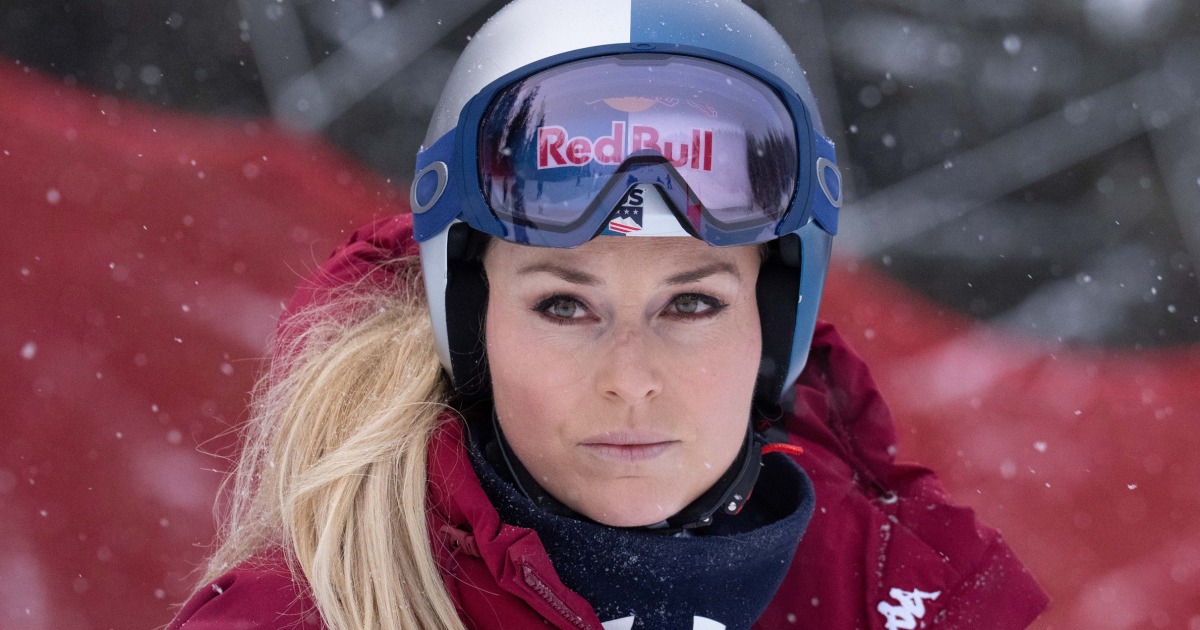
Lindsey Vonn’s story from NBC News is a mirror image of the same dilemma, but at the personal level. The three-time Olympic medalist, 41, returned to top-level competition after a series of injuries and a knee replacement, and decided to start at the Milan–Cortina Olympics with a completely torn anterior cruciate ligament (ACL — one of the key ligaments in the knee responsible for stability during sharp changes of direction and braking). From a sports medicine perspective this looks close to insanity: an ACL tear usually requires surgical reconstruction and long rehabilitation, and attempting to compete at speeds of 130 km/h on an icy slope is a direct path to catastrophic injury.
But Vonn says: “As long as there’s a chance, I’ll try” and “I’m not going to let this slip through my fingers.” She emphasizes that these are very likely her last Games, and neither pain, risk, nor the changed odds of medaling after her crash in Crans-Montana will make her back down. This willingness to consciously accept physical risk for a short, “90-second” moment on the course (in the words of her late coach Erich Sailer) shows another side of risk logic: in professional sport it ceases to be something to avoid and becomes a required element of identity. Vonn frames her story as the culmination of a career in which injury and pain were the norm: numerous ligament tears, fractures, a full knee replacement in 2024, and despite all that, a successful return — she once again led the overall downhill standings, 144 points ahead of her nearest rival before the fall in Switzerland.
Conceptually an interesting paradox emerges. Unlike the White House reconstruction case, where the administration tries to hide part of its justifications under classification, Vonn is maximally transparent: she openly admits that her chances are worse than before the injury and that she cannot promise to race the super-G (a more technical but also very fast discipline). Yet that honesty only intensifies the drama of voluntary risk-taking: she knows she may lose much more than she gains, but the sense of closure, loyalty to herself, the memory of her coach, and her sporting legend matter more than long-term health. Unwritten norms often operate in professional sport: if you can in any way start, you are obliged to do so, especially when it’s a “last chance.” The risk to bodily integrity for symbolic capital (medals, narrative, status) becomes not an exception but the norm.
Comparing this with the Japanese story, the boundary between “controlled” and “uncontrolled” risk blurs. In Japan the cause of the disaster appears externally driven: record-breaking snowfall, a local manifestation of broader climate instability, an incursion of Arctic cold air, as Kyodo reports. But that is only the initial factor. That a natural event becomes a social catastrophe with at least 30 deaths in two weeks and nearly 300 injured is tied to human decisions and limitations.
Japanese authorities have had to deploy the Self-Defense Forces to help clear snow and support the most vulnerable — primarily elderly and solitary people in places like Aomori and Niigata prefecture. Aomori Governor Sōichirō Myōsita warns of an “imminent danger” — a threat that is not abstract but present and immediate: people die falling from roofs while trying to remove snow, are buried by avalanching slabs from roofs, thawing and shifting snow masses collapse structures, two men are swept into a drainage canal for meltwater while assisting with clearing infrastructure. The government warns of avalanche risk, downed power lines, and even potential effects of the snowfall on parliamentary elections.
At the everyday level the Japanese story shows a classic example of residual risk — the risk that remains even after all reasonable precautions. In northern regions snow is a familiar reality; infrastructure and everyday life are adapted to it: drainage channels exist, municipal snow-clearing systems are developed, residents know how to work with roofs. But when snowfall volumes exceed the norm twofold, as in Aomori where snow depth reached 183 cm and broke a 40-year record, familiar methods prove insufficient. For elderly people, who make up a significant portion of the population in these regions, every attempt to clear a roof or yard becomes a life-threatening task they often cannot refuse: if they do not remove the snow, the house may collapse.
Unlike Vonn, for these people risk is not romanticized. It is a forced choice: risk yourself now to preserve your home and the ability to live on. The state tries to take some of that risk on itself, mobilizing Self-Defense Forces, organizing assistance and running warning campaigns. Prime Minister Sanae Takaichi holds an emergency cabinet meeting, demanding everything possible be done to prevent deaths and accidents. Here we see another configuration: the state acknowledges the limits of control over natural forces, but still strives to minimize consequences and especially to protect the most vulnerable.
Returning to the overarching thread, these three stories can be seen as different approaches to dealing with inevitability: construction risks of a large infrastructure project, bodily risk in elite sport, and climate-driven risk in everyday life. They differ in scale and in the decision-makers involved, but the logic is similar: someone tries to turn risk into justification for action, someone treats it as a conscious challenge, and someone must simply live with it.
Several key trends and conclusions emerge from juxtaposing these narratives.
First, at the state level risk is increasingly presented as an argument for expanding powers and accelerating procedures. In the dispute over the White House ballroom, the Trump administration shifts the debate from governance style and funding transparency to the claim that halting construction “would harm national security.” The request to the court to preemptively stay a possible injunction demonstrates a desire to neutralize institutional risk — the risk of losing and having to comply immediately. This shows a broader trend: the greater the emphasis on security in modern democracies (external, internal, cyber, etc.), the easier it becomes for executives to use that language to justify contentious decisions in urban planning, defense and surveillance.
Second, at the individual level risk increasingly becomes part of self-construction. Lindsey Vonn consciously builds her comeback narrative around “as long as there’s any chance”; to step back would be to betray herself and her career. Objectively, doctors might deem her decision extremely unsafe, especially given age, previous injuries and a prior knee-replacement surgery. The psychological element matters: admitting that health and body have insurmountable biological limits means admitting the end of a professional identity. The desire to race one more time, even if medaling chances are minimal, answers a fear of losing meaning as much as sporting ambition. The price may be disability or a diminished post-sport quality of life.
Third, at the societal and everyday level tension increases between growing climatic uncertainty and demographic shifts. Japan is aging, the density of elderly populations in northern prefectures is high, and extreme weather events are becoming more frequent and intense. When a 91-year-old woman dies after being buried under a three-meter layer of snow near her home, it is not just a private tragedy but a symptom of systemic vulnerability. Even a perfectly organized warning and assistance system cannot protect everyone in real time: the time lag between a snowfall, awareness of the threat and physical help is inevitable. Here risk is neither voluntary nor heroic; it is unevenly distributed and falls first on those least able to bear it.
Finally, all three cases raise the question of transparency in risk management. At the White House much of the argument about danger to the president is in classified materials: the public is asked to take it on faith that stopping construction is more dangerous than continuing it. In sport, Vonn is the opposite: she is open about her diagnosis, doubts and limitations, bringing the debate into the public sphere and allowing people to admire or criticize her choice. In Japan, authorities operate between these poles: weather forecasts, casualty statistics, and measures like the 183 cm snow depth in Aomori are published and debated, but decisions about deploying troops, organizing assistance and even whether to hold elections on schedule are made within the political system, where closed compromises and assessments are also possible.
Taken together, this leads to an important conclusion: in a world where natural, political and personal risks grow and intersect, the crucial ability is less to “eliminate” risk than to honestly acknowledge its limits and to allocate responsibility for consequences. A state that invokes security must be prepared to justify its actions not only with classified intelligence but also with open dialogue about where reasonable precaution ends and abuse begins. Sport that builds legends on extreme self-overcoming must not silence the cost of those feats for athletes’ health. And societies facing climatic anomalies inevitably face the question: can we continue to leave the most vulnerable alone with “ordinary” seasonal risks that, because of climate change, are no longer ordinary?
The White House ballroom story, Lindsey Vonn’s final start and the snowstorms in northern Japan remind us: managing risk means not only building bunkers, stepping up to a start gate, handing out shovels and mobilizing troops, but constantly re-examining the assumptions about what is permissible, what is fair and what we as societies and individuals are willing to pay for the illusion of control over an unpredictable world.
![A shop worker clears snow in the city of Aomori, where on Jan. 30, 2026, the deepest snow cover in 40 years was recorded [Philip Fong/AFP]](https://www.aljazeera.com/wp-content/uploads/2026/02/AFP__20260130__94J34WH__v3__MidRes__JapanWeatherSnow-1770099437.jpg?resize=770%2C513&quality=80)