Almost all the texts in the roundup, despite their different genres and tones, converge on one important theme: how an adult’s personal choice turns into a public event with very different consequences. In one case, it is a tragedy in which a father did not stop his teenager from getting access to a weapon and has now received 15 years in prison, according to NBC News. In another, an incident in Philadelphia, where ABC News reports the safe removal of a purported grenade that ultimately turned out to be harmless. In a third, a story from Ella Langley on Fox News about her rise, in which personal values, faith, and “authenticity” become the foundation of commercial success. Seen in broader terms, all three stories show that today society responds especially sharply not only to the events themselves, but also to who is held responsible for them, how risk is perceived, and how convincing a person seems to others.
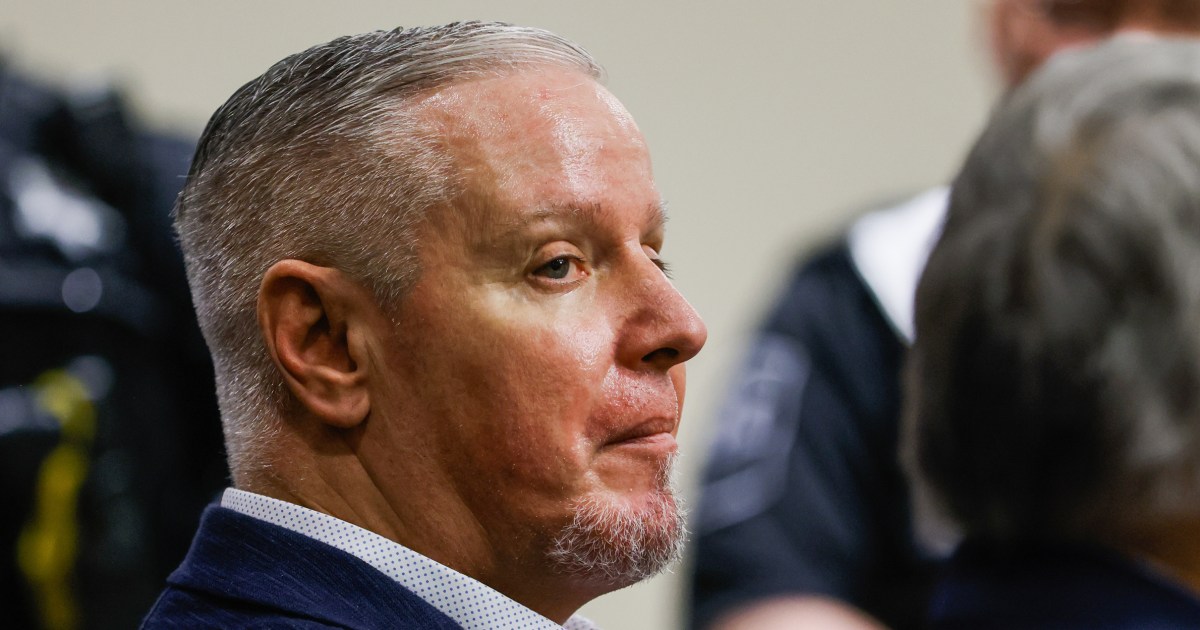
The strongest and most dramatic thread is tied to the case of Colin Gray. A Georgia court sentenced him to 15 years for giving his 14-year-old son an assault rifle that the teenager later used in a mass shooting at Apalachee High School. NBC News quotes Judge Nicholas Primm’s harsh wording: “I don’t get to sentence with passion. I have the nearly impossible task of sentencing you without passion, despite the immeasurable heartache that you’ve caused.” In other words, the judge emphasizes that punishment must be based not on emotion but on the proportionality of guilt. And yet it was precisely that proportionality that became the central question of the proceedings. Prosecutors argued that the father ignored a “substantial and unjustifiable risk”—a substantial and unjustifiable risk that the weapon would end up in the hands of a teen who had already threatened to shoot at the school. The judge said plainly that Gray “fail[ed] to get Colt counseling” and “fail[ed] to remove the guns from the house”—he did not provide his son with help and did not remove the weapons from the home. This is no longer merely family negligence; it is legally significant inaction that the court treated as part of the causal chain of the tragedy.
The particular power of this story lies in the way it shifts the focus from the perpetrator to the adult who created the conditions for catastrophe. Usually, mass shootings are viewed as the action of a single attacker, but here the court effectively recognized that responsibility can extend up the family and social ladder. This is an important signal for the American legal system and for public debates about guns: it is not enough to talk only about a “bad teenager” if an adult knowingly did not remove the tool from the home that ultimately became an instrument of killing. In that sense, Gray’s sentence is not just punishment for the father—it is an attempt to set a new benchmark for parental and civic responsibility.
It is also telling how, in the NBC News report, the words of the victims’ relatives are presented. The mother of the murdered student, Mason Schermerhorn—Maria Schermerhorn—rejected the justification that Gray was a “newly minted single father”: “Parenting is hard. Parenting alone is even harder... but there is a world of difference between struggling to parent and refusing to parent.” This line captures the key distinction with particular precision: parenting difficulties are not the same as refusing parental responsibility. She also said: “I could not control every choice my children would eventually make, but I was responsible for controlling what I put into their hands.” It sounds like a compressed moral formula for the entire case: you cannot control every future decision a child will make, but you can—and must—control what the child has access to here and now. For the public debate about guns, this is perhaps one of the most concise arguments.
Against this backdrop, the fact that the shooter himself also received life in prison without parole looks especially grim. NBC News writes that he was obsessed with mass killers, especially Columbine and the tragedy of Sandy Hook, and on prison calls, as prosecutors claimed, he “apparently relish[ed] the attention the massacre brought him.” This is an important detail: it is not just about violence, but about a culture that romanticizes it—when the offender seeks not only destruction, but also notoriety. In this way, the Apalachee case goes beyond a single tragedy and becomes an example of how easily a teenager’s obsession with guns and mass killings can turn into real terror when there are no adults nearby willing to intervene decisively.
A completely different, yet also illustrative storyline is provided by ABC News from Philadelphia. There, a reported grenade was allegedly thrown into a home in the Feltonville area at around 2 a.m.; the device failed to work and was thrown back onto the street. The house was evacuated, and then bomb squad personnel determined it was not an explosive device at all and posed no danger to the public. The news itself is short and, on the surface, local, but it reveals another aspect of modern anxiety: people and services respond to a potential threat as quickly as possible even when the real danger has not yet been confirmed. This is not random overcaution; it is part of a new kind of urban security, where the cost of mistakes is too high. Society is already living in a mode where a “suspicious object” automatically triggers an entire chain of evacuations, checks, and expert responses. In that sense, what matters is not only the outcome—whether the device was harmless—but also the risk-mitigation mechanism itself.
Ella Langley’s story, published by Fox News, at first glance seems to belong to a completely different universe, but it, too, revolves around trust, authenticity, and public reaction. The article says her success is tied to the fact that she does not give up her faith, values, and traditional country sound. It mentions that her song “Choosin’ Texas” has stayed at the top of the chart for 15 weeks, and experts call her success the result of “authenticity.” The text also makes the point that she “really does seem very unapologetic” and that “I believe what she’s saying.” This is a key moment: in the modern entertainment industry, it’s not enough to simply sing well or to actively promote yourself; audiences want to believe that the artist is truly who she presents herself to be.
Based on the views of experts, Fox News effectively describes an old but very resilient formula for success in country music: faith, family, simplicity, universal emotions, and recognizability. One of the interviewees emphasizes that country often works because it draws on themes close to a broad swath of Americans: love of family, pride in the country, first love, loss, financial difficulties, and gratitude to Jesus. In that logic, Ella Langley is not an exception to the genre, but its modern embodiment. Her success is explained not by rejecting her roots, but by, in fact, strengthening them. Even the comparison to Taylor Swift here serves less as a contrast and more as a way to show that the path from country to mainstream stardom is still built on the ability to connect local identity with widely understandable emotions.
When you put all three pieces side by side, it becomes clear that today’s public world is built around two opposing yet related requirements. On the one hand, society demands responsibility for consequences, especially when violence—or the threat of violence—is involved. That is why the father of the shooter in Georgia receives not a symbolic, but real prison punishment. On the other hand, society increasingly rewards a sense of sincerity and clear identity, as in the case of Ella Langley: people want a public figure to be not just visible, but “real.” Between these poles lies the Philadelphia “grenade” episode, where the response to danger has to be fast, even if it later turns out that the threat was illusory. In other words, the modern coordinate system works like this: risks must be prevented in advance, responsibility cannot be shifted away, and trust must be constantly reaffirmed.
Several important conclusions follow from this. First, the case of Colin Gray could become a precedent for discussions about how far criminal liability of parents extends when children have access to guns. Second, the Apalachee tragedy again shows that gun availability at home remains a critical factor in school violence. Third, Ella Langley’s story confirms that in an era of information overload, authenticity sells as well as—or better than—marketing: audiences are more likely to support an artist who looks rooted in her values than someone who seems too constructed. And finally, the Philadelphia incident reminds us that the security system is built not only on preventing real attacks, but also on being ready to respond to any signals, because the cost of delay can be too high.
If you briefly explain the complex terms, “second-degree murder” is murder where there is not necessarily a premeditated intent to kill a specific person, but there is extremely dangerous behavior and a conscious disregard for the likelihood of a fatal outcome. “Involuntary manslaughter” means causing death without direct intent, but through gross negligence or criminal recklessness. “Mass shooting” means a mass shooting, usually with multiple victims or injured people. “Authenticity” in the entertainment-industry context is perceived sincerity—alignment between the public image and the real person behind it. And the work of bomb squad refers to the actions of a bomb disposal unit that checks, neutralizes, and removes potentially dangerous devices.
Ultimately, all three stories say the same thing: modern society tolerates less and less negligence where serious consequences are possible, and values more and more clarity, reliability, and the ability to take responsibility for one’s choices. In the tragedy involving the Gray family, this is expressed through punishment for inaction. In Philadelphia, through an immediate response to a possible threat. In Ella Langley’s story, through the high price of the sense of authenticity without which even a dazzling success becomes temporary.