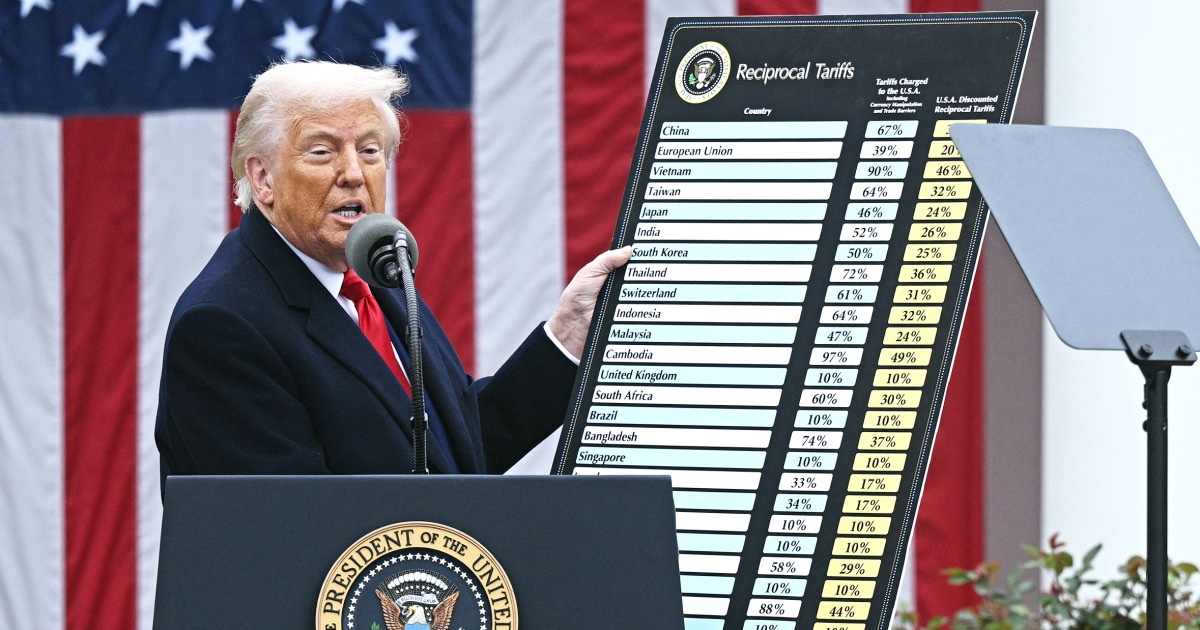
In three seemingly unrelated pieces — about the U.S. Supreme Court’s decision on Donald Trump’s tariffs, the administration’s attempt to sharply increase military spending, and a pop‑up café serving gigantic milkshakes in Disney Springs — a single thread emerges. It’s a story about how executive power in the United States tries to expand its authority and redistribute vast sums of money, and how society and institutions — courts, bureaucracy, business, and consumers — respond. From disputes over the constitutional limits of presidential power to questions of who will pay for tariffs and the military budget, and ending with how mass culture and the entertainment industry monetize people’s attention — the issue everywhere is control over resources and emotions.
The Supreme Court decision on Donald Trump’s tariffs, described in detail by NBC News in “Supreme Court strikes down most of Trump's tariffs in a major blow to the president” (link), reveals a key conflict in contemporary American politics: where presidential initiative ends and constitutional constraint begins. The Court, in a 6–3 majority, ruled that Trump exceeded his authority when he relied on the 1977 statute — the International Emergency Economic Powers Act (IEEPA) — to impose broad tariffs under a self‑declared “national emergency.” That law was originally intended as a tool to respond to an “unusual and extraordinary threat” — primarily from hostile states or terrorist groups — not as a universal lever of trade policy.
It’s important to understand what IEEPA is: a statute that allows the president to “regulate” imports and exports in the event of an extraordinary external threat to national security. To regulate does not automatically mean to impose tariffs of any size. That is the court’s central emphasis. Chief Justice John Roberts, in his opinion, stresses that the president effectively claimed an “extraordinary” unilateral power to impose tariffs “of unlimited size, duration, and scope,” but the administration could not point to any statute in which Congress had clearly authorized using IEEPA for such tariffs. The legal conclusion follows: IEEPA does not empower the president to impose such tariffs.
Another complex but important concept in U.S. law surfaces here — the so‑called “major questions doctrine,” which NBC News mentions in the same piece (link). The doctrine’s essence is that when a government policy has “vast economic and political significance,” courts require Congress to grant explicit and specific authorization for that policy. One cannot assume that a vague phrase in an old statute gives an administration the right to carry out expansive initiatives with trillion‑dollar consequences. The doctrine was previously used by the Court’s conservative majority against Joe Biden, notably in the student loan forgiveness case. Now Roberts invokes it in a dispute with a Republican president, showing the issue transcends partisan lines: both Democratic and Republican administrations have sought expansive readings of statutes, and the courts respond by demanding clarity of mandate.
The Court’s decision does not affect all of Trump’s tariffs, only those directly tied to IEEPA. Measures enacted under other statutes (for example, steel and aluminum duties) remain in force, but two large groups are vacated: so‑called “reciprocal” (country‑by‑country) tariffs — differential rates ranging from 34% for China to 10% for most countries — and 25% tariffs on certain goods from Canada, China, and Mexico justified by alleged insufficient efforts to combat fentanyl shipments. For businesses this is not only a symbolic victory against what entrepreneurs call “arbitrary” policy, but a material issue — the return of previously paid duties.
NBC News quotes importers like Victor Schwarz, owner of New York wine and spirits importer VOS Selections, who called the tariffs “arbitrary, unpredictable and harmful to business” (link). The group We Pay the Tariffs, representing small businesses, immediately demanded a “full, swift, and automatic” refund mechanism. For them the court’s decision is not just a legal precedent, but a chance to recover funds they consider “illegally collected” by the government. The refund question is especially sensitive: according to Customs and Border Protection, by mid‑December tariffs imposed under IEEPA had brought about $130 billion into the Treasury. The Court did not directly rule on what should be done with that money, but in a concurring opinion Justice Brett Kavanaugh warns that any obligation to refund could be a severe blow to the federal budget.
Against this backdrop, Trump’s reaction is telling: he went beyond criticizing the Court — calling the decision a “shame” and accusing the majority justices of “unpatriotic” behavior and disloyalty to the Constitution, even suggesting they were influenced by “foreign interests” (NBC News). Simultaneously, he conspicuously shifted to another legal tool, announcing a global 10% tariff under Section 122 of the Trade Act of 1974. This move highlights the administration’s strategy: when one channel is found unconstitutional or unlawful, quickly locate another statute where powers are more plainly articulated or more defensible in court. Effectively we see a kind of “legal arms race” between an executive branch seeking maximum flexibility and a Court insisting that Congress speak clearly and specifically.
The same motif — how to spend and how to justify — appears in a short Washington Post item recapped in a Facebook post, “Trump aides struggle with how to spend $500 billion more on military” (link). Relying on unnamed sources, it reports that Trump administration officials struggled to devise a plan to increase military spending by $500 billion. Some senior figures, including the director of the White House Office of Management and Budget, resisted Defense Department plans to raise the defense budget by roughly 50%. Here another facet of the same problem comes to the fore: even within the executive branch there is no consensus on how to justify and allocate such a massive increase in defense spending.
Half a trillion dollars is comparable to the sums at issue in the tariff dispute, if one accounts for the trillions Trump frequently cites in rhetoric. But unlike tariffs, which produce a relatively direct and tangible inflow to the Treasury, boosting military spending is a political choice favoring long‑term buildup of “hard power.” The classic dilemma arises: how to reconcile the demands of the defense establishment, the president’s ambitions, and the constraining role of bureaucratic structures that raise questions about feasibility and priorities. The fact that even the director of OMB — formally serving the president — opposed such a steep jump indicates inertia and an internal “check” logic within the state apparatus. It is not always prepared to absorb political impulses that are not backed by a clear strategy and administrative capacity.
Tariffs and the military budget share a common denominator: both are instruments of redistribution. Tariffs are effectively a hidden tax, shifted onto importers and ultimately onto consumers. Military spending is a priority channel for spending already collected taxes and borrowed funds. In both cases presidential rhetoric appeals to national security, economic greatness, and the need for a “tough response” to external threats — from China to fentanyl. But judicial and bureaucratic filters make each decision face the question: is there really an “unusual and extraordinary threat” that statutes like IEEPA point to, and does society consent to finance years of increased military budgets?
Against this background the third piece — about the temporary opening of Black Tap’s pop‑up with its famous Crazy Shakes in Disney Springs, reported by AllEars.net (link) — is especially revealing. At first glance it’s just an entertainment story: starting March 2, 2026, a time‑limited Black Tap concept will open in Disney Springs for 90 days, featuring viral milkshakes including the Mickey Shake debuting on the East Coast. But look a little deeper and the story continues the same theme — how money and attention are redistributed in the modern economy.
Disney Springs is a space entirely governed by the logic of consumption and emotional experience. The pop‑up format — a temporary, “popping up” service location — is a tool for monetizing hype and scarcity. A 90‑day window, milkshakes in convenient to‑go cups optimized for a stroll through a shopping‑entertainment complex — it’s a carefully designed strategy to stimulate foot traffic and spending. Sprinkles, which closed last winter, made room for a new player in the same sweet niche: this shows that even within the “shop window” economy formats constantly change, and those who best capture and convert current social media trends and tourist flows into revenue win.
In the tariff story public and judicial attention is focused on how the president “taxes” goods from China, Mexico, or Canada; in the Disney Springs story we see businesses competing for the money of the same consumers who ultimately pay both for tariffs and milkshakes. In one case the state claims to act in the interest of national security; in the other, corporations simply offer an “ideal day” in Disney Springs, as AllEars.net mentions in its call to subscribe to a newsletter with tips (link). But the economic reality ties these stories together: higher tariffs can make imported ingredients more expensive; a stronger dollar and trade wars can affect tourism flows; military budgets and the taxes associated with them indirectly determine how much discretionary income households have left for trips to Disney World.
A key difference is transparency and accountability. With Black Tap everything is relatively straightforward: the milkshake price, the flavor list (BAM BAM SHAKE, THE COOKIE SHAKE, COOKIES ‘N CREAM SUPREME, BROOKLYN BLACKOUT, SPECIAL EDITION MICKEY CRAZYSHAKE), the limited run — all of this is visible to the consumer who makes a conscious choice to spend on a “viral” dessert. With tariffs and military spending consumers often do not see a direct link between decisions in Washington and what happens to prices in their wallets. That’s why courts and bureaucratic institutions act as a kind of “translator” and filter, demanding clear legal bases and clearer budget plans from the administration.
If we try to distill several key takeaways from these three sources, the following picture emerges. First, America’s system of checks and balances still functions: even with a formally conservative Supreme Court majority, the Court can deliver significant blows to a Republican president’s policies when it sees them exceeding legislatively defined limits, relying on doctrines developed by that majority itself, like the major questions doctrine (NBC News). Second, there is at least some capacity for self‑restraint within the executive branch: resistance from the Office of Management and Budget to a $500 billion increase in military spending, as the Washington Post recounts in its Facebook post (link), shows officials think not only in terms of political slogans but also about whether such decisions can be administered. Third, the experience economy exemplified by Black Tap at Disney Springs demonstrates how quickly and flexibly the private sector responds to demand, using time‑limited formats, visual “virality,” and emotional value to extract maximum consumer attention (AllEars.net).
Ultimately all three narratives are different levels of the same process: a struggle over who will spend society’s money and manage its expectations. The president attempts to use vague statutory language to impose tariffs and reshape foreign economic policy but runs into a Court that demands literal readings and explicit mandates. The Defense Department and the White House dream of sharply increasing the defense budget but must negotiate with their own financial managers. Major entertainment corporations like Disney hone the mechanics of temporary pop‑ups and viral products to keep people within the consumption space amid economic uncertainty. Against this backdrop it becomes especially important to see connections between big abstract decisions — about tariffs, war, and peace — and seemingly harmless everyday details, like the line for a giant milkshake in Disney Springs.