If you look at these three pieces together, they don’t add up to a random selection of news items, but rather to a fairly precise portrait of the moment: politics in the United States is becoming increasingly performative, television and media operate according to the logic of symbolic gestures and conflicts, and sport remains the space where attention shifts to records, emotion, and national storylines. The common theme here is the struggle for attention and control of the agenda. Donald Trump is trying to set the tone even when the subject is the condition of the Reflecting Pool at the Lincoln Memorial; Jimmy Kimmel frames his airtime as a response to political pressure while also turning it into a show; and ESPN, in turn, shows how a global sports tournament becomes a never-ending stream of events, where every story instantly becomes part of the broader information flow.
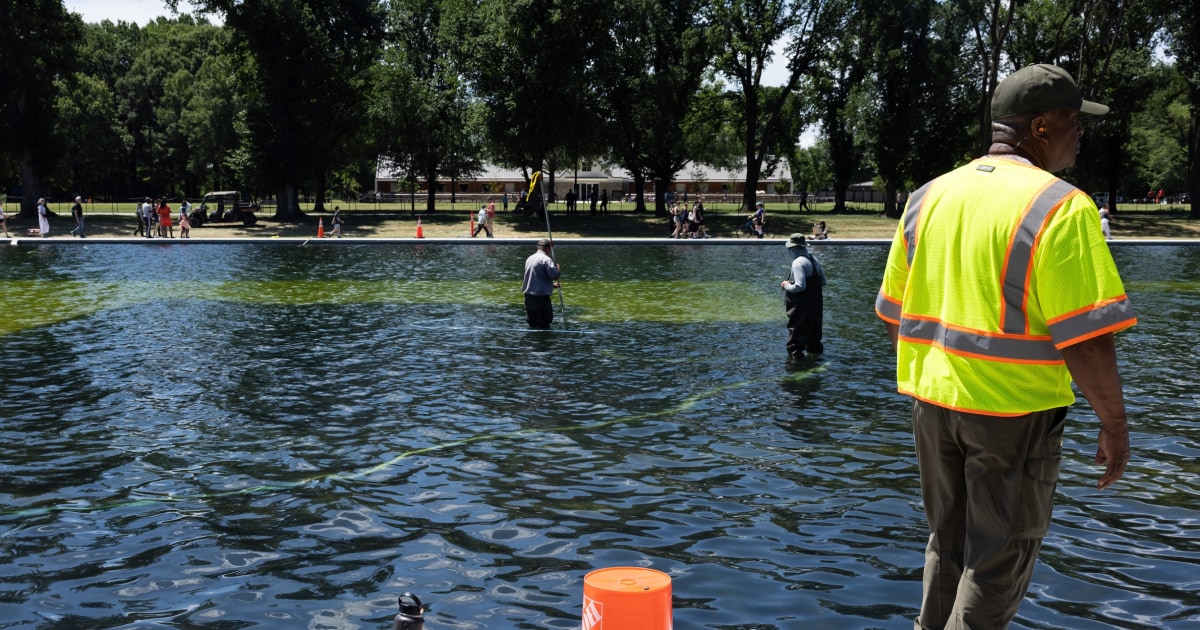
At the center of the first story is not just the repair of the Reflecting Pool, but a telling example of how an infrastructure project turns into a political symbol. NBC News reports that Trump said that several people, including an Olympic canoeist, were allegedly detained in connection with vandalism—though he provided no evidence. He wrote on Truth Social that these were “very serious crimes” against national monuments and that those responsible face “years in prison.” Meanwhile, the actual problem appears far more mundane—and possibly less convenient for political drama: there’s an algae outbreak in the pool, and recently applied coating in a shade described as “American-flag blue” has begun to peel. In other words, instead of a flashy story about malicious saboteurs, we see a typical—albeit awkward—technical mishap, amplified by Trump’s public bet on “beauty” and symbolic order.
It’s especially revealing how, in this story, the language of threats blends with the language of national heritage. Trump calls what’s happening an “insult” to George Washington and Abraham Lincoln, describes a purported “250-foot wound” on the facade, and claims that “corrosive and destructive chemicals” were poured into the water. But NBC News offers a different version: former Olympic canoeist David “Davy” Heirn says he was arrested and held for five hours after he merely touched the detached coating. He is explicit: “I wasn’t taking it off, wasn’t ripping it, wasn’t breaking it, and wasn’t destroying it.” This contrast matters not only on its own. It shows how public authority can quickly transform a technical issue into a mode of moral panic, where fact-checking takes a back seat to political effect. In that mode, even the state of the water in the pool becomes part of a larger story about competence, order, and national greatness.
The second NBC News piece takes us into a completely different media world, but the logic there is surprisingly similar. Jimmy Kimmel takes a two-month break from his show and calls it “voluntary—this time,” clearly alluding to last year’s suspension of the program following his remarks about the response to Charlie Kirk’s death. In its place, he invites a lineup of guest hosts, including Rosie O’Donnell, a long-time Trump opponent. Kimmel himself frames it as an appeal to the president: “For our commander in chief, I asked one of his longtime favorites to come—Rosie O’Donnell. Please, and all I ask in return, Mr. President, is that you don’t do anything stupid while I’m gone.” It sounds like a joke, but the joke here is a form of political statement and a way to remind viewers that late-night television in the United States has long stopped being “just” entertainment.
Kimmel’s story also matters because it shows the fragility of free speech in conditions of intense political polarization. NBC reminds readers that last year, after his line, the show was taken off the air for nearly a week; at the time, criticism triggered a harsh reaction from Republicans and even threats from FCC chair Brendan Carr. Kimmel’s return became not just a personal episode, but a public demonstration of how American audiences still respond—painfully—to attempts to pressure comedy and satire. His words—“This show isn’t important. What’s important is that we live in a country where you can have a show like this”—capture the core principle of the American media conflict: a show may be frivolous in form, but politically significant in function. And Rosie O’Donnell here isn’t merely a guest; she’s a symbolic figure of ongoing cultural opposition to Trump.
If the first two pieces show power and media as a space of conflict, the third is about how sport turns all that noise into a clear, measurable system of results. ESPN is tracking the 2026 World Cup, and the key isn’t just match scores, but historical shifts. Curaçao, essentially a small Caribbean country, “made history” by becoming the smallest nation ever to take a point at a World Cup. In the match against Ecuador, goalkeeper Eloy Room made 15 saves and matched Tim Howard’s World Cup record for saves set in 1966. This is exactly the kind of sports story that instantly becomes big news: not because it’s politically contentious, but because it concentrates drama on one person and one outcome. In such storylines, sport shows a rare clarity that today’s media environment seldom offers: goals, saves, the table, and a chance to reach the playoffs.
But even here, there’s a logic of the broader agenda. The World Cup in the United States, Canada and Mexico is not only a tournament, but also a global media project, where each game gathers meaning and each team achievement—such as Curaçao’s—becomes a story of national identity and sports legitimacy. Germany, according to ESPN, gets another boost from Deniz Undav: coming on as a substitute, he scores twice and delivers a win over Ivory Coast. Japan thrashes Tunisia 4-0, and after an unfortunate start the Netherlands confidently beat Sweden 5-1. Taken together, it shows that at major tournaments attention is split between unexpected heroes and familiar favorites, and the media platform turns individual matches into an unending dramatic series.
If you put the three pieces into one line, you get a very modern picture of American and global information space. A politician talks about a damaged pool as if it were a national insult; a TV host answers pressure with a joke, where humor becomes a form of protecting freedom; a sports media outlet tracks how rare records and unexpected successes from small teams instantly become international stories. In all cases, the most important resource is not only the event itself, but the interpretation. Whoever labels the problem vandalism, whoever frames it as a repair failure, whoever treats it as satire, and whoever casts it as a historical achievement—gets the advantage in the public arena.
That’s why the key conclusion is this: today’s public sphere is driven less by facts than by the fight over their framing. In the Reflecting Pool story, that is especially clear—one side sees deliberate destruction, the other points to a technical fault and possibly an excessive reaction. In Kimmel’s story, political pressure becomes a reason for self-irony and for defending the institution of free expression. In the World Cup story, the opposite happens: sporting reality is cleared of political noise and built on a verifiable result, even though the media immediately create narratives about heroes, records, and national pride.
It’s also important to clarify moments that may be harder to understand here. Reflecting Pool is a long body of water on the National Mall near the Lincoln Memorial, which reflects the monument and is used as a signature location in Washington. Truth Social is a social network associated with Trump, through which he often makes political statements directly, bypassing traditional media. The FCC is the U.S. Federal Communications Commission, the regulatory body that oversees broadcasters and can influence how they operate—so mentioning it in the context of Kimmel’s show implies not just criticism, but potential pressure from the state. And “save” in soccer refers to a goal being prevented by the goalkeeper; when ESPN writes about Eloy Room’s 15 saves, it means he prevented a goal 15 times—an outstanding result at the World Cup level.
The key trend linking all three texts is the growing importance of symbolic scenes. The pool at the Lincoln Memorial, an evening talk show, and a football match on a world stage are very different arenas, yet all of them function as stages for public meaning. Another important trend is personalization: Trump, Kimmel, Rosie O’Donnell, Heirn, Room, and Undav become carriers of big stories rather than just participants in separate episodes. And finally, there’s an implication for the entire media ecosystem: audiences consume fewer news items as a set of facts, and more as a competition of interpretations. That’s why even painting the bottom of a pool, a two-month vacation for a TV host, or another group-stage match becomes stories about power, freedom, and status.
Sources: NBC News on problems with the Reflecting Pool and Trump’s statements, NBC News on Rosie O’Donnell guest hosting Jimmy Kimmel’s show, ESPN on the 2026 World Cup.