In all three pieces, which at first glance seem unrelated, the same theme emerges: how government and quasi-government structures use (and sometimes abuse) power amid weak transparency and the substitution of real public accountability with formal procedures. The story of a Columbia University student's detention, the political context of investigations into Jeffrey Epstein's ties to powerful figures, and the behind-the-scenes pushing of a controversial infrastructure project for the Chicago Bears in another state — all are parts of the same picture. In it, the law, supposedly protecting citizens, increasingly becomes an instrument of pressure, bargaining, or political play, while the public receives fragmentary and untimely information, forced to react after the fact via street protests, sharp statements, and symbolic gestures.
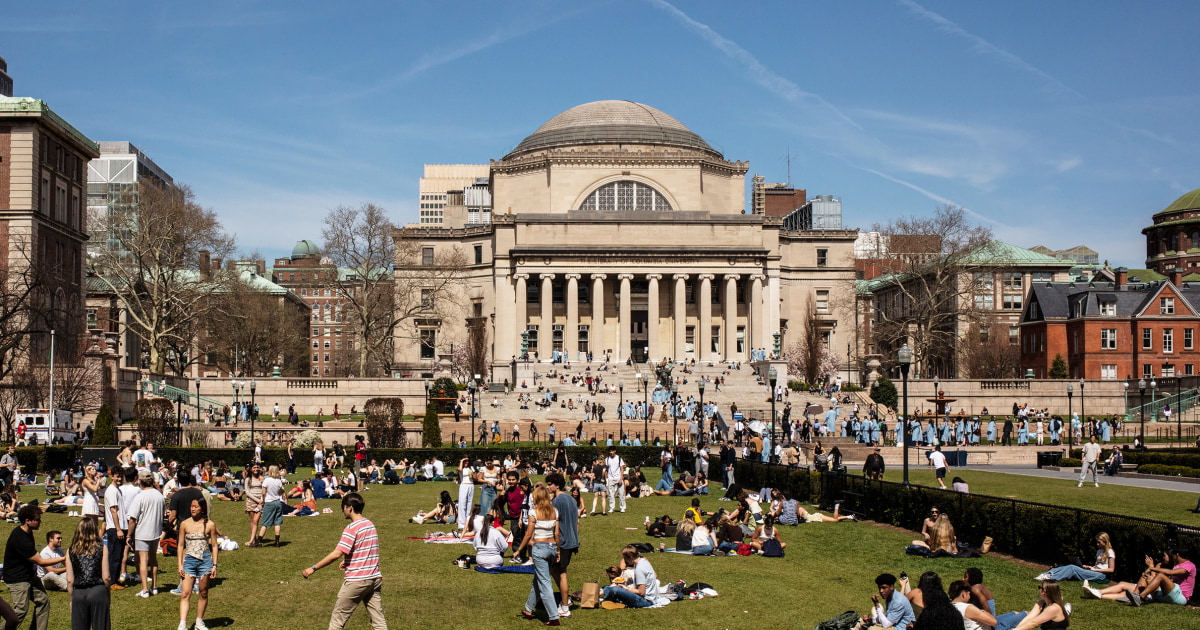
NBC News's report on the detention of Elmina Agaeva, a Columbia University student from Azerbaijan, describes an episode the university administration calls "frightening, fast-moving and utterly unacceptable" ("This was a frightening and fast-moving situation and utterly unacceptable," said acting president Claire Shipman). According to the university, at 6 a.m. five federal agents entered a Columbia-owned off-campus building identifying themselves as police searching for a missing child. That cover story allowed them to get inside without a judicial warrant: the building manager and a neighbor let them into the apartment, and when a university security officer demanded a warrant and time to call his superiors, he was, Shipman says, refused. The agents allegedly pointed to security camera images of the "missing child" and did not present any documents authorizing a search or arrest in university housing.
The Department of Homeland Security (DHS), which oversees immigration and customs authorities (ICE), responded that agents displayed credentials and orally identified themselves as agency personnel, and that the basis for Agaeva's arrest was that her student visa had been "terminated" in 2016 "for failing to attend classes" ("her student visa had been terminated in 2016 'for failing to attend classes.'"). This discrepancy alone — "we are police looking for a child" versus "we are ICE acting on an immigration basis" — shows how fragile trust in law enforcement can be when access to private housing is effectively achieved through a misleading story rather than the open presentation of a court order.
It is important to clarify the difference between types of warrants. In the U.S. there is an administrative warrant — a document signed by an executive branch official (for example, ICE), not an independent judge. Such a warrant authorizes detaining a specific foreign national for immigration proceedings, but traditionally did not permit forcible entry into private residences. For that, a judicial warrant issued by a judge or magistrate based on probable cause is typically required. NBC News recalls an internal ICE memorandum from May that allows agents to forcibly enter a home using an administrative warrant if the person already has a "final order of removal" ("agents are allowed to forcibly enter a home using an administrative warrant if a judge has issued a 'final order of removal.'"). This is a quiet but fundamental shift: the executive branch expands its authority to bypass stricter judicial standards, and the public, including students and universities, faces the consequences at the moment of intrusion into living spaces.
Columbia hastily tightened its internal rules in response: in all student communications the administration emphasizes that access to "nonpublic areas" is allowed only by judicial warrant or subpoena and only through the university's public safety office. Shipman writes plainly: "An administrative warrant is not sufficient" ("An administrative warrant is not sufficient” to access nonpublic areas"). In doing so the university effectively draws a firmer line around privacy protection than the federal immigration agency currently does.
The political context only heightens the concern. Over the past two years Columbia University has become a symbol of clashes over campus autonomy, protests against the war in Gaza, questions of antisemitism, and federal pressure. NBC reminds readers that the Trump administration moved to rescind $400 million in federal grants to the university, accusing Columbia of failing to act "in the face of persistent harassment of Jewish students" ("persistent harassment of Jewish students"). The restoration of funding was tied to strict conditions: a ban on masks on campus, reforms to admissions policy, and a $200 million settlement over alleged anti-discrimination violations. Formally, the university retained "autonomy in matters of faculty hiring, student admissions and academic policy," but the fact of bargaining — money in exchange for rule changes and concessions — shows how federal power can use financial levers to shape independent institutions' behavior.
Elmina Agaeva's story is not the first instance of immigration enforcement intruding on campus life. DHS agents previously conducted searches in two Columbia residences, and student and Palestinian activist Mahmoud Khalil — a U.S. lawful permanent resident — spent three months in immigration detention. His attorneys say this was "targeted repression for pro-Palestinian views," and therefore a violation of constitutional rights as described in the same NBC piece. An appeals court later vacated the lower court's decision, finding that Khalil must first go through full immigration proceedings before challenging the lawfulness of his detention. Procedure, then, is placed above immediate protection of allegedly violated rights, and the question of political motivation for the detentions remains unresolved.
Meanwhile, New York Governor Kathy Hochul sharply criticizes federal immigration agencies not only for Agaeva's case but also for the tragic death of nearly blind refugee Nurul Amin Shah Alam, who authorities say was dropped off from custody at a coffee shop in Buffalo and left to make his own way home ("a nearly blind refugee who was found dead in Buffalo... after authorities said Customs and Border Protection left him at a coffee shop"). Hochul speaks of "an unbridled deportation agenda with zero transparency and even less accountability" and links the refugee's death with the deception in the student's detention. This is not just an emotional reaction but a political statement about systemic problems: federal enforcement agencies operate in a gray zone between law, internal directives, and political orders, while regional authorities and universities rush to erect their own protective mechanisms.
Public reaction follows the same oppositional logic. Student groups, including Columbia Student Apartheid Divest, organize an emergency rally "against the detention of a student from a Columbia building"; about 100 people gather at the university gates, according to Columbia Spectator. Democratic Senator Chuck Schumer calls the allegations against ICE "outrageous" and promises to work with the university and authorities ("It is outrageous that ICE agents falsely represented themselves to arrest a Columbia graduate student"). Agaeva posts on Instagram: "I am safe and OK... completely in shock from what happened." Lawyers file a habeas corpus petition — an ancient legal mechanism requiring that a detainee be brought before a court immediately and the grounds for arrest explained. The very recourse to habeas corpus signals that her detention is perceived as arbitrary and outside normal procedural channels.
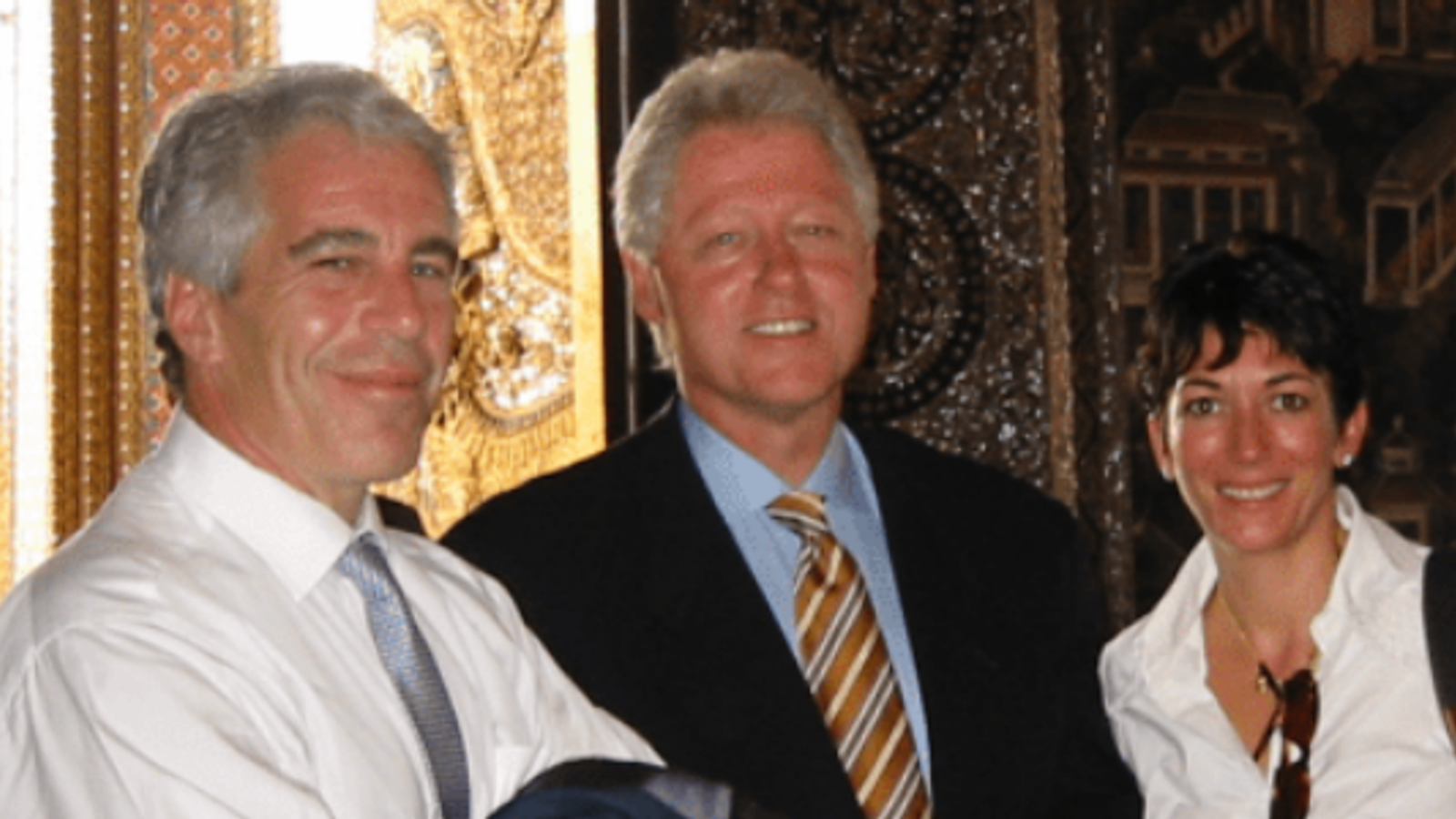
Shifting from New York to another part of the news agenda, Sky News's report on Bill Clinton's deposition in the Epstein case ("Epstein files latest: Former president Bill Clinton faces questions at deposition") again reflects the same logic: the public struggle for the appearance of impartial justice collides with political selectivity and omissions. Democrat James Walkinshaw, speaking at Clinton's Chappaqua residence, says he's glad Clinton is answering questions and that "tough questions will be asked," but he immediately stresses a "Trump-sized gaping hole" in the investigation: Trump, he says, is mentioned "thousands of times" in the files ("there's a 'Trump-sized gaping hole' in this investigation... President Trump has been mentioned thousands of times in the files"), yet he himself is not being questioned in a deposition.
It is important to explain the format: a deposition is sworn testimony given outside court, usually within a civil case or investigation, where attorneys examine a witness and the transcript can later be used in court. Formally it is part of procedure, but in high-profile cases a deposition becomes a political and media event. In Epstein's case — a convicted pedophile and financier with a wide network of powerful acquaintances — the issue is not only legal responsibility but whether the choice of people to be deposed reflects the true scale of their connections and involvement. White House spokeswoman Abigail Jackson says Trump is "totally exonerated on anything relating to Epstein" ("totally exonerated on anything relating to Epstein"), and this is presented as a definitive statement. But the executive branch's certainty of a political leader's "total exoneration" before the public has seen the full body of evidence and findings undermines the perception of the investigation's independence.
Clinton, for his part, cannot avoid the deposition, and his presence highlights Trump's absence. As a result, the investigation is perceived not as a systematic unveiling of Epstein's ties but as a field of political contestation where some are publicly questioned and others are excluded by the formula "totally exonerated." The "Trump-sized hole" becomes a metaphor for selective justice: the law is applied unevenly depending on the balance of power and political circumstances.
Against this backdrop, a third, seemingly local story — the Indiana Senate's passage of a bill creating a financing authority for a potential Chicago Bears stadium in Hammond ("The Indiana Senate passed a bill that creates a financing authority for a potential Chicago Bears stadium in Hammond.") — also fits the same pattern. The law envisages creating a special financing body, a quasi-governmental entity through which funds (typically bonds, tax incentives, infrastructure levies) can be raised for a large private project. The Chicago Bears are a private sports franchise, but a public financial instrument is being created in a neighboring state on their behalf.
In such cases the key question is not the legal purity of the procedure (the law passed, the entity created) but transparency and accountability: who benefits from the construction, what risks Indiana taxpayers bear, why the interests of a Chicago club suddenly become a matter for another state, and how openly alternatives were discussed. When the law forms a special authority whose mission is to carry out a single project, it often becomes less accountable than ordinary budgetary mechanisms: decisions are made within a narrow circle of officials and lobbyists, and the public learns details only once funding obligations are effectively imposed. This is another form of the same problem seen at Columbia or in the Epstein investigation: the expansion of authority and redistribution of resources happens quickly and largely "behind the scenes," leaving citizens with either passive observation or late protest.
Taken together, the three stories demonstrate several key trends. First, the deepening blurring of legality and legitimacy. In each case there is a formal legal framework: immigration procedures, subpoenas for testimony, legislative processes in a state senate. But how these frameworks are implemented — deception to gain entry to a residence, selective choices of deposition subjects, creation of a special authority to benefit a private club — raises serious doubts about fairness and equal application of the law.
Second, conflicts between different levels of authority and institutions are intensifying. Universities, regional authorities, and courts find themselves constantly on the defensive against decisions from federal agencies or the political center: Columbia must bargain for grants with the federal administration while establishing protocols to protect students from those same federal agents; Governor Hochul publicly accuses immigration agencies of being out of control; lawmakers and local politicians debate the completeness and impartiality of the Epstein investigation; a state's legislative body takes on the role of driver for an infrastructure project directly linked to a major private actor in another state.
Third, symbolic and protest actions increasingly serve as the only effective feedback mechanism. Columbia students gather at the gates; Agaeva's lawyers rely on habeas corpus; critics of the Epstein probe point to the "hole" left by Trump's absence; opponents of stadium subsidies (as in many similar cases, and likely in Indiana as the project advances) organize campaigns against public money for private sports. Where formal accountability channels are weaker than political interests, protest becomes not only a moral statement but often the only practical way to raise the issue.
Finally, all three narratives underscore the vulnerability of those lacking institutional power: foreign students, refugees, victims of sexual abuse, ordinary taxpayers. In Agaeva's case and in the death of Nurul Amin Shah Alam, lives and liberty are at stake for people who are poorly equipped to navigate a complex immigration system and lack the resources for lengthy litigation. In Epstein's case, victims seek recognition and justice in a world where their abusers are people with enormous connections and legal resources. In the stadium example, taxpayers risk being silent guarantors of debt taken on for an image project benefiting a wealthy sports organization.
The overall picture emerging from NBC News, Sky News and WNDU is not of isolated abuses but of a systemic problem: institutions meant to limit power and ensure transparency are often too weak or too dependent on political currents, and the burden of defending rights and interests increasingly falls on citizens themselves, their lawyers and solidarity networks. This makes each new story — from a morning raid in a dormitory to the deposition of a former president and the quietly passed infrastructure bill — not a local incident but a symptom of a deeper crisis of trust in how power is used and controlled in contemporary America.