In different parts of the world, from Havana to Beirut and the airports of San Diego and Washington, the same scenario repeats: decisions by national leaders, driven by geopolitical calculations or domestic political bargaining, turn into real deprivation and danger for ordinary people and those who try to help them. The stories described in reports by CNN, Sky News and NBC News at first glance appear unrelated: a Russian tanker carrying oil for Cuba, strikes on medics and civilians in Lebanon, and a protracted funding stoppage in the U.S. that paralyzed airport security services. But they all raise the same issue: how far states are willing to go in using humanitarianly vulnerable sectors — energy, healthcare, security — as tools of pressure, and who ultimately pays the price for those decisions.
The CNN piece about shipments of Russian oil to Cuba describes a striking denouement of a policy of pressure. The administration of Donald Trump built a de facto oil blockade around the island, first cutting off the main supplier — Venezuela, after Washington secured the arrest of Nicolás Maduro, and then intimidating potential alternative partners, including Mexico, with threats of additional tariffs for direct or indirect oil deliveries to Cuba. Formally, this was justified by portraying Havana as an “extraordinary threat” to Washington. In practice, the fuel shortage became the main lever of pressure on the communist regime.
The consequences on the island, as CNN describes them, look like a classic example of sanctions designed against a government primarily striking the population: in Havana power outages have become more frequent and longer, garbage piles up in the streets, hospitals cannot properly receive patients or keep operating rooms running. The country experiences total collapses of power systems that leave major cities, including the capital, in complete darkness. Fuel shortages emerge, prices rise, infrastructure worsens, and food transportation is disrupted. For Cuba, where social discontent has traditionally been suppressed, protests become highly atypical — people take to the streets, bang pots, and light fires in the dark.
Against this backdrop, Trump’s decision to allow the Russian tanker Anatoliy Kolodkin with roughly 730,000 barrels of oil to enter the port of Matanzas, as reported by Russia’s Ministry of Transport and Vladimir Putin’s press secretary Dmitry Peskov, looks like a targeted softening of a blockade declared by Washington itself. Peskov explicitly says that the matter of clearing the tanker’s passage “was raised in advance” during contacts with the American side. Trump, commenting on the situation aboard Air Force One and answering a question about the tanker, adopts a humanitarian tone: “We don’t object if someone brings them a ship with oil, because they need to survive.” He added: “If a country wants to send oil to Cuba now, I have no problem. I’d rather let it through, whether it’s Russia or anyone else, because people need heat, air conditioning and everything else they need.”
Politically this is an intriguing pivot: the country that created a harsh energy crisis suddenly appears in the role of a rational humanitarian arbiter “allowing” some mitigation of the consequences. Trump also brushes off suggestions that he is helping Putin: “He loses one cargo of oil, that’s all. If he wants to do that, and if other countries want to do that, it doesn’t particularly bother me.” In reality, however, the Kremlin had already been in contact with Havana about possible assistance, as earlier reports noted, and a delivery of oil is an obvious way to bolster Russia’s influence in the region and demonstrate that where the U.S. creates shortages, Moscow can fill them. Meanwhile, the human cost of energy pressure becomes the backdrop for geopolitical maneuvering and symbolic gestures: governments are officially targeted, but ordinary people — whose health and welfare are jeopardized by blackouts, shortages and inflation — bear the risk.
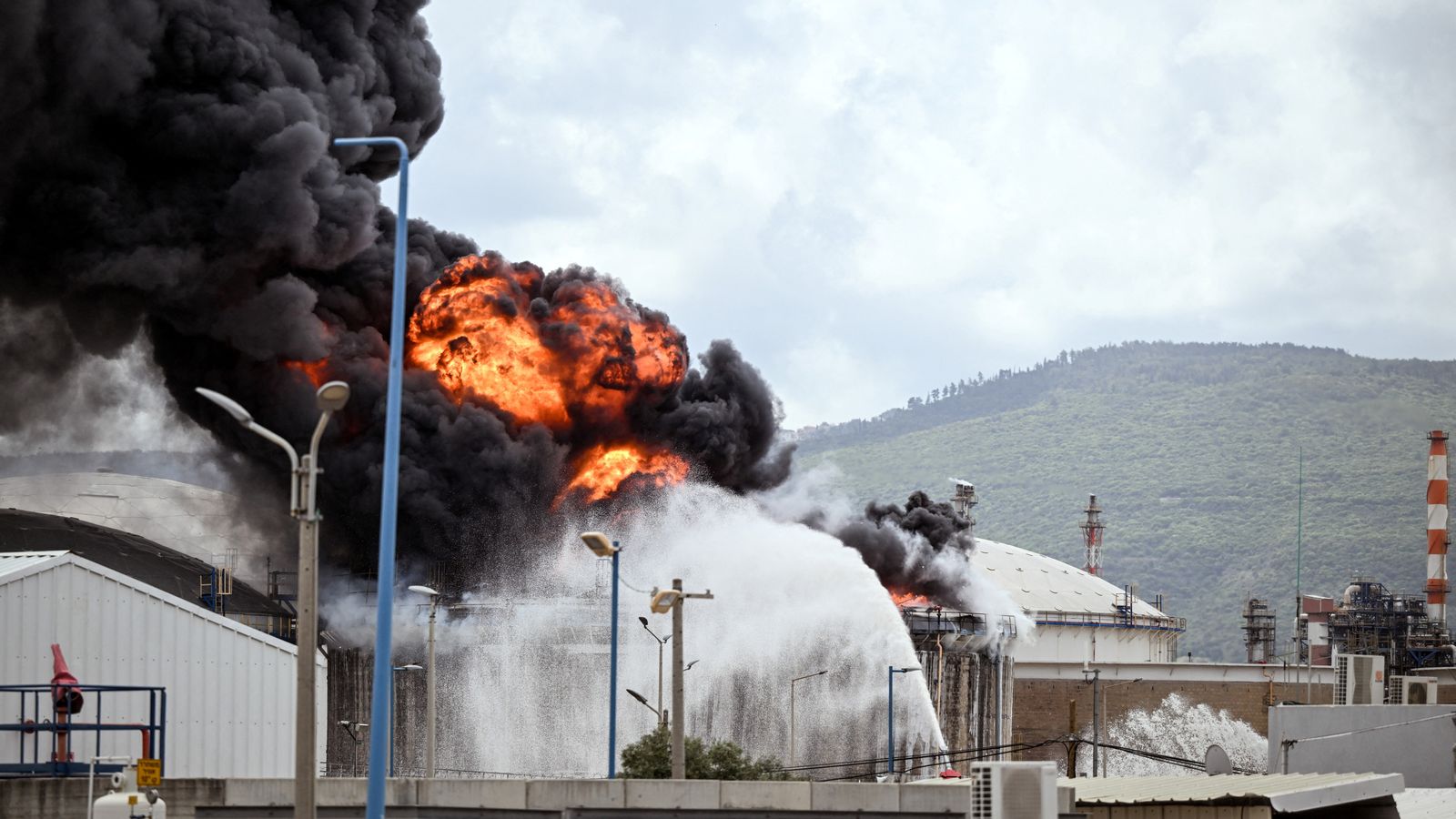
The Sky News piece on the Israel–Hezbollah war and tensions around Iran shows the logic of politico-military pressure in even harsher form: under attack are structures whose mission, by international norms, should be specially protected — medics, rescuers, humanitarian organizations and peacekeepers. Alex Crawford’s report from the Lebanese Red Cross center in Beirut paints a picture of humanitarian infrastructure in southern Lebanon being systematically shelled. After another strike on the emergency center of the humanitarian organization Islamic Message Scouts Association, whose buildings appear burning in footage shared online, Lebanese Red Cross secretary-general Georges Kettane says his staff’s work has become “very dangerous.” The organization coordinates all routes and sorties to the hardest-hit areas with the UN and local authorities, but even so ambulances and medics regularly come under fire.
Over the past month, he says, one Red Cross paramedic was killed and another seriously injured; in total more than fifty responders from various services have died in the same period. Lebanon’s health ministry accuses the Israeli army of deliberate strikes aimed at making the region uninhabitable, depriving it of medical infrastructure, and forcing residents and medics to flee. Israel, for its part, issues statements alleging that Hezbollah militants reportedly disguise themselves as medics and use ambulances to transport weapons. The Lebanese Red Cross and other humanitarian organizations on the ground categorically deny this; Kettane says he is “100% sure” that neither his staff nor ambulances are being used for anything other than humanitarian tasks. He calls for “much stronger” international pressure to stop strikes on medical workers and facilities.
Here the overlap of politics and the humanitarian sphere takes a form that international humanitarian law regards as direct violations. Under the Geneva Conventions, medics, medical transport and hospitals enjoy special protection, and even in cases of abuse by specific objects, punishment cannot take the form of broad, effectively indiscriminate attacks. Nevertheless, the Israeli prime minister announces an expansion of a ground operation in southern Lebanon to create a “security zone” to protect Israeli civilians from Hezbollah rockets. The formation of such buffer zones, especially amid active shelling and troop movements, almost inevitably carries additional risk for civilian infrastructure. UN peacekeeping forces suffer in parallel: UNIFIL’s press office reports an Indonesian peacekeeper killed and another seriously wounded in an attack, prompting the UN secretary-general to again urge parties to “respect their obligations under international law.” The peacekeepers themselves report Israeli soldiers’ presence in Nakura — a populated area near their base — but say they will “remain in position.”
This picture demonstrates a different but related mechanism: warring parties, seeking tactical or strategic advantage, are prepared to question or ignore humanitarian norms intended to minimize civilian suffering. As with Cuba’s informal energy blockade, governments operate from a logic of a “higher purpose” — security, regime change, geopolitical influence — under which strikes on objects that should remain untouched are justified. Accusations of the “dual use” of humanitarian structures (as in the Israel–Lebanon case) or of support for “hostile regimes” (as with sanctions against Cuba) become universal justificatory tools.
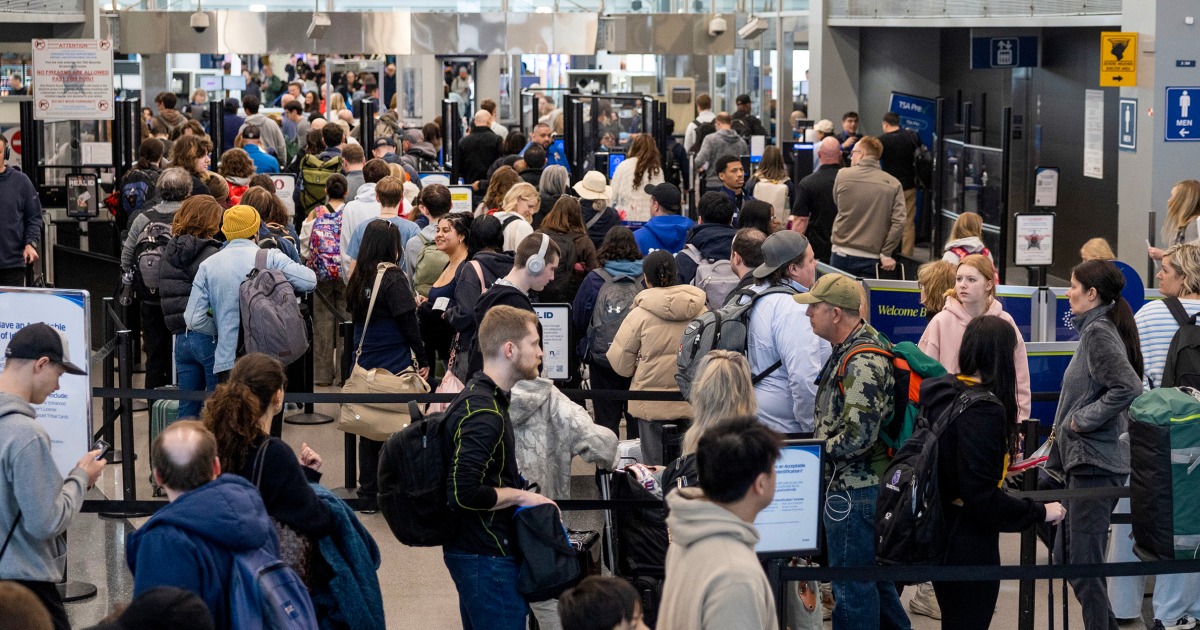
The NBC News article brings the same theme into American domestic politics, showing how the fight between the White House and Congress over spending priorities and immigration policy turns security personnel and millions of passengers into hostages. Context matters: in the U.S. there are periodic shutdowns — halts in operation or funding of federal agencies when Congress and the president cannot agree on a budget. In this case the stoppage affected the Department of Homeland Security, including the TSA — the Transportation Security Administration responsible for airport screening. TSA employees, who had already endured a protracted shutdown a year earlier, again found themselves unpaid and forced to turn to relatives, friends and food banks for help.
President Trump signed a memorandum directing DHS to pay TSA agents two weeks after the shutdown began, when it became clear that “air travel in America was on the brink of collapse,” according to a senior administration official. He said funds were found in a previously enacted omnibus tax-and-budget law colloquially called the “One Big Beautiful Bill.” The White House blames Democrats, arguing that they in the House of Representatives scuttled a Senate compromise bill that would have funded most of DHS except ICE (Immigration and Customs Enforcement) and CBP (Customs and Border Protection) — a move intended to protest Trump’s immigration policies. Democrats, in turn, accuse the president of creating the crisis and manipulating security for political ends.
But the focus of the NBC piece is less on partisan tactics than on the reactions of people stuck in long airport lines and watching unpaid workers. Passengers like Lisseth Garza‑Garcia from Fort Worth emphasize: these are “people who already suffer enough,” and the reminder of 9/11 makes clear to them the link between stable TSA funding and flight security. Even some Trump supporters, like the Oberons, say agents “don’t deserve” to live without pay. Frank Oberon, a former corrections officer, notes he does not blame the president, pointing to Congress’s key role in allocating funds.
Many interviewed, like David Simmons from Florida, “blame everyone”: it’s “their job — to solve the problem, and they’re not doing it.” Simmons, who leans toward blaming Democrats for their chosen tactics, describes the situation with the metaphor “they’re killing a chicken to scare a monkey” — striking one group (TSA employees and passengers) to influence another (ICE and immigration policy). For others, such as 81-year-old Patricia Wright or 28-year-old Miraj Shaw‑Hudson, the main culprit remains Trump, but the general sentiment is similar: “it feels like everything is falling apart,” “we need a new Congress and a new president,” “they should cooperate, not push the country into crisis.” Even the politically passive or disillusioned, like Aimee Simius from New Jersey, talk about a lack of real leadership “in both parties,” and how hard it is to reach agreement when the motive is not problem-solving but avoiding looking like the one who “gave in” to the other side.
The key element linking all three stories is that vital sectors are deliberately turned into leverage. In Cuba, oil and energy become tools of foreign-policy coercion; in Lebanon, the safety of medics and humanitarian infrastructure is embedded in a military pressure strategy and the creation of a “security zone”; in the U.S., the financial stability of services on which the day-to-day security of millions of passengers depends becomes a bargaining chip in disputes over immigration policy and budget priorities. Everywhere the outcome is the same: those politicians publicly claim to protect — “the people,” “civilians,” “taxpayers” — end up paying the direct price.
Another common thread is political actors’ attempt to present their moves as inevitable or even humanitarian. Trump, in the CNN piece, frames easing the blockade as concern for the Cuban population, even though his policies created the fuel shortage. In the U.S.–Cuba–Russia trio and the Russian aid reported by the Kremlin, Moscow appears in a relatively favorable light as a donor filling the gap created by Washington. In Lebanon, the Israeli side justifies strikes on facilities associated with humanitarian work by claiming the enemy disguises itself as medics and uses ambulance infrastructure for military aims. For hardliners this sounds like a justified, albeit tragic, consequence of asymmetric warfare. For humanitarian organizations and international law it is a dangerous precedent that normalizes strikes on those who should be outside the war.
In the U.S., the White House, through unnamed officials, claims the president took “decisive action” when air travel was threatened, shifting focus from the fact that the funding system was driven to crisis by political confrontation in which both the executive and legislative branches deliberately used the threat of a shutdown as a bargaining tool against each other. Polls cited by NBC show public opinion distributes responsibility variously, but the share of those blaming everyone — Trump, Republicans and Democrats — is growing, and many view the practice of halting government operations as unacceptable.
From the perspective of long-term trends, several conclusions matter. First, using humanitarianly vulnerable sectors as leverage is becoming a more “normalized” political tool: from sanctions aimed at severing energy supplies to military strategies permitting strikes on medical services, and to budgetary tactics that put essential services at risk due to domestic political bargaining. Second, this leads to a gradual erosion of trust — both in states’ foreign-policy motives (when civilians are punished under the guise of “protecting democracy” or “fighting terrorism”) and in domestic institutions (when citizens standing in endless lines feel that “everything is falling apart” while elites play the blame game). Third, the role of humanitarian and international organizations as witnesses and arbiters grows, but their means of pressure, as the Lebanon example with killed peacekeepers shows, are clearly insufficient to stop processes when national security and power interests are at stake.
The stories described in CNN’s reporting on the Russian tanker and Cuba’s energy crisis (https://www.cnn.com/2026/03/30/americas/us-russian-oil-tanker-access-cuba-intl-hnk), Sky News on strikes on medics, the expansion of Israel’s ground operation and risks to the Lebanese Red Cross and UN peacekeepers in Lebanon (https://news.sky.com/story/iran-war-latest-trump-tehran-us-israel-kharg-island-netanyahu-lebanon-strikes-drone-live-sky-news-13509565), and NBC News on the protracted DHS shutdown that paralyzed TSA and stoked growing frustration and feelings of betrayal among travelers and employees (https://www.nbcnews.com/politics/congress/travelers-frustrated-washington-shutdown-blame-rcna265602) make clear: in all cases the front line runs not only between states or parties, but through the everyday lives of people whose security, health and basic living conditions become hostages of political calculations. Understanding this common logic is a necessary condition for evaluating leaders’ actions not only by their stated goals but also by the real price paid by those who do not take part in those decisions.