Three publications reveal a common trend: Donald Trump’s administration is seeking not only to govern public institutions, but also to physically, visually and symbolically reshape them around the president’s image. In this context, the meme about Marco Rubio, the renaming of the Kennedy Center and the construction of a new ballroom at the White House appear not as isolated episodes, but as elements of a single political logic. Government power is becoming a space for personal branding, where appointments, architecture, institutional names and even legal disputes form part of a public performance.
The story about Rubio’s gift particularly clearly demonstrates how internet culture can be incorporated into the official language of power. A Fox News article describes a gold frame containing 68 images of the secretary of state in a wide range of roles, from astronaut and RoboCop to ayatollah and the Easter Bunny. At the center of the collage is the original photograph of Rubio sitting on a sofa in the Oval Office. Trump signed it with the words: “You are great.”
The joke is based on a real feature of Rubio’s position. He serves as secretary of state while also acting as national security adviser, and previously served temporarily as head of the National Archives and the U.S. Agency for International Development. The meme, in which Rubio “receives” more and more professions and positions, therefore works on several levels at once. It mocks the official’s overloaded schedule, emphasizes his versatility and simultaneously normalizes the unusual concentration of authority in one person’s hands.
It is telling that Rubio initially reacted negatively to the photograph that gave rise to the meme. In an interview, he admitted: “When it first came out, I hated that picture.” He explained that the problem was the uncomfortable sofa: “If you don’t have a pillow behind you, you sink.” He later embraced the internet joke and called it funny. Moreover, Dan Scavino, the White House deputy chief of staff for communications, turned the memes into an official gift, and the collage subsequently had to be updated: “Even after he made that board, we had to update it.”
This episode matters less as a curiosity than as an example of a new form of political communication. In traditional politics, an unflattering photograph could become a reputational problem. Now an official can turn it into an asset by participating in the joke’s circulation. The meme becomes a tool of loyalty and recognition. It makes a high-ranking official appear more human, while simultaneously turning his government work into entertainment content. Rubio is presented not only as a diplomat, but also as a character who can be “appointed” to any role.
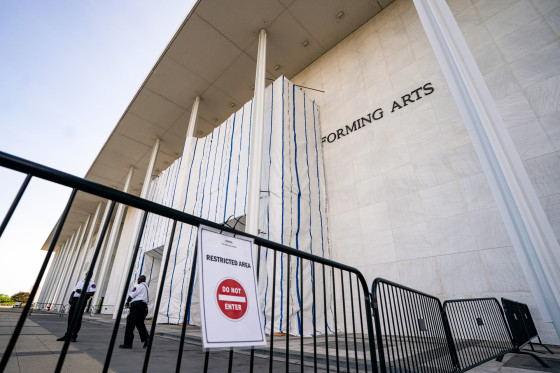
The second publication — an NBC News article about the Kennedy Center — shows an institutional rather than digital form of the personalization of power. The board of trustees, reshaped by Trump, voted to partially close the cultural center for up to two years and to restore the president’s name to the building’s façade. The new name is intended to read “The John F. Kennedy Center for the Performing Arts, Restored and Renewed by President Donald J. Trump,” while the surrounding area has been proposed as “President Donald J. Trump Plaza.”
The decision passed by a vote of 20 to three. The three opponents were members of Congress who sit on the board by virtue of their office. Their position reflects the central legal conflict: the Kennedy Center was established by Congress as a “living memorial” to the assassinated President John F. Kennedy. The opponents therefore argue that the board cannot unilaterally change its official name.
Judge Christopher Cooper previously ruled that the institution could not rename the center without congressional authorization. His decision stated: “Congress gave the Kennedy Center its name, and only Congress can change it.” In other words, the dispute is not only about a sign on a building. It concerns the limits of presidential administrative power and whether a political majority can rewrite the symbolic meaning of a federal institution.
Trump’s supporters may view the renaming as recognition of his contribution to the center’s renovation. Critics see it as an attempt to appropriate a national memorial for the sitting president. That is why the wording of the new name is particularly significant: Kennedy’s name is formally retained, but it becomes surrounded by references to Trump that alter the meaning of the public space. A memorial intended to preserve the memory of an assassinated president is transformed into a platform for showcasing the achievements of the current head of state.
At the same time, the board intends to close the main building during the renovation, leaving only the smaller Reach space open. The decision is connected to a May court ruling that required the center’s memorial function to be preserved and called into question the justification for closing it completely. Even if a partial closure is legally allowed, it will have serious consequences for Washington’s cultural life. The main concert hall will be unavailable, and the National Symphony Orchestra will have to find alternative venues.
The third article — an ABC News report on the administration’s appeal to the Supreme Court — moves the same conflict into the space of the White House. The administration is asking to be allowed to continue construction of a ballroom and helipad despite a court order that would halt a significant portion of the above-ground work. The government argues that stopping the project could threaten the safety of the president, his family, staff and foreign guests.
Solicitor General John Sauer called the injunction “extraordinary and unlawful.” In the filing, he stated that the president “is not a tenant, but the sole elected head of the executive branch.” This wording reflects a broad understanding of presidential authority: the White House is presented not as a historic site requiring approvals and restrictions, but primarily as the working residence of the head of state, which the president has the right to adapt to his own needs.
The courts, however, proceed from a different principle. A lower court concluded that Trump could not radically alter the White House without congressional approval. An appeals court upheld that ruling. The issue therefore lies in the clash between two approaches: the administration emphasizes executive power and security, while its opponents stress legislative oversight, historic preservation and procedural transparency.
The administration says the project is proceeding “on schedule” and “on budget,” and that taxpayer money is supposedly not required. At the same time, the filing says that $200 million has already been spent or reserved for the project, while construction itself is approximately 65 percent complete. Work is taking place around the clock: 250 workers are reportedly employed 20 hours a day, seven days a week. Meanwhile, Senate Democrats have asked the Government Accountability Office to review the financing, since the project combines private and public sources of funding and, in their view, is being carried out without the usual federal oversight procedures.
The common theme across all three stories is especially apparent here: the boundary between the president’s personal initiative and the state institution is becoming blurred. The White House is simultaneously a historic monument, the president’s residence and the working center of the executive branch. The Kennedy Center is both a cultural institution and a memorial. The office of secretary of state is a crucial government position, but the meme turns its occupant into a media personality. In each case, the official function remains, but a personal image of Trump or his team is layered over it.
It is important to distinguish between two levels of what is happening. The first is symbolic. Renaming a building, undertaking a large-scale renovation or turning memes into a gift artifact creates a narrative of the president as someone who “fixes,” “renews” and “restores greatness.” The second is legal and institutional. Such actions raise the question of where political leadership ends and the limits imposed by Congress, the courts and historic-preservation laws begin.
The term “personalization of power” refers to a situation in which government decisions and institutions become increasingly associated with a particular leader rather than with stable rules and procedures. In a conventional political system, a president may promote his own agenda, but institutions retain an autonomous identity. In these cases, that boundary becomes less distinct: Trump’s name is proposed for inclusion in the name of a national cultural center, his personal project is changing the historic appearance of the White House, and even Rubio’s gift is presented in the style of the president’s communications team.
The concept of a “living memorial,” used in the dispute over the Kennedy Center, refers not simply to a monument, but to an active institution that both preserves a person’s memory and serves a public function. Changing its name is therefore seen as changing not only the sign, but also its historic mission. Similarly, the White House is not merely the president’s residence, but also a national heritage site. That is precisely why architectural decisions concerning it provoke legal and political disputes.
The key conclusion is that the modern administration uses symbols not as secondary embellishments to policy, but as an independent instrument of governance. Building renovations, public names and viral images create a sense of constant movement and personal control. This strategy can be effective as communication: it simplifies complex processes, makes the president and his circle visually recognizable, and unites supporters around an easily understood image of a “transformer.”
But it also carries risks. If government institutions begin to be perceived as extensions of the president’s personal brand, the meaning of political continuity changes. The next president may inherit altered names, architecture and institutional practices created for a specific leader. As a result, political conflicts become more enduring, while a change in administration becomes more disruptive to the normal functioning of institutions.
The lawsuits surrounding the Kennedy Center and the White House show that the American system of checks and balances continues to function, but increasingly responds only after large-scale initiatives have begun. The administration acts quickly and publicly, then defends its decisions in court by citing security, efficiency and the president’s authority to direct the executive branch. Its opponents, by contrast, seek to restore the role of Congress, independent reviews and standard procedures.
In this sense, the Rubio meme is the lightest and safest episode, while the White House renovation is the most serious. But they are connected by a common thread. Political power is increasingly exercised through spectacle: an official becomes a meme, a cultural center becomes the bearer of a presidential name, and an architectural project becomes a demonstration of the head of state’s personal will. Beneath the outward differences in genre lies a single process: a struggle over who will define not only government decisions, but also the visual image of America itself.
The main trend revealed by these materials is a shift from the politics of programs to the politics of presence. What matters is not only which laws are passed, but also whose name appears on a building, what the White House looks like, which images circulate online and who is seen as the embodiment of government efficiency. Such politics can mobilize attention quickly, but it also intensifies tensions surrounding legal constraints, historical memory and the independence of public institutions.