In three pieces that at first glance seem unrelated — about the assassination attempt on Donald Trump at a journalists’ gala dinner, his public attack on Supreme Court justices over a tariff ruling, and why the war in Iran has not yet broken the global economy — a single common thread emerges. It’s about how high‑intensity politics, personalized power and a “presidential center of the universe” affect institutions: from the Department of Justice and the Supreme Court to global markets. Taken together, these texts paint a snapshot of a moment in which the United States is simultaneously experiencing an attempted act of political violence, an open fight between the president and the judiciary, and an economic stress test amid war and geopolitics.
The Al Jazeera piece on the trial of Col Thomas Allen describes how an assassination attempt on the president at a dinner at the Washington Hilton hotel becomes a test for the justice system. According to the prosecution, 31‑year‑old Allen from California traveled to Washington by train, brought with him a rifle, a pistol and knives, checked into the same hotel where the White House Correspondents’ Dinner took place on April 25, and breached a security checkpoint, opening fire on a Secret Service agent. He is formally charged with attempted assassination of the president, assault on a federal officer and weapons offenses; on the attempted‑assassination charge alone he faces a possible life sentence. But at the center of the story is not only the act of violence itself, but the question: can the justice system be genuinely neutral when senior officials are effectively participants in the events and political allies of the possible victim?
Allen’s defense, writes Al Jazeera, is seeking the disqualification (recusal) of at least two senior Justice Department officials: acting Attorney General Todd Blanche and U.S. Attorney for the District of Columbia Jeanine Pirro. Both were present at the gala when Allen breached the post and shot the agent. Defense lawyers point out that they could be victims or witnesses in the case, and therefore their participation in leading the prosecution creates a conflict of interest. Moreover, the defense questions whether Pirro’s office, led by a political ally of Trump, should be handling the case at all: attorney Eugene Ohm explicitly says he plans to move to have the entire U.S. Attorney’s Office for Washington removed because of its personal friendship with Trump and its status as a potential victim. The phrase he uses — “it is entirely inappropriate for alleged victims of a crime to personally handle its prosecution” — strikes a nerve in modern American politics: where is the line between independent justice and political combat?
It is important to explain what recusal is. In the American system, as in other legal systems, a participant in proceedings (a judge, prosecutor, even an entire office) can and should step aside or be removed on motion if there is a real or perceived conflict of interest: personal interest, close relationships with a party, or status as a victim or witness. In high‑profile political cases such recusal requests often become, on the one hand, a legitimate protection of the right to an impartial tribunal, and on the other, a tactical method to change the composition of the prosecution or the court to obtain a more favorable configuration.
The Allen case reveals another angle: how the system treats a person who is simultaneously suspected of politically motivated violence and seen as a potential suicide risk. Another judge last week apologized to Allen for conditions in Washington’s jail: he was placed on suicide‑prevention watch, isolated, kept in a continuously lit soft cell, repeatedly strip‑searched and restrained outside the cell. The Justice Department prosecutor explained such strictness by saying Allen told FBI agents he did not expect to survive the attack. This is an important detail: in modern security terminology this behavior is often described as a “suicide attacker” — someone who does not plan to return. From the prison’s point of view this objectively increases the risk of suicide. From the accused’s rights and dignity standpoint, it forms a picture of indiscriminate, sometimes excessive control.
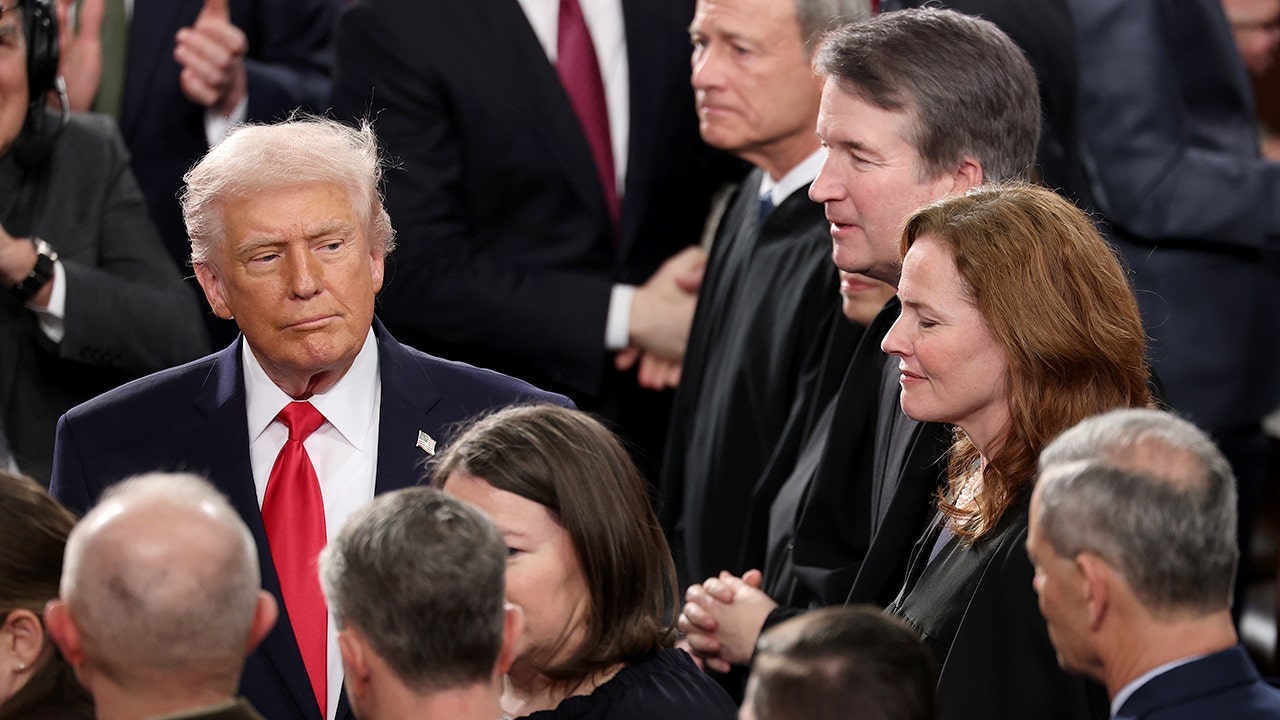
In the Fox News piece the focus shifts from the criminal process to the upper echelons of the legal system. President Trump, in a long emotional post on Truth Social quoted by Fox News, publicly lashes out at two Supreme Court justices — Neil Gorsuch and Amy Coney Barrett, whom he appointed — over their tariff decision and over an anticipated, in his view, “negative” ruling on birthright citizenship. The context: in February the Supreme Court, in a 6–3 decision, found unconstitutional the president’s use of the International Emergency Economic Powers Act (IEEPA) to impose broad tariffs on foreign trade under the guise of national security. Gorsuch, Barrett and Chief Justice John Roberts sided with three liberal justices to form the majority. The most conservative justices — Clarence Thomas, Samuel Alito and Brett Kavanaugh — dissented.
It is useful here to explain how IEEPA works. The law gives the president broad authority to impose economic sanctions and restrictions against foreign states and actors in times of foreign policy and national security emergency. Traditionally it has been used to freeze assets and restrict transactions with certain persons and organizations, not as a primary tariff tool against a wide range of countries and goods. The Supreme Court, according to Fox News’s account, saw Trump’s attempt to use IEEPA for sweeping tariffs as exceeding the authority Congress delegated: the president cannot substitute himself for the legislative power even under the banner of a national emergency.
Trump’s reaction, as Fox News reports, illustrates a dangerous trend: he effectively demands loyalty from judges not to an abstract Constitution but to him as a political leader. He complains that their decision will cost the U.S. $159 billion that must be refunded to companies and countries that previously paid the tariffs, and even suggests a hypothetical formula he thinks the court could have used to avoid such an outcome: “Any money paid by another person to the United States is not subject to refund.” In doing so he expects judges to flexibly reinterpret the law for an economic and political outcome. Moreover, he pits “Democratic” and “Republican” judges against each other, asserting that the former allegedly always remain loyal to those who nominated them, while the latter “go against” him to demonstrate their independence.
This is an important point for understanding the Supreme Court’s role. In the U.S. constitutional architecture justices are appointed for life precisely to maximize their independence from current political winds and even from the president who appointed them. Their job is to interpret the Constitution and the laws, not to serve the interests of any particular leader or party. Personalized criticism that turns into accusations of “disloyalty” to the appointing president undermines confidence in the court as an institution. It is no accident that Fox News also cites a statement from Chief Justice John Roberts, who has emphasized that justices are “not political actors” and that characterizing the court as purely political is a “misunderstanding” of their role.
Trump applies the same logic to the yet‑to‑be‑issued ruling on birthright citizenship — the constitutional principle that any child born on U.S. soil (with very narrow exceptions) automatically receives citizenship. The president predicts the court will “rule against us,” calling the current regime “unworkable, unsafe and an incredibly costly disaster,” especially in the context of so‑called “birth tourism,” where foreigners deliberately come to the U.S. to give birth. Again he argues that judges should “be loyal to the people” who gave them their appointments — effectively expecting a political, not legal, decision. This ties directly back to the Allen case: if in one instance defense seeks to disqualify a prosecutor because of personal and political closeness to the president, in another the president himself demands greater political and personal fealty from the judges.
Against this backdrop, the Yahoo Finance piece on the global economy and the war in Iran may seem like a story from another world, but in reality it continues the same thread: how a world tied to U.S. political and legal decisions reacts to geopolitical shocks. Goldman Sachs chief economist Jan Hatzius, in a research note summarized by Yahoo Finance, describes the situation around the war in Iran and the closure of the Strait of Hormuz in its fourth month. The Strait of Hormuz is a key “artery” of global oil trade, through which a significant portion of shipments from the Persian Gulf pass. Closure of this artery would traditionally be seen as a near‑catastrophic scenario for the global economy. Yet Hatzius concludes that the global economy is so far “bending, not breaking.”
He explains this with three factors. First, oil price increases have been much more moderate than expected, largely because global oil inventories were unusually high at the start of the conflict. That allowed supply shocks to be offset without an explosive shortage. Second, the resulting regional shortage of certain refined products, like jet fuel, led to “relatively painless” forms of demand reduction: airlines cut flights on less profitable and noncritical routes rather than collapsing global air service. In economic theory this is called “demand destruction” — consumption falls not only because of higher prices but also due to structural reallocation (companies and consumers forgoing lower‑priority expenditures).
Third, a powerful investment and profit cycle around artificial intelligence and supportive fiscal policy (expanded government spending and incentives) have bolstered equity markets despite geopolitical tension and a slower start to the year. It is telling that the S&P 500 and the Nasdaq Composite hit record highs, and long‑term profit expectations are supported by belief in productivity gains from AI adoption. At the same time, Goldman Sachs, according to Hatzius, does not idealize the picture: the probability of a U.S. recession over the next 12 months remains about five percentage points higher than pre‑conflict levels; consumer spending is expected to slow as the boost from tax refunds wears off, wage growth decelerates and gasoline prices rise.
The topic of asymmetric risks reappears. Hatzius describes the baseline scenario as positive but notes that risks are “asymmetrically negative,” meaning the chance of severe consequences — such as a significant spike in oil prices and broader economic damage — is disproportionately large. AI itself adds complexity: each new step in productivity growth means fewer jobs are needed for a given GDP increase, and indirect effects — higher electronics prices and an expanded set of paid software features — can push already “sticky” inflation higher.
All three stories together show that the U.S. and the world are living in a prolonged state of stress that so far is “bending, not breaking.” Politically, the country faces direct violence against its highest official, and that violence prompts tests of systemic principles: can the prosecution be independent if its leader is a long‑time political friend of the alleged victim, as in the case of Jeanine Pirro, reported by Al Jazeera? At the rule‑of‑law level, the president, according to Fox News, openly demands loyalty from Supreme Court justices, accusing them of acting “against him and the country” if they do not back his tariff and immigration initiatives. Economically, according to Yahoo Finance’s analysis, the world is holding up even under a serious shock like a prolonged closure of the Strait of Hormuz and war in Iran, relying on inventories, a tech boom and accommodative policy — but everyone understands the fragility of that resilience.
A key trend emerges: escalating tension between personalized political power and institutional constraints — courts, prosecutors, economic mechanisms. The attempt on the president’s life and the subsequent dispute over who has the right to prosecute the case underscore the need for strict recusal procedures and transparency in law‑enforcement. The conflict between the president and the Supreme Court over tariffs and citizenship shows how dangerous it is to replace the idea of an independent judiciary with demands for political loyalty. Goldman Sachs’s analysis highlights that markets currently trust institutions — from central banks to international arrangements — to contain the effects of wars and conflicts, yet everyone recognizes the precariousness of that trust.
The important implication: the system can keep “bending,” but the more it is pushed from multiple directions — political violence, pressure on the courts, protracted wars, technological shifts — the higher the risk of “breaking,” a term Hatzius uses for the economy but one equally applicable to politics. If criminal justice comes to be seen as an extension of political wars, if the Supreme Court is viewed as an institution obliged to “be loyal” to the president who appointed it rather than to the Constitution, if fundamental economic rules are treated as something to be circumvented by “alternative tariff methods,” as Trump phrases it, trust in institutions will erode. Then any next shock — whether another assassination attempt, a sharp judicial scandal or an escalation of war in a strategic region — could be the blow after which the system stops merely bending and begins to crack.
![Col Thomas Allen sits in a courtroom during a hearing after being charged with attempting to assassinate US President Donald Trump, Washington, DC, April 30, 2026, in this courtroom sketch. [File: Emily Goff/Reuters]](https://www.aljazeera.com/wp-content/uploads/2026/05/reuters_6a01e7ff-1778509823.jpg?resize=770%2C513&quality=80)