The events outside New York’s mayoral residence, Iran’s claims of captured American soldiers and even, at first glance, the seemingly neutral news of hockey player Corey Perry moving to Tampa appear unrelated. Look closer, and all three stories describe the same processes: how a conflict radicalizes, how violence increasingly becomes part of political and social confrontation, and how the struggle to interpret events — to decide “what really happened” — becomes another front. In one case it’s a street protest where an improvised explosive device appears; in another, a large‑scale war where the sides even dispute whether prisoners exist; in the third, a subtle information game around a major NHL transaction, where not only the player swap matters but also how clubs present it to fans and the market.
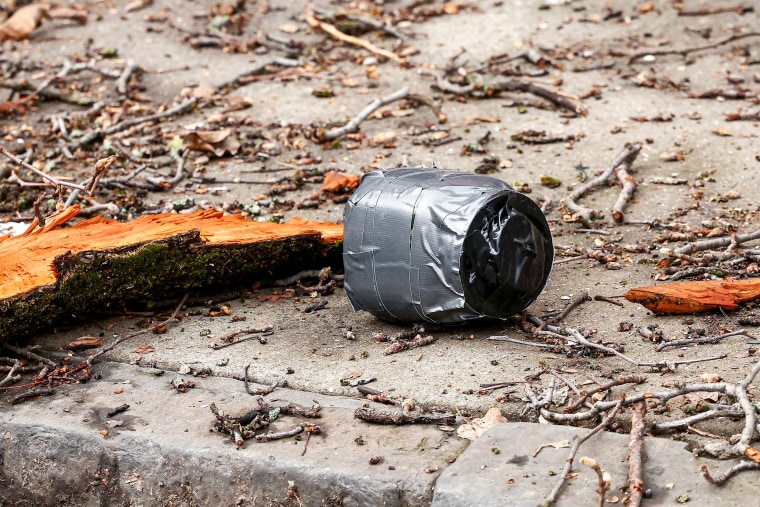
An NBC report about the incident at Gracie Mansion, the official residence of New York’s mayor, describes a disturbing episode that illustrates how thin the line can be between a “normal” protest and an act potentially qualifying as terrorism. During the “Stop the Islamic Takeover of New York City, Stop New York City Public Muslim Prayer” rally, organized by conservative influencer Jake Lang and attended by about 20 people according to police — and countered by a much larger counterprotest of roughly 125 participants — one of the young counterprotesters threw a lit improvised explosive device at the entrance to the mayor’s residence, NBC News reports. Police and the FBI are treating the incident as a possible terrorist act not only because of the nature of the device (an improvised explosive device, IED) but also because one of the detainees reportedly mentioned ISIS in a conversation with law enforcement. Important to clarify: the term IED — improvised explosive device — denotes a homemade explosive device, not a factory-made bomb, often used in terrorist attacks and guerrilla warfare.
The situation is complicated by context: Lang’s protest was openly anti-Muslim, took place during Ramadan and targeted public Muslim prayer in New York. The city’s new mayor, Zoharn Mamdani, a Muslim, was inside the residence at the time of the incident. In his statement he condemned both the original rally — which he said was based on Islamophobia and “white supremacy” — and the subsequent act of violence, stressing that attempting to use an explosive device is “criminal and disgusting” and contrary to what he believes New York stands for. Here we see double radicalization: on one side, an organized anti‑Islam protest with slogans like “stop the Islamic takeover of the city,” and on the other, a response from some counterprotesters, one of whom crossed the line from peaceful resistance to the use of a potentially lethal device.
A key point: both groups were initially gathered in police‑designated “corridors” — protesters and counterprotesters separated, a standard practice to reduce the risk of mass clashes. But within an hour of the events starting the situation spiraled out of control: one member of Lang’s group sprayed pepper spray toward opponents and was arrested, and shortly after an 18‑year‑old counterprotester ignited and threw a homemade bomb. What began as a peaceful protest became a sequence of violent incidents, attracting federal attention and raising the question: where is the line between protest, disorder and terrorism?
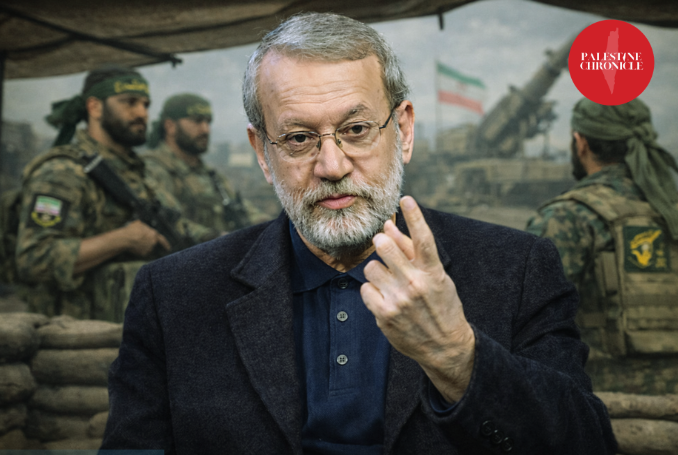
This question connects directly to another piece — on the war between Iran, on one side, and the U.S. and Israel on the other, published in Palestine Chronicle. Here radicalization and violence are not episodic protest flare‑ups but a full‑scale military campaign involving hundreds of rockets and thousands of drones. Senior Iranian politician Ali Larijani says American soldiers were captured during the war and accuses Washington of trying to hide this fact by declaring them killed in action. U.S. Central Command (CENTCOM), via Al Jazeera, immediately denied the claims, calling them false. This is a classic example of information warfare: the sides fight not only on the battlefield but also over the interpretation of reality — who captured whom, who destroyed what, who is losing control and who is demonstrating resilience.
It’s important to note how Iran constructs its version of events. Larijani, in an interview and a post on X (formerly Twitter), claims the U.S. and Israel carried out massive strikes on Iran on February 28, expecting a “quick war,” internal destabilization and, effectively, the collapse of the political system through the elimination of leadership. He asserts they failed to achieve these strategic objectives: society rallied, fuel and essential goods supplies remain intact, and the death of Supreme Leader Ali Khamenei would have serious consequences for the attackers. Some of these claims are difficult to independently verify, but they demonstrate how Iran is building a narrative of resilience and retaliation.
The military dimension is presented via a briefing by Islamic Revolutionary Guard Corps (IRGC) representative Ali Mohammad Naeini. He states that in the first week of the war Iran launched about 600 rockets (both ballistic and cruise, on liquid and solid fuel) and conducted roughly 2,600 drone attacks against more than 200 targets associated with the U.S. and Israel. He separately emphasizes the destruction of seven high‑technology radars of the THAAD missile defense system, seen as part of the “American security umbrella” in the region. The scale of the claimed operations is meant to show that Iran’s strike potential remains; moreover, Naeini says the intensity of the first three days of the war is comparable to operations over 12 days in a previous campaign. He also insists Iran can sustain such a pace of warfare for up to six months and that its stocks of rockets and drones are sufficient for protracted conflict.
These statements should be viewed not only as military statistics but also as tools of psychological and political pressure. For domestic audiences, they send a message of strength and endurance; externally, they signal readiness for prolonged confrontation and raise the stakes in negotiations or mediation efforts. Reports also cite specific targets, such as missile strikes on Israeli infrastructure, including a refinery in Haifa, allegedly in response to strikes on Iran’s energy system, including Tehran’s refinery. This exchange of strikes, labeled the “True Promise 4” operation, shows how energy systems become key targets: the energy sector is not only an economic backbone but also a symbol of state resilience.
Putting the New York domestic episode with the IED and the international conflict with thousands of rockets together reveals a common thread: violence is used as a means to achieve goals and is constantly accompanied by a battle for the meaning of events. In New York the dispute is over what counts as peaceful protest and what counts as extremism, who actually initiates escalation and where the boundary of acceptable resistance lies. In the U.S.–Iran case the dispute is no longer only about the causes of war but about basic facts: are there prisoners, what are the real losses, how badly damaged is the defense infrastructure.
Against this backdrop the third story — the Los Angeles Kings trading NHL veteran Corey Perry to the Tampa Bay Lightning, reported by MayorsManor — is particularly revealing. At first glance it’s a different world — professional sport, a deal between clubs where the stakes are sporting outcomes and salary‑cap management. But here too the key is not only the decision itself but how it’s explained, how the informational groundwork is prepared, and how fan impressions and team image are managed.
The piece notes that just a day before the trade there were discussions that Perry wanted to stay with the Kings and even extend his contract. He signed a one‑year deal, missed the season start due to an odd training injury, and then became a noticeable offensive contributor: 28 points (11 goals and 17 assists) in 50 games for Los Angeles. It’s reported that a few hours before the trade he earned the last season performance bonus in a game against the Islanders — a detail that takes center stage in discussing the trade: the club retains 50% of his salary, and that same proportion applies to potential playoff performance bonuses, as analytic outlet PuckPedia notes and MayorsManor cites.
To clarify terminology: in the NHL, contracts often include performance bonuses — bonuses for achievements (for example, number of games, goals or playoff wins). When a player is traded, part of the financial obligations can be “retained” — meaning the original club takes on part of the player’s salary and, as in this case, part of possible future bonuses. This is a salary‑cap management tool, but in informational terms it allows the club to explain to fans that the deal makes economic and strategic sense. Notably the article stresses that trading Perry for a 2028 second‑round draft pick could be “a crafty move” if the sides sign again in the summer: the club gets an asset (a draft pick) while keeping the door open for the popular veteran’s return.
Why is this important in the context of radicalization and information warfare? Because professional sport is one of the few arenas where conflicts (between club and player, between fans and management) are institutionally defused: there are established systems of explanations, rules and procedures. Perry may be unhappy, fans may be upset, but no one throws homemade bombs, launches rockets or tries to declare each other “terrorists” or “enemies of the people.” The club prepares the ground in advance: leaks about possible extensions, discussion of contract structure, explanations about bonuses and salary retention. It’s effectively a demonstration of how to manage conflicts and expectations while minimizing radical reactions.
Comparing the three stories highlights several trends. First, the boundaries between political expression and violence are blurring. In New York, religious and ethnocultural tension amplified by rhetoric about an “Islamic takeover” quickly turned into physical aggression from both sides. Second, the informational component of conflict has become as important as the physical one. Iran and the U.S. dispute not just goals and consequences of the war but the very existence of prisoners. For Iran, asserting “American soldiers in captivity” is a symbolic victory and a lever of pressure; for the U.S., acknowledging such a fact without extreme necessity would mean image losses and increased domestic criticism.
Third, institutional environment and rules of the game radically affect how a conflict is experienced and resolved. Sport has a set of formal norms and economic mechanisms that can channel potential tension into a manageable track. International politics and city streets have such mechanisms too, but they are weaker or lack the trust of all parties. When part of society believes institutions are biased or hostile, the temptation to resort to violence as the “final argument” grows.
Finally, these stories show how crucial transparency and careful handling of facts are. In the Gracie Mansion incident, law enforcement stresses the investigation is being conducted with federal partners and that forensic results are still pending; nonetheless, a leak about a possible ISIS link can heighten fear and stigmatize Muslims even though the actions in question involve specific individuals, not the community at large. In the Iran–U.S. war the gap between official versions is so wide that an outside observer finds it increasingly difficult to separate reality from propaganda: when one side claims captured soldiers and destroyed THAAD radars while the other calls it fiction, public trust in any information falls. For society this means growing uncertainty and fatigue from a constant “war of narratives.”
Taken together, the three stories — from a homemade bomb in New York to captures and massive strikes in the Middle East to a “quiet” NHL trade — depict a world where conflicts do not disappear but can be institutionalized in different ways. Where transparent rules and trust in procedures exist, even tough decisions (like trading a team star) are treated as part of the game. Where trust is eroded, every action becomes a pretext either for escalating violence or for another round of information warfare. Which model — the “sporting” one, with strict but comprehensible rules, or the “military‑protest” one, with bombs and drones — comes to dominate will largely determine whether the next flare‑up is merely a news item or the start of a new spiral of radicalization.