The materials provided are united by the theme of the security of public institutions and people at the center of public attention. In the United States, this appears on several levels at once: the White House is discussing possible violations of procedures for access to classified information, the FBI is preventing an alleged terrorist attack on a state legislative building, and Democrats are demanding that the administration be transparent about protecting the electoral process. In the United Kingdom, security is becoming one of the key factors behind Prince Harry and Meghan’s decision to return to life near London. Even seemingly unrelated reports—about Melania Trump’s rare public appearances or Donald Trump’s unexpected radio interview with Michael Cohen—show how much publicity, trust and control over information now depend on political and personal security.
The main common trend is that the traditional boundaries between private life, government administration and national security are becoming increasingly blurred. For politicians and members of royal families, personal decisions immediately acquire public significance, while alleged shortcomings in internal procedures—for example, a close presidential adviser’s lack of access to classified information—are viewed as potential threats to the state.
The issue emerged most sharply in reports about Natalie Harp, one of Donald Trump’s closest aides. According to information cited in The Guardian’s live report, Harp allegedly refused for an extended period to submit documents for a standard security clearance review, despite regularly working in the West Wing of the White House. The newspaper stressed that the information had not been independently confirmed. However, according to a summary of the MS NOW report, after White House lawyers and security personnel expressed concern, the president intervened personally. Harp then began the clearance process and obtained authorization.
Former Barack Obama adviser David Axelrod called the situation “deadly serious” if the reports were accurate. This assessment is based not on political sympathies but on the principle of minimizing risk: an employee with daily access to the president and influence over his decisions should undergo a background investigation and meet established requirements. Access to classified information is not a formality or a sign of the president’s personal trust. It is official authorization to receive certain categories of protected information after checks of a person’s background, associations, finances and other risk factors.
Administration press secretary Karoline Leavitt did not directly deny reports that Harp had previously resisted the procedure. She said only that “Natalie Harp has a security clearance, as everyone else does, and is a loyal and hard-working member of the president’s team.” The wording is significant: it confirms Harp’s current status but leaves unanswered why the process may have been delayed and why presidential intervention was needed to initiate it. The story therefore turns from a private personnel dispute into a question of institutional discipline at the White House.
Against this backdrop, it is notable that personnel changes and political communications are being discussed at the same time within the administration. According to The Guardian, conservative commentator Scott Jennings is being considered as a possible successor to Leavitt as press secretary. He reportedly defended Harp in public appearances and even sent relevant video recordings to White House leadership. If Jennings does receive the position, it could indicate that the administration wants to strengthen its press operation with someone prepared to actively defend controversial decisions by the president and his circle. However, sources emphasize that no final decision has been made.
The problem of trust in government procedures extends far beyond the personnel dispute. The Democratic National Committee has sued the Department of Justice and the FBI, arguing that the agencies failed to respond to Freedom of Information Act requests. The requests concerned possible plans to seize election ballots, voting equipment and other elements of election infrastructure following reports that archived ballots had been taken in Fulton County, Georgia.
The Freedom of Information Act, or FOIA, gives citizens and organizations the right to obtain federal agency records unless they fall into protected categories. Its purpose is to ensure public oversight of government actions. In this case, the lack of a response does not prove that the administration actually planned to interfere in elections. But, the committee argues, the agencies’ nearly five-month silence is preventing scrutiny of such plans and the preparation of possible lawsuits. This creates an “information vacuum” in which suspicion can quickly replace evidence.
The Guardian’s report links the lawsuit to Trump’s public remarks about possibly declaring a state of emergency and seeking greater control over the conduct of midterm elections. The institutional dimension of the issue is especially important here: election security depends not only on the physical protection of polling places but also on the transparency of government decisions, the independence of election authorities and the courts’ ability to oversee the executive branch. If government institutions do not explain their actions, uncertainty itself becomes a source of political instability.
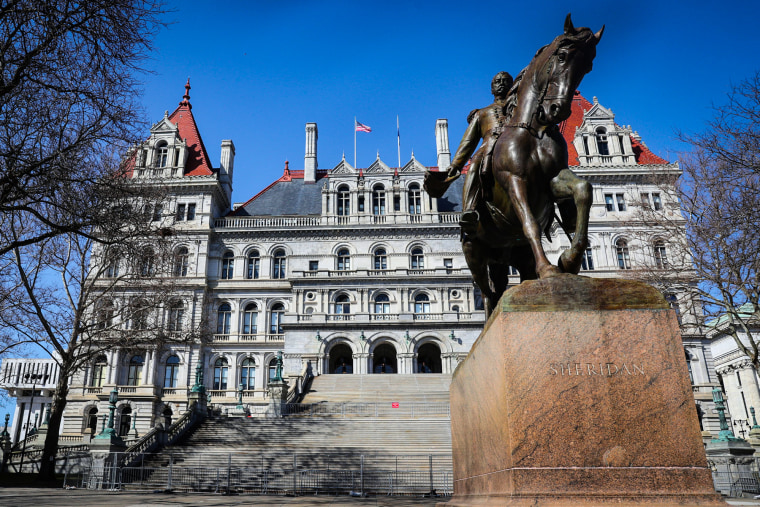
The case described in an NBC News report demonstrates another aspect of security—the prevention of a violent attack on a government facility. Jessica Bowie, 35, has been charged with attempting to provide material support to a terrorist organization. According to the prosecution, she expressed support for ISIS, sought help making explosives, visited the New York State Capitol in Albany several times and discussed an attack on a day when the building would contain the largest possible number of senators.
According to the criminal complaint, Bowie was radicalized online, created accounts under an Islamic name and posted messages supporting terrorism. She allegedly pledged allegiance to ISIS in audio recordings and spoke of wanting to “destroy as much of the building as possible and kill the senators.” Investigators say she also acquired materials for making an explosive device and tried to obtain a handgun and ammunition.
One distinctive feature of the case is that the investigation used confidential sources, one of whom posed as an ISIS intermediary. Federal agents gave Bowie $200 to purchase components and then monitored her actions. This is a typical example of preventive law enforcement work, in which investigators create an opportunity for a suspect to commit a crime in order to document their intentions and stop the preparations. However, in such cases, the court must separately assess whether an independent criminal intent existed and whether it was excessively encouraged by the agents’ actions.
The charges carry a possible sentence of up to 20 years in prison, a fine of up to $250,000 and lifetime supervision after release. Authorities emphasize that there is no longer an immediate threat. New York Governor Kathy Hochul said that earlier in the year, amid growing political violence and threats against government officials, authorities had already increased security at the Capitol and other government facilities.
The episode shows that the risk of political violence is not limited to the federal level. State legislative buildings can also become symbolic targets for extremists because they are perceived as embodiments of the government system. In a statement, First Assistant U.S. Attorney John Sarcone said authorities seek not only to prevent a specific attack but also to “have a chilling effect” on those who are becoming radicalized or considering violence. At the same time, it is important to balance effective threat prevention with the protection of civil liberties: radical views alone do not always constitute a crime, whereas a prosecution must establish specific actions, intentions and a connection to a banned organization.
Security is presented in the materials as a personal issue as well as a state one. ABC News reports that Prince Harry and Meghan plan to return to the United Kingdom while retaining homes in Montecito and Portugal. They intend to live in a private non-royal residence near London, and their children, Archie and Lilibet, are reportedly expected to begin school in the United Kingdom in September.
The couple will remain private citizens and will not return as working members of the royal family. This is therefore not a restoration of their former duties but a restructuring of their family and geographic model of life. According to an ABC News source, King Charles III welcomes the possibility of seeing his son and grandchildren more often. Buckingham Palace has not officially commented on the plans, however, and the subject of the move was reportedly not discussed during the family’s recent meeting.
The decision is closely linked to security. After stepping down from royal duties, Harry lost an appeal against the reduction of his publicly funded security while in the United Kingdom. The family now uses a private security team, and future security measures have not been disclosed. Returning to one’s country of origin therefore does not automatically mean restoring the previous level of state protection. For Harry and Meghan, this is a fundamental limitation: proximity to the royal family and public status may increase risks, but the legal grounds for government-funded protection remain a separate issue.
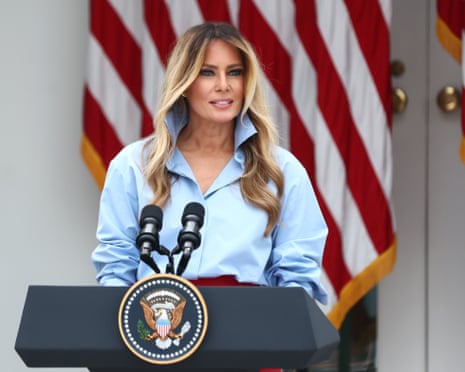
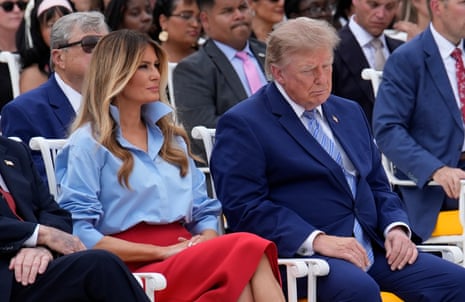
Against this backdrop, another aspect of public life is also visible—the management of one’s presence in the media sphere. The Guardian notes that Melania Trump appeared in public far less often in 2026 than during the same period of her husband’s first presidential term: only about 38 times, according to the data cited. At an event in the Rose Garden, she joked: “I heard you missed me. Here I am.” Her speech focused on an initiative supporting children in foster care, including scholarships in partnership with IndyCar and Fox.
Melania herself explained her approach with the formula: “The greatest investment America can make is not technology, infrastructure or capital markets. It’s our children.” In this speech, public visibility is used not as a constant form of political communication but as a tool for promoting a specific social initiative. Yet a first lady’s rare appearances inevitably generate speculation, especially when they are accompanied by a documentary, discussions about personal relationships or unexpected statements.
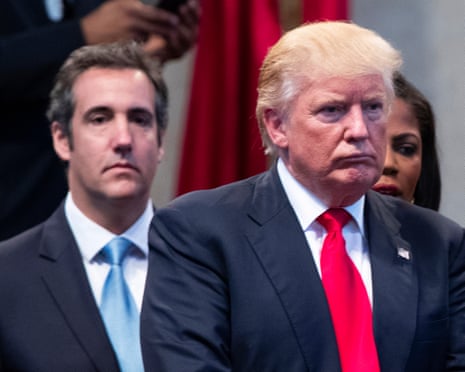
A similar dynamic is evident in Donald Trump’s unexpected interview with Michael Cohen. Cohen was once his personal lawyer and described himself as “a licensed attorney’s attack dog,” but later became a key prosecution witness in the case involving payments to Stormy Daniels. After Trump was convicted on 34 counts of falsifying business records and Cohen himself served time in prison, Cohen publicly criticized his former employer for years. Now, following an apparent reconciliation, Trump has agreed to appear on Cohen’s radio program.
The story shows how political loyalty can change under the influence of circumstances. After Trump returned to power, Cohen said he had felt “forced and coerced” by federal prosecutors during the proceedings. Asked whether he would seek a pardon from the president, Cohen replied: “We’ll see. Will I ever demand it? I don’t know. Maybe I will, maybe I won’t.” Even if the issue of a pardon is not discussed directly, the interview itself demonstrates that personal conflicts and legal consequences can once again become political assets.
Taken together, the materials portray a state in which trust in procedures is constantly tested by several types of threats. These include physical threats against officials and buildings, online radicalization, uncertainty surrounding elections, insufficient transparency in personnel clearances and public figures’ struggle for control over their own images. In every case, the decisive factor is not only the existence of formal rules but also their consistent application.
The key conclusion is that security cannot be reduced to guarding buildings or preventing terrorist attacks. It includes cyber and information resilience, transparency in the work of agencies, vetting people who have access to the president, independent oversight of elections and clear rules governing government protection. When these elements weaken, even an isolated personnel episode or a delay in responding to a FOIA request begins to be perceived as part of a broader threat.
The second important conclusion is that publicity is becoming a mechanism of political management. Melania Trump’s rare appearances, Jennings’s public defense of a White House employee and Trump’s interview with a former adversary show that media presence is becoming selective and tactical. A public figure can disappear from view and then reappear at the most advantageous moment—to promote an initiative, defend an ally or change perceptions of an earlier conflict.
Finally, the reports about Harry and Meghan underscore that personal autonomy comes at a price. Returning to the United Kingdom may restore family connections and give their children easier access to the British educational environment, but it does not automatically restore their former privileges or level of protection. For modern public figures, freedom from an official role, political independence and security often prove to be goals that limit one another.