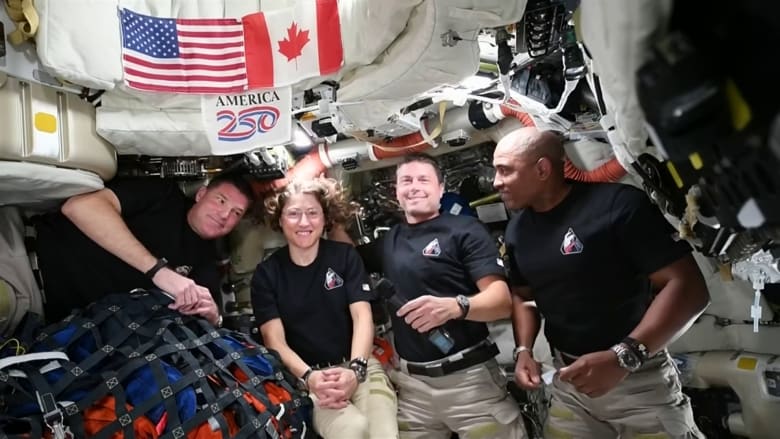
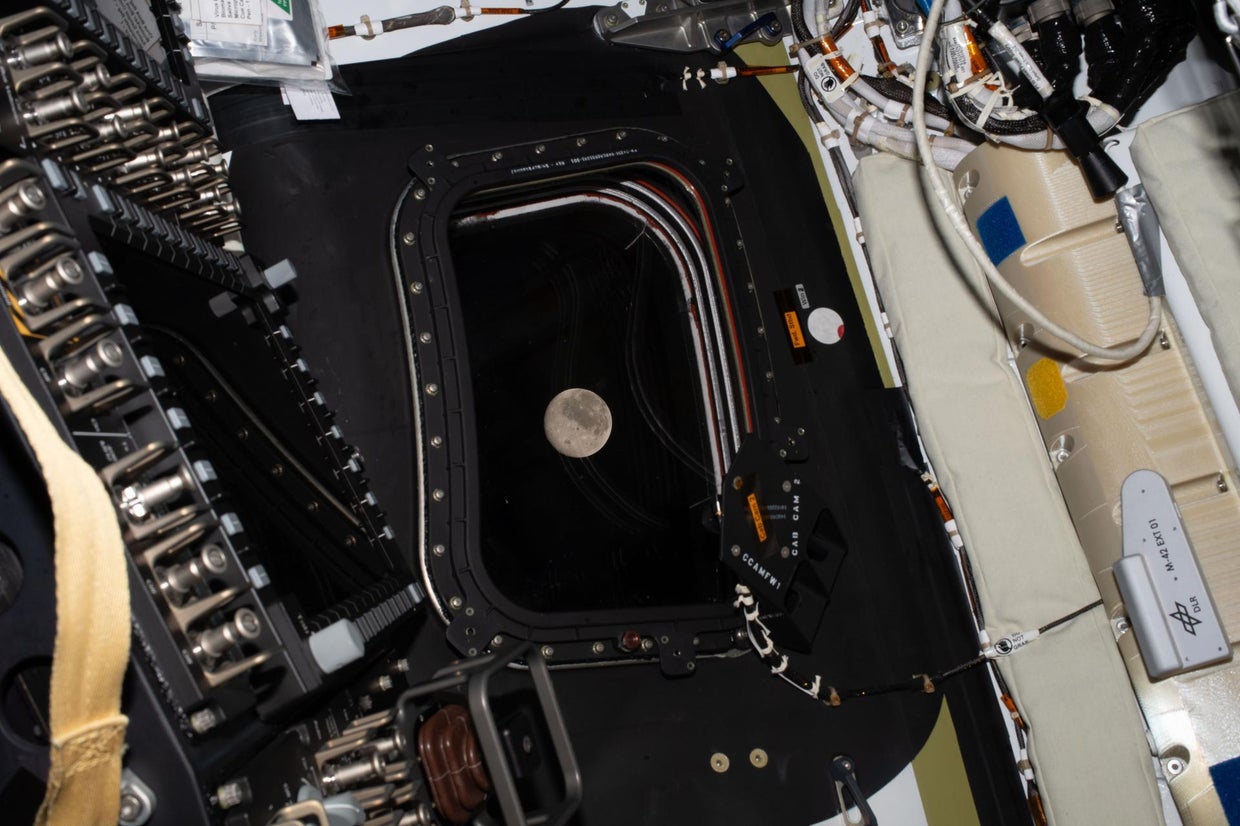
When the astronauts of the Artemis II mission describe their flight around the Moon as "unreal" and note that "a couple of billion people on Earth" are watching their photographs, the contrast with other news the same day becomes especially striking: a local ambulance crash at a busy intersection in Fort Myers. In one case — a record lunar flyby reaching global broadcasts on NBC News and CBS News, in the other — a short item on a regional site, Gulf Coast News, about a crash with no injuries but causing a serious traffic jam. Viewed together, these stories sketch a central theme: the tense and fragile balance between everyday vulnerability and the drive toward grand, almost symbolic breakthroughs. It's a story about how humanity simultaneously lives at the scale of neighborhoods and intersections while projecting itself to the scale of lunar orbit.
The record lunar flyby being performed by the Artemis II crew is itself a historic gesture. According to live coverage on NBC News and a special report on CBS News, this is not merely a technical event but a carefully constructed symbolic act. The astronauts are conducting a "lunar flyby" — a trajectory that carries the spacecraft around the Moon, including its far side, where a planned "radio silence" occurs — a period of lost communications caused by the Moon blocking the spacecraft from direct line-of-sight to Earth. This "communication blackout," mentioned by CBS News, is no longer perceived as the dramatic risk of the Apollo era, but rather as a well-calculated and technologically safe phase: ground teams know in advance how long the signal will be gone and when it will return. Still, humanity experiences it emotionally as a tense lapse in connection — a brief taste of isolation when people, furthest from Earth, for several dozen minutes literally slip over the horizon of sight.
It is at such moments that words become especially meaningful. When communication is restored, the words of mission leaders and the astronauts themselves cease to be routine and take on an almost ritual character. A NASA representative, speaking on NBC News, emphasizes the scale of human involvement: "There are a couple billion people here on Earth who are anxiously waiting to see the images that you captured up there," he tells the crew. This is not merely a compliment but a formulation of the planet-wide emotional stake in the flight. When he adds, "For the benefit of NASA and all the people on Earth who love space, thank you for taking us with you to the Moon" and "You represent the best of us," he articulates a long-standing role of spaceflight: to be a showcase for humanity, a concentrated display of what it regards as its "best."
The astronauts themselves, CBS News reports, call the solar eclipse they observed "unreal" — an understandable word that arises where ordinary language fails. A solar eclipse in the lunar context is the same celestial mechanics (the Moon blocking the Sun and casting a shadow on a certain area), but seen from a place where humans rarely stand. A phenomenon familiar from textbook pictures becomes a personal, almost bodily experience. That simple, very "human" word "unreal" neatly captures the tension between technological routine and the existential shock that space still provokes, even in trained professionals.
To understand why NASA carefully crafts the narrative around Artemis II, it's important to clarify that this is not a "tourist" flight nor a purely scientific expedition, but part of a long-term program to return humans to the Moon and then proceed to Mars. Such a flight is called a "crewed flyby" — a key test of life-support systems, navigation, communications, and crew behavior in deep space ahead of even more complex landing missions. Every public gesture — from broadcasting live video to emotional speeches on Earth — is simultaneously an accounting to taxpayers and a means of sustaining public support for an expensive program. It's no coincidence that the phrase "you took us with you to the Moon" sounds like a reminder: the mission is carried out not just "for science" but as a collective experience for millions of viewers around the world.
Interestingly, at that same moment, literally "on Earth," another news item demonstrates a different side of our reality — local, grounded, and yet equally dependent on technology. On the busy stretch of Colonial Boulevard in Fort Myers, at the intersection with Six Mile Cypress Parkway, Gulf Coast News reports that an ambulance was involved in a crash Tuesday morning. Fort Myers police say there were no injuries and no road closures, but the incident created heavy congestion on Colonial Boulevard and Ortiz Avenue. Hidden in that dry traffic-reporting notice are a few hallmarks of our time: even a minor incident involving emergency services instantly becomes news, and the outlet that reports it promptly offers a mobile app to "receive the latest news and alerts" — and even a separate streaming app for watching news and entertainment content on TV.
This, seemingly purely local story unfolds the same motif of dependence on complex infrastructure as the Artemis II mission, only at a different scale. An ambulance is also a high-tech object, part of a vital system on which people's lives depend. When such a vehicle is involved in an accident, even without casualties, it shows that our ability to manage risks and technologies is imperfect both in space and on the street. Downstream consequences produce "heavy congestion": tens or hundreds of people lose time, are late for work, change plans. Unlike the majestic video of a lunar orbit, there's no beautiful image here and, as a rule, no global meaning. Yet such episodes make up the everyday experience of most people — the baseline level of reality against which events the scale of Artemis II are perceived.
If you join these two levels — global and local — some patterns emerge. First, in both space and on the road we are dealing with networks of technical and social systems that simultaneously expand our capabilities and create new points of vulnerability. A flight around the Moon requires flawless operation of engines, navigation systems, communications, life support, and complex coordination with ground teams. The urban environment with its ambulances, traffic, and information services depends on no less intricate logistics, even if hidden from view. In both places, safety is ensured by a combination of engineering solutions, protocols, and the human factor — and in both cases that balance is not perfect.
Second, the way we tell ourselves about these events plays a key role. A space mission is framed with speeches about "courage," "representing the best of us," and millions of people "who travel to the Moon through you," as NASA tells NBC News. The local crash is described as tersely as possible, emphasizing no injuries and that "Gulf Coast News continues to gather details" while inviting readers to "download the free app to get the latest news and alerts" (Gulf Coast News). But essentially both are operations in managing attention. The space agenda, being expensive and dependent on public support, needs an inspiring narrative. Local media, competing for an audience, turn any traffic blip into a reason to promote an app and keep readers "connected."
Third, both stories point to a common trend: our lives increasingly unfold in "live broadcast" mode. The Artemis II mission is covered with a live blog and a CBS News special report describing the far-side passage and planned communications blackout in near real time. The Fort Myers crash goes online and is immediately accompanied by a call to download a mobile app to stay informed of breaking news. In other words, unprecedented observability of space and equally unprecedented observability of the everyday are two sides of the same process. We strive to see everything: the trajectory of a spacecraft and the traffic at the nearest intersection.
Special attention should be paid to how such stories shape a sense of community and scale. When a NASA representative says, "Thank you for taking us with you to the Moon" and wishes the crew "Godspeed and go Artemis II" on NBC News, he invites viewers to identify with the mission. This is not only about the United States or NASA; it is addressed to "people around the world who love space." The flight becomes a global cultural event through which humanity tests the boundaries of what is possible. At the same time, a local reporter in Fort Myers speaks to neighbors: "This is happening on your road, in your city; here's how it affects your commute, and here's how you can stay informed." Here, a sense of community is formed around shared urban space rather than lunar orbit.
This contrast leads to an important conclusion: there are no purely "space" or purely "everyday" stories when viewed from the perspective of humanity's overall development. Space is not an escape from earthly problems but a continuation of our attempt to manage risk, expand knowledge, and create meaning. The ambulance crash is not just a private incident but an indicator of where and how our infrastructure remains fragile and how vital coordinated action and transparent information are. When astronauts are told they represent "the best of us," that claim is valid only if that "best" gradually extends to other spheres: road safety, emergency services, and the quality of urban life.
Finally, both stories clearly show the main trend: our civilization lives in constant tension between striving for more and the need to cope with small failures here and now. Artemis II is forging a new normal: a lunar flyby as "a step to the next step," toward farther missions. The injury-free crash on Colonial Boulevard establishes another norm: even small system failures should not yield human casualties, and information about them should quickly reach everyone concerned. In that sense, both news items are about the same thing: how to make complex systems work so reliably that the word "unreal" remains reserved for the grandeur of a solar eclipse over the lunar horizon, not for the consequences of an everyday accident on our street.
Gathering the reports from NBC News, CBS News and Gulf Coast News draws a simple but important picture. We are a species that on the same day can send people on a record lunar flyby and paralyze traffic on an urban avenue over a minor accident; that can plot the most complex trajectories in celestial mechanics and still be learning how to coordinate ambulance movement. Our main resources are not only rockets and apps but also the ability to see the connections between these levels: to remember the Moon while stuck in a traffic jam, and to remember traffic jams and ambulances while gazing at a mesmerizing eclipse from orbit. It is in that joining of large and small, distant and near, symbolic and utilitarian that the story of humans in space and on Earth unfolds today.