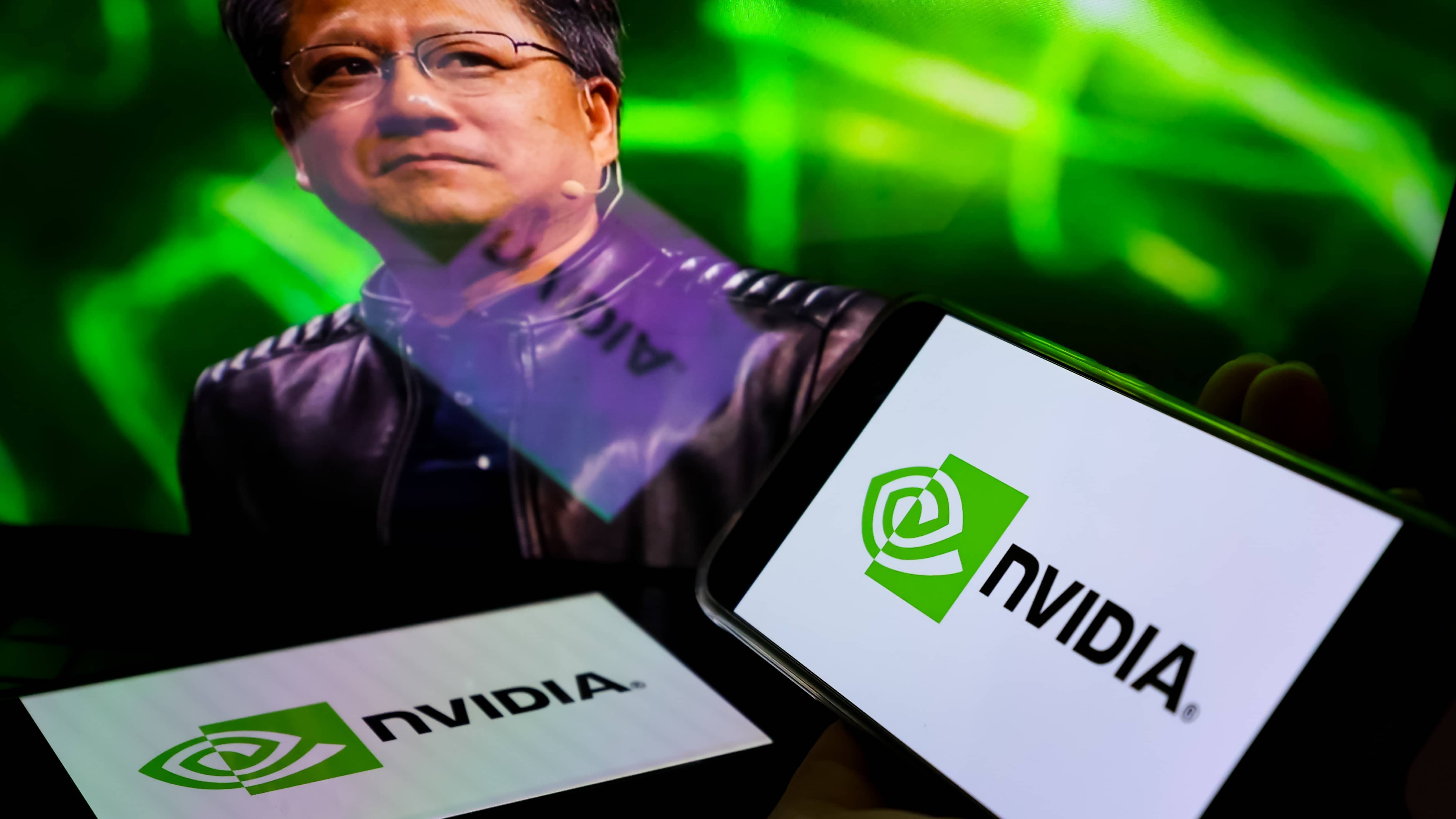
Jensen Huang’s return as head of Nvidia sent a powerful signal of support to investors across the artificial intelligence industry. The company’s shares surged, and major stock indexes recovered much of their recent losses. But the market’s reaction reflects more than its view of the board’s decision: it shows how much expectations around AI depend on Nvidia’s resilience and confidence in its leadership. Behind the sharp rebound, questions remain about financing, geopolitics and whether demand for AI can endure over the long term.
According to reports by BBC, CNBC and Yahoo Finance, Nvidia’s board reinstated Huang as president and CEO and returned him to the board of directors. The decision took effect immediately. Board chair Harvey Jones said Huang was the right person to lead the company and that his return was in the interests of shareholders, employees, partners and customers.
The news followed Huang’s resignation earlier that month. CNBC reports that it came amid reports about his personal relationships, including an allegation that he had been involved with a suspected Chinese spy. The materials presented do not independently substantiate that allegation. Donald Trump called Huang’s return “very happy news” and said that he “did nothing wrong,” while acknowledging that Huang had shown “poor judgment” in circumstances that, the president said, were largely unrelated to the company’s work.
Trump also said he had spoken with Nvidia’s board “directly and indirectly” and persuaded it to bring Huang back. He said he had considered the decision necessary and assured the board there was no national security threat. BBC and CNBC report these remarks as the president’s own statements; the materials do not disclose the details of the consultations or the basis for that security assessment. It is therefore important to distinguish between two things: the board’s corporate decision and the political influence Trump said he exerted. The company confirmed the former; the latter is presented in Trump’s own account.
The market reacted to the decision almost instantly. On Monday, Nvidia gained about 35%, while the Nasdaq Composite rose roughly 7.3–7.4%. The S&P 500 climbed 5.3%, and the Dow Jones rose approximately 3.1%, or more than 1,400 points. CNBC says it was one of the best days for all three indexes since April 2025. The rally followed a punishing week: the indexes had entered correction territory, meaning they had fallen about 10% from recent highs, while the Nasdaq-100 had approached the threshold for a bear market—a 20% drop from its peak. Yahoo Finance also notes that the S&P 500 had fallen for seven straight days and that the market rebounded sharply after an especially weak week for the Dow.
The rally extended beyond Nvidia. According to CNBC, Micron shares rose 19%, CoreWeave gained 25% and AMD climbed 8%; Alphabet, Meta and Microsoft also advanced. This broad response suggests investors saw Huang’s return as a signal of renewed confidence in the entire AI supply chain—from makers of computing components to companies building infrastructure and developing digital services. Hendi Susanto, a portfolio manager, described Huang’s return as a factor that “restores and strengthens confidence in the AI ecosystem.” But he also stressed that the industry still has to overcome concerns about financing, geopolitics, the durability of demand and broader skepticism.
This is where the story’s central contradiction emerges. On the one hand, Nvidia remains a key supplier of chips for AI systems, so its leadership and ability to fulfill orders matter far beyond the company itself. On the other, a short-term jump in share prices does not prove that all previous concerns have disappeared. Before the sell-off, investors were worried about excessively high expectations for AI and whether future revenues would justify the massive investment in computing infrastructure. CNBC notes that companies across the supply chain continue to report strong demand, but this does not resolve doubts about how sustainable that demand is or how new projects will be financed.
The market’s response should therefore be seen not as a final verdict on AI’s prospects, but as a sharp reassessment of short-term risk. The founder’s departure could have heightened concerns about Nvidia’s strategy and the industry’s stability; his return temporarily eased them. Investors saw the decision as a sign of continuity in leadership and a symbolic assurance that the company would stay its course. But the market’s strong reliance on a single person also points to its vulnerability: if sentiment across an entire sector shifts so dramatically with the fortunes of one executive, then expectations and confidence—not just financial results already achieved—are playing a significant role in share prices.
Differences in the sources’ reporting are also important. Yahoo Finance gives the board’s statement and confirms that Huang was reinstated in three roles at once—as president, CEO and board member. CNBC provides more detail on the market rebound, the recent sell-off and the impact on shares of AI-related companies. BBC focuses on Trump’s statements about his contacts with the board and assurances concerning national security. Together, the reports show that the story has corporate, political and market dimensions, but do not justify treating any one of them as a complete explanation for the others.
The overall message is mixed: Huang’s return quickly helped restore confidence and sparked a broad rally, but the future course of shares will depend not on the personnel decision itself, but on companies’ actual revenues, the returns on AI investment and the stability of demand. The correction beforehand was a reminder of how fragile expectations can be, even when companies report strong interest in their products. And Monday’s exceptional rally showed that faith in AI remains strong—but for now, it rests largely on confidence in Nvidia and its ability to remain a key supplier of technological infrastructure.