Three reports come together to tell a story about how difficult it is to separate technological security from commercial interests and political influence. The United States bans exports of Nvidia’s most advanced chips to China, yet, according to The Washington Post, they can still be found on the Chinese market. At the same time, the company’s CEO, Jensen Huang, has become the focus of an investigation into possible shipments, while Donald Trump has publicly intervened in the question of Huang’s return to the helm of Nvidia. The intervention took on particular significance after it emerged that the president owns a substantial stake in the company.
The central contradiction is the gap between formal restrictions and the actual availability of technology. An export ban can make legal direct sales more difficult, but on its own it cannot guarantee that chips will not reach Chinese buyers through intermediaries, resale or other channels. And when enforcing these restrictions affects a major technology company, the market, national security and political leaders’ personal financial interests, the issue is no longer merely customs-related or technical.
A report by The Washington Post says that Nvidia’s advanced chips continue to be offered in China despite the U.S. ban. In Shenzhen, traders are still advertising them for sale, although black-market prices have risen sharply amid the turmoil surrounding Huang. This is an important detail: sanctions can raise the cost and risk of illicit shipments, but they do not necessarily eliminate demand or stop the trade. If scarce accelerators remain available, restrictions can create profits for intermediaries and make it harder to track end users.
These are chips used to train and run artificial intelligence systems. Their strategic value explains why Washington is trying to restrict China’s access to Nvidia’s most powerful models: such processors make it possible to build large AI systems faster and can be used in areas with military and intelligence applications. But there is a difficult practical challenge between banning exports and controlling the global circulation of a product. Meeting it takes more than announcing restrictions: authorities must establish where chips come from, vet intermediaries and monitor where the equipment goes after its initial sale.
Against this backdrop, the allegations against Huang take on not only legal but political significance. A live blog by The Guardian reports that Senate Minority Leader Chuck Schumer accused Nvidia’s CEO of supplying “extremely advanced chips to China” and violating export rules. He compared this to selling rocket engines to the Soviet Union during the space race—a sharp analogy that underscores how the issue is viewed as a national security threat.
The Guardian also describes suspicions about Huang’s relationship with Alice Huang, a technology executive who is not related to him and is accused of having ties to Chinese intelligence and of arranging for chips to be diverted to China through her data center company, Megaspeed. In the reports cited, these are presented as allegations and suspicions, not as facts established in court. Even so, they have become part of the political debate: Trump said he did not think Huang needed to invoke the Fifth Amendment and refuse to answer questions that could incriminate him. He also said a presidential pardon “is always an option,” while adding that he did not think one would be necessary.
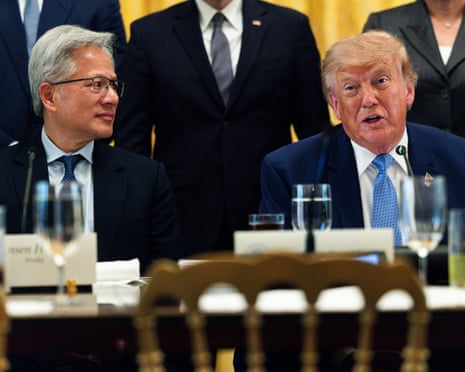
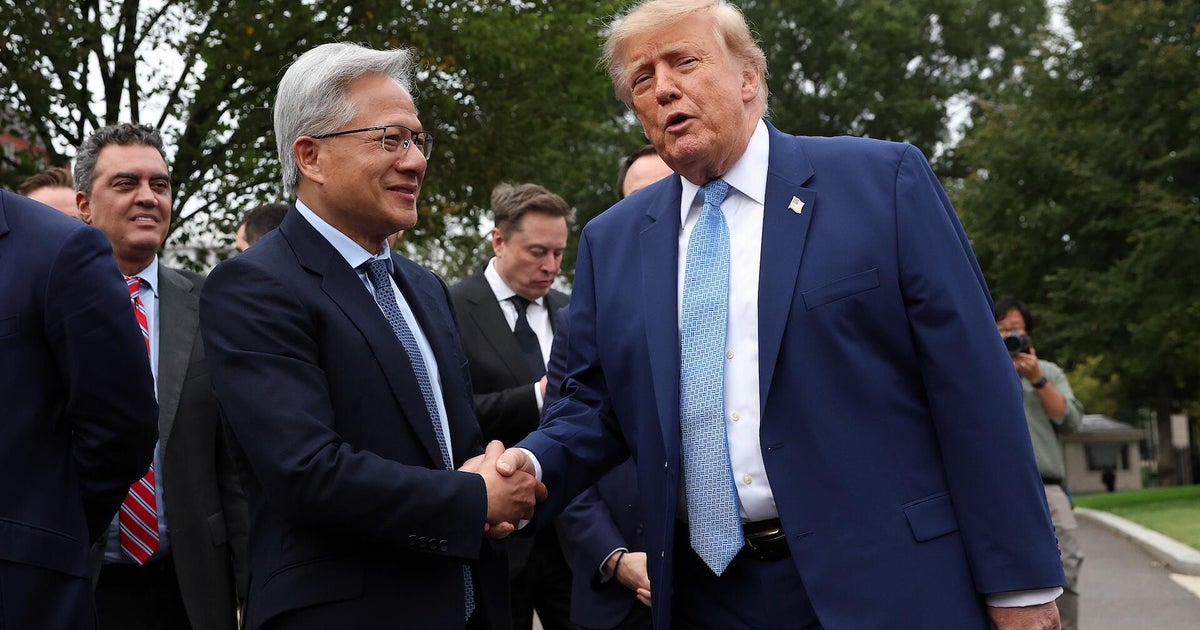
Of particular significance is the report that Trump personally spoke with Nvidia’s board and, by his own account, persuaded it to bring Huang back. The president assured the company’s leadership that he did not see a national security threat. In doing so, the head of state publicly intervened in a private company’s personnel decision while commenting on matters that could become the subject of a congressional investigation. This raises questions not only about the appropriateness of political intervention, but also about where the line lies between protecting a strategic industry and influencing commercial decisions.
An investigation by CBS News adds a financial dimension to the story. According to financial disclosures, as of the end of 2025, Trump held Nvidia stock worth between $13 million and $58 million. From January 2025 through September 2026, he made more than 100 transactions involving the company’s shares, with a combined value estimated at between $27 million and nearly $98 million. The exact size of his current stake is unclear, but after Huang’s return, Nvidia shares rose by more than 30% from their low, according to CBS. The value of the president’s investments may have increased by $1.3 million to $14.8 million in a single day.
The White House said independent financial organizations manage the portfolio, and that neither the president nor his family can direct the managers’ trades. This explanation matters, but it does not eliminate the question of a conflict of interest. When a president personally helps bring about a decision that could affect the value of a company in which he is a major shareholder, there is an obvious question about impartiality—even if independent managers make the specific trades. As CBS notes, government ethics experts find the situation particularly troubling because federal conflict-of-interest rules do not apply to the president, vice president and members of Congress in the same way they apply to other executive branch employees.
The CBS article also cites other examples of Nvidia stock ownership among government officials and political appointees. Some sold their holdings after taking office, while certain officials or affiliated entities disclosed substantial positions. Owning shares in a large publicly traded company does not in itself prove wrongdoing. But taken together, these investments show how closely public officials’ financial interests can become intertwined with decisions on export controls, technology regulation and national security. What matters is not only whether rules have actually been broken, but also whether the public trusts that government decisions are made without regard to private gain.
All three reports point to the same systemic problem: control over strategic technologies depends not only on the law, but also on enforcement, political consistency and transparency in decision-making. Chips remain available on the Chinese market, even though trading them has become more expensive and risky. In Washington, accusations of evading export rules are being made, while the president defends the company’s CEO and says a pardon is possible. And financial disclosures show that the president has a personal stake in the company’s share price, even as the White House insists that his investments are managed independently.
To clarify the key terms, “export control” refers to rules that restrict the sale or transfer of certain goods and technologies to foreign buyers, particularly when they may have military applications. In this context, the “black market” does not necessarily mean one unified clandestine network: it refers to a range of illicit or opaque channels through which goods may be resold in circumvention of official restrictions. The Fifth Amendment to the U.S. Constitution, among other things, allows a person to refuse to answer questions if their answers could lead to criminal prosecution. A “conflict of interest” arises when a public official’s private financial stake could influence—or appear to influence—the performance of their official duties.
The most important takeaway is that technology sanctions do not work automatically. They can restrict direct shipments and raise the cost of access, but their effectiveness depends on the authorities’ ability to close circumvention routes and ensure that companies and intermediaries comply with the rules. A second takeaway is that political decisions concerning Nvidia can affect the market just as much as the restrictions themselves: Huang’s return coincided with a sharp rise in the company’s share price, and the president publicly linked his position to U.S. competitiveness in artificial intelligence. A third is that even when no wrongdoing by a particular official has been proven, the institutional question remains: rules that allow senior officials to retain substantial investments in companies affected by their decisions can undermine trust in government policy.
Ultimately, the dispute over Nvidia is about more than whether a chip can be sold in China. It is a test of how effective U.S. restrictions are, how independent government decisions are from corporate interests, and whether political institutions can maintain public trust when national security, a major technology business and personal investments are all tied to the same company.