The story of 84‑year‑old Nancy Guthrie's disappearance rapidly escalated from a local criminal incident into a national drama intertwining several key threads: the vulnerability of public figures and their families, the growing role of digital technologies in investigations, unprecedented involvement by major media and even the president in the search. This case shows how, in contemporary America, the boundaries between news, personal tragedy and politics are nearly erased — and how every new fragment of digital trace can become decisive for the course of an investigation.
The case in brief: on the evening of January 31, 2026, Nancy Guthrie’s family dropped her off at her home in the Catalina Foothills area near Tucson, Arizona. Within a few hours, an unknown person, concealed head to toe, appears at her door, after which a series of alarming digital “interruptions” occur — from a doorbell camera going dark to a pacemaker disconnecting from its mobile app. The next day, when relatives do not see Nancy during their habitual online viewing of a church service, they call the police. Soon the family receives an extortion letter demanding ransom in bitcoin, and the case becomes federal and politically significant.
How this story unfolded in public is clear from the fact that NBC paused Olympic coverage to show footage of the suspect and a plea from Nancy’s daughter — TODAY show star Savannah Guthrie. A Yahoo piece details how, during an Olympic commercial break in 2026, the network showed viewers black‑and‑white clips from a Nest camera at Nancy’s home — a tall man in a mask, with a beard, wearing gloves and a jacket. Savannah Guthrie then addressed the nation with a direct, almost personal appeal: “We believe our mom is still out there somewhere… We need your help. She was taken, and we don’t know where.”
From a journalism standpoint this is an unprecedented move: a major sporting event, one of NBC’s highest‑rating properties, is interrupted for a private, albeit dramatic, case. But that gesture shows how a personal tragedy involving a public figure instantly becomes part of the “national storyline.” Because Savannah Guthrie is the face of a morning show, viewers perceive her mother’s disappearance not as “another kidnapping case,” but as the story of “one of our people” they see every day. The media in this instance do more than cover the investigation; they effectively become part of the operational search, using their audience as a resource — almost like an “extended search squad.”
Alongside the media aspect, a technological thread develops that is now standard in serious investigations but is particularly visible here. The same Yahoo article quotes FBI director Kash Patel: the agency, together with the Pima County sheriff and private companies, is recovering lost or damaged digital data from home surveillance cameras, including footage from devices that were physically removed. According to Patel, a video recording was recovered from “backup data in the backend systems” — that is, from residual information stored on provider servers.
It’s important to clarify: modern "smart" cameras (like Nest) often duplicate data not only locally but also in the cloud — on remote servers run by the manufacturer. Even if a recording is deleted or the device destroyed, providers may retain fragments, logs, or service frames. That’s what is meant by “backup data in the backend” — internal data not obvious to a user, which can be recovered with specialists’ help and at law enforcement’s request. The Guthrie case demonstrates how real and important this “second life” of digital traces can be.
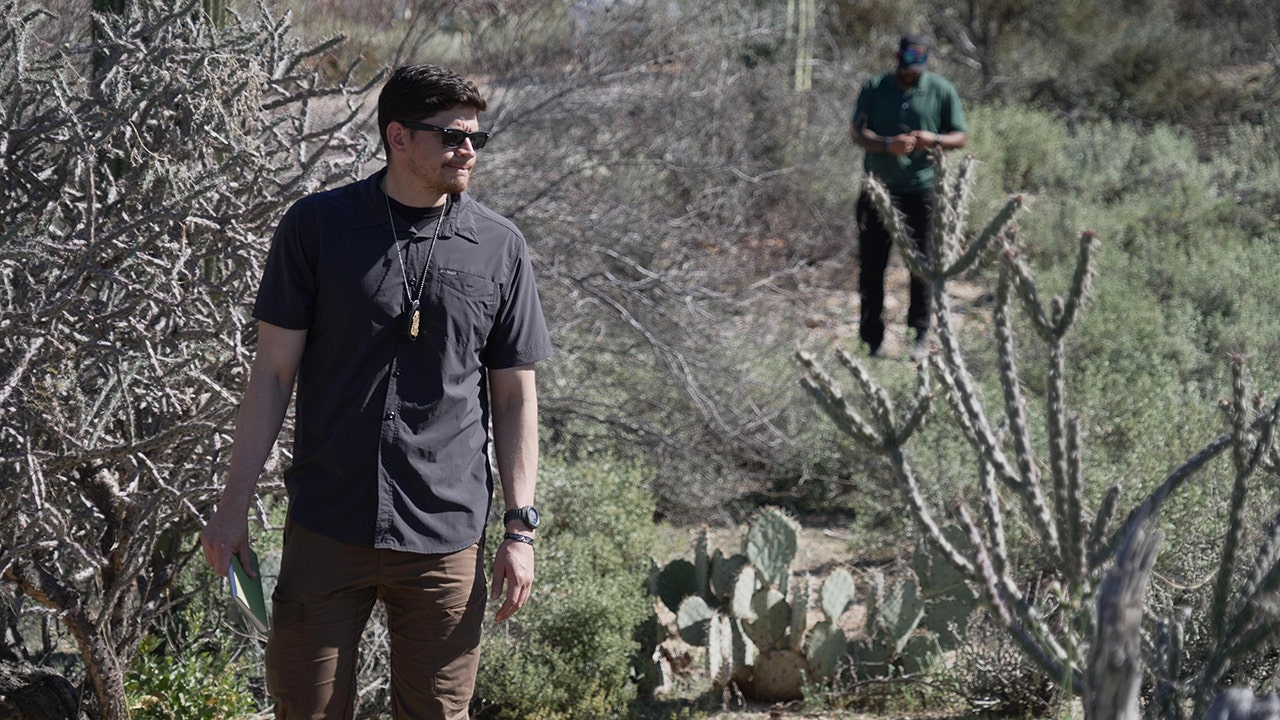
Fox News develops the same technological line in a piece where former FBI unit chief Jason Pack analyzes recent investigative actions. The FBI is conducting a large canvass of the neighborhood around the Guthrie home and along roads in Catalina Foothills, simultaneously seeking witnesses and video recordings. A pair of black gloves was found roughly one and a half miles southeast of the house — and although it’s unclear whether they are connected to the case, Pack explains two possible reasons for the choice of search area.
First, it’s a logical route for a perpetrator’s entry and exit if they planned maximum concealment. Second, and more interesting from a trends perspective, that route could have been suggested by digital data: cell‑phone signals, vehicle movement data, network logs, or other indirect sources. The former agent is cautious in his assessments but explicitly refers to “digital evidence” that could have narrowed the search focus.
Fox News also provides a detailed timeline by the hour that shows how tightly a digital “box” can enclose even an elderly person’s life:
– between 9:30 and 9:45 p.m. the family drops Nancy off at home;
– at 9:50 p.m. the garage doors close;
– at 1:47 a.m. the doorbell camera goes offline;
– at 2:12 a.m. the camera records movement;
– at 2:28 a.m. Nancy’s pacemaker stops synchronizing with the phone app;
– toward midday the family, not seeing her at the weekly online viewing of the service, raises the alarm and calls 911.
The pacemaker linked to an app is another important technological element. Many modern medical devices connect to phones and through them to medical center servers. When synchronization stops at 2:28 a.m., it could mean: either the phone was turned off or damaged, or there was a sudden change in location with no connectivity, or direct interference. For investigators this is a temporal milestone that helps build a route and possible scenarios — from forcible removal to deliberate disabling of electronics by the perpetrator. Notably, each device’s “silence” can be as incriminating as its activity.
Against this background local media note more tactical, concrete investigative actions on site. A KOLD / 13 News report says that investigators briefly set up a search tent in front of Nancy Guthrie’s door in the morning: it was erected around 8 a.m. and taken down after about an hour and a half. This is the same door in front of which footage of the suspect was captured. Context — black gloves were found nearby the day before. The temporary tent installation is likely related to delicate forensic work: re‑examination, use of new particle detection methods, analysis of traces that previously went undetected or were deemed insignificant until new evidence (e.g., the gloves) emerged.
To a layperson such tents may look odd or alarming, but in modern forensics they are common tools. They protect the work area from weather, prying eyes, and, most importantly, potential contamination of evidence. In light of a possible new find (the gloves), investigators could have returned to the door and entry area to try to identify microtraces (fibers, skin particles, DNA) that could match the items found.
A particularly telling thread is the involvement of senior political figures. As Yahoo notes, President Donald Trump personally reviewed FBI video and promised the Guthrie family “all possible resources.” White House press secretary Karoline Leavitt urged “any American with any information” to contact the FBI immediately. Because this concerns the family of a host of one of the country’s flagship television shows, the case ceases to be merely a criminal matter and becomes part of the political‑media field.
Cryptocurrency’s role in this story is also notable: the extortionists reportedly demanded ransom in bitcoin, setting a firm deadline. Bitcoin is often perceived as an anonymous means of payment, but in reality it is pseudo‑anonymous: all transactions are permanently recorded in a public ledger (the blockchain), and intelligence agencies have long learned to trace transfers and behavioral patterns back to individuals or at least to clusters of linked wallets. Demanding ransom in cryptocurrency complicates direct banking oversight but simultaneously gives investigators another digital “tail.” Although there are no public details about how the FBI is using potential crypto‑traces in this case, the mere mention of bitcoin points to another level of crime digitalization.
From all these fragments a broader picture emerges in which the central throughline is not just the abduction itself but the collision of three forces: a digital environment permeating daily life; major media infrastructure; and traditional criminal investigation. Nancy Guthrie’s disappearance illustrates several key trends.
First, virtually every serious crime in the 2020s is accompanied by a rich digital trail — home cameras, smartphones, smart medical devices, vehicle telematics, and carrier data. Even when a perpetrator deliberately disables cameras or removes devices, such actions often leave traces in logs and the cloud. The recovery of Nest camera footage from a backend backup, as described by Yahoo, is a vivid example of how deeply and durably data can persist beyond a typical user’s control.
Second, the boundary between private life and the national agenda effectively disappears for highly public individuals. Savannah Guthrie, as a media figure, finds the search for her mother transformed from a private family tragedy into a nationwide campaign — with on‑air appeals, an Olympic broadcast interruption, and presidential commentary. On one hand, this objectively increases the chance of gathering information: millions see footage of the suspect, federal resources mobilize quickly, and the FBI openly asks the public for help. On the other hand, it risks turning the investigation into a political and ratings tool: not every missing elderly person receives such scale of attention and resources.
Third, the investigation shows the growing intertwining of law enforcement with the private tech sector. In the FBI director’s statement quoted by Yahoo, “private partners” and recovery of data potentially lost due to device removal are mentioned directly. This means that solving major cases requires investigators not only to access phones and home computers but also channels into the infrastructure of large IT and service companies: camera and smart‑device manufacturers and cloud platforms. For ordinary citizens this raises difficult privacy questions: how securely and independently are their data stored, and who may access them under what conditions?
Finally, in the operational actions described by Fox News and KOLD, it’s clear that no matter how advanced technology becomes, the basic logic of investigation remains unchanged: careful site examination, stepwise widening of the search radius, canvassing neighboring homes and businesses for cameras, and building a temporal and spatial line of movement. Digital traces are new waypoints on an old map. The discovered gloves may be a coincidental find or the key to DNA or fingerprints; the temporary tent at the door may be a tactical episode or evidence of an important new discovery. In any case, as former agent Pack emphasizes, investigators are trying to “build a route” — from the last moment Nancy was seen alive to any fragment of the path that can be checked.
Major conclusions and consequences of this case remain open: Nancy Guthrie is still missing, and family and authorities continue to seek answers. Nevertheless, it is already clear that her disappearance has become a striking example of how modern society reacts to such tragedies when the life of a person surrounded by digital devices and media attention falls into the focus of federal agencies, the president, and millions of viewers. This is a story not only about finding a missing woman but also about how, in the 21st century, technology, media and the state jointly — and not always consciously — shape a new reality in which every human drama instantly becomes part of a larger national story.