In the final days before the U.S. Senate election, the Michigan campaign has become more than a debate over candidates and policy platforms: it is also a test of how durable party loyalty and ties between communities are. Democratic Rep. Haley Stevens’ decision to endorse Republican Mike Rogers has intensified her conflict with Democratic nominee Abdul El-Sayed. At the same time, his team is trying to build support among Black voters in Detroit, a group that is crucial to the Democratic coalition. Reporting from Texas adds a broader context: turnout among Hispanic voters is also changing, though it remains unclear whom they are voting for.
The trigger for Stevens’ sharp turn was a dispute over an ad from an outside group. The ad linked U.S. aid to Israel with rising grocery prices. Stevens called it antisemitic and demanded that El-Sayed condemn it. He replied that he had not created the ad and disagreed with its content, but also accused Stevens of trying to reignite the dispute after the primaries had ended.
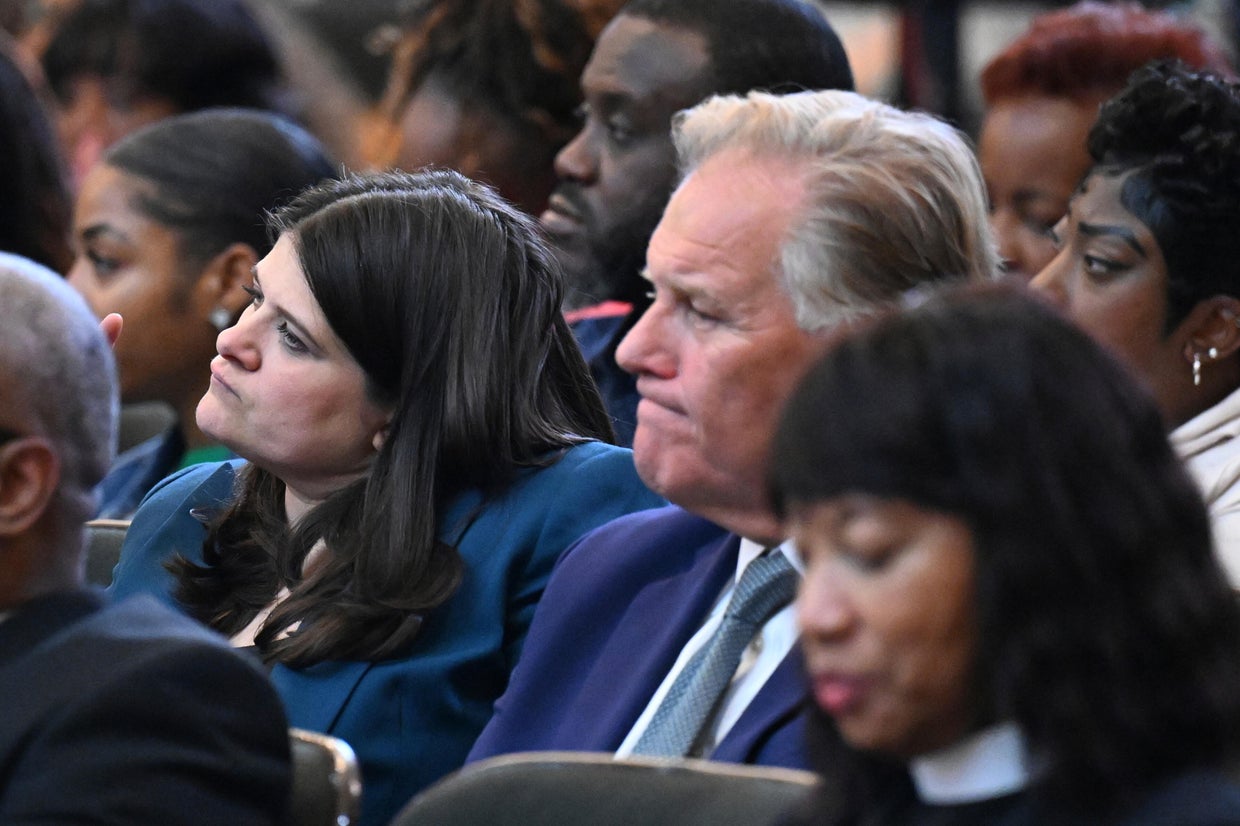
On Sunday, speaking alongside Rogers at a Detroit church, Stevens announced that she was endorsing the Republican. “Our Democratic Senate nominee, Abdul, said I’m no longer welcome in his campaign and should stay away from it,” she said. “And he’s right. So today I’m supporting Mike Rogers.” She described it as a personal decision and “a vote for one candidate,” not a rejection of the Democratic Party. She said she was acting to stand against hate and cited the presence in El-Sayed’s campaign of Hasan Piker, an online commentator whose statements have drawn sharp criticism from his opponents.
Rogers presented Stevens’ endorsement as a sign of unity against hate, rather than simply a party defection. The political impact, however, was clear: the Democratic nominee took a public hit from the rival he had defeated in the primary, while the Republican gained an opportunity to talk about expanding his coalition beyond his party. President Donald Trump praised Stevens, while Senate Minority Leader Chuck Schumer called her move a “betrayal” and reaffirmed his support for El-Sayed. Several of Stevens’ staffers resigned or announced that they were leaving; her former chief of staff said the team was “shocked and heartbroken” and supported the Democratic nominee.
The dispute stands out because it concerns not only competition between parties but also an unresolved rift among Democrats. El-Sayed narrowly defeated Stevens in the August primary. According to CBS News, Stevens had previously enjoyed significant support from the party establishment and publicly backed the winner after her defeat. She now says El-Sayed excluded her from his campaign. For his part, he is trying to steer the conversation back to the everyday concerns of state residents: on Sunday, he dedicated his remarks to “the 9,999,998” people of Michigan, not to the participants in a public quarrel.
This strategy is especially important for Democrats because of the makeup of their electoral coalition. In Detroit, El-Sayed needs to make a compelling appeal to Black voters, even though Stevens performed better in the city in the primary. According to Politico, Black residents make up about 14% of Michigan’s population, but recent polls suggest that El-Sayed’s support among them trails that of Democratic gubernatorial nominee Jocelyn Benson. So a visit to a Black church in Detroit is more than a symbolic stop on the final campaign swing: it is an effort to strengthen ties with voters whose participation is critical to Democratic turnout.
That effort is complicated by tensions between Black and Arab American communities, including disputes over business ownership in predominantly Black neighborhoods. Detroit City Council President James Tate, who has endorsed El-Sayed, described a concern some residents have: a business owner may earn money in their neighborhood but take the proceeds elsewhere. At the same time, he added, business owners may say they are treated poorly by customers. In his view, the issue calls for a conversation, not a simplistic accusation against one group by another. This local issue shows that voter mobilization depends not only on ideology or national politics but also on people’s everyday experiences in particular neighborhoods.
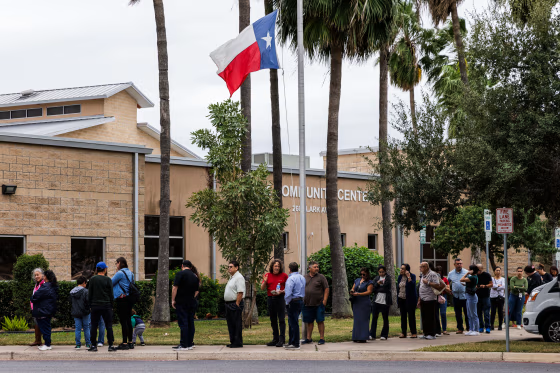
The comparison with Texas broadens the picture, but calls for caution. NBC News reports a sharp rise in early voting among Hispanic voters, including people who did not participate in recent elections. The outlet calls it a “sea change,” while stressing that it is not yet clear which candidates they are voting for. An increase in turnout alone, therefore, does not prove that either party has gained an advantage. As in Michigan, what matters is not only the size of a group of voters but also how successfully campaigns can earn its trust and turn participation into support for a particular candidate.
The broader lesson from these reports is that party labels and familiar coalitions do not guarantee an outcome. In Michigan, the Democrats’ internal conflict could undermine El-Sayed’s effort to unite a diverse group of supporters, while Stevens’ endorsement gives Rogers a chance to appeal to moderate voters and those concerned about antisemitism. But one public gesture does not automatically transfer votes: Stevens’ influence and the real effect of her decision remain to be seen. Similarly, the rise in early voting in Texas does not, by itself, signal a partisan shift.
It is important here to distinguish between several concepts. Primaries are intra-party elections in which a party chooses its nominee for the general election. Early voting means casting a ballot before Election Day; an increase in early voting indicates greater participation but does not reveal voters’ preferences unless reliable data show whom they voted for. Finally, a political coalition is an alliance of groups with different interests, formed around a candidate or party. Such a coalition may look broad on paper yet remain vulnerable if issues of trust and representation within it go unresolved.
Ultimately, the contest in Michigan is at once a dispute over the character of the campaign, a test of party discipline, and an effort to build ties between communities whose votes could decide the election. The reporting from Texas is a reminder that electoral dynamics are changing in other states too, but rising turnout cannot automatically be interpreted as a shift in political preferences. The key question for both campaigns is not only who will turn out to vote, but who can convince those voters that their interests are being heard.