Three articles cover entirely different events: the possible return of Prince Harry and Meghan Markle to the United Kingdom, the financial difficulties facing Ken Paxton’s Senate campaign in Texas, and the evacuation of a school in Florida. Yet they share one theme: public institutions and people under intense public scrutiny must manage the consequences of decisions that affect trust, safety, and their ability to control their own image. In each case, a formal decision—relocation, running for office, or evacuation—is accompanied by more complex questions: Who is responsible? How effectively is the system working? And will trust be restored?
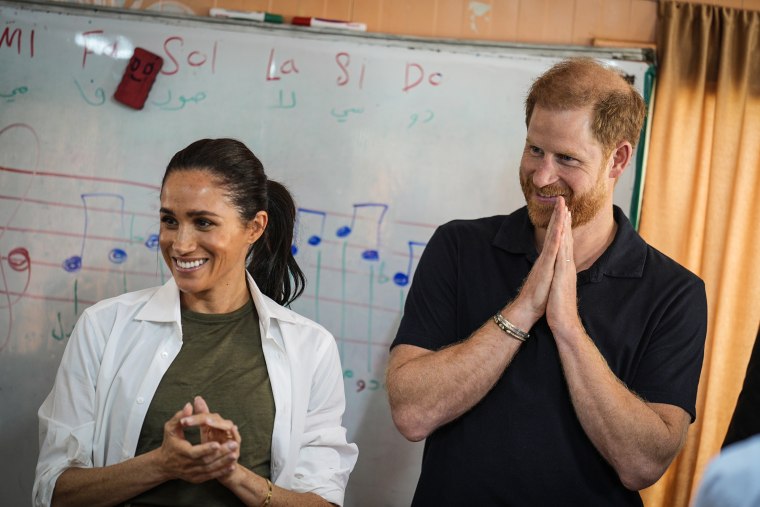
Harry and Meghan’s story shows that returning to the United Kingdom does not mean returning to their former roles. According to NBC News, the Duke and Duchess of Sussex plan to leave California and move to the United Kingdom with their children. The children have reportedly already been enrolled in British schools and are expected to begin classes in September. At the same time, the royal family views them strictly as private citizens: Harry and Meghan will not perform official duties and will not live in a royal residence.
This is a crucial detail. The issue is not the restoration of their former status, but an attempt to establish a new form of presence alongside the royal family. According to an NBC News source, King Charles III “welcomes the prospect of seeing the Sussex family more often in private,” while maintaining a boundary between personal relationships and official service. The return could therefore become a step toward family reconciliation, but not institutional rehabilitation.
The move is also linked to practical considerations. Many of Harry’s charitable projects, including the Invictus Games and WellChild, are based in the United Kingdom. According to The Telegraph royal correspondent India McTaggart, the prince has long wanted to bring his children to the country so they could spend time with the king and their Spencer relatives. She noted that he needs “somewhere he can come to in the UK without the circus around his arrival.” The comment reflects one of the couple’s central problems: almost any appearance they make in the country becomes a media event.
Security remains an especially sensitive issue. After stepping down from royal duties, Harry lost his previous level of state-funded protection, and disagreements over the matter have repeatedly become the subject of public disputes. In July, his visit to the United Kingdom involved changes to his plans related to security, and an offer to stay at Buckingham Palace was withdrawn. The British Home Office again refused to disclose details of his protection, saying that doing so could “threaten its effectiveness and the safety of individuals.”
It remains unclear whether the return will help bring about reconciliation. Harry’s relationship with his father remains strained, while he and his brother William, according to McTaggart, “haven’t spoken for years.” At the same time, contact with the king, who is undergoing cancer treatment, has gradually resumed. In May 2025, Harry said he wanted reconciliation, explaining that he did not know “how much time my father has left.” The decision to move therefore has not only practical or educational implications but also an emotional dimension: it reflects an attempt to reduce the distance from his family amid uncertainty.
Ken Paxton’s political story revolves around another kind of trust—the trust of voters and donors. As ABC News reports, the Republican candidate from Texas is significantly behind his Democratic opponent, James Talarico, in fundraising. By the end of June, Paxton had raised about $9.2 million, compared with approximately $68.6 million for Talarico. For comparison, Senator John Cornyn had about $22.4 million at a similar point in his 2020 campaign.
This is a particularly serious problem in Texas. The state is large, its media markets are expensive, and election campaigns require substantial spending on television, digital advertising, and campaign organization. Paxton is trying to make up the shortfall with the support of Donald Trump. The president is expected to headline a fundraiser in Houston that could bring the campaign millions of dollars. In addition, at least 20 Republican senators have already taken part in a fundraising event in Washington.
Money, however, does not eliminate the candidate’s political vulnerability. Paxton is known for numerous scandals. In 2015, he was charged with securities fraud; in 2024, the case ended in a pretrial agreement under which he paid $300,000 and performed community service without admitting guilt. In 2023, the Texas House of Representatives impeached him, but the state Senate acquitted him. Paxton has consistently denied the allegations and was not convicted, but some party donors continue to find these circumstances unacceptable.
Earl Nye, the former head of energy company TXU and a Cornyn donor, said he would neither vote for Paxton nor fund his campaign. In his view, the candidate “does not represent the state of Texas properly” in such an important position. A Republican consultant quoted by ABC News said that most major donors and business leaders in the state dislike Paxton and that he will have to answer “uncomfortable questions.”
The situation illustrates the gap between party loyalty and a candidate’s personal reputation. Trump helped Paxton defeat Cornyn in the primary, or intra-party election, but presidential support does not automatically mobilize the traditional donor network. Paxton can rely on national supporters of the MAGA movement, but moderate Republicans and major businesses fear that his reputation will make the Senate campaign riskier.
A Texas Pulse poll found that Paxton had a negative favorability rating: 40% of respondents viewed him positively, 52% negatively, and 55% considered him corrupt. In a hypothetical vote, Talarico led Paxton by only four percentage points—47% to 43%—which falls within the margin of error. This means the Democrats’ financial advantage does not yet guarantee victory. Texas has not elected a Democrat to statewide office in more than three decades, and Donald Trump won the state in 2024 by nearly 14 percentage points.
Nevertheless, Texas’s traditional partisan geography no longer appears completely reliable. Democratic turnout in the Senate primary was higher than Republican turnout, which could indicate strong mobilization among Democratic voters. In 2018, Beto O’Rourke lost to Ted Cruz by less than three percentage points—one of the closest results in the history of modern elections in the state. Paxton therefore needs not merely to raise money but to convince voters and donors that his personal scandals will not turn the election into a referendum on his character.
The third article shifts attention from a long-term political crisis to an immediate safety threat. Action News Jax reports that Crown Point Elementary School in Jacksonville was evacuated because of an electrical fire. Students and school buses were sent to Mandarin Middle School, while roads around the school were closed. It was later reported that the fire affected four classrooms, after which the school district began testing air quality to determine whether the children could return.
Unlike the other two stories, this one does not involve a prolonged struggle for public recognition or political funding. Yet the brief report clearly demonstrates the role of institutional response. When a threat arises, the administration must quickly evacuate the building, arrange temporary accommodations, close roads, and assess the consequences of the fire. Even a limited incident requires coordination among the school, transportation services, firefighters, and police.
Air-quality testing is important because danger can persist after the visible flames have been extinguished. Smoke and combustion products can remain inside buildings and ventilation systems, while an electrical fire can damage structures and equipment. The decision to allow students to return must therefore be based not only on a visual assessment of the building but also on a technical inspection.
All three stories share the theme of managing consequences and the limits of public responsibility. Harry and Meghan are trying to return to a country with which they have family and professional ties, but without restoring their royal powers. Paxton is seeking a position on the national stage, yet he faces the reality that party support cannot replace the trust of donors and voters. The Jacksonville school illustrates the most direct form of responsibility: when there is a threat, immediate safety takes priority over instruction and the normal schedule.
The key conclusion is that a formal decision does not, by itself, resolve a crisis. Moving does not guarantee reconciliation between Harry and William or the restoration of Harry’s status. Trump’s financial support does not erase Paxton’s reputational problems or ensure victory in Texas. Evacuating a school does not end the incident until air quality and the building’s safety have been confirmed.
Another important trend is the growing dependence of public figures on outside support. Harry and Meghan depend on decisions by British authorities regarding security and on the royal family’s willingness to accept them in a private capacity. Paxton depends on Trump, national donors, and political action committees. The school administration depends on emergency services and technical experts. In every case, the durability of a decision is determined not only by the intentions of the main participants but also by the functioning of the broader system.
Finally, the articles show how quickly personal reputation can become an institutional problem. Harry’s family conflicts affect his security and his ability to travel freely to the United Kingdom. Paxton’s scandals affect Republicans’ ability to raise money and retain a Senate seat. A school fire forces authorities to temporarily alter the operation of an entire educational institution. The central question in all three stories is therefore not simply “What happened?” but whether the relevant system can convincingly demonstrate that it is in control of the situation and capable of protecting the people who have placed their trust in it.